
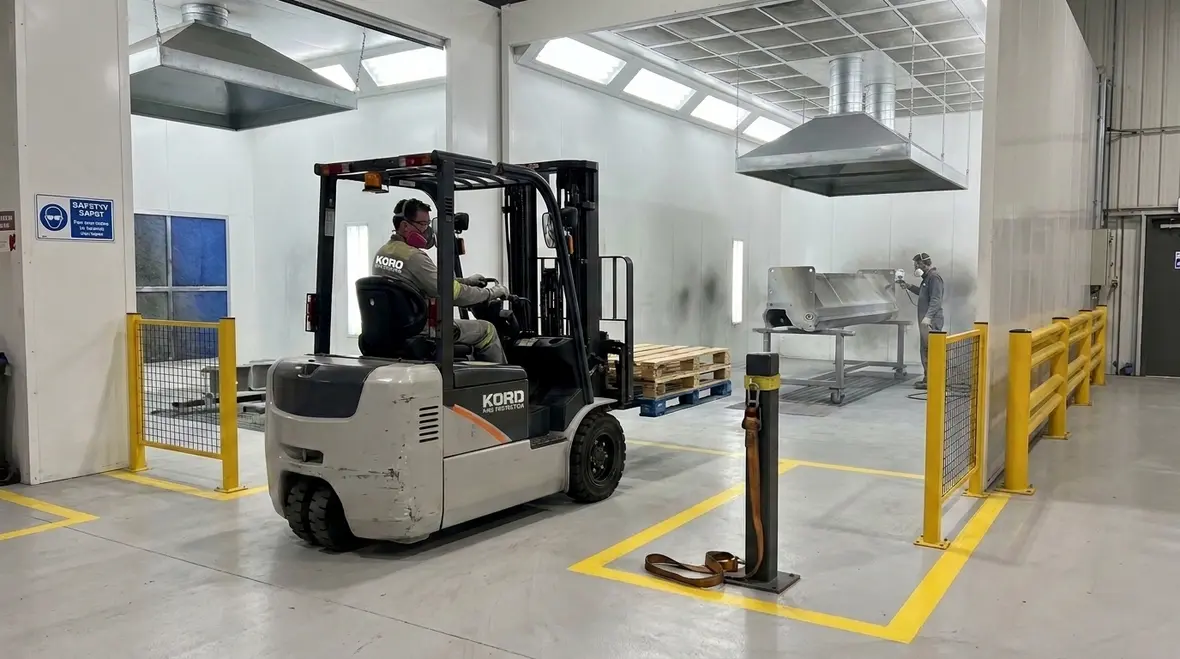
NFPA 33 Section 6.10: Moving Powered Vehicles in Spray Operations
Quick Answer: NFPA 33 Section 6.10 controls how powered vehicles move during spray operations to prevent ignition hazards. The standard requires managing vehicle electrical systems, grounding and static discharge risk, and safe operational boundaries so flammable vapors cannot ignite.
Facilities that conduct spray finishing, coating, adhesive application, or similar solvent and combustible material processes often rely on powered trucks, forklifts, carts, and tow vehicles. NFPA 33 Section 6.10 sets the safety expectations for how these NFPA 33 powered vehicle movement spray operations occur while flammable vapors, mists, or residues may be present.
Facilities reviewing vehicle movement controls in spray environments often also benefit from strengthening their spray booth fire suppression approach, especially where ventilation, detection, and shutdown coordination all need to work together naturally. ([kordfire.com](https://kordfire.com/spray-booth-fire-suppression-for-safer-paint-operations/?utm_source=openai))
What NFPA 33 Section 6.10 is trying to prevent
During spray operations, the atmosphere can contain flammable vapors and finely divided combustible particles. A powered vehicle introduces multiple ignition sources, including hot surfaces, electrical arcing from switching or contacts, static discharge from wheels and movement, and exhaust system surfaces. Section 6.10 focuses on controlling those ignition sources while keeping operations productive and orderly.
Because spray areas vary by solvent chemistry, ventilation performance, and work scheduling, compliance requires a documented approach that ties vehicle selection, operating procedures, inspection frequency, and maintenance to the hazards created by the spray process.
How to apply Section 6.10 in the field
Compliance for NFPA 33 powered vehicle movement spray operations typically depends on whether the standard classifies the area as hazardous due to vapor generation and whether vehicles can be operated without introducing ignition sources. A practical approach used by commercial, industrial, and retail finishing facilities includes the following control layers.
1) Define the spray area boundaries and vehicle routes
Mark where spraying occurs, where vapors and overspray likely accumulate, and where vehicles are allowed to travel. Route planning should prevent vehicles from entering the highest hazard zones during active spraying unless the facility has engineering and equipment controls that meet the intent of NFPA 33.
- Use floor markings and traffic control signage to keep vehicles out of critical spray zones.
- Align loading, staging, and pickup points so vehicles remain outside the most flammable vapor concentration risk area.
- Consider changes in air movement when doors open and when fans cycle, since hazardous conditions can shift.
2) Control vehicle ignition potential through equipment suitability
Vehicles used in or near spray areas need to be managed for ignition control. The typical field issues include electrical components, battery ventilation, ignition sources from electrical arcing, and hot exhaust and brake surfaces.
- For electric vehicles: verify electrical enclosure integrity, inspect cables and connectors, and control charging practices outside spray areas.
- For internal combustion vehicles: verify exhaust system condition, ensure proper spark arresting where required by facility policy, and keep hot components from contacting combustible residues.
- For any powered cart or tow vehicle: confirm that switching devices, power pickups, and motor housings maintain safe operating condition.
3) Address static discharge and grounding practices
Static charge can build on vehicles moving through spray atmospheres, especially when surfaces accumulate overspray or residue. Section 6.10 expects facilities to manage static risks through grounding and bonding practices where applicable to vehicle design and operating conditions.
- Maintain conductive paths and ensure bonding points remain clean and intact.
- Remove paint overspray buildup that can alter conductivity and create insulating layers.
- Train operators on recognizing abnormal conditions such as damaged wheels, missing ground straps, or unusual arcing.
What operators must do during movement
Written operating procedures should define when vehicle movement is permitted, how it is performed, and what triggers a stop. Section 6.10 compliance becomes fragile when procedures rely only on “good judgment.” Facilities should make the hazards observable and the response measurable.
Loading, staging, and timing controls
In practical operations, the safest approach limits vehicle movement during the peak solvent release window. Where vehicles must move during spray operations, procedures commonly require:
- Coordinated scheduling between spray operations and material movement.
- Pre staged racks and carts placed outside hazardous zones before spraying begins.
- Controlled entry and exit points that avoid prolonged idling within spray vapor accumulation areas.
Traffic management and supervision
NFPA 33 hazard control depends on predictability. A supervised environment reduces accidental entry, unexpected route changes, and uncontrolled stops.
- Assign a traffic control lead during spray cycles when vehicles are moving.
- Maintain clear line of sight and keep reflective markers unobstructed.
- Use interlocks with ventilation and exhaust systems where feasible, aligned to facility engineering controls.
Inspection triggers during operation
Section 6.10 expectations are reinforced when the facility has defined triggers that pause movement:
- Unusual electrical behavior, sparks, burning odors, or arcing noise.
- Visible exhaust system malfunction or overheating.
- Damaged cables, loose connectors, or missing covers on powered components.
- Excessive overspray accumulation on vehicle surfaces that can increase static or ignition risk.
Inspection and maintenance that prevents common failure points
Many compliance gaps occur after equipment is brought into service and begins to drift from the condition assumed by the safety design. For NFPA 33 powered vehicle movement spray operations, the maintenance program needs to cover the specific ignition related elements that change over time.
Pre shift and periodic checks
Facilities should implement a practical checklist that fits how vehicles are used. At minimum, checks typically include:
- Electrical integrity: damaged wiring, loose terminals, worn insulation, and compromised enclosures.
- Brake and tire condition: evidence of overheating, excessive wear, or damaged tires that increase fault risk.
- Exhaust and heat shielding: proper attachment, intact guards, and signs of corrosion or leaks.
- Battery systems for electric vehicles: confirm secure ventilation and cover integrity, and verify that charging occurs in controlled locations.
Cleaning and overspray control
Overspray and residue can insulate grounding paths and create combustible buildup. A consistent cleaning cadence reduces both ignition likelihood and spread of residues outside the spray area.
- Specify cleaning methods that do not damage conductive components.
- Document when conductive bonding points are inspected and cleaned.
- Control where removed residues go, since waste management can affect hazard levels.
Recordkeeping for audits
Inspection records should tie directly to the hazards. Maintain logs that show dates, defects found, corrective actions taken, and equipment status prior to return to service.
For facilities seeking ongoing compliance assurance, Kord Fire Protection supports commercial programs through documentation support, inspection coordination, and hazard focused maintenance planning. When you align records to the actual spray movement practices, audits become less disruptive.
To connect NFPA 33 maintenance planning with broader fire protection controls, facilities often cross reference related guidance. For practical planning resources, see NFPA 33 Section 1.5 equivalency for spray operations for compliance support and planning context. ([kordfire.com](https://kordfire.com/nfpa-33-section-1-5-equivalency-alternative-compliance-for-spray-operations/?utm_source=openai))
How ventilation and housekeeping affect vehicle movement safety
Vehicle ignition control does not stand alone. Spray operations depend on ventilation performance to keep flammable vapors below dangerous levels. When ventilation degrades, vehicle movement becomes riskier even if the equipment is in good condition.
Ventilation performance must match operating mode
Facilities should verify that exhaust and air handling operate correctly during spray, transfer, and cleanup. Door openings, fan cycling, and changes in product usage can alter vapor distribution.
- Verify airflow indicators are monitored and alarms are addressed promptly.
- Review ventilation adjustments after process changes, including new coatings, solvents, or application methods.
- Confirm that maintenance activities do not leave baffles, filters, or ductwork in a degraded state.
Housekeeping reduces both fuel and ignition opportunities
Accumulated residues can create additional ignition pathways and expand the hazardous footprint. Housekeeping practices should include:
- Regular cleaning of overspray on floors, ledges, and vehicle staging points.
- Controlled waste collection and removal at defined intervals.
- Cleaning schedules that consider when vehicle movement increases residue disturbance.
NFPA 33 powered vehicle movement: an audit ready checklist
Use this checklist to confirm that Section 6.10 requirements are implemented as operational controls, not just statements in a policy manual.
| Control Area | What to Verify | Typical Evidence |
|---|---|---|
| Boundaries and routes | Vehicles avoid the highest hazard spray vapor zones | Floor markings, route diagrams, SOPs |
| Timing and coordination | Movement is restricted during peak solvent release where feasible | Production schedules, shift procedures |
| Vehicle suitability | Vehicle electrical, exhaust, and switching components are maintained | Inspection logs, maintenance records |
| Static and grounding management | Bonding points remain intact and residue does not insulate them | Ground strap condition checks, cleaning records |
| Operator procedures | Clear stop triggers and traffic supervision exist | Training records, incident response SOPs |
| Ventilation and housekeeping | Airflow is maintained and residues are controlled | Ventilation checks, cleaning schedules |
Frequently Asked Questions
Ready to make vehicle movement compliant and defensible?
Review your powered vehicle routes, inspection checklists, and cleaning practices against NFPA 33 Section 6.10 requirements, and verify that ventilation and housekeeping support safe spray conditions. Kord Fire Protection can help commercial facilities build an audit ready compliance program with practical maintenance and documentation support. Contact Kord Fire Protection to schedule a walkthrough and gap assessment for your spray operation and powered vehicle movement controls.

Join Our Newsletter!
Get the latest fire safety tips delivered straight to your inbox From our Newsletter.



