
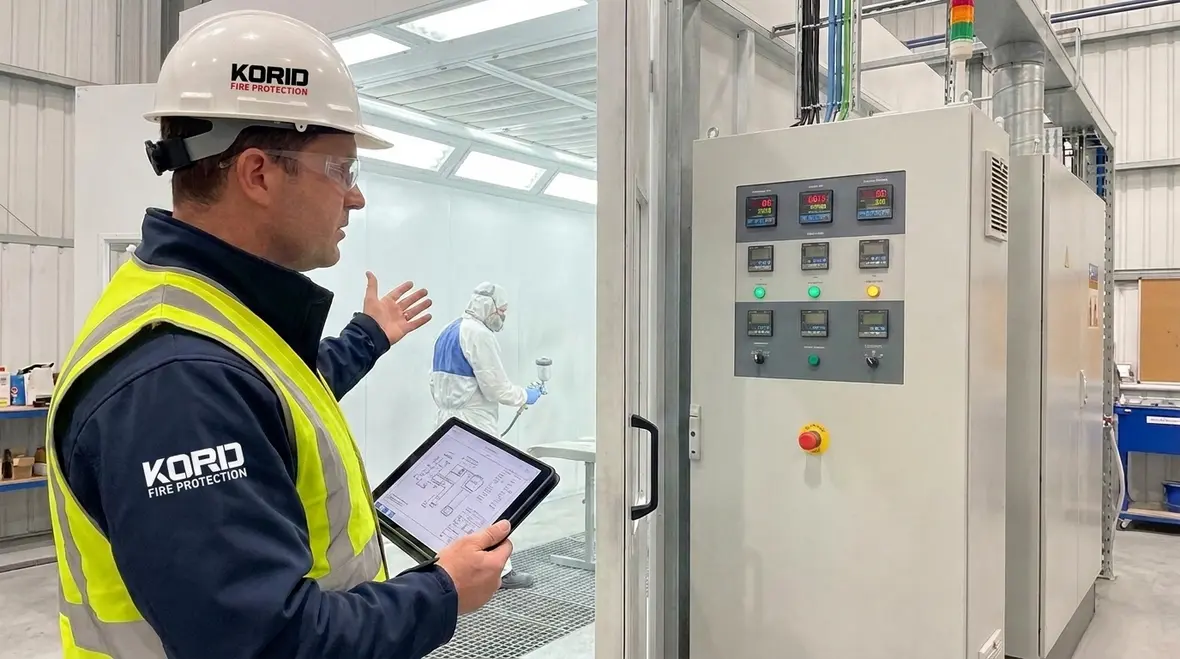
NFPA 33 Section 1.5 Equivalency: Alternative Compliance for Spray Operations
Quick Answer: NFPA 33 Section 1.5 allows facilities to meet the intent of the standard through equivalent protection when strict compliance is not practicable. For spray operations, an NFPA 33 equivalency alternative compliance spray approach can be approved using documented risk controls, engineering justification, and verified maintenance.
Facilities dealing with spray hazards often benefit from a structured spray booth fire suppression approach alongside their equivalency strategy, especially when shutdown logic, hazard coverage, and maintenance planning all need to work together.
What NFPA 33 Section 1.5 Equivalency Actually Requires
NFPA 33 Section 1.5 addresses situations where an operator cannot follow a specific prescriptive requirement yet can still demonstrate an equivalent level of safety. Fire protection officials evaluate equivalency based on whether the alternative method delivers the same or greater effectiveness in controlling the hazards created by spraying operations, including flammable or combustible liquid atomization, ignition sources, and ventilation related risk.
In practical terms, an NFPA 33 equivalency alternative compliance spray proposal is not simply “close enough.” It typically requires a documented engineering basis, evidence that hazards remain controlled under normal operation and upset conditions, and a maintenance and inspection program that sustains performance over time.
Why Spray Facilities Use Equivalency Instead of Prescriptive Compliance
Commercial, industrial, and retail facilities often face operational constraints that make prescriptive compliance difficult. Common drivers include layout limitations, retrofit complexity, downtime restrictions, and equipment availability. Local enforcement also plays a role, because inspectors look for assurance that the underlying hazard controls work in the real world, not only on paper.
Typical reasons a facility pursues equivalency include:
- Existing building constraints: Limited space for ductwork, capture devices, or dedicated electrical classification upgrades.
- Process redesign constraints: Changing spray equipment models or automation hardware after the facility was built.
- Ventilation limitations: Ventilation performance objectives may still be met, but the prescriptive method is impractical.
- Phased capital planning: Interim operation needs an engineered compliance path until full upgrades occur.
For each situation, the equivalency package must show that the alternative maintains the standard’s safety intent: limiting ignition risk, controlling flammable vapor accumulation, and ensuring safe operation of spray-related systems.
How an NFPA 33 Equivalency Alternative Compliance Spray Package Is Evaluated
Facilities that succeed with equivalency typically build a submission that matches the way code officials assess engineering equivalence. They document the hazard, the performance objective, the alternative control method, and how the control is verified and maintained.
1) Establish the hazard and performance objective
Spray operations introduce an ignition risk when flammable or combustible vapors and mists are present. The performance objective usually focuses on preventing a hazardous atmosphere and ensuring that spray operations stay within safe ventilation and ignition control conditions.
2) Present the alternative method and control logic
The alternative control must be specific and measurable. Examples of alternative approaches often include engineered ventilation strategies, control interlocks, or monitoring methods that prove safe operating conditions. The code review will focus on whether the alternative provides reliability comparable to prescriptive requirements.
3) Demonstrate equivalency through evidence
Evidence can include engineering calculations, system performance testing results, and documentation of how the system responds to upset conditions. For example, if an alternative relies on airflow detection, the facility should show calibration records, trip setpoint verification, and test results that confirm the system shuts down or otherwise prevents spraying when performance falls outside safe limits.
4) Lock in inspection, testing, and maintenance
A major failure point in equivalency submissions is the lack of a sustained verification program. Inspectors and insurers typically want confirmation that the alternative will continue to perform. That means defined inspection intervals, functional testing procedures, and corrective action workflows when readings drift or components fail.
Operational Procedures That Make Equivalency Work in the Real World
Even strong engineering does not compensate for poor operational control. For spray areas, code officials expect operators to follow procedures that keep the alternative controls within safe operating parameters. Kord Fire Protection commonly sees that operational discipline and documentation determine whether equivalency remains acceptable after initial approval.
Key operational elements include:
- Ventilation verification before spray: Documented start-up checks that confirm capture and exhaust performance before atomizing flammable materials.
- Interlock performance and response: Procedures that confirm spray pumps, atomizers, and related ignition potential stay disabled when ventilation drops or detection signals alarm.
- Maintenance discipline: Filter replacement, duct cleaning schedules, and sensor recalibration based on measured performance rather than time alone.
- Housekeeping controls: Removal of overspray accumulations that can become fuel sources or obstruct ventilation paths.
- Change management: Written steps for equipment replacement, process parameter changes, or software updates that could affect equivalency performance.
These procedures should connect directly to the equivalency rationale. If the alternative relies on airflow monitoring, the facility needs the training and documentation that show operators understand what triggers safe shutdown and how they respond.
Common Failure Points During Inspections and Re-Submittals
Equivalency approval can fail later when the alternative control loses performance or when documentation becomes inconsistent with current operations. Commercial facilities often encounter the same recurring issues.
- Outdated drawings and equipment lists: The spray system changes over time, but the equivalency narrative stays static.
- Missing functional testing records: Inspectors look for evidence that interlocks, alarms, and shutoffs operate as intended under verified conditions.
- Inconsistent calibration practices: Sensors that drift without documented recalibration can lead to unsafe conditions while still “appearing normal.”
- Ventilation performance not revalidated: Renovations, duct modifications, or filter changes alter airflow. Equivalency needs periodic performance confirmation.
- Insufficient housekeeping and overspray control: Overspray residue can affect ventilation effectiveness and increase hazards in the spray enclosure.
To reduce these risks, facilities should treat equivalency as a managed compliance program. Kord Fire Protection supports that lifecycle approach through inspections, testing support, and maintenance planning that align with real spray operation requirements.
For related guidance on commercial fire protection expectations, see inspection, testing, and maintenance services or visit Kord Fire Protection.
Frequently Asked Questions
Next Steps for Spray Operations Seeking NFPA 33 Equivalency
Facilities should start by mapping the spray hazards to the specific prescriptive provisions they cannot meet, then selecting an alternative control strategy that can be measured, verified, and maintained. Engage Kord Fire Protection early to build an evidence-based equivalency alternative compliance spray plan that aligns with inspection expectations, supports reliable operation, and withstands revalidation after equipment or process changes.

Join Our Newsletter!
Get the latest fire safety tips delivered straight to your inbox From our Newsletter.



