
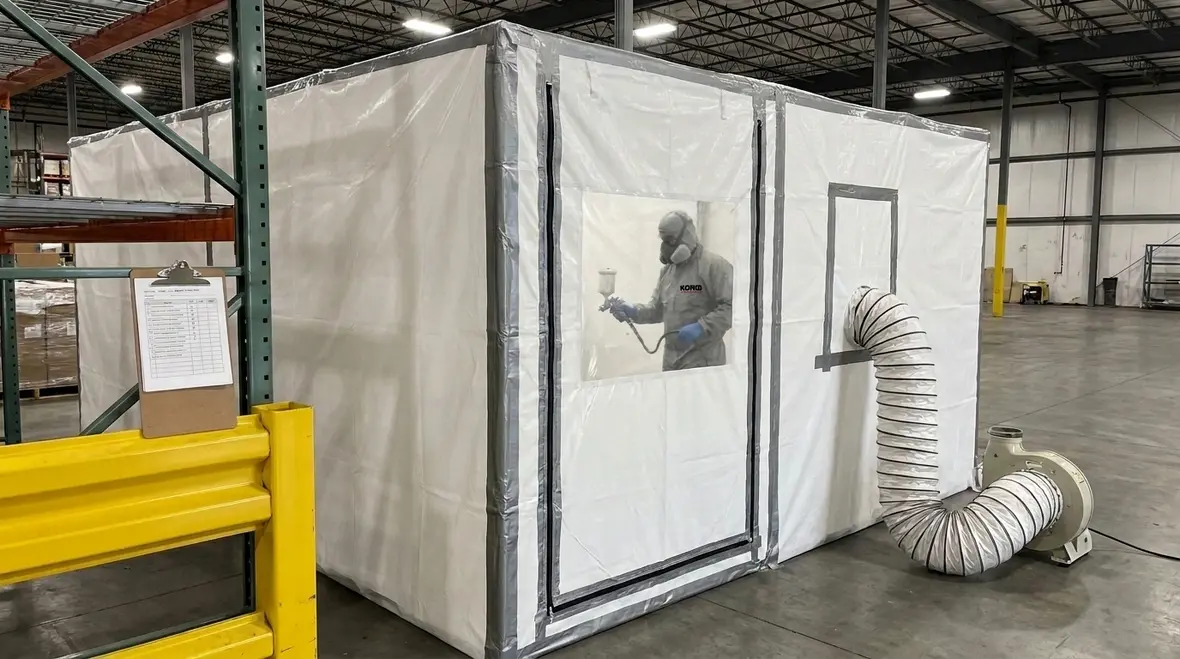
NFPA 33 Section 18.2: Limitations on Spray Work in Membrane Enclosures
Quick Answer: NFPA 33 Section 18.2 restricts how spray work occurs inside membrane enclosures to control ignition hazards and ensure safe ventilation. These NFPA 33 membrane enclosure spray limitations influence enclosure design, transfer operations, air movement, and inspection frequency.
What NFPA 33 Section 18.2 means for spray operations in membrane enclosures
NFPA 33 sets performance and procedural requirements to reduce fire and explosion risk during spray application of flammable or combustible materials. Within that framework, Section 18.2 addresses Limitations on Spray Work in Membrane Enclosures. For facility owners, contractors, and fire protection teams, the key compliance challenge involves maintaining safe control of atomized material, ignition sources, and airflow behavior inside a temporary containment space.
In practical terms, NFPA 33 membrane enclosure spray limitations affect how the work zone is configured, how air is managed, what equipment is permitted, and how the enclosure is verified before, during, and after spray application. Commercial facilities typically discover gaps during walkthroughs, prejob meetings, and maintenance audits, when documentation and inspection routines do not match the actual installation or operating practices.
If your team is tightening spray operation safety more broadly, review spray booth fire suppression for safer paint operations to connect enclosure practices with the suppression and inspection side of the risk picture.
Where compliance often breaks down: common operational failure points
Even well designed enclosures can fail compliance if day to day procedures and support systems do not remain consistent. The most common issues include:
- Ventilation mismatch: Enclosure airflow falls outside the expected range due to fan changes, blocked ducting, or poorly routed hoses. This can allow accumulation of overspray and flammable vapors.
- Membrane integrity loss: Tears, loose seams, damaged floor edges, or incorrect material selection can change containment performance and increase leakage of atomized coatings.
- Improper equipment placement: Ignition sources may migrate as operators reposition equipment, extend hoses, or add temporary lighting and tools.
- Inadequate housekeeping and residue control: Overspray deposition can increase combustible loading and lead to delayed ignition risk even after active spray stops.
- Inspection gaps: Teams may verify initial setup but skip verification after changes such as fan service, membrane repair, or a shift in spray pattern.
Commercial and industrial operators often feel pressure to keep production moving, which increases the likelihood that the “setup and forget” approach replaces scheduled checks. Retail maintenance cycles and specialty contractor schedules can intensify this risk because multiple vendors handle enclosure setup and tear down.
How the spray enclosure workflow changes under Section 18.2
NFPA 33 Section 18.2 functions as an operational guardrail. It ties spray work eligibility to how the membrane enclosure behaves as a controlled environment. Typical compliance oriented workflow elements include:
1) Prejob setup verification
Before spray begins, the enclosure must be installed and prepared to perform as intended. Facility teams should require documentation and a practical verification checklist that includes:
- Membrane condition and correct installation geometry to maintain containment behavior
- Air movement pathways that remain unobstructed during production
- Equipment routing that avoids creating new ignition source exposure points
- Clear procedures for how workers enter and exit the enclosure area without disturbing airflow
2) During spray: controlling airflow and exposure
Once spray begins, operations must maintain conditions. A common compliance issue appears when operators modify the setup mid job. Examples include changing spray gun position, swapping nozzles, or adjusting hose layout without re checking airflow and containment.
3) Post spray: residue and ignition risk management
After spray work stops, combustible residue and aerosol remnants can remain in the environment. Compliance programs should include wipe down or removal plans consistent with facility dust and coating residue management practices and should address how long the enclosure remains active to manage airborne material.
Ventilation, monitoring, and equipment controls you should plan for
Membrane enclosures rely on controlled airflow to reduce the likelihood that flammable vapors or atomized particles reach an ignition source. Facility standards usually require more than a generic fan start up. Strong compliance programs use a combination of design controls, operational checks, and documented inspection evidence.
Ventilation system behavior and maintenance
Fans, ducting, and air movement equipment must operate as installed. Common drift points include duct deformation, partially clogged filters, and incorrect static pressure readings. The enclosure airflow system also needs a maintenance plan that prevents unknown changes between jobs.
For a related look at make-up air and exhaust balance in spray environments, see NFPA 33 Section 7.3: Make-Up Air for Spray Operation Exhaust Systems.
Inspection and testing frequency
For commercial fire safety programs, the “inspection once at startup” model often fails. Teams typically benefit from an inspection cadence that includes:
- Setup verification before each spray session
- Membrane checks after any repair or repositioning
- Airflow verification after equipment changes or duct adjustments
- Post job residue control verification based on deposition and cleaning outcomes
Ignition source control and equipment selection
Spray areas can create hazardous conditions even without open flame. Controls must address potential ignition sources such as electrical equipment used inside the enclosure boundary, improper extension cords, and hot work activities happening nearby. Facility teams should also align the spray work permit process with enclosure operation steps.
If ignition source control is part of the bigger facility conversation, proactive electrical hazard prevention for commercial spaces adds useful context for managing electrical risk without turning the jobsite into a comedy of bad extension cords.
Documentation and maintenance records that support ongoing compliance
NFPA 33 compliance depends on evidence. In commercial facilities, regulators, insurers, and internal audit teams commonly request documentation that links the enclosure design and operating procedures to real inspection outcomes.
A practical record set typically includes:
- Membrane enclosure installation and configuration records, including any modifications
- Airflow system configuration documentation and performance verification results
- Pre job checklist and sign off records
- Training records for operators and supervisors responsible for spray work
- Maintenance logs for fans, ducting components, and enclosure repair actions
- Cleaning and residue removal records after spray sessions
For facility leaders who manage multiple tenants, production zones, or retail refurbishments, record consistency often becomes the bottleneck. Kord Fire Protection supports commercial compliance by helping organizations create reliable inspection routines, align documentation to the actual field setup, and maintain spray safety systems over time.
For related fire safety planning and system coordination, explore fire protection services in Southern California for inspection, repair, installation, and maintenance support.
For additional commercial fire safety resources, reference Kord Fire Protection blog articles to strengthen your internal training and maintenance planning.
How to evaluate your current enclosure program against NFPA 33 requirements
Facility teams can reduce risk by using an evaluation approach that combines field verification and procedure review. A strong assessment focuses on whether real operations match what is documented and trained.
Step 1: Walk the job like an inspector
Observe setup, observe the first minutes of spray, and then observe end of job cleaning. Identify where operator behavior changes the enclosure performance, such as repositioning hoses or adding temporary lighting.
Step 2: Verify enclosure performance assumptions
Confirm airflow pathways remain open during work. Check membrane condition and secure attachment points. Ensure that changes to equipment placement do not create new ignition exposure risks.
Step 3: Tighten permit and responsibility controls
Define who can change fan settings, rearrange hose routing, repair membrane sections, or restart spray after a disruption. These controls support consistent outcomes in multi contractor settings.
When organizations want dependable compliance support, Kord Fire Protection can help by establishing inspection, maintenance, and documentation practices that support safe spray enclosure operation and reduce audit friction.
Frequently Asked Questions
Conclusion and call to action
Section 18.2 compliance depends on more than having a membrane enclosure. Your safety outcome depends on ventilation consistency, membrane integrity, ignition source control, and documented verification before, during, and after spray work. If your facility relies on contractors, frequent refurbishments, or multi zone production, engage Kord Fire Protection to strengthen inspections, maintenance routines, and compliance records so NFPA 33 requirements stay aligned with real field operations.

Join Our Newsletter!
Get the latest fire safety tips delivered straight to your inbox From our Newsletter.



