
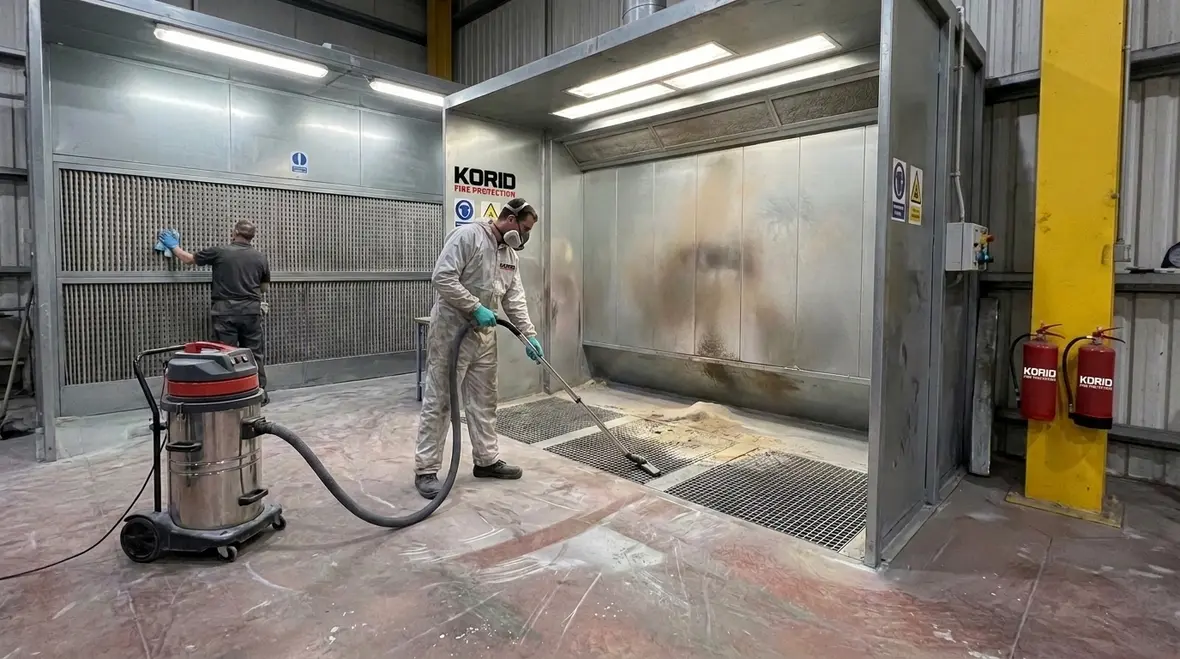
NFPA 33 Section 10.3: Managing Combustible Residues in Spray Areas
Quick Answer
NFPA 33 Section 10.3 requires facilities to control and remove combustible residues in spray areas to reduce ignition risk. Effective NFPA 33 combustible residues spray area management includes routine inspection, proper cleanup methods, preventive housekeeping, and documented maintenance of ventilation and collection systems.
If your facility is reviewing spray risks more broadly, Kord Fire’s spray booth fire suppression guidance is a useful companion to residue control because it connects cleanup discipline with the protection systems that support safer paint operations.
Why Section 10.3 matters in real spray operations
In commercial finishing, coating, and spray application environments, combustible residues accumulate where overspray deposits, where cleaning is deferred, and where collection systems fail. NFPA 33 recognizes that the hazard is not only the sprayed material. It is also what remains after spraying: dried or partially cured solids, dust and lint, residue on floors and ledges, and buildup inside ductwork or collection equipment.
Compliance teams often focus on product and spray equipment, but fire risk concentrates in overlooked areas: the edges of spray booths, behind baffles, around filtration frames, in drip zones, and in corners of ducting. When NFPA 33 combustible residues spray area management is weak, small ignition sources can develop into full fire involvement through piled residue and fuel-rich surfaces.
What “combustible residues” typically include in spray areas
Section 10.3 expectations apply to more than obvious floor waste. In practice, combustible residues include:
- Overspray deposits on booth walls, ceilings, and structural steel
- Residue on floors, run-off channels, sumps, and grate areas
- Accumulation on rafters, beams, and duct exterior surfaces near spray zones
- Overspray solids trapped in filter banks, media, and plenum spaces
- Dust and debris mixed with coatings that become fuel once deposited and aged
- Residue on light fixtures, electrical enclosures, and cable trays within spray zones
Facilities should treat “residue” as a controlled fire load. The risk increases as residue depth grows, as it dries, and as it becomes more uniformly distributed on horizontal surfaces where hot particles and sparks can land.
How NFPA 33 combustible residues spray area management should work day to day
NFPA 33 combustible residues spray area management requires a disciplined approach, not ad hoc cleanup. A typical compliant program includes planning, execution, verification, and documentation.
1) Establish a cleaning plan by hazard zone
Map spray area zones and define cleaning frequencies based on actual residue loading, coating type, and operating schedule. For example:
- High overspray zones: frequent wiping and removal of solids from ledges and booth surfaces
- Floor and run-off routes: scheduled residue removal to prevent buildup in channels and sumps
- Filtration and collection components: maintenance cycles aligned to loading and performance
2) Use cleaning methods that do not create new ignition pathways
Cleanup must control dust aerosolization and ignition sources. Personnel should follow written procedures for safe waste collection, residue removal, and tool selection. When vacuuming is required, use equipment intended for combustible dust and coating residue control, with appropriate filtration and grounding as applicable to the facility risk assessment.
3) Verify effectiveness, not just completion
Cleanup “done” often means work orders are closed. Section 10.3 compliance depends on verification that residue depths and coverage remain controlled. Supervisors should implement visual inspections at the right intervals, including spot checks in known hot spots where residue accumulates.
4) Maintain good housekeeping adjacent to spray equipment
Residue migrates. Even when booths are maintained, transfer areas, staging zones, and immediate service corridors may collect overspray and dust. The management process must cover these adjacent spaces, not just the spray booth interior.
Inspection and documentation: where programs commonly fail
NFPA 33 enforcement and internal audits typically focus on whether residue control is systematic. Common failure points include:
- Inconsistent frequencies: cleaning intervals do not reflect production intensity or changing coating formulations
- Unverified turnaround: work orders record time spent, but not residue condition outcomes
- Filter bypass and poor collection efficiency: residue continues to deposit because airflow and collection performance are degraded
- Missed ledges and non walkable areas: residue builds where inspectors cannot easily reach
- Improper waste handling: residues are stored or staged in ways that increase heat exposure or reignition risk
A strong program uses checklists that address both visible and likely accumulation points. Facilities should also track corrective actions when residue levels trend upward. If performance indicators show higher residue loading, the plan must adapt through cleaning frequency, ventilation assessment, and collection system maintenance.
Ventilation and collection systems: the link between airflow and residue buildup
Even the best housekeeping program struggles when collection systems underperform. Spray area exhaust and filtration influence deposition patterns. When airflow drops, when filters load prematurely, or when duct systems accumulate residue, combustible solids can settle and remain on surfaces longer than expected.
Practical checks that protect compliance
- Confirm exhaust performance remains within the facility’s design and operational targets
- Inspect filter banks and plenum areas for buildup and loss of capture efficiency
- Verify duct and transition areas for residue accumulation that can later flake or smolder
- Coordinate filter changeout with residue loading and production rates
Kord Fire Protection supports facilities with fire protection services in Southern California designed to keep fire risk controls functioning as intended. Their role often includes reviewing your program approach, verifying performance-focused maintenance practices, and supporting the documentation needs that regulators and insurers expect.
Equipment and maintenance considerations for combustible residue control
Combustible residue management depends on maintaining the systems that prevent residue from accumulating. Facilities should align maintenance tasks with both NFPA 33 expectations and the specific design of the spray area.
Maintenance tasks that reduce residue risk
- Filter and media maintenance: changeout schedules based on loading, not only time
- Booth component upkeep: inspect baffles, seals, and surfaces that capture overspray
- Run off and collection points: keep sumps and channels clean to prevent pooling and residue thickening
- Electrical and lighting clearance: ensure fixtures and enclosures do not become residue catchment points
- Inspection access: maintain safe access for routine inspection in elevated or hard to reach locations
For related guidance on preventing dangerous conditions from developing in coating operations, facilities should use internal fire protection planning tools, site specific procedures, and service support that reflect the actual spray environment and residue loading patterns.
Frequently Asked Questions
Conclusion and next step
Combustible residue control is one of the most preventable fire risks in spray operations when it becomes a measured, documented process. Facilities should validate their NFPA 33 combustible residues spray area management plan with zone based inspection, effective cleanup methods, and maintenance aligned to real residue loading. Schedule a compliance review with Kord Fire Protection to strengthen your program, close likely gaps, and keep spray area hazards under control.

Join Our Newsletter!
Get the latest fire safety tips delivered straight to your inbox From our Newsletter.



