
NFPA 33 Section 10.1 General: Operations and Maintenance Basics
Quick Answer
NFPA 33 Section 10.1 sets the operational and maintenance foundations for ventilation, spray equipment, and control measures that manage flammable atmospheres. The goal is consistent performance over time through documented procedures, inspections, and corrective action. Facilities must treat maintenance as a safety system, not a routine task.
Facilities that want a broader view of protection strategy should also review spray booth fire suppression for safer paint operations, especially when inspection readiness, maintenance planning, and day to day spray hazards all need to stay aligned.
What NFPA 33 Section 10.1 actually requires day to day
NFPA 33 operations maintenance spray general requirements start with a simple principle: equipment and systems that prevent ignition hazards must stay reliable during normal use and during planned service. Section 10.1 General emphasizes that facilities must operate and maintain spray operations using established practices, with attention to changes, wear, contamination, and performance degradation. In commercial and industrial settings, compliance often hinges on how well operations teams coordinate with maintenance and how effectively the facility manages inspection results, defects, and rechecks.
Because spray applications can shift with production schedules, staffing, and product changes, Section 10.1 also functions as a governance standard. It expects documented processes, consistent enforcement, and timely corrective action when conditions fail to meet intended safeguards.
How Section 10.1 connects operations to maintenance
Operational control affects maintenance outcomes
Many failures trace back to operations. Examples include improper spray technique, incorrect feed rates, worn or mispositioned atomizers, and ventilation disruptions during troubleshooting or housekeeping. These operational deviations increase overspray, raise solvent vapor loads, and accelerate wear on hoses, seals, pumps, and ventilation components. That means inspections must evaluate both system condition and operational practices that can affect performance.
Maintenance keeps the hazard controls at design intent
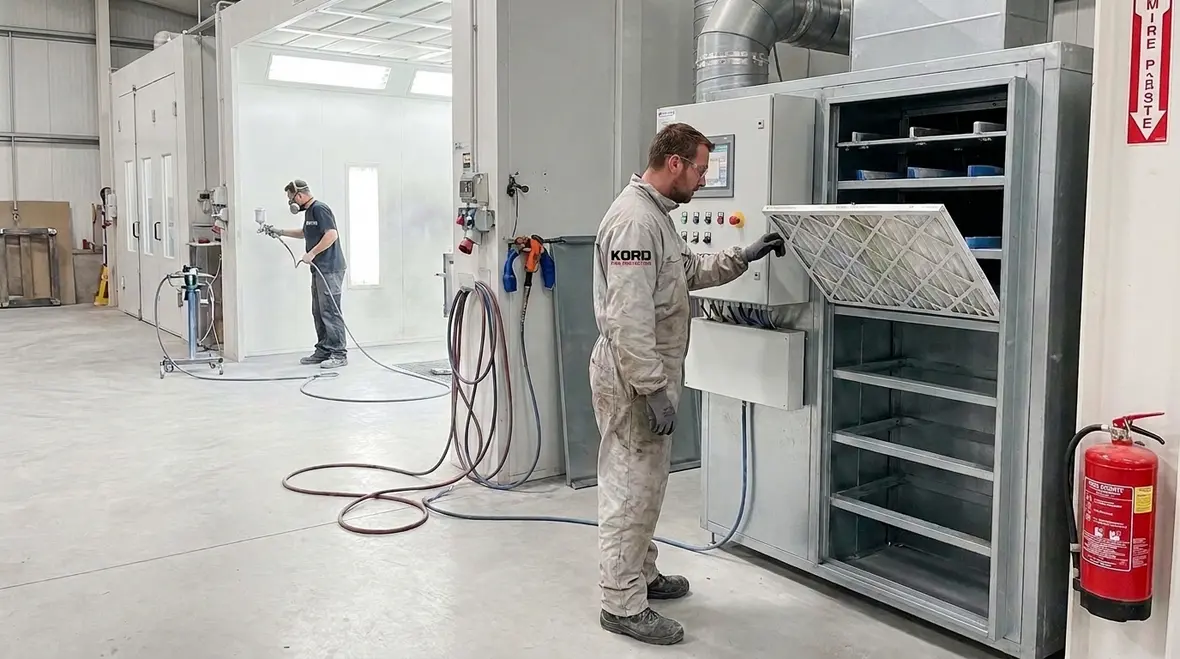
Ventilation and other engineering controls must continue to perform as designed. For spray areas, the maintenance discipline must protect against losses in capture efficiency, blocked ducting, fan deterioration, failed interlocks, and changes in filtration or airflow balance. NFPA 33 operations maintenance spray general requirements effectively require the facility to treat these controls like life safety critical systems.
Minimum maintenance foundations: procedures, inspection, and corrective action
Section 10.1 General expects a maintenance framework that is repeatable, auditable, and tied to hazard prevention. The operational reality is that spray systems operate continuously or in frequent shifts, which can mask early degradation unless maintenance is structured and tracked.
1) Written procedures and assigned responsibility
Facilities should maintain clear written procedures for operation and maintenance activities that affect the spray environment. Procedures should address safe shutdown and restart, isolating energy sources, and verifying system status before resuming spraying. Assign responsibility for inspecting ventilation, spray equipment components, electrical devices, and housekeeping-related performance items.
2) Routine inspection with documented results
Inspections must verify condition and function. The most common compliance problem in commercial facilities is inconsistent documentation or insufficient detail. Effective inspection records include what was checked, when it was checked, results against acceptance criteria, and actions taken. In retail or light industrial paint and coating spaces, teams often overlook incremental issues such as partial duct blockage, degraded airflow at booths, or deterioration of seals on spray hoses and fittings.
3) Corrective action that closes the loop
Section 10.1 aligns maintenance actions with hazard reduction. Corrective action should not stop at replacing a part. It must restore performance, confirm proper operation, and recheck the system after repairs. If the facility discovers a recurring defect, the corrective action should address root cause, such as improper usage, worn components, unsuitable maintenance intervals, or changes in materials and formulation.
What to check under NFPA 33 operations maintenance spray general requirements
Spray operations create unique failure points. A practical approach is to focus maintenance inspections on the elements that influence ignition source control and vapor management. The table below provides common inspection targets and typical failure modes.
| System or Component | Maintenance Check Focus | Common Failure Points |
|---|---|---|
| Ventilation and air handling | Airflow performance, duct integrity, capture effectiveness, filter condition, fan operation | Blocked ducting, failed dampers, degraded fan performance, improper filter maintenance |
| Spray application equipment | Seal integrity, hose condition, pump condition, atomization consistency, fittings | Worn seals, leaks at couplings, inconsistent atomization increasing overspray |
| Electrical connections and devices | Condition of wiring, junction integrity, bonding and grounding verification | Loose connections, corrosion at terminals, missing or ineffective bonding |
| Safety interlocks and shutdown systems | Interlock functionality and response time, fail safe behavior | Bypassed or degraded interlocks, control logic drift, malfunctioning sensors |
| Housekeeping and spill control | Removal of residues, management of rags and waste, control of accumulations | Accumulated residues, inadequate waste container practices, delayed spill cleanup |
To keep maintenance aligned with safety performance, facilities should periodically verify that the overall hazard controls still meet intended outcomes, not just that components were serviced. That includes confirming that ventilation is adequate for current production conditions and spray patterns.
Common compliance challenges in commercial and industrial facilities
1) Maintenance work orders that do not confirm hazard performance
Many facilities document parts replacement but do not confirm that airflow, interlocks, and spray area control performance return to safe operating conditions. Section 10.1 emphasizes operating and maintenance fundamentals, which means verification matters.
2) Change management gaps
Production changes create risk. Switches in coating chemistry, viscosity, spraying duration, nozzle type, or transfer methods can increase vapor generation or alter overspray distribution. The maintenance plan must consider these changes so that inspection frequency and acceptance criteria remain appropriate.
3) Housekeeping variability
Housekeeping affects the flammable atmosphere risk and the integrity of electrical and mechanical systems. In busy facilities, cleaning practices may vary by shift or contractor. A compliant program uses clear standards, training, and audit checks.
How Kord Fire Protection supports ongoing NFPA 33 compliance
Commercial spray operations require more than one time inspections. They require a maintenance partnership that can evaluate system performance, validate documentation quality, and support corrective action that restores designed protection. Kord Fire Protection helps facilities implement practical, serviceable compliance strategies, including inspection support, testing coordination, and maintenance planning that supports NFPA 33 operations and ongoing safety performance.
If your facility needs a structured maintenance approach or a compliance review tied to operational realities, use the internal guidance at Kord Fire Protection to discuss current spray operations and the maintenance workflow needed to sustain safe performance.
Frequently Asked Questions
Next step: validate your maintenance program against real operating conditions
Review your spray area maintenance records, confirm ventilation and safety control performance after service, and tighten change management for coatings and operating parameters. Then align inspection frequency with current production realities and close corrective actions with documented verification. If you want an expert review and practical compliance support, contact Kord Fire Protection to assess NFPA 33 operations and maintenance readiness.

Join Our Newsletter!
Get the latest fire safety tips delivered straight to your inbox From our Newsletter.



