
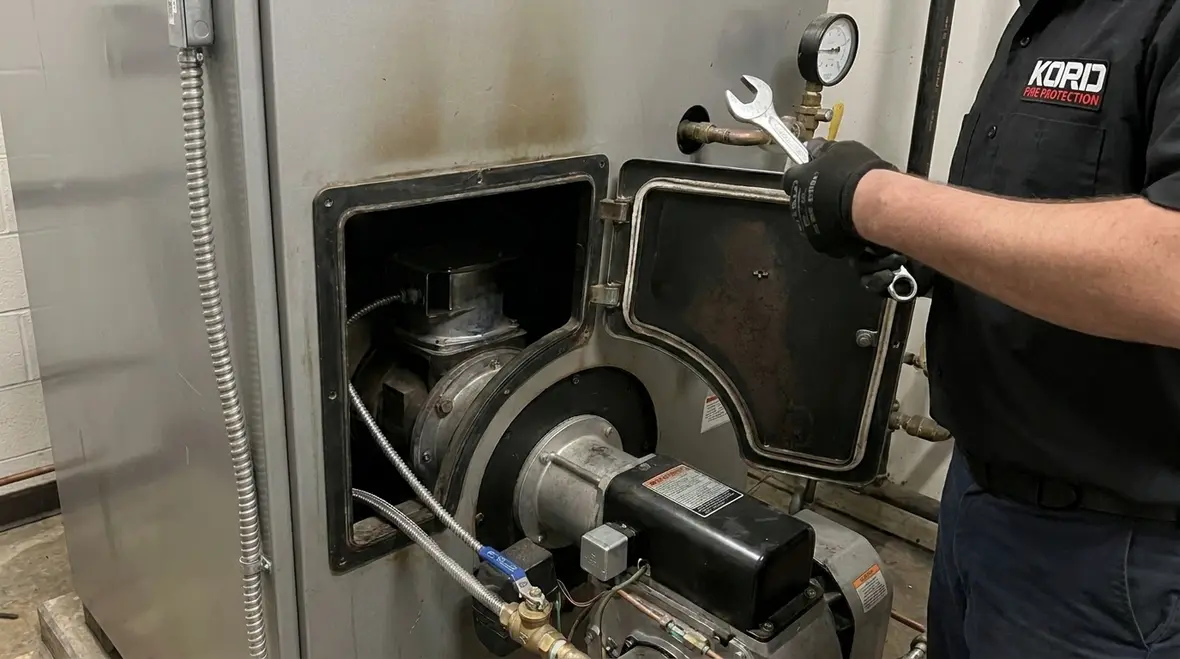
NFPA 31 Section 13.5: Construction Requirements for Oil-Gas Appliances
Quick Answer: NFPA 31 Section 13.5 sets construction and material expectations for oil and gas appliances used in commercial facilities. The rule focuses on safe burner operation, robust heat management, protection against leakage, and durability that supports reliable inspection, testing, and maintenance over the appliance life.
Why NFPA 31 oil gas appliance construction requirements matter in the real world
Commercial, industrial, and retail facilities often treat “appliance compliance” as an installation concern only. NFPA 31 takes a broader view. NFPA 31 oil gas appliance construction requirements address how the appliance is built so it can safely withstand normal operation, cycling, venting demands, and maintenance activities without creating unsafe conditions such as overheating, leakage, or improper combustion.
In practice, auditors and insurers commonly observe recurring gaps: appliance casings that degrade under heat, burner components that do not tolerate the site’s thermal profile, and control or fuel train interfaces that are not compatible with required inspection access. A construction compliant appliance reduces these failure points and supports a consistent inspection and service workflow.
If your facility team is also reviewing broader fire protection services in Southern California, this construction focused requirement fits naturally into a bigger inspection, testing, and maintenance strategy.
What Section 13.5 typically controls: appliance construction, materials, and safeguards
Section 13.5 focuses on ensuring appliances are constructed so the burner and fuel handling systems can operate safely under intended conditions. For compliance planning, treat the section as a “design intent” checklist that shows whether the appliance can be safely installed, inspected, and maintained without compromising fundamental safety features.
1) Burner and combustion system durability
Oil gas appliances rely on stable combustion. Construction details that affect combustion stability usually include burner retention, refractory or insulation integrity (when applicable), and component resistance to thermal stress. Commercial service teams see failures when heat cycles loosen fasteners, warp housings, or allow misalignment that changes airflow patterns and combustion quality.
During inspections, service personnel typically verify that burner assemblies can be removed, cleaned, and reinstalled without damaging alignment points and that protective covers or shields remain secure after maintenance.
2) Heat transfer management and protective separation
Appliance casings, internal shields, and insulation design aim to prevent unintended ignition of nearby combustibles and to manage surface temperatures. Construction compliance matters most where equipment rooms share boundaries with storage, electrical panels, or occupied areas.
A common compliance challenge involves appliances installed in tight plant rooms. Even when clearances are correct at install time, damaged insulation or missing heat shields can elevate surface temperatures over time, creating inspection findings that are hard to correct without replacing construction elements.
3) Fuel train integrity and leakage prevention
Construction requirements also support safe fuel handling. Fuel valves, fittings, and seals must tolerate vibration, thermal cycling, and maintenance access. Leakage risks often surface at interfaces that service techs must open frequently, such as unions, gaskets, or access ports.
For ongoing compliance, facilities should confirm that the appliance’s design allows proper pressure testing and safe purging procedures during service. If the construction design limits test access, it complicates verification and increases the chance that unsafe conditions remain undetected.
4) Controls, wiring pathways, and safe access for inspection
NFPA 31’s construction expectations connect directly to inspection and maintenance. The appliance design should support safe access to controls and burner components without creating bypasses or unsafe workarounds.
In commercial facilities, the most frequent construction driven issues include damaged wiring routes from repeated panel access, loose strain reliefs near high vibration points, and control compartment obstructions that prevent full visual inspections of flame sensing or ignition components.
How construction requirements influence installation, commissioning, and acceptance testing
Construction compliance is only useful if the facility can verify it operationally. NFPA 31-driven workflows typically require that the appliance, burner, venting compatibility, and fuel train interfaces support functional testing and continued inspection.
Commissioning checks that expose construction weaknesses
- Combustion performance verification that indicates stable airflow and fuel delivery, suggesting burner alignment and stable ignition behavior.
- Verification of safe ignition and shutdown behavior, which can reveal control compartment design issues or flame sensing positioning constraints.
- Fuel train functional tests that confirm valve integrity and safe purging pathways.
- Inspection access checks to ensure service personnel can reach and verify critical components without improvisation.
Acceptance documentation that supports compliance audits
Commercial facilities should maintain appliance documentation that links model specific construction features to safe operation and serviceability. This usually includes appliance listing information, manufacturer installation and service manuals, and records of commissioning tests.
When documentation is missing, inspectors often rely on observable evidence: the presence of required protective components, intact insulation systems, and the ability to conduct required inspections and tests during routine maintenance.
Common failure points inspectors and service teams see with appliances that do not meet construction intent
Even when a unit is installed correctly, noncompliant or degraded construction features can undermine safe operation. The following issues repeatedly appear during commercial maintenance cycles.
1) Casing and shielding degradation
Heat exposure, mechanical impacts during service, and poor material selection can lead to missing covers, cracked shields, or compromised insulation. These conditions can increase surface temperatures and prevent safe inspection of burner area components.
2) Misalignment created during service
If the appliance design does not guide correct burner positioning or if alignment features wear out, repeated cleaning can shift the burner. Misalignment changes combustion and can trigger intermittent safety shutdowns that are difficult to reproduce.
3) Seal and connection fatigue on the fuel side
Gaskets, unions, and fittings can fatigue when construction materials or tolerances do not match the service environment. In commercial settings, frequent start stop cycling accelerates fatigue, increasing leakage risk and creating recurring compliance findings.
4) Limited access to inspection points
Some appliance designs make it hard to fully view flame sensing, ignition components, or flame failure pathways. When access is restricted, inspections become surface checks rather than verification checks, increasing the chance that deficiencies persist.
For a practical, installation focused overview that supports maintenance planning and service coordination, refer to this resource: NFPA 31 a practical guide to oil burning equipment installation.
Operational compliance strategy for commercial facilities
NFPA 31 Section 13.5 connects appliance construction to the facility’s ability to sustain safe operation. A strong compliance strategy treats construction, maintenance, and inspection as a single system.
Set a maintenance approach that matches the appliance design
- Use manufacturer service intervals and align them with your site’s duty cycle and fuel characteristics.
- Document component condition changes between service cycles, especially insulation integrity, casing fit, and fuel train seal condition.
- Confirm that replacement parts are like for like where construction intent depends on material selection and dimensional tolerances.
Build inspection workflows around serviceability
Facilities should schedule routine inspections so service personnel can access all critical areas safely. When appliances are located in tight rooms, a pre service walkdown reduces the risk of incorrect reassembly and avoids bypassing guards or shielding for convenience.
Use a partner that performs code aligned testing and reporting
Kord Fire Protection supports commercial compliance through inspection, testing, and maintenance planning that reflects both code intent and operational reality. The result is fewer repeat findings, clearer documentation trails for audits, and a practical approach to correcting deficiencies before they escalate into operational risk.
Frequently Asked Questions
Next step: verify your appliance construction compliance now
Facilities should not wait for an audit to confirm safe appliance construction features and serviceability. Schedule a code aligned inspection and maintenance review to validate construction driven risks like shielding integrity, fuel train leakage potential, and inspection access for controls and burner components. Kord Fire Protection helps commercial owners close gaps early, document compliance clearly, and keep equipment operating safely between service cycles.

Join Our Newsletter!
Get the latest fire safety tips delivered straight to your inbox From our Newsletter.



