
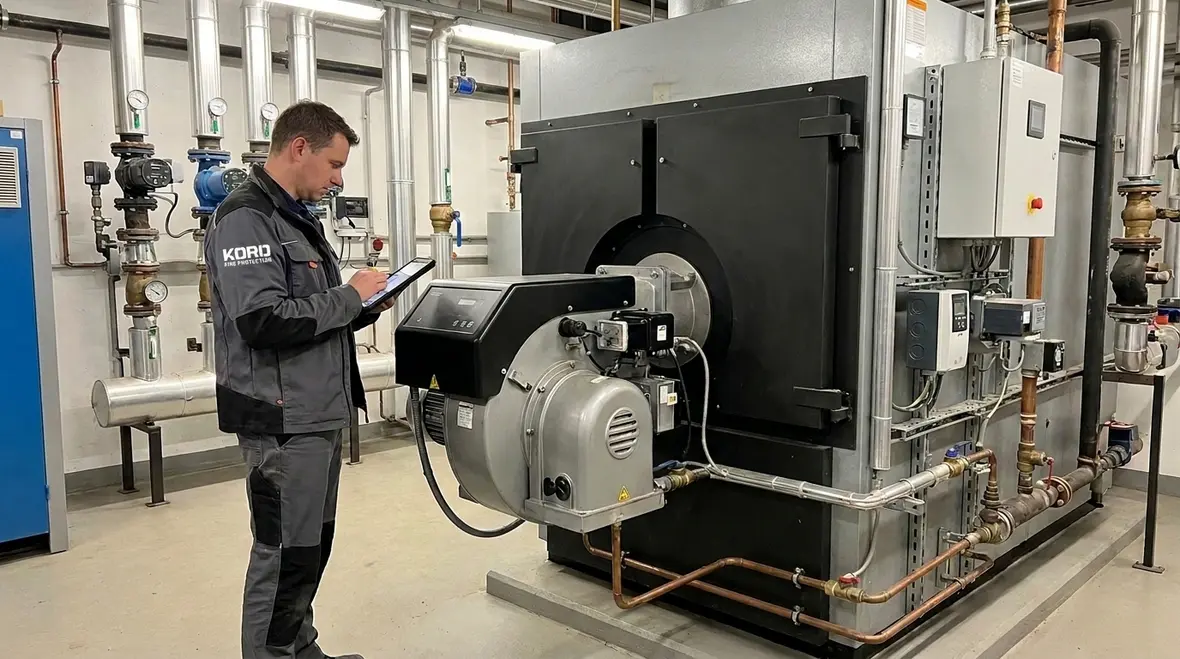
NFPA 31 Section 10.1: Scope of the Oil Burner Installation Chapter
Quick Answer: NFPA 31 Section 10.1 defines what the Oil Burner Installation chapter covers, focusing on how oil burners are installed within the system and how the installation supports safe operation. It sets the boundaries for construction, arrangement, and compliance expectations before later chapters address detailed components.
If you are tightening up broader facility compliance at the same time, commercial fire protection services in Southern California can help coordinate inspections, repairs, documentation, and scheduling across related life safety systems.
What does NFPA 31 Section 10.1 control, and why it matters
Commercial facilities do not fail from a single defect. They fail from a chain: design intent is not translated into installation reality, the burner system is commissioned without matching the physical conditions, and maintenance later drifts from the original assumptions. NFPA 31 Section 10.1 is the front door to the Oil Burner Installation chapter. It clarifies the scope so inspectors, installers, and facility technicians can determine which rules apply to the burner installation work and which rules belong in other parts of the standard.
In practical terms, NFPA 31 chapter 10 oil burner installation scope establishes the installation boundaries for burner-related work. That scope drives how a facility documents compliance, how contractors sequence commissioning, and how in house maintenance teams manage change control for burners, piping, and controls.
How the Section 10.1 scope is applied on real job sites
NFPA 31 uses a chapter based structure. Section 10.1 works as a scope gate that reduces ambiguity. It tells stakeholders what the Oil Burner Installation chapter is intended to cover, without forcing unrelated requirements to be applied in the wrong places.
1) Installation versus broader system elements
Facility managers often ask whether Section 10 applies to every aspect of an oil heating system. The scope concept matters because oil burner safety depends on multiple subsystems, including fuel oil piping, tanks or supply arrangements, controls, combustion air, and venting. Section 10.1 frames which parts of the overall system are handled within the Oil Burner Installation chapter. That framing helps teams avoid skipping requirements that sit in other chapters.
2) New installations versus modifications
Commercial buildings rarely stay static. Burns often get replaced, controls get upgraded, and piping layouts get altered when tenants expand, remodel, or add production equipment. Section 10.1 scope helps define when the Oil Burner Installation chapter is the correct compliance reference and when other chapters govern the change. Kord Fire Protection typically sees the highest risk during “like for like” replacement projects where the burner is swapped but installation details, clearances, and functional interlocks are not verified to the current configuration.
Key compliance outcomes tied to the burner installation scope
Even when teams focus on equipment procurement, NFPA compliance hinges on installation quality and operational functionality. The scope in Section 10.1 leads to predictable outcomes that inspectors look for during plan review and field evaluation.
Safe burner mounting, placement, and access
Burners need stable mounting and correct positioning for combustion performance and servicing. If access is constrained, technicians may delay maintenance actions such as nozzle and filter service, inspection of ignition components, and cleaning of combustion surfaces. Over time, that drift increases smoke, deposits, and unsafe operating conditions. A scope focused installation approach ensures the burner location supports both safe operation and practical inspection routines.
Functional integration with controls and safety shutoff
The burner installation scope affects how the burner interfaces with the control system. Installation details influence sensor alignment, wiring routing, and how safety shutdown sequence components respond to abnormal conditions. The most common field failures involve wiring that is routed for convenience, mechanical connections that are not secured correctly, and setpoints that remain unchanged after replacement equipment is installed. Those issues often surface during commissioning or later during seasonal operations.
Combustion air and venting interfaces
While venting and air requirements often live in other sections, installation choices directly influence safe venting and draft behavior. Poor alignment, incorrect clearances, or incorrect linkage between burner and appliance can cause combustion instability. That instability can lead to nuisance lockouts, incomplete combustion, soot buildup, and increased inspection findings. Facility teams should treat the burner installation scope as a starting point that ensures interfaces support safe combustion.
Common installation gaps that trigger inspection and maintenance problems
Commercial, industrial, and retail facilities typically share the same pain points: tight mechanical rooms, tenant driven modifications, and uneven documentation. These gaps often emerge around the boundaries of the Oil Burner Installation chapter scope.
1) Incomplete commissioning relative to installed conditions
Commissioning often happens once, then gets forgotten until the next service call. When commissioning does not verify combustion behavior under actual operating conditions, the facility inherits long term risk. Examples include incorrect fuel pressure adjustment, mismatch between nozzle size and firing rate, or failure to confirm proper airflow and draft. The scope concept in Section 10.1 helps ensure the burner installation work is validated as installed, not merely installed as described.
2) Access limitations that prevent proper service
Service access is not aesthetic. It directly affects the ability to inspect flame, service ignition components, change nozzles, clean internal components, and confirm safety function operation. When access is blocked by piping, ductwork, or storage, maintenance becomes inconsistent and combustion performance declines.
3) Configuration drift from replacement or retrofit work
Operational drift is a major commercial issue. Teams replace burners or controls but do not fully reestablish baseline installation settings. That includes mechanical positioning, electrical terminations, and interlock verification. Over time, combustion changes, lockouts become more frequent, and soot accumulation increases.
For a practical, equipment focused overview that aligns installation thinking with day to day compliance work, facility teams can reference the guide at NFPA 31 oil burning equipment installation best practices.
Inspection readiness checklist aligned to the burner installation scope
To support compliance and reduce operational downtime, commercial sites benefit from a repeatable readiness process. The following checklist is designed to match the intent behind NFPA 31 chapter 10 oil burner installation scope: confirm the burner installation supports safe operation and continued maintenance, not just initial startup.
- Documentation: Verify installation diagrams, burner model and rating data, and commissioning records match the installed configuration.
- Installation integrity: Confirm burner mounting and alignment, secure connections, and correct component placement for servicing and inspection.
- Safety control verification: Confirm safety shutdown operation and interlocks function as installed, including response to abnormal conditions.
- Combustion performance evidence: Maintain records showing safe combustion adjustments and stable operation during seasonal cycling.
- Vent and air interface checks: Verify interfaces behave as designed and remain consistent after any retrofit work.
- Maintenance access: Ensure clearances and access routes support routine service activities without bypassing safety steps.
Kord Fire Protection supports compliance readiness for commercial properties by conducting targeted inspections, documenting deficiencies, and coordinating corrective actions with operational scheduling. This reduces the likelihood that “minor” burner installation deviations become recurring callouts and elevated risk during peak demand periods.
Where Kord Fire Protection fits in the compliance lifecycle
NFPA 31 compliance works best when it is treated as a lifecycle, not a one time project. Section 10.1 scope sets what the Oil Burner Installation chapter expects, but real risk appears when installation work is followed by insufficient verification and maintenance.
Kord Fire Protection helps commercial facility owners and contractors by:
- Translating scope into work packages: Align burner installation tasks with the correct compliance boundaries so installers do not miss scope critical items.
- Verifying installed conditions: Focus on the reality of how the burner and interfaces operate in the mechanical space, including commissioning evidence.
- Maintaining traceability: Preserve records that demonstrate continuity of installation configuration across service cycles.
- Reducing downtime: Plan inspection and maintenance interventions to minimize disruption in retail operations and industrial production windows.
For additional technical context, teams may also review related guidance published by the Kord Fire group at kordfire.com and local resources through kordfire.com.au.
Frequently Asked Questions
Next step: get your oil burner installation scope validated
Facility teams can reduce inspection findings by confirming that the installed burner configuration matches the NFPA 31 chapter 10 oil burner installation scope intent. Kord Fire Protection can support documentation review, targeted inspections, and corrective actions coordinated around operations. Contact Kord Fire Protection to plan a compliance readiness visit and establish an inspection and maintenance cycle that stays aligned year after year.

Join Our Newsletter!
Get the latest fire safety tips delivered straight to your inbox From our Newsletter.



