
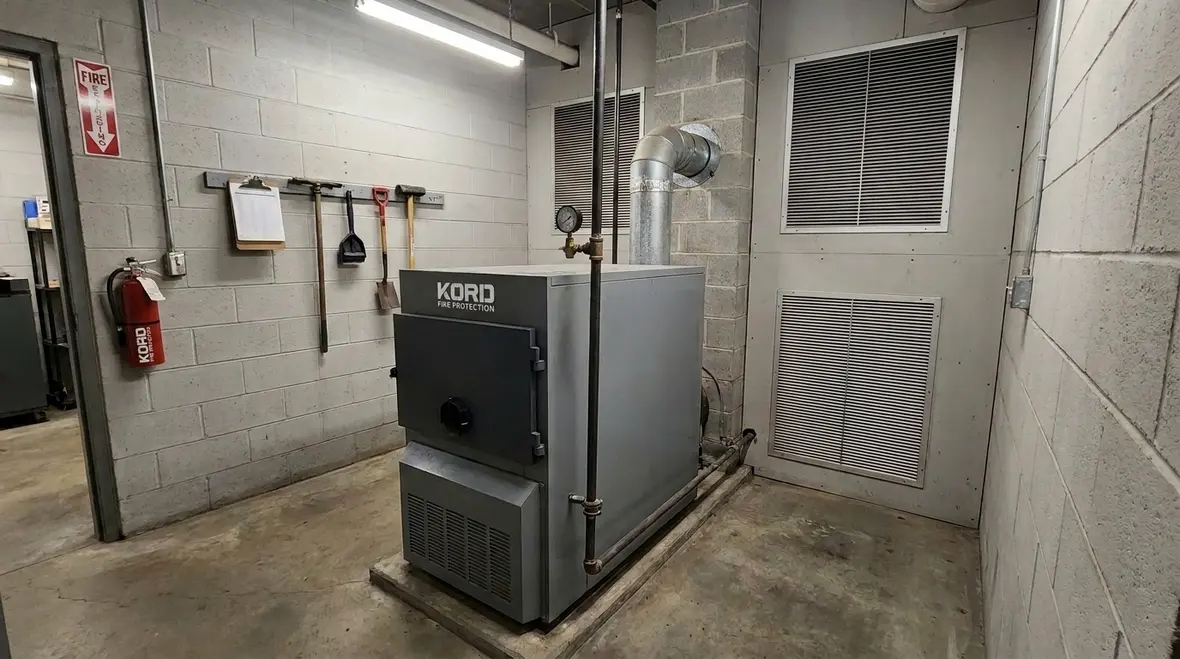
NFPA 31 Section 12.3: Where Used Oil Appliances Can Be Used
Quick Answer: NFPA 31 Section 12.3 limits where used oil appliances may be installed and operated based on fire risk, ventilation, ignition control, and building use. The goal is to prevent accumulation, overheating, and improper fuel handling in unsuitable occupancies. These NFPA 31 used oil appliance use restrictions must be verified during design and commissioning.
If your project also touches broader installation planning, Kord Fire Protection’s practical guide to oil-burning equipment installation is a helpful companion resource for mapping code intent to real-world field conditions.
Why Section 12.3 Matters in Real Facilities
In commercial and industrial environments, “where” a used oil appliance sits often matters as much as “what” type of appliance it is. NFPA 31 Section 12.3 addresses occupancy context, placement relative to hazards, and how the appliance integrates into the facility’s fire and life safety strategy.
Facilities commonly face compliance pressure from several directions at once: existing mechanical rooms that were never designed for used oil service, maintenance practices that vary across shifts, and contractors that install equipment without fully validating clearances, ventilation performance, or fuel handling controls. Kord Fire Protection typically encounters these gaps during inspections, upgrades, and tenant fit outs.
What Section 12.3 Typically Controls: The Practical Interpretation
Section 12.3 functions as a location and use constraint. In practice, it focuses on whether the surrounding space and operational conditions can safely support used oil combustion equipment. The compliance challenge is that the “used oil appliance use restrictions” are not only about the appliance’s label and listing. They also include how the room behaves under abnormal events such as burner malfunction, flame failure, ignition issues, and oil supply irregularities.
1) Appliance room suitability and hazard exposure
Used oil appliances require a controlled installation environment. Compliance typically depends on how the mechanical space is classified by hazards, stored combustibles, and ignition risk. Kord Fire Protection regularly sees issues where a boiler or furnace room overlaps with areas that also host chemicals, solvent containers, or storage racks not accounted for in the original design.
When the space includes combustible loading or ignition sources that are not separated and managed, the risk profile changes. That is where Section 12.3 becomes operationally significant: it limits placement so hazards do not elevate the consequences of burner upset or oil handling failure.
2) Ventilation and exhaust integrity
Used oil combustion depends on stable air supply and properly managed exhaust. Inadequate ventilation can cause incomplete combustion, elevated byproducts, and nuisance conditions that lead to service interruptions. More critically, abnormal combustion conditions can increase the chance of overheating and improper smoke or flue behavior.
Commercial facility compliance requires that ventilation assumptions remain true over time. Dampers can stick, fan belts can degrade, and ducting can collect residues. A strong maintenance program includes periodic verification of airflow performance and inspection of exhaust pathways, not just visual checks.
3) Ignition control, flame safety, and shutoff behavior
Most used oil appliances rely on a burner control system that detects flame presence and initiates a safe shutdown upon failure. Section 12.3 installations must support proper operation of these safety functions by ensuring the appliance is configured correctly and that the environment does not interfere with combustion air, ignition, or exhaust management.
A common failure pattern involves contamination and varnish buildup from poor fuel quality or inconsistent oil filtration. That contamination can delay ignition, reduce flame stability, and drive repeated shutdown cycling. Repeated cycling can mask the root cause and can also stress components that depend on controlled operating conditions.
Common Installation Locations That Trigger Compliance Review
Even when an appliance is listed and approved, facilities often fail compliance by placing it in a space that does not align with the safety intent of Section 12.3. Typical review triggers include:
- Mixed use mechanical rooms that also serve as a storage space or include unrelated ignition hazards.
- Tenant fit outs where the appliance location changes after approval, but ventilation and clearances remain unchanged.
- Adjoining areas with combustible loading where fire separation and access control do not meet the facility’s risk assessment.
- Inadequate access for service resulting in poor maintenance practices and incomplete inspections.
Kord Fire Protection supports clients with compliance scoping that connects Section 12.3 intent to how the equipment is actually operated and maintained. This includes documenting room conditions, verifying separation where required, and aligning maintenance access with the appliance manufacturer’s requirements.
Operational Controls That Influence Whether the Location Remains Compliant
Section 12.3 is not a one time paperwork requirement. The location that was safe at commissioning can become unsafe after changes in operations, maintenance, or fuel handling. Used oil appliance compliance depends on ongoing control of the variables that affect combustion and safe shutdown behavior.
Fuel handling and supply stability
Used oil quality variability can cause burner instability and residue formation. When fuel storage tanks, piping, or pumps accumulate contamination, the resulting spray or atomization issues increase the probability of flame failure events. Those events stress the safety controls and can create conditions that increase smoke production and service disruption.
Commercial maintenance teams must implement a consistent filter and inspection approach. Where filtration is used, it must match the equipment’s design. Where fuel heating is used, controls must remain calibrated to prevent over-temperature conditions.
Routine cleaning and inspection triggers
Residues in combustion chambers, burner components, and exhaust pathways can shift heat transfer performance and compromise stable combustion. This can lead to overheating, soot accumulation, and flue restriction. The “where used oil appliances can be used” question becomes a “can the installation maintain safe operating conditions” question.
As a practical trade expectation, cleaning frequency should be based on measured operating conditions and observed performance trends, not only on a calendar. Kord Fire Protection typically recommends maintenance intervals tied to inspection outcomes, including burner spray pattern checks and flue condition verification.
Documentation and inspection readiness
Many failures during audits stem from incomplete records. Inspectors and AHJs look for evidence that the appliance location supports safe use throughout service life. That evidence includes inspection reports, service logs, filter and oil handling documentation, and records of combustion and safety control verification.
When commercial clients use Kord Fire Protection as a continuing compliance partner, the documentation becomes a manageable system rather than an end of year scramble.
How to Align Section 12.3 With Installation Planning and Permits
To reduce rework and avoid failed compliance steps, facility teams should treat Section 12.3 as an early design constraint. That means validating the appliance’s intended placement against hazard exposure, ventilation and exhaust arrangements, and maintenance access requirements before installation.
For teams planning oil burning equipment integration, Kord Fire Protection also recommends using practical guidance that connects the installation details to safe operating requirements. See this internal resource for a structured approach: NFPA 31 a practical guide to oil burning equipment installation.
Compliance workflow that works in commercial projects
- Verify appliance listing and configuration and confirm the intended room matches the manufacturer and code intent.
- Confirm ventilation and exhaust performance through commissioning checks that validate airflow and safe flue operation.
- Validate fire risk context including separation, storage, ignition sources, and access routes.
- Set maintenance controls for cleaning, fuel filtration, and safety control verification.
- Maintain inspection and service records to support ongoing compliance reviews.
Frequently Asked Questions
Call to Action
If your facility uses, plans to install, or is upgrading a used oil appliance, Kord Fire Protection can help you confirm Section 12.3 location suitability, tighten operational controls, and build inspection ready documentation. Contact Kord Fire Protection now to schedule a compliance review that targets the real-world failure points behind NFPA 31 used oil appliance use restrictions and keeps your systems audit ready.

Join Our Newsletter!
Get the latest fire safety tips delivered straight to your inbox From our Newsletter.



