
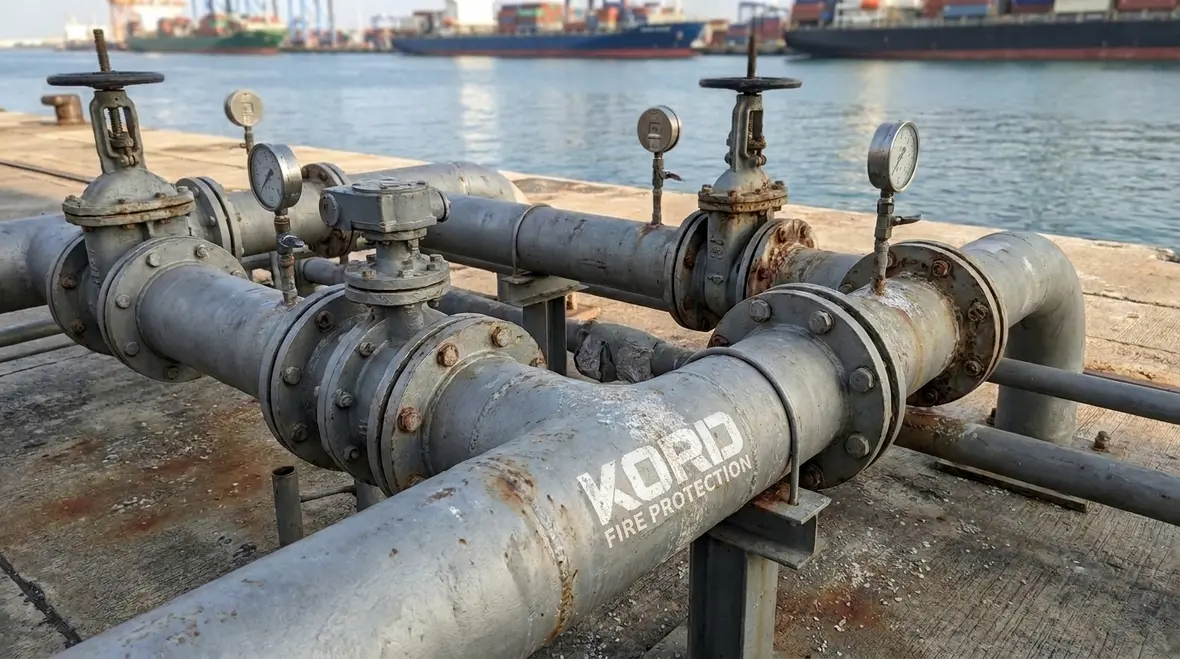
NFPA 30 Section 27.11: Marine Piping System Requirements
Quick Answer: NFPA 30 Section 27.11 marine piping requirements govern how flammable and combustible liquid piping systems are designed, installed, supported, protected, and maintained. The standard targets leak prevention, corrosion control, impact resistance, and safe connection methods through enforceable inspection and maintenance practices.
For facilities coordinating broader system planning, fire suppression system integration for life safety is a useful companion read because marine piping rarely lives alone. It shares space, support loads, and maintenance attention with the rest of the facility’s fire protection strategy.
What NFPA 30 Section 27.11 marine piping requirements actually require
NFPA 30 Section 27.11 marine piping requirements focus on the integrity of piping systems that handle flammable and combustible liquids in marine service. For commercial facilities that tie into marine loading, storage, or transfer operations, compliance becomes a systems issue, not a single component issue. It affects material selection, routing, bonding and grounding, supports and hangers, joint integrity, protection against mechanical damage, and verification through inspection and maintenance.
In practice, the biggest compliance risk comes from operational changes over time: rerouted lines, added attachments, vibration wear, patched coatings, and “temporary” modifications that remain in service. A strong inspection regime and maintenance plan help facilities detect deterioration early, keep documentation current, and prevent small defects from becoming leaks.
System design and installation controls that reduce leak risk
NFPA 30 Section 27.11 marine piping requirements expect piping systems to be installed with an emphasis on predictable performance during normal operations and upset conditions. The standard’s intent aligns with core risk controls used in commercial marine-adjacent environments: physical integrity, controlled connections, and protection from environmental and mechanical stress.
Routing, support, and vibration management
Piping fails in predictable ways when it is improperly supported or exposed to vibration. Supports and hangers must hold alignment and limit excessive movement that can stress joints, flanges, and threaded connections. Facilities frequently encounter issues when:
- Supports are added or removed during retrofits without recalculating load paths
- Lines are rerouted around new obstacles, increasing span length
- Vibration sources change due to equipment upgrades
- Thermal expansion is not accounted for, leading to chronic misalignment
A compliant program checks support condition, clamp tightness, base corrosion, and signs of rubbing or abnormal contact points. Kord Fire Protection typically recommends pairing visual inspection with targeted condition assessments during planned shutdown windows, because access constraints often delay corrective work.
Materials, corrosion protection, and coating integrity
Marine environments accelerate corrosion, and corrosion undermines both pressure integrity and fire safety. Coatings, linings, and corrosion-resistant materials require protection during installation and maintenance. Common failure points include:
- Damaged coating at clamps, supports, and connection points
- Galvanic corrosion where dissimilar metals connect without intended mitigation
- Localized pitting that is not visible from a single viewpoint
- Coating repairs that do not restore original thickness, adhesion, or coverage
Commercial facilities often see repeat defects at transition areas: where insulation ends, where water intrusion occurs, and where lines pass through bulkheads. Maintenance should include inspection of transition zones and documented repair methods that restore the original corrosion strategy.
Connections, joints, and pressure boundaries: where problems start
Connections and joints represent the highest probability leak points. NFPA 30 Section 27.11 marine piping requirements emphasize that joints must maintain integrity over time and be suitable for the service conditions. That includes managing installation quality and subsequent impacts from vibration, thermal cycling, and operational pressure variations.
Flanged, threaded, and gasketed assemblies
In marine piping, gasketed and bolted joints can loosen, while threaded joints can degrade if subjected to movement or improper assembly practices. Typical indicators of developing noncompliance include:
- Weeping at flange faces or around bolt circles
- Salt residue and corrosion products forming around gasket lines
- Uneven bolt loading or missing fasteners
- Insulation compression and hidden gap formation that traps moisture
Facilities can reduce recurring failures by standardizing torque practices, requiring controlled assembly procedures, and verifying joint condition during scheduled inspections. Kord Fire Protection supports commercial compliance programs by helping keep inspection records aligned with the operational reality of marine piping systems.
Valves, fittings, and appurtenances
Even when pipe itself remains sound, fittings and appurtenances can become the weak link. Valves, strainers, regulators, and meters must remain in safe condition with appropriate sealing performance and mechanical protection. Inspect for corrosion, seal degradation, damaged protective covers, and evidence of leakage around stems and fittings.
Protection from mechanical damage and environmental exposure
Marine operations expose piping to knocks, abrasion, and water intrusion. NFPA 30 Section 27.11 marine piping requirements support the use of practical protection methods so piping does not become physically compromised. This includes protecting vulnerable runs in work zones and ensuring that barriers and guards remain installed and effective.
Physical impact and abrasion points
Inspection teams often find failure patterns in:
- Lower sections of piping exposed to deck wash and handling traffic
- Areas adjacent to ladders, hatches, and transfer equipment
- Places where hoses and equipment routinely contact piping
- Zones where paint and coating have been scuffed during operations
Facilities should treat damage events as inspection triggers. A protective guard that bends or shifts can mask ongoing impacts and accelerate wear on pipe walls, supports, and insulation.
Water and drainage management
Water intrusion can drive hidden corrosion behind insulation and in crevices around supports. A compliant approach includes ensuring that drainage pathways are not blocked, that insulation coverings do not trap water, and that penetrations remain sealed where required for the environment.
Inspection, testing, documentation, and maintenance practices
Compliance depends on repeatable verification. NFPA 30 Section 27.11 marine piping requirements function best when facilities implement a maintenance system that catches defects before they leak. This includes inspection frequency planning, competence requirements, and accurate documentation for commercial auditors and internal safety governance.
What to inspect during routine checks
Routine inspection should focus on leak indicators and deterioration mechanisms, including:
- Visible wetness, staining, or residue that suggests weeping
- Corrosion at supports, clamps, weld joints, and connection points
- Integrity of insulation and protective coverings, including moisture intrusion
- Condition of fasteners and evidence of movement at hangers
- Guard condition and clearance from impact sources
Where feasible, facilities should add targeted measurements that reflect the service environment, such as thickness assessments when coating and insulation can conceal loss of material.
Testing and verification workflows
Testing practices should align with the piping system’s operational characteristics and the facility’s risk profile. A common commercial approach includes pressure testing where appropriate, verification of valve sealing performance, and documentation of test results tied to asset IDs and drawings. Kord Fire Protection can help commercial teams integrate these verification steps into maintenance schedules so that compliance does not depend on last minute mobilization.
Maintenance that prevents “repair rebound”
Repairs can fail if they do not restore the original protection strategy. For example, patching coatings without surface prep or using incompatible materials can cause rapid re corrosion. Maintenance teams should:
- Use repair methods compatible with the original corrosion control system
- Verify installation quality for joints, gaskets, and fasteners
- Re inspect repaired sections promptly to confirm stability
- Update drawings and asset records after modifications
To connect these piping integrity principles with broader flammable liquid oversight, facilities often benefit from reviewing how NFPA 30 regulates flammable liquids in everyday operations: how NFPA 30 regulates flammable liquids.
How commercial facilities operationalize compliance with Kord Fire Protection
Marine piping systems rarely exist in isolation. In commercial and industrial settings, they intersect with transfer skids, loading racks, storage tanks, venting systems, and maintenance workflows. That intersection creates practical compliance challenges: access restrictions, changing operating conditions, and incomplete handoff between operations, maintenance, and safety teams.
Kord Fire Protection partners with commercial facilities to support ongoing compliance, testing, and maintenance planning. The focus remains on keeping inspection outcomes actionable, documentation complete, and corrective actions closed in a controlled manner, so the facility maintains the integrity that NFPA 30 Section 27.11 marine piping requirements are designed to protect.
Frequently Asked Questions
Next step
If your facility relies on marine or marine-adjacent flammable liquid piping, schedule an inspection and compliance review with Kord Fire Protection. A documented program helps confirm piping integrity, close corrective actions, and keep maintenance aligned with NFPA 30 Section 27.11 marine piping requirements. Contact Kord Fire Protection to discuss your system layout, inspection constraints, and practical maintenance cadence.

Join Our Newsletter!
Get the latest fire safety tips delivered straight to your inbox From our Newsletter.



