
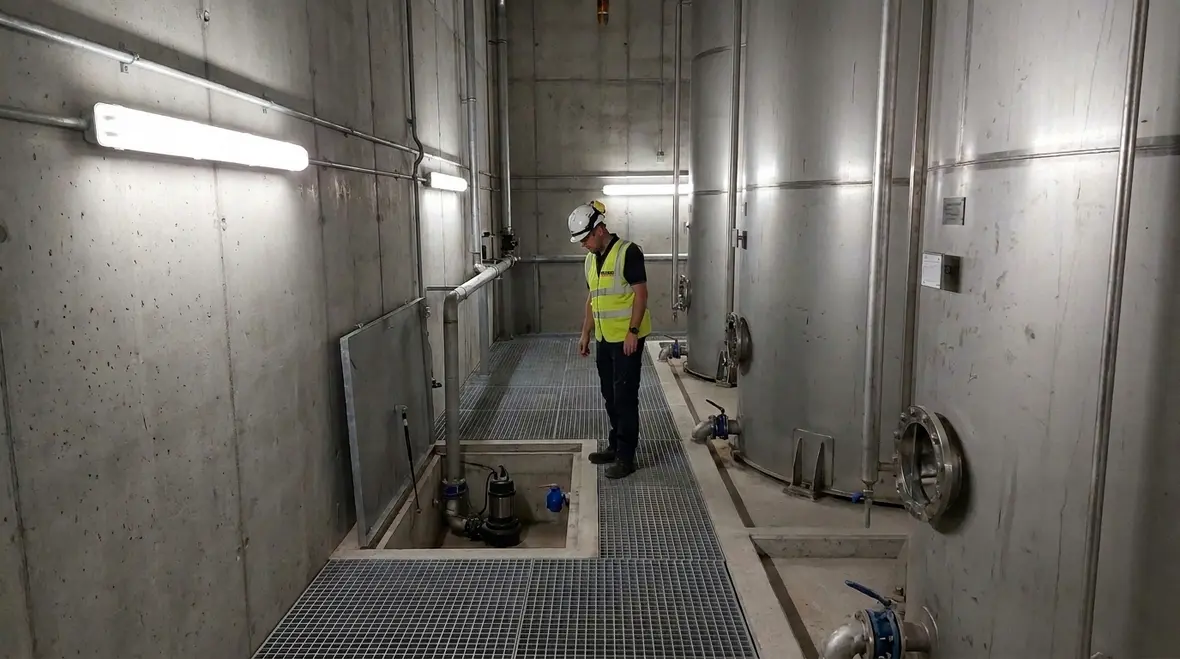
NFPA 30 Section 25.9: Spill Control in Storage Tank Vaults
Quick Answer
NFPA 30 Section 25.9 tank vault spill control establishes how facilities contain accidental releases from tanks housed in vaults. The section focuses on design and operational safeguards that keep spilled flammable or combustible liquids within protected areas, supporting both fire risk control and environmental protection requirements.
Why NFPA 30 Section 25.9 tank vault spill control matters in real operations
Storage tank vaults concentrate risk. A single transfer line failure, gasket leak, overfill, or corrosion breakthrough can release product into a confined below grade or semi enclosed space. NFPA 30 Section 25.9 tank vault spill control addresses containment so spills do not spread to adjacent equipment, travel to drains that discharge to hazardous zones, or increase exposure to ignition sources.
Commercial and industrial operators typically discover compliance gaps during routine inspections. Common drivers include incomplete construction documentation, nonconforming drainage arrangements, missing or obstructed sumps, and drainage valves left in unsafe positions. Retail sites with frequent deliveries add another pressure point: recurring transfer operations increase the likelihood of line damage or human process errors.
Sites that already rely on commercial fire suppression system services often benefit from reviewing vault spill controls at the same time, especially where flammable liquid hazards and coordinated inspection programs overlap.
What the standard expects: containment performance and controlled drainage
In storage tank vaults, NFPA 30 Section 25.9 tank vault spill control centers on two practical outcomes: keep spilled liquid within the vault boundaries and prevent migration pathways that defeat containment. Facilities must ensure the vault geometry, curbing, and containment structures can retain the expected spill quantity without exceeding designed limits.
Containment design that supports both fire and spill mitigation
Containment features typically include raised edges, sealed penetrations, and appropriate lining or surfaces to reduce seepage into surrounding soil. The goal is not only to “hold liquid,” but to prevent it from finding alternative routes through cracks, poorly sealed pipe sleeves, and open or improperly installed seals around instrumentation and electrical conduits.
Drainage and runoff controls that do not create new hazards
Vault drainage must be configured to manage normal precipitation and cleaning water without allowing product migration. In practice, the safest compliance approach aligns drainage arrangements with controlled discharge or collection. Facilities commonly use sump systems, shutoff mechanisms, or segregated collection so that any spill is captured and evaluated rather than dispersed.
Key operational requirement: drainage controls must be dependable during the conditions that matter most, including transfer activity, heavy rain, and abnormal equipment operation.
Core components under the microscope during inspections
Fire and safety compliance teams often assess vault spill control by verifying system components can perform as designed under both everyday and abnormal scenarios. NFPA 30 Section 25.9 tank vault spill control becomes practical only when each component is maintained and used correctly.
Vault sumps, collectors, and inspection access
Where sumps or collectors exist, they must remain accessible for inspection and cleaning. Blocked sumps lead to overflow within the vault, which can create hazardous accumulation and complicate emergency response. Access panels, ladders, and safe entry arrangements also affect how quickly technicians can confirm proper operation.
Valves, dampers, and shutoff devices for controlled discharge
Shutoff arrangements must be capable of stopping unwanted flow paths when a spill occurs. A frequent failure point involves valves that are operationally “functional” but not reliable in real conditions due to binding, corrosion, missing signage, or incorrect positioning after maintenance. Another recurring issue is loss of control due to bypass configurations added informally to manage routine stormwater.
Inspection teams often check for tampering indicators, correct actuator function, and evidence that the device has been cycled and verified during recent maintenance windows.
Seals and penetrations that prevent seepage and hidden migration
Penetrations through vault walls create risk even when containment seems intact at the surface. Gasketed pipe entries, cable sleeves, and instrumentation pass through points must maintain integrity throughout thermal cycling, vibration, and chemical exposure. Seepage channels can carry product beyond the vault, which undermines the containment intent of NFPA 30 Section 25.9 tank vault spill control.
Under vault housekeeping and product residue management
Residue accumulation can reduce effective capacity of sumps and change drainage behavior. It can also mask early leak indicators. Commercial facilities typically need a disciplined housekeeping plan that aligns with tank gauging, line inspection schedules, and spill response readiness.
Common compliance challenges that lead to findings
Many findings result from mismatches between design assumptions and field realities. The following challenges frequently appear in commercial, industrial, and retail environments where transfer operations and deliveries occur regularly.
Stormwater drainage operating incorrectly during transfer weeks
Facilities often treat stormwater systems as separate from spill controls. Over time, staff may leave drainage valves in positions that seem convenient for rainfall, even if the arrangement conflicts with spill containment intent. This practice can allow product migration during abnormal releases.
Blocked or partially obstructed collection points
Debris, sediment, construction residue, or routine maintenance waste can obstruct sump inlets. As a result, the system cannot capture the first and most critical portion of a spill, which can overflow into surrounding areas.
Incorrect assumptions about capacity and spill quantity basis
Containment capacity must consider realistic worst case release scenarios consistent with the facility’s documented basis. If the facility uses outdated drawings, changed piping configurations, or altered tank arrangements without an update process, spill retention performance may not match current conditions.
Documentation gaps and unverified maintenance records
NFPA 30 compliance depends on demonstrating that spill control systems remain fit for service. Missing maintenance records, incomplete valve test histories, or lack of inspection photos and test reports can turn a functional system into a nonconforming one from an audit perspective.
How Kord Fire Protection supports ongoing NFPA 30 compliance for spill control systems
Compliance does not end at installation. Kord Fire Protection helps commercial sites maintain NFPA 30 expectations by supporting inspections, testing, and maintenance programs that keep vault containment and controlled drainage systems reliable under real operating pressure.
To strengthen assurance, Kord Fire Protection typically focuses on the practical elements auditors look for: verifying drainage control operation, checking for physical obstructions and degraded seals, confirming system accessibility for inspection, and documenting maintenance outcomes that support your internal compliance files.
For additional context on how NFPA 30 regulates flammable liquids and why ignition control and release prevention overlap, refer to how NFPA 30 regulates flammable liquids.
Frequently Asked Questions
Next step: schedule a spill control assurance review
If your tank vaults rely on drainage arrangements, sumps, or shutoff devices, schedule an assessment with Kord Fire Protection to verify real world performance, not just design intent. A targeted inspection and documented testing plan helps you close common containment and housekeeping gaps, reduce the likelihood of findings, and improve readiness for both audits and emergency response. Contact Kord Fire Protection today to start.

Join Our Newsletter!
Get the latest fire safety tips delivered straight to your inbox From our Newsletter.



