
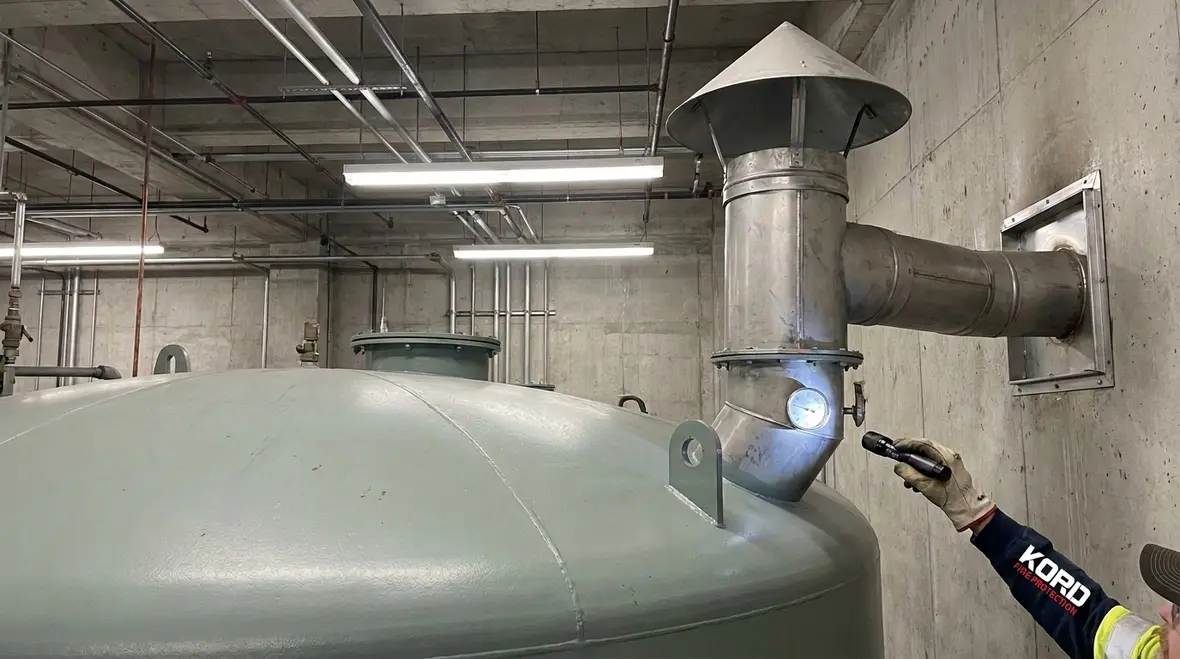
NFPA 30 Section 24.13: Vents for Tanks Inside Tank Buildings
Quick Answer: NFPA 30 Section 24.13 sets requirements for venting tanks located inside tank buildings to control pressure and prevent hazardous vapor accumulation. Compliance depends on correct vent routing, vent sizing, use of approved devices, and a maintenance program that verifies vent operability over time.
What NFPA 30 Section 24.13 requires for vents on tanks inside buildings
NFPA 30 Section 24.13 vents tanks inside buildings by addressing how tanks in enclosed tank buildings release vapors and manage pressure and thermal expansion. Facilities cannot treat venting as an afterthought. A compliant vent pathway supports safe operation under normal conditions and during upset scenarios such as heating, blocked outlets, or abnormal pressure conditions.
From a commercial facility standpoint, the practical issue is not only whether a vent exists. The issue is whether the vent system stays unobstructed, properly connected to the tank, and sized and arranged to function as designed throughout installation, changeouts, and routine operations. For an overview of how NFPA 30 regulates flammable liquids across systems and facility elements, see how NFPA 30 regulates flammable liquids. Facilities planning broader inspection readiness can also benefit from fire protection services in Southern California, especially when maintenance coordination and compliance documentation already need attention.
Why venting inside tank buildings is operationally different
Buildings change vapor behavior and failure modes
When tanks sit inside tank buildings, the vent discharge and pressure relief performance interacts with the enclosure. Vent vapors may remain within the building envelope, migrate to ignition sources, or be drawn into air handling equipment if airflow is not controlled. Section 24.13 focuses on ensuring venting can perform its protective function without creating new hazards inside the structure.
Heat input and pressure swings increase stress on vent components
Thermal expansion, solar heating, internal pump operation, and changes in liquid temperature can create frequent pressure and flow demands on venting. Vent components that work in open air may fail when installed in confined or draft constrained environments. Common operational stressors include corrosion from moisture, material degradation from condensate, and mechanical damage from maintenance activity.
Core compliance checkpoints for NFPA 30 Section 24.13 vents tanks inside buildings
1) Vent routing and discharge location must stay unobstructed
Vent routing must provide a safe discharge arrangement consistent with the tank building design intent. In the real world, vent outlets become partially blocked by construction debris, stored materials, landscaping or maintenance obstructions, or ice and condensate buildup in colder climates. A vent that discharges to the wrong location or becomes blocked does not meet the protective purpose of the system, even if the tank itself remains intact.
Commercial operators should treat vent outlets as operational critical infrastructure. The facility’s standard housekeeping plan must explicitly include inspection points for vent terminations and nearby obstructions.
2) Vent sizing and device selection must match the tank and service
Vent performance depends on proper sizing and on the correct combination of vent devices for the flammable liquid service. If the vent system is undersized, it may not relieve pressure and may cause unsafe stress on tank internals or seams. If it is oversized without appropriate flow control, it can increase vapor release rates and challenge containment strategies inside the tank building.
Selection also matters for how devices respond to liquid slugs, condensate, and changes in vapor composition. In practice, replacing vent components with non equivalent parts during maintenance is a frequent cause of noncompliance.
3) Materials and protection against corrosion and condensation
Vents in tank buildings can experience higher humidity and condensate accumulation. Corrosion can reduce flow area, impair moving components, and create leak paths. Facility teams should verify that vent materials and coatings remain compatible with the chemical service and that drain and moisture management features, where used, remain functional.
4) System integrity during modifications and tank changeouts
Section 24.13 compliance can be undermined during changeouts. A typical failure pattern includes unapproved rework of vent piping, missing gaskets, improper flange alignment, incorrect thread sealant selection, or temporary caps that are later left in place. Any modification that touches the vent assembly should trigger a documentation and inspection workflow that confirms the final configuration matches the approved arrangement.
Inspection, testing, and maintenance: the part facilities get wrong
Inspection should confirm performance, not only appearance
Routine checks often focus on whether vent lines exist and look “in place.” For NFPA 30 Section 24.13 vents tanks inside buildings, inspections should verify that the system can function as intended. That includes checking for physical obstructions, verifying that vent terminations are clear, confirming that protective screens or elements are present when required, and ensuring no evidence of significant corrosion or condensate buildup that could block flow.
Operational tests must account for safety and vapor control
Where vent systems include devices intended to relieve pressure or manage vapor flow, testing requires controlled procedures aligned with facility safety management. Common practical constraints include maintaining ignition control, managing vapor release, and coordinating testing with operations and emergency response readiness.
Maintenance tasks that protect compliance
A strong maintenance program typically covers the following:
- Scheduled inspection of vent outlets and accessible piping sections for blockage, corrosion, and damage.
- Verification that vent devices remain free to actuate and that their vents have not been painted over, sealed, or modified.
- Documentation of parts used during replacements to prevent non equivalent substitutions.
- Post maintenance verification that piping connections remain tight and correct and that no temporary modifications remain.
Facilities that want consistent compliance outcomes usually benefit from a professional service partner that can align inspection schedules with local risk, asset criticality, and operating patterns. Kord Fire Protection supports commercial tank building compliance through inspection planning, documentation support, and maintenance coordination to help reduce operational surprises.
Common failure points seen in commercial tank building projects
Condensate and debris buildup at vent terminations
Condensate can trap vapors or block openings, while debris can reduce the effective vent area. These conditions can develop slowly, so visual inspections alone may miss early degradation.
Uncontrolled air movement and vapor migration inside the building
If the tank building ventilation, doors, and air handling interfaces are not coordinated with venting, vapors can accumulate or move toward ignition sources. Even a properly sized vent can become unsafe if the enclosure’s airflow pattern encourages vapor persistence.
Unauthorized vent piping changes after commissioning
During maintenance and upgrades, teams sometimes reroute or cap vent piping for convenience. Without engineering review, even minor layout changes can affect vent discharge behavior and device performance, undermining the intent of NFPA 30 Section 24.13 vents tanks inside buildings.
Material mismatch and sealant issues at flanged or threaded joints
Improper gasket selection or incorrect sealant application can create slow leak paths that may not be immediately obvious. Over time, leakage can increase vapor presence within the building and elevate risk.
How to implement a practical compliance program for your facility
A practical program should combine engineering control, inspection discipline, and maintenance governance. The target is to keep the vent system functional, documented, and aligned with the approved configuration.
- Document the approved vent configuration: Maintain current drawings and device make and model data for vent assemblies inside each tank building.
- Standardize inspection routes: Create checklists that include vent outlets, accessible piping, device condition, and nearby obstruction hazards.
- Control modifications: Require review for any work that affects vent routing, devices, connections, or discharge pathways.
- Align with operating conditions: Adjust inspection frequency during seasonal temperature swings, high throughput periods, or known corrosion risk cycles.
- Use qualified support: Engage Kord Fire Protection for ongoing verification, maintenance planning, and compliance support to keep vent performance dependable.
Frequently Asked Questions
Conclusion and Call to Action
NFPA 30 Section 24.13 vents tanks inside buildings require more than basic installation. Compliance depends on vent routing integrity, correct device selection, protected discharge performance, and disciplined inspection and maintenance practices that prevent blockage, corrosion, and unauthorized changes. Kord Fire Protection helps commercial facilities keep vent systems in dependable working condition through practical inspection planning and maintenance support. Contact Kord Fire Protection to review your tank building vent assemblies and strengthen your ongoing compliance program.

Join Our Newsletter!
Get the latest fire safety tips delivered straight to your inbox From our Newsletter.



