
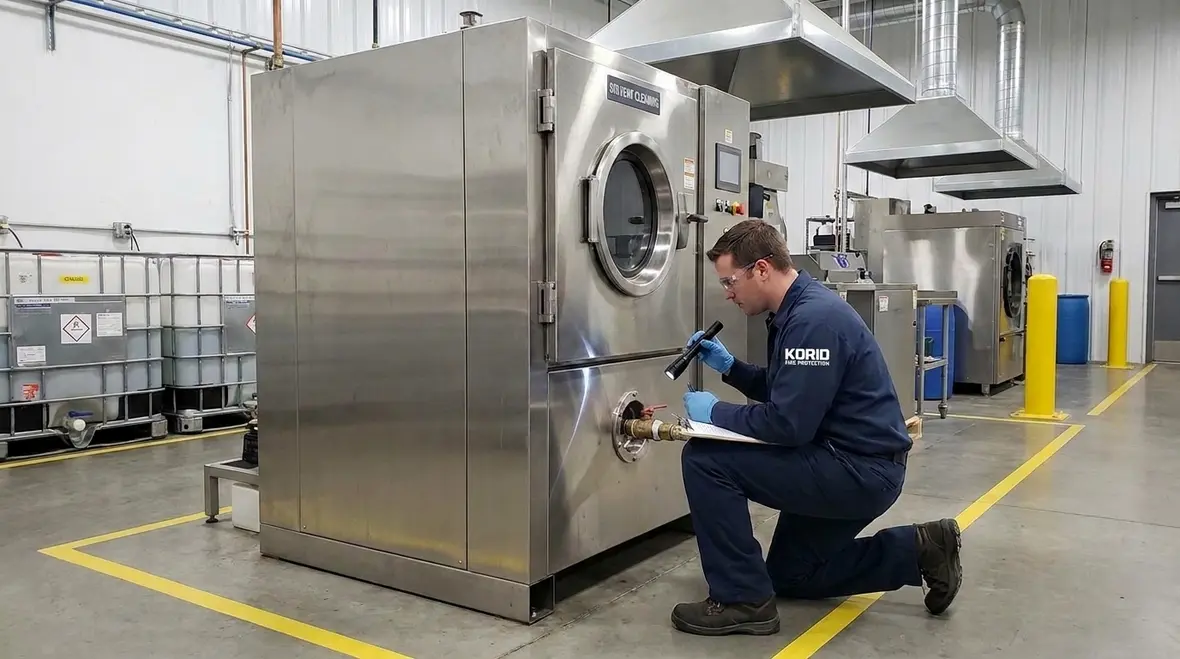
NFPA 32 Section 6.1 General: Overview of Equipment and Solvent Requirements
Quick Answer: NFPA 32 Section 6.1 establishes the general expectations for how equipment must be selected, arranged, and maintained when using solvents. It frames the overall solvent handling requirements and sets the baseline for safer operation, inspection, and compliance across commercial and industrial facilities.
For facilities managing cleaning, coating, and related solvent based operations, the NFPA 32 equipment solvent requirements scope starts with Section 6.1. This section does not replace detailed chapter requirements. Instead, it sets the general rules that influence how equipment is used, how solvents are treated, and how facilities maintain compliance over time.
Facilities that need broader inspection and maintenance support can also review fire protection services in Southern California for a practical overview of compliance-focused support.
What NFPA 32 Section 6.1 covers in real operations
NFPA 32 Section 6.1 focuses on the general overview of equipment and solvent requirements. It helps answer a practical question: “Are the systems and controls that support solvent use appropriate, and are they managed to reduce fire and explosion risk?”
In daily operations, this translates into several compliance themes that inspectors and internal safety teams expect to see addressed across the solvent lifecycle, from receiving and storage to transfer, use, and shutdown conditions.
- Equipment suitability for the solvent properties involved, including flammability characteristics.
- Safe operating conditions and proper placement and arrangement of equipment.
- Control of ignition sources and protection of solvent vapor areas where applicable.
- Maintenance practices that prevent deterioration of equipment performance.
- Documentation and inspection readiness so issues do not remain hidden until an audit or incident.
Commercial, industrial, and retail facilities often struggle when equipment changes occur faster than the compliance program. Section 6.1 functions as a baseline standard to guide that alignment.
Equipment selection and arrangement: the compliance foundation
Section 6.1 expectations drive how solvent related equipment gets selected and installed. Even when facilities follow detailed requirements in later sections, incorrect equipment selection or placement can create unsafe vapor migration or expose ignition sources.
Common equipment categories affected by Section 6.1
Depending on the application, solvent related processes frequently involve equipment such as:
- Cleaning and degreasing units
- Spray and coating systems
- Solvent transfer systems
- Associated ventilation and vapor control components
- Containers, storage cabinets, or reclaim equipment
Practical arrangement issues that lead to failures
Experience shows that the most common breakdowns occur after installation, during normal workflow. Typical problem points include:
- Unauthorized storage near solvent use equipment, increasing spill or vapor exposure.
- Blocked or impaired ventilation in operational zones, reducing vapor control effectiveness.
- Improper clearance around equipment, limiting maintenance access and increasing the chance that components remain uninspected.
- Replacement parts that do not match original specifications, affecting seals, fittings, or operational reliability.
These gaps can make “paper compliance” fail in field verification. Kord Fire Protection commonly supports facilities by aligning engineering intent, maintenance records, and inspection criteria into a consistent compliance package.
Solvent requirements scope: how Section 6.1 frames the rest of NFPA 32
The phrase NFPA 32 equipment solvent requirements scope is best understood as the boundary of where general expectations apply and where later sections provide detail. Section 6.1 sets the baseline for safe solvent handling and equipment readiness, then other parts of NFPA 32 expand on specific hazards and control methods.
In operational terms, “scope” affects how a facility should interpret solvent workflows:
- Which solvents the equipment can safely handle based on the process characteristics and risks.
- How solvent vapors might accumulate in equipment enclosures, rooms, or production areas.
- What inspection and maintenance steps must continue so equipment remains effective throughout its service life.
- How facility staff should respond to abnormal conditions, such as leaks, reduced ventilation performance, or equipment malfunctions.
Why the solvent itself drives the equipment risk profile
Solvent characteristics influence ignition risk and vapor behavior. Even when equipment design matches the intent of a process, changes in product formulation, concentration, or operating parameters can shift risk levels. Facilities often miss this connection when procurement replaces solvents without revisiting hazard controls.
Kord Fire Protection helps commercial teams treat solvent changes as a compliance trigger, ensuring the equipment and control systems continue to match the actual solvent hazards in use.
Operational controls and maintenance: where compliance breaks down
NFPA 32 Section 6.1 is “general” in language, but it drives a very specific operational expectation: equipment must be managed as a functioning fire and explosion safety system, not as standalone hardware.
Inspection readiness is not optional
During walk downs, compliance teams often find that maintenance records do not reflect current conditions. Typical issues include:
- Deferred inspection of hoses, fittings, seals, and gaskets.
- Unverified ventilation performance and incomplete documentation of service history.
- Spill response supplies that do not match the solvents used in production.
- Equipment calibration or verification not performed on schedule.
Common failure points in solvent handling equipment
These failure points create risk in ways that are often overlooked until the next inspection cycle:
- Worn seals that allow vapor release into the work area.
- Loose or deteriorated connections during transfer operations.
- Ventilation airflow changes that reduce vapor capture performance.
- Contamination buildup that impacts safe operation and temperature management.
To address these gaps, facilities should implement a disciplined maintenance and verification program that ties directly back to the solvent process. Kord Fire Protection supports ongoing compliance by establishing inspection and maintenance expectations that remain practical for day to day operations.
If your team needs an aligned approach to maintaining safety systems, review Kord Fire Protection’s resources here: Kord Fire Protection.
How commercial facilities can demonstrate ongoing compliance
Most compliance problems emerge after initial installation. A strong approach to Section 6.1 compliance focuses on repeatability: consistent procedures, consistent equipment condition, and consistent documentation.
Recommended compliance controls for staff and contractors
- Maintain a current inventory of solvents used, with documented hazard review when products change.
- Require work permits or controlled procedures for solvent transfers and equipment startups.
- Set inspection intervals for components that fail over time, such as seals, connections, and vapor control interfaces.
- Ensure staff understand operational limits that prevent unsafe vapor release or ignition exposure.
- Verify that ventilation and related protective features operate as intended under real production conditions.
Commercial inspection artifacts that typically matter
Inspectors and internal auditors commonly look for evidence that the equipment remains suitable and managed. Facilities often strengthen their program by maintaining:
- Maintenance logs tied to specific equipment identifiers and processes.
- Service documentation for ventilation and control components.
- Training records that reflect solvent types and operating procedures.
- Corrective action records showing closure and verification, not just issue reporting.
When facilities standardize this information, Section 6.1 becomes easier to defend. Kord Fire Protection can help teams build a defensible compliance process that supports audits, corporate requirements, and insurance expectations. For teams tightening recordkeeping, the article on fire safety system documentation for compliance fits naturally with this effort.
Frequently Asked Questions
Call to Action
Ensure your solvent process equipment remains suitable and consistently maintained under NFPA 32 Section 6.1 expectations. Schedule a compliance review with Kord Fire Protection to validate equipment readiness, solvent controls, inspection documentation, and corrective action practices. The earlier teams identify gaps, the lower the operational disruption and the stronger the audit defense when inspectors evaluate NFPA 32 equipment solvent requirements scope.

Join Our Newsletter!
Get the latest fire safety tips delivered straight to your inbox From our Newsletter.



