
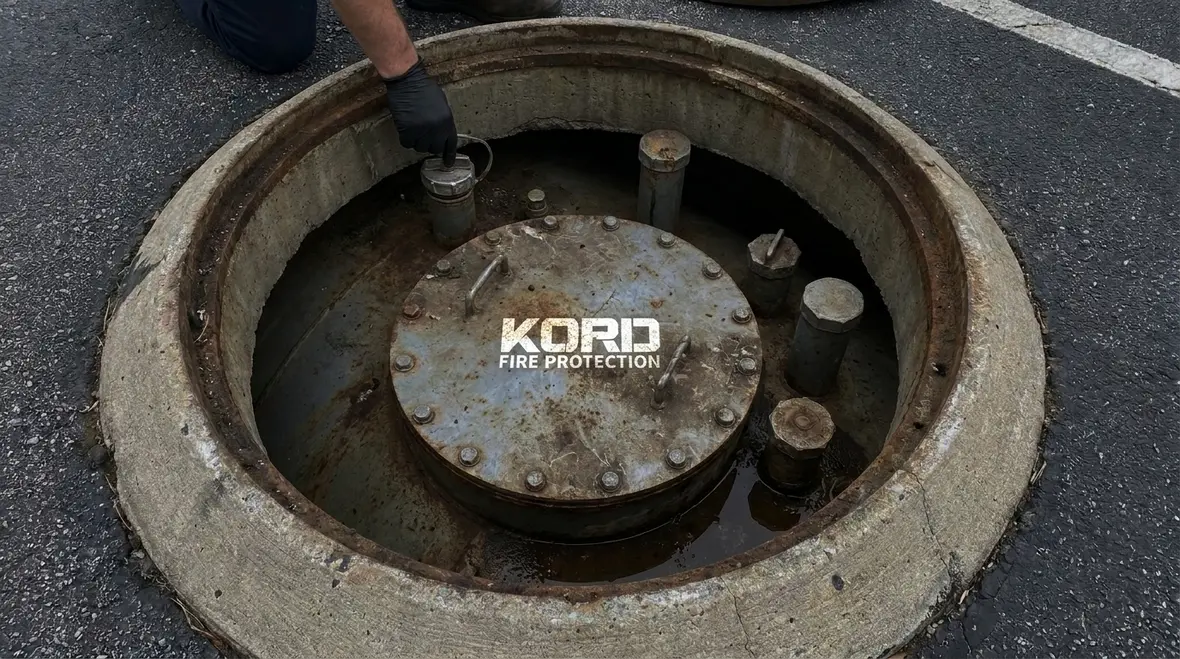
NFPA 30 Section 23.13: Underground Tank Openings Other Than Vents
Quick Answer
NFPA 30 Section 23.13 governs how facilities manage underground tank openings other than vents, including manways, fittings, and closure systems. The rule focuses on preventing leaks, limiting vapor release pathways, maintaining proper sealing, and ensuring openings remain controlled, secured, and serviceable.
If your facility is tightening up life safety and inspection readiness more broadly, Kord Fire Protection’s fire protection services in Southern California fit naturally into that bigger compliance picture.
Why “UST openings other than vents” matter for compliance
Facilities often think “venting” is the only critical opening control point for an underground storage tank system. NFPA 30 Section 23.13 UST openings other than vents shifts attention to the additional interfaces that can create leak routes and vapor pathways. These include access openings, fill or withdrawal-related compartments where applicable, and openings that serve installation, inspection, gauging, and maintenance functions.
In commercial, industrial, and retail environments, these openings are frequent operational touchpoints. They get opened for service, disturbed by upgrades, and affected by settlement, corrosion, and surface water intrusion. When compliance gaps exist, inspectors commonly find deteriorated seals, improper gaskets, nonrated caps, damaged risers, missing hardware, or modifications that defeat the intent of the standard.
What NFPA 30 Section 23.13 UST openings other than vents typically covers
NFPA 30 Section 23.13 addresses underground tank openings other than vents by requiring controls that maintain containment and limit unwanted release. From a field perspective, the standard expects a system approach: openings must be constructed and maintained so they remain closed, secure, and compatible with the tank and product hazards.
Common opening types encountered during inspections
- Access or service openings used to reach internal components or perform inspections.
- Manway and closure interfaces where the tank design includes access arrangements.
- Fill and product transfer related openings when the opening is not the vent system and is part of the tank or its direct opening arrangement.
- Riser and cover assemblies that provide access to closures and interfaces below grade.
Even when the tank’s vent system remains properly configured, a poorly controlled nonvent opening can still create a vapor migration path, allow liquid seepage, or expose the site to ignition risk through environmental contamination.
Core compliance expectations: containment, closure, and compatibility
NFPA 30 Section 23.13 UST openings other than vents is best understood through three practical outcomes: containment of product and vapors, reliable closure performance, and equipment compatibility for the tank environment.
1) Reliable closure performance under site conditions
Closures for nonvent openings must remain functional after thermal cycling, ground movement, and routine site activity. In practice, inspectors verify that covers and caps sit correctly, gaskets remain intact, fasteners are present and appropriately tightened, and protective components prevent water and debris intrusion.
Failure points frequently include flattened or cracked gaskets, loose hardware, incorrect closure materials, and cover assemblies that do not seat evenly due to riser deformation or surface settling.
2) Sealing systems designed for petroleum service
The sealing material used on closures needs to remain chemically compatible with the stored product and withstand moisture exposure. Elastomer selection and gasket condition matter. Degraded seals may not show immediate failure, but they can wick liquids, trap vapor in confined spaces, or allow migration into backfill.
Commercial sites often use multi source parts during replacements. That convenience can create compliance risk if the replacement does not match performance requirements for the tank system.
3) Compatibility with corrosion environment and installation details
Underground conditions create relentless stress on nonvent openings. Galvanic corrosion, external coatings failures, and deterioration of metallic parts can compromise closure alignment and sealing integrity. Compliance requires that the system design, materials, and installation details remain consistent with the tank’s intended arrangement.
Maintenance records should show like for like replacement, documented verification after service, and corrective actions when damage is identified.
Operational procedures that keep openings controlled
Even with compliant equipment, operational practices frequently determine whether NFPA 30 Section 23.13 UST openings other than vents is effectively met day to day. The best programs treat every nonvent opening event as a controlled procedure, not routine access.
During service, upgrades, and inspections
- Control opening duration so closures are not left unattended or unsealed longer than necessary.
- Use proper lockout and work permits where site procedures require them, especially when hot work or electrical work is involved.
- Verify closure integrity after reassembly with an inspection focused on seating, gasket condition, fastener presence, and correct cover alignment.
- Confirm product and vapor safeguards remain intact, including monitoring and site controls where your program requires them.
After ground movement or storm events
Settlement, washouts, and flooding can expose components and compromise sealing. Commercial operators should conduct post event visual inspections of risers, covers, and closure points, and should document corrective actions quickly when damage appears.
Inspections, testing, and documentation: what auditors expect
Inspectors and auditors typically evaluate whether the tank opening system stays serviceable and compliant across its lifecycle. For NFPA 30 Section 23.13 UST openings other than vents, documentation and physical condition carry equal weight.
What to inspect on site
- Cover and gasket condition, including cracks, flattening, missing pieces, and improper seating.
- Riser alignment and integrity, including deformation, corrosion, and loose or damaged components.
- Closure hardware, including missing fasteners, stripped threads, and signs of tampering.
- Evidence of seepage or moisture intrusion around the opening interface.
- Markings and system identification needed to confirm the correct assembly type for the tank system.
How Kord Fire Protection supports ongoing compliance
Kord Fire Protection helps commercial facilities close compliance gaps by performing inspection support, maintenance coordination, and documentation review for underground tank opening systems and related fire protection risk controls. This includes helping operators verify that opening protection strategies stay aligned with NFPA 30 requirements and facility standards, especially after service events, modifications, or component replacement.
For broader context on how NFPA 30 regulates flammable liquids and related safety systems, see how NFPA 30 regulates flammable liquids.
Common failure points and how to prevent them
Most noncompliance outcomes tied to NFPA 30 Section 23.13 UST openings other than vents trace back to repeatable, preventable issues. Treat these as standard risk items in your maintenance plan.
1) Incorrect replacement components
Facilities often replace gaskets, covers, or hardware without confirming chemical compatibility and fitment. Prevent this by using documented specifications and requiring a post replacement verification checklist.
2) Loose or missing hardware after maintenance
After service, closures can be reinstalled incorrectly or incompletely. Prevent this with a defined reassembly procedure and a sign off step that includes fastener presence and torque consistency where applicable.
3) Water intrusion through compromised covers
When water enters the opening area, corrosion accelerates and sealing materials deteriorate faster. Prevent this by repairing cover and riser damage promptly and by ensuring protective components remain properly seated.
4) Settlement that shifts riser geometry
Settlement causes uneven seating and gasket failure. Prevent this with periodic site condition checks and immediate corrective action when misalignment appears.
Frequently Asked Questions
Conclusion and call to action
NFPA 30 Section 23.13 UST openings other than vents requires more than “getting the cover back on.” It demands engineered closure performance, correct compatible components, and repeatable maintenance controls that prevent vapor and liquid release pathways. Kord Fire Protection can support your compliance program with practical inspection focus, maintenance documentation, and risk reduction strategies across commercial tank systems. Contact Kord Fire Protection to schedule an assessment and strengthen your underground opening compliance posture.

Join Our Newsletter!
Get the latest fire safety tips delivered straight to your inbox From our Newsletter.



