
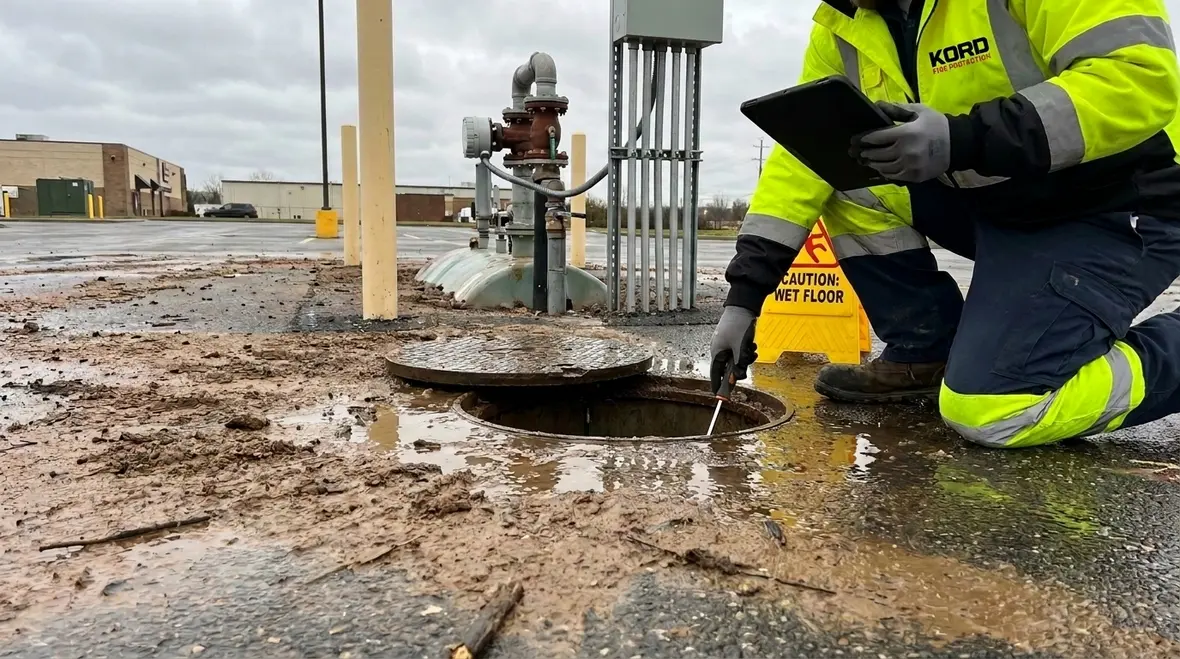
NFPA 30 Section 23.14 Underground Tanks in Flood-Subject Areas: Compliance, Inspections, and Operational Risks
Quick Answer: NFPA 30 Section 23.14 sets performance and protection expectations for underground storage tanks (USTs) located where flooding can occur. It focuses on preventing loss of containment, limiting ignition risk, and ensuring systems remain functional during and after flood events. Compliance requires site-specific design, installation, and maintenance verification.
What NFPA 30 Section 23.14 USTs flood subject areas actually require
NFPA 30 Section 23.14 addresses underground storage tanks in flood subject areas by requiring safeguards that protect tank integrity, piping, and associated components during flood conditions. For commercial, industrial, and retail facilities, the practical goal is simple: keep the tank system in a controlled condition when water rises, flows fast, or remains stagnant long enough to undermine corrosion protection, anchoring, venting, monitoring, and leak detection.
The primary compliance challenge is that flooding changes both the physical environment and the operational behavior of tank systems. Water intrusion, buoyant forces, debris impact, sediment movement, and prolonged moisture exposure can combine to degrade materials and interrupt normal leak detection and emergency response capabilities. When facilities treat flooding as an “emergency only” problem, rather than a maintenance and verification program, failures become more likely at exactly the wrong time.
For facilities tightening up broader inspection and maintenance planning, Kord Fire Protection provides fire suppression system services that fit naturally into compliance-focused programs for commercial and industrial properties.
For a deeper view of how NFPA 30 regulates flammable liquid systems across lifecycle stages, refer to: how NFPA 30 regulates flammable liquids.
How flood conditions stress underground tank systems
1) Buoyancy and displacement
Floodwater raises the surrounding hydrostatic pressure. If the tank is not properly anchored or if backfill conditions allow it to move, buoyancy can lift the tank or shift the piping connections. Movement can crack fittings, stress flexible connectors, loosen gaskets, and compromise spill containment paths. Even minor shifts can create pathways for seepage at seams and penetrations.
2) Corrosion acceleration and coating failures
Floods increase moisture and reduce oxygen gradients, which can change how corrosion propagates in steel components and piping. Coatings may blister under wet thermal cycling, and disbonded coating areas often drive “hidden” corrosion where inspection access is limited. If cathodic protection is disrupted during high water events, the system can shift from protected to actively degrading without immediate external indicators.
3) Water intrusion into sumps, manholes, and venting pathways
Some UST arrangements rely on internal or external sumps, risers, or manholes for monitoring equipment. Floodwater can enter these structures, causing sensor malfunction, damaged electrical components, or blocked venting. Restricted venting can affect tank pressure behavior and increase the chance of abnormal operating conditions.
4) Debris impact and mechanical damage
Floods carry debris that can strike risers, piping runs, and protective covers. Operators often focus on tank walls but overlook above grade components, protective bollards, and access ports that become failure points after impact.
Compliance approach: design intent plus verification
NFPA 30 Section 23.14 expects more than a one-time installation. Flood-related risk management must continue through routine operation, testing, maintenance, and post flood inspection. Commercial facilities should implement a compliance approach that combines documentation, field verification, and repeatable inspection triggers.
Define your flood subject area scope and the tank system boundary
Start by clearly identifying where flooding can reasonably affect the tank system. The scope should include tank shells, piping, fittings, dispensers, vent piping, leak detection components, electrical devices, and any containment or diversion structures that could influence release pathways during a flood.
Confirm anchoring and support stability
Facilities should verify that anchoring systems, backfill compaction methods, and protective grading prevent uplift or settlement during rising water. Practical verification includes reviewing installation records, inspecting accessible supports, and confirming protective grading has not eroded.
Maintain cathodic protection and confirm performance
Flood events can interrupt electrical continuity or alter soil conductivity. A strong compliance program schedules cathodic protection checks at required intervals and adds condition based checks after flooding. Technicians should confirm readings and correlate them with system configuration so the facility understands whether protection is real, not assumed.
Ensure leak detection remains reliable before, during, and after flooding
Leak detection is only effective if sensors stay operational and liquid levels do not defeat the detection method. Facilities should verify sensor placement, cable integrity, power supplies, and alarms. After flood exposure, they should validate that the system returns to normal operating parameters and that fault alarms do not mask leak alarms.
Verify venting and pressure control elements
Floodwater and debris can block vents or alter flow characteristics. Maintenance checks should include vent risers and protective caps, plus inspection for water entry into vent pathways and evidence of blockage or corrosion.
Inspection and maintenance that hold up in real commercial operations
Many facilities meet inspection schedules but still experience failures because their maintenance program does not account for how flood impacts emerge over time. A strong program uses clear operational triggers, documented inspection outcomes, and corrective actions that address root causes, not only symptoms.
Pre flood readiness checklist
- Confirm all alarms, monitors, and associated power and communication components report normally.
- Verify cathodic protection status and record baseline readings.
- Inspect vent risers, protective covers, and access points for integrity and blockage risk.
- Confirm secondary containment and drainage paths remain unobstructed where applicable.
- Review emergency shutoff procedures and ensure staff understand what changes after flooding (for example, what indicators to trust and which to verify).
Post flood inspection triggers
After flood exposure, facilities should not rely on “it looks fine” assessments. Water can recede leaving corrosion damage, displaced components, and sensor faults that develop quickly. A post flood inspection should prioritize:
- Tank and piping system physical condition at accessible interfaces and penetrations.
- Evidence of coating damage, disbondment, or unusual corrosion patterns.
- Verification that leak detection sensors and alarms return to normal operation.
- Cathodic protection performance checks to confirm the system remains protected.
- Vent pathway inspection to confirm unobstructed flow and no water intrusion.
Common failure points to watch at retail and industrial sites
- Loose or degraded riser seals that allow water entry into inspection and monitoring areas.
- Corroded vent components where moisture exposure and restricted vent flow compound risk.
- Damaged cabling and electrical connections inside wet access structures after debris impact.
- Monitoring system faults that remain active and hide critical leak alarm conditions.
- Backfill erosion and settlement that changes support geometry and stresses piping joints.
Where facilities need a specialist partner: Kord Fire Protection in ongoing compliance
Flood subject area compliance is not only a code requirement. It is an operational discipline that depends on competent testing, accurate documentation, and timely corrective actions. Kord Fire Protection supports commercial, industrial, and retail facilities with structured compliance services that align inspection outcomes with real flood risk behaviors.
In practice, specialist services help facilities reduce downtime and uncertainty by performing risk focused checks, validating leak detection performance, confirming corrosion control and electrical integrity, and ensuring records support audit readiness. Kord Fire Protection also assists asset owners in building a repeatable maintenance cycle, including pre flood readiness and post flood verification protocols.
NFPA 30 Section 23.14 USTs flood subject areas: Frequently Asked Questions
Next step
If your USTs are located in NFPA 30 Section 23.14 USTs flood subject areas, set up a compliance and maintenance program that includes pre flood readiness and post flood verification. Contact Kord Fire Protection to schedule risk focused inspections, validate leak detection and corrosion control performance, and ensure your documentation supports audit ready compliance before the next flood season.

Join Our Newsletter!
Get the latest fire safety tips delivered straight to your inbox From our Newsletter.



