
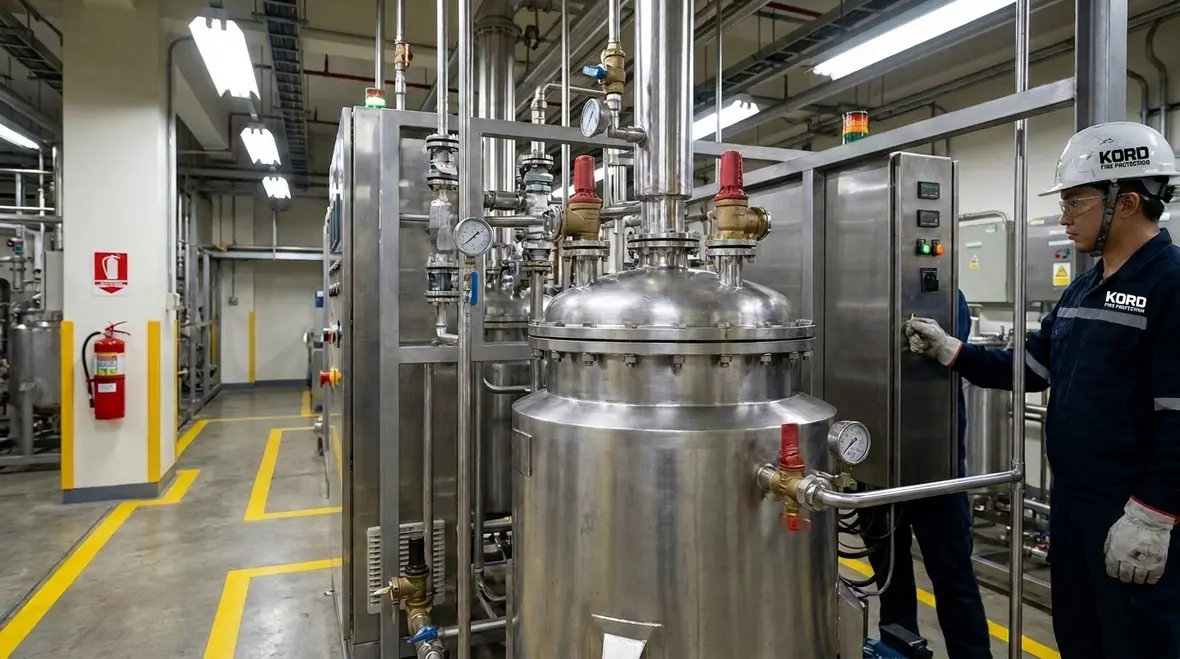
NFPA 30 Section 19.6 Solvent Distillation Unit Requirements: Compliance, Inspections, and Practical Controls
Quick Answer
NFPA 30 Section 19.6 sets minimum fire safety requirements for solvent distillation units, focusing on ignition control, safe venting and pressure protection, electrical classification practices, and operation and maintenance that sustain hazard controls. Facilities must verify equipment condition, guarding, and documentation through recurring inspections and testing.
Why NFPA 30 Section 19.6 solvent distillation units demand disciplined fire safety management
Solvent distillation concentrates flammable liquids vapors and heat exposure into a single operating process. That combination creates conditions where ignition sources, blocked vents, inadequate pressure relief, or deteriorated components can rapidly escalate into fire or flashback events. For commercial, industrial, and retail facilities with distillation assets, compliance under NFPA 30 Section 19.6 is not a one time task. It is an operational control system that depends on correct design features and ongoing verification.
This article focuses on practical compliance expectations and common failure points tied to NFPA 30 Section 19.6 solvent distillation units, with special attention to what inspectors typically look for during walkdowns, maintenance audits, and deficiency correction.
For broader context on how NFPA 30 regulates flammable liquids and process hazards, see how NFPA 30 regulates flammable liquids.
If you are reviewing broader protection strategies around special hazards and industrial systems, Kord Fire Protection also provides fire suppression system services that fit naturally into inspection readiness and ongoing compliance planning.
What Section 19.6 typically requires at the unit level (and what it means operationally)
NFPA 30 Section 19.6 addresses solvent distillation unit requirements as a system, not just individual components. Facilities typically must ensure that the unit design and installed protections reduce the likelihood of vapor ignition, control abnormal conditions, and support safe shutdown and recovery procedures. From an operational perspective, the key intent is to prevent flammable vapor release to ignition sources and to manage thermal and pressure related hazards during normal and upset conditions.
1) Ignition source control during heating and vapor handling
Distillation relies on heat input and creates vapor pathways. The compliance challenge often becomes managing ignition sources, including hot surfaces, improperly classified electrical equipment, inadequate bonding and grounding, and damaged wiring or insulation. Operationally, facilities should confirm that all heat tracing, control panels, and motorized components remain in serviceable condition and maintain appropriate protective measures.
Common failure points include deteriorated cable glands, compromised conduit seals, failed temperature control sensors that cause over temperature operation, and gaskets that fail during thermal cycling, allowing vapor leakage into non rated areas.
2) Vapor containment and safe venting strategies
Where the unit includes venting to manage pressure and vapors, the primary compliance concept is to direct vapors safely away from ignition risks. Improper vent termination location, missing flame arresting devices where required, or vent routes obstructed by debris can defeat the protection intent. Operational checks should verify that vent paths remain clear, supported, and maintained to prevent condensation buildup that can alter flow behavior.
Facilities also should ensure that any vent discharge direction remains consistent with the current site layout. Renovations, new racks, or stored materials can unintentionally place combustibles into the discharge zone.
3) Pressure relief and abnormal condition readiness
Distillation units operate across temperature ranges that can create pressure fluctuations. When pressure protection devices rely on correct set points and unobstructed discharge routes, maintenance lapses become high risk. If valves, rupture disks, or relief piping become clogged, corroded, or incorrectly reinstalled after service, the hazard returns.
Operational implication: facilities should not only test and inspect relief devices per the applicable maintenance program, but also verify that downstream discharge piping remains free and correctly routed, with no ad hoc modifications.
Compliance challenges in commercial and industrial settings (what crews discover in the field)
In practice, the hardest compliance items are rarely the original installation. The risk tends to increase during routine operations, shutdowns, and maintenance events. NFPA 30 Section 19.6 solvent distillation units should remain protected through disciplined change control and inspection routines.
Maintenance and replacement control
A frequent operational failure pattern involves replacing components with parts that match size but not fire safety intent, such as incorrect seals, substituted fittings, or non rated electrical parts. Even minor changes to vent hardware or pressure protection piping can create a hidden ignition exposure path. Facilities should require that maintenance work orders reference the applicable distillation unit hazard protections and that replacements retain the same fire safety characteristics.
Hot work and turnaround activities
Turnarounds often introduce temporary heaters, additional piping, or modifications for cleaning. Hot work near distillation equipment can create ignition risk that exceeds the baseline hazard profile. Section 19.6 compliance demands should extend to hot work permitting, vapor control during cleaning, and verification that electrical and vent systems are restored correctly after work completion.
Housekeeping and solvent residue management
Solvent vapors are not the only ignition concern. Residue accumulation around seals, low points, and discharge areas can provide fuel for a developing fire. Walkdowns should confirm that drip trays, sumps, and spill containment remain intact, that spill cleanup is completed promptly, and that residue does not block vent routes or cover heat tracing components.
Inspections and documentation: how to prove the unit stays compliant
NFPA 30 Section 19.6 solvent distillation unit requirements are best managed through a documented inspection and maintenance program that ties each protective feature to a verification method. Auditors typically look for clear evidence that protections remain functional and that staff understand what constitutes abnormal operation.
Inspection items to track during routine walkdowns
Vapor pathway integrity: gaskets, seals, inspection ports, and fittings for leakage indicators, wear, or misalignment.
Venting condition: clear discharge paths, flame protection devices where present, and no obstructions or incompatible attachments.
Pressure relief provisions: relief device condition, corrosion control, correct routing, and no modifications that alter discharge function.
Electrical and control safety: integrity of conduits and seals, correct enclosure condition, and absence of ignition source exposure from damaged hardware.
Thermal control response: confirmation that temperature limiting functions do not operate out of tolerance due to sensor drift.
Operational markings and access: labels and access clearances so that emergency response actions can occur without delay.
Maintenance records that reduce compliance friction
Facilities should maintain records that demonstrate what was inspected, when it was done, what was found, and what corrective actions were completed. Effective documentation includes calibration records for temperature related instruments, relief device service tickets, electrical inspection results where relevant, and evidence of verification after any modification.
For teams tightening their paper trail before an audit, this related guide on fire safety system documentation for compliance helps connect inspections, maintenance logs, and corrective action records in a way inspectors actually appreciate.
Where Kord Fire Protection supports safer operations for solvent distillation assets
Commercial facilities often need more than a single compliance inspection. They need an ongoing program that integrates fire protection system awareness, hazard control verification, and actionable deficiency management. Kord Fire Protection supports clients by aligning practical field inspections with operational realities, including how maintenance teams work on distillation units and how changes affect venting, ignition control, and documentation.
As a service partner, Kord Fire Protection helps facilities reduce downtime and rework by identifying issues early, verifying corrective actions, and supporting continuous readiness for inspections. This approach helps prevent recurring failures such as repeated seal issues, vent obstructions after maintenance, and incomplete restoration following turnaround work.
That same practical mindset shows up in Kord Fire Protection’s broader work around industrial fire suppression solutions for real hazards, where inspection planning, maintenance discipline, and system readiness are treated like everyday operational controls instead of once a year panic projects.
Frequently Asked Questions
Next step: get your distillation unit ready for inspection
Facilities can reduce risk and avoid last minute findings by performing a targeted review of NFPA 30 Section 19.6 solvent distillation unit protections, then tying results to a corrective action and maintenance plan. Kord Fire Protection can support with practical inspections, deficiency management, and ongoing compliance readiness so your distillation operations stay protected throughout the year. Contact Kord Fire Protection to schedule an assessment and confirm your unit’s fire safety controls are maintained.

Join Our Newsletter!
Get the latest fire safety tips delivered straight to your inbox From our Newsletter.



