
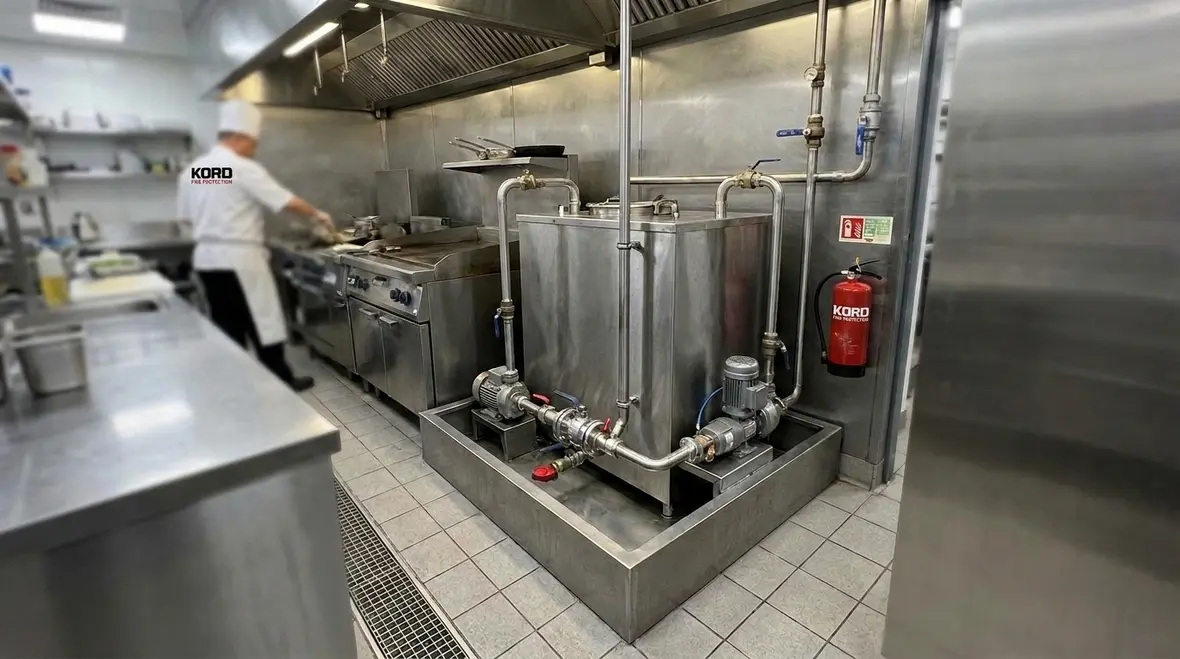
NFPA 30 Section 19.7: Cooking Oil Storage Tanks in Commercial Kitchens
Quick Answer: NFPA 30 Section 19.7 sets minimum fire safety requirements for cooking oil storage tanks used in commercial kitchens. It emphasizes safe tank design, proper installation, hazard controls, and maintenance practices that reduce ignition and spill related risks in occupied facilities.
Why NFPA 30 Section 19.7 matters in real commercial kitchens
Commercial kitchens operate with frequent high heat cycles, pumps, piping, filters, and staff traffic, which creates repeated opportunities for ignition sources and release events. NFPA 30 Section 19.7 cooking oil storage tanks kitchens addresses how cooking oil is stored and controlled so that a small incident does not escalate into a major fire. In practice, compliance affects tank selection, setback and placement, venting and controls, containment, detection, and ongoing inspection routines.
For facility owners and safety managers, the key challenge is that cooking oil systems often look “kitchen specific” but behave like flammable liquid systems under fire conditions. That mismatch is where inspections frequently find gaps.
If you are also reviewing your overall kitchen protection strategy, Kord Fire Protection’s commercial kitchen fire suppression system guide gives helpful context on how storage risks connect with active suppression and day to day fire safety planning.
For broader context on how NFPA 30 regulates flammable liquids, refer to how NFPA 30 regulates flammable liquids.
What Section 19.7 covers for cooking oil tanks
NFPA 30 Section 19.7 focuses on the safe storage of cooking oils in tanks serving commercial operations. It applies to tanks and associated system components that manage oil volume, transfer, and exposure to ignition hazards. While exact implementation details depend on the facility configuration and tank type, compliance typically includes the following control categories.
1) Tank safety and installation controls
Tank condition and integrity: corrosion control, leak tightness, and mechanical soundness.
Proper siting and exposure management: placement that reduces risk from vehicle impact, nearby equipment, and heat sources.
Vent and pressure protection as required: preventing unsafe venting behavior that can contribute to release or ignition risk.
2) Hazard reduction through containment and spill management
Secondary containment or equivalent spill control: to manage releases without allowing oil to spread to ignition sources.
Drainage and disposal paths: controlled routes that prevent oil from accumulating in inaccessible areas.
3) Connection points and transfer risks
Piping and hose discipline: secure connections, proper routing, and leak detection practices.
Transfer equipment controls: pump operation safety, grounding and bonding where applicable, and maintenance of seals and valves.
Compliance pain points that trigger inspection findings
In the field, many cooking oil storage systems fail compliance not because the concept is wrong, but because the details drift out of spec. These are common problem areas that create recurring inspection findings.
Venting and pressure management not maintained
Vents can become partially blocked by debris, paint overspray, or oil residue. When venting is impaired, pressure can build and force leaks at gaskets, flanges, or threaded fittings. This is a practical ignition and escalation risk in kitchens where staff operate frequently and cleaning is routine.
Containment not matched to changing operations
Installations that once aligned with design assumptions can change after renovations. Oil volume may increase, transfer methods may change, or floors may be reworked. Without re-verification, containment capacity, drainage pathways, and access clearances may no longer protect against realistic release scenarios.
Transfer point deterioration and micro leaks
Pumps, flexible hoses, quick connects, and valve stems experience wear from repeated use and thermal cycling. Micro leaks often appear first as residue around fittings. Facilities sometimes treat residue as a cleaning issue rather than a fire safety defect that needs immediate repair and documentation.
Housekeeping practices that unintentionally increase risk
Cooking oil residue on nearby surfaces and in floor recesses can contribute to flame spread if ignition occurs. Poor spill response timing also increases the chance that oil reaches electrical panels, cooking equipment, or hot surfaces.
Operational procedures: keep tanks safe during daily use
NFPA 30 driven risk reduction depends on how staff operate the system, not just how it was installed. Commercial kitchens need procedures that align with safe transfer, controlled shutdown, and reliable response to releases.
Staff training that mirrors real failure modes
Recognize early warning signs: odor changes, unusual pump sound, slow leaks, unexpected oil level fluctuations, and vent behavior.
Safe transfer habits: prevent overfilling, confirm correct routing, and ensure connections are fully seated and secured before energizing pumps.
Shutdown and isolation routines
Facilities should establish clear steps for stopping transfer equipment, isolating valves, and preventing continued pumping during a suspected leak. In many real scenarios, quick isolation prevents the release from reaching a larger quantity and improves the effectiveness of fire response actions.
Spill response built for cooking oil chemistry and cleanup
Cooking oils have different handling needs than water and may not behave predictably on sloped surfaces. Procedures should address containment, removal, and safe disposal. Cleanup plans should also include inspection for damaged gaskets, compromised hoses, and weakened floor penetrations after any release.
Inspection, maintenance, and testing: what to schedule and document
Ongoing compliance requires a structured inspection and maintenance program. A best practice approach treats tank and transfer systems like critical life safety equipment rather than routine utilities.
Routine inspection checklist operators can support
Tank exterior condition: corrosion spotting, dents, loose fasteners, and coating breakdown.
Seams, welds, and fittings: signs of wetness, residue trails, and paint blistering around joints.
Vents and appurtenances: evidence of obstruction, damage, or improper orientation.
Hoses and quick connects: abrasion wear, cracking, and end fitting integrity.
Containment performance: check for oil accumulation in secondary areas and verify cleanable surfaces and drainage routes.
Preventive maintenance that reduces downtime and incidents
Preventive maintenance should address seals, gaskets, valve seats, pump alignment, and any component degradation caused by temperature cycling. When maintenance is deferred, the failure often appears at the highest stress points, such as flanged connections and hose interfaces.
Documentation that strengthens audits
Audits typically expect evidence that the facility followed a consistent process. Documentation should include inspection dates, observed conditions, corrective actions, and verification that repairs restored safe operation.
As a commercial fire safety partner, Kord Fire Protection supports facilities with compliant inspection planning, testing coordination, and maintenance oversight to keep NFPA 30 cooking oil storage tanks kitchens aligned with operational reality. This reduces the risk of last minute remediation when a regulator or insurer reviews documentation.
Design and equipment considerations for commercial kitchen tank systems
Tank systems differ by kitchen footprint, oil handling method, and whether the facility uses bulk storage, on site tanks, or centralized delivery. Still, certain equipment considerations consistently affect outcomes.
Tank type and capacity alignment
Capacity should reflect actual throughput, refill frequency, and operational limits. Overcapacity can increase contained fuel load if something fails. Undercapacity can lead to more frequent transfer events, increasing the chance of transfer related faults.
Placement around ignition sources and access paths
Tanks and transfer routes should avoid direct exposure to cooking equipment heat zones and should preserve safe access for maintenance. Poor placement can force staff to route hoses across hot surfaces or to work in restricted areas, both of which increase release risk.
System integration with fire and emergency response practices
Even when Section 19.7 focuses on tank safety, overall fire safety depends on how the storage system integrates with the facility’s broader hazard controls. Facilities should coordinate tank protection measures with emergency procedures and ensure responders understand where oil could migrate during a release.
Frequently Asked Questions
Conclusion and next step
NFPA 30 Section 19.7 cooking oil storage tanks kitchens compliance succeeds when installation design, daily operations, and preventive maintenance work together. Facilities should verify tank integrity, vent performance, containment effectiveness, and transfer point condition while maintaining strong documentation. If your kitchen system has changed through renovations or equipment swaps, schedule a compliance review now. Kord Fire Protection can help assess risk, align maintenance schedules, and support ongoing inspection readiness.

Join Our Newsletter!
Get the latest fire safety tips delivered straight to your inbox From our Newsletter.



