
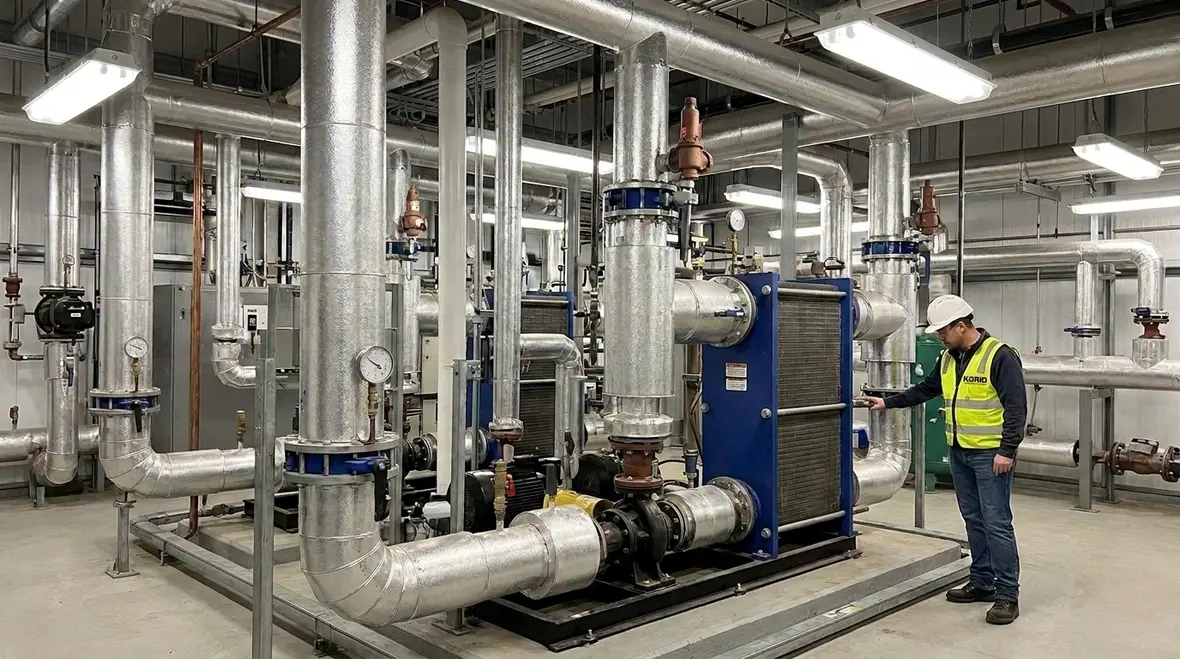
NFPA 30 Section 19.4: Recirculating Heat Transfer System Requirements
Quick Answer: NFPA 30 Section 19.4 sets operational and design expectations for recirculating heat transfer systems used with flammable liquid processes. It focuses on controlling ignition risk, protecting equipment integrity, preventing leaks, and ensuring the system remains safe through inspection, maintenance, and testing.
For facilities tightening up inspection routines and code-driven maintenance planning, Kord Fire Protection also offers fire protection services in Southern California that fit naturally into broader compliance efforts around flammable liquid operations.
What NFPA 30 Section 19.4 is trying to prevent in real facilities
In commercial and industrial settings, recirculating heat transfer systems support heating and temperature control for process equipment handling flammable and combustible liquids. NFPA 30 Section 19.4 recirculating heat transfer systems requirements exist because these systems introduce additional failure pathways beyond simple piping and storage. Common risks include heat source hazards, degraded seals, undetected leaks in liquid or vapor pathways, and unsafe conditions created during abnormal operation such as overtemperature, loss of circulation, or pressure excursions.
As a result, compliance does not only come down to “having equipment installed.” Facilities must be able to demonstrate that the system operates within defined safety limits and that any abnormal condition triggers safe states or protective actions, supported by inspection and documented maintenance.
Core compliance expectations under Section 19.4 recirculating heat transfer systems
For NFPA 30 Section 19.4 recirculating heat transfer systems, compliance expectations typically center on keeping hazardous conditions from developing and ensuring integrity of the heat transfer circuit. In practice, safety is achieved through a combination of design controls and operational safeguards. Key themes facility teams should prioritize include:
- Integrity of the heat transfer circuit: Piping, hoses, manifolds, valves, pumps, and heat exchangers must resist the chemical, thermal, and pressure stresses of operation.
- Control of temperature and pressure: Overtemperature and overpressure conditions must be prevented or safely mitigated.
- Leak prevention and detection: The system must avoid conditions that allow flammable liquid exposure to ignition sources, including leaks and spray or atomization risks.
- Safe operation during startups and shutdowns: Sequence controls must prevent thermal shock, vapor lock, and unsafe transient states.
- Inspection and maintenance: Ongoing verification must confirm that protective components remain functional and that degradation is identified early.
How heat transfer systems create failure points during day to day operations
Even when the original installation was compliant, operational realities can erode safety margins. Commercial facilities such as refineries, chemical plants, packaging operations, food and beverage processing, and retail supply chains with flammable liquid handling often reuse equipment across service changes. That is where failure points commonly show up.
1) Loss of circulation and overheating
A frequent operational failure is loss of flow through the heat exchanger or heater loop. When circulation drops, heat transfer becomes inefficient and hot spots can develop. These hot spots can degrade system materials, overpressurize local regions, or increase the likelihood of ignition if flammable liquids or vapors migrate to surfaces at elevated temperatures. Section 19.4 expectations typically align with the need for temperature limiting and reliable interlocks so the system transitions to a safe state instead of continuing to heat under fault conditions.
2) Seal degradation and microleaks in pumps and fittings
Recirculating circuits rely on mechanical seals, packing, gaskets, unions, and threaded joints. Microleaks often begin as intermittent seepage that does not trigger immediate alarms. Over time, those leaks can create dampened surfaces that attract vapor and increase ignition likelihood. Inspections must therefore look beyond “active dripping” and include condition based indicators such as staining patterns, residue buildup, and recurring moisture around seal interfaces.
3) Corrosion, thermal cycling, and material compatibility gaps
Thermal cycling expands the risk surface for fatigue cracking and loosening at connections. Corrosion can reduce wall thickness and impair pressure boundaries. Material compatibility matters as well: heat transfer fluids, additives, and any contamination introduced during commissioning or top off can create conditions that accelerate degradation. Section 19.4 aligns with the broader intent of maintaining equipment capable of safe duty over time, not just at initial commissioning.
Design and protective measures facilities should verify
Compliance success depends on verifying that safety measures actually exist where needed and that they perform reliably. For NFPA 30 Section 19.4 recirculating heat transfer systems, facility teams should confirm the following verification items during inspections, management of change reviews, and contractor acceptance testing.
Temperature control and high temperature shutdown logic
Recirculating loops must not allow uncontrolled heating. Facilities should verify that high temperature controls are calibrated, set points are appropriate for the process, and override conditions do not bypass shutdown logic without an engineered safe alternative. Documentation should clearly identify who configured the controls and when calibration last occurred.
Pressure boundary protection
Pressure excursions can occur during startup venting, control valve hunting, thermal expansion, or blocked flow conditions. Facility safety programs should verify pressure protection devices, relief routing, and discharge locations to ensure no discharge creates additional ignition or exposure hazards. Maintenance records must show that relief devices are not overdue and that discharge routes have not been obstructed.
Backflow prevention and cross connection control
Heat exchangers and piping networks can allow unintended fluid migration if isolation is inadequate. Facilities should verify that backflow prevention devices and isolation valves are correct for the system design and are not left in incorrect positions during operational modes. This issue becomes especially common after repairs, temporary tie ins, or process reconfiguration.
Vent, drain, and purge controls
Vents and drains manage vapor and trapped air or condensate. Improper venting can create vapor lock or shift system behavior toward unsafe conditions. Facilities should verify that venting procedures exist for startup and that draining practices prevent the accumulation of residues that can interfere with flow and controls.
Inspection and maintenance: what compliance documentation should show
NFPA 30 Section 19.4 recirculating heat transfer systems focuses on safe performance over time. That means inspection and maintenance must be more than routine housekeeping. Facilities should ensure documented programs capture equipment condition, protective device performance, and corrective actions.
Inspection checklist themes that stand up during compliance review
- Visual integrity inspections: Identify staining, residue, corrosion, insulation damage, and loose or leaking connections.
- Protective controls validation: Confirm high temperature shutdown, flow interlocks, and alarms are functional and not defeated.
- Leak management: Verify that leaks are classified, contained, and corrected promptly with root cause analysis.
- Relief device and discharge verification: Ensure relief paths remain unobstructed and discharge is directed to a safe location.
- Fluid condition checks: Confirm heat transfer fluid levels, contamination control, and replacement criteria.
- Recordkeeping: Maintain calibration records, maintenance logs, and management of change documentation.
Commercial compliance often fails at the documentation layer. Auditors and insurers will look for evidence that protective actions were not only installed but maintained. When corrective work occurs, records should show what was replaced, why it failed, and how the fix restores safe operation.
Why Kord Fire Protection is the practical partner for ongoing compliance
Kord Fire Protection supports commercial facilities with fire and life safety programs that connect equipment reality to code intent. For NFPA 30 Section 19.4 recirculating heat transfer systems, that typically means helping owners and facility teams maintain consistent inspection routines, verify that protective features align with how the system operates, and ensure documentation remains audit ready. For many sites, this creates a safer baseline during turnarounds, seasonal operational changes, and contractor-managed repairs.
For broader context on how NFPA 30 regulates flammable liquid hazards, review: how NFPA 30 regulates flammable liquids.
Operational best practices that reduce noncompliance findings
Facilities that consistently perform well with NFPA 30 expectations use procedures that prevent unsafe transients and control access to system adjustments. Practical best practices include:
- Startup and shutdown procedures: Use controlled sequences for venting, flow establishment, and temperature ramping.
- Management of change: Re evaluate safety controls when heat exchanger surfaces, fluid types, instrumentation, or pump configurations change.
- Competency and permit to work: Restrict bypasses and ensure hot work or tie in activities follow formal permit steps.
- Housekeeping and residue control: Treat residue near pumps, heat exchangers, and discharge areas as a risk indicator requiring cleanup and inspection.
- Seasonal and workload adjustments: Confirm set points and interlock behavior after operational shifts or prolonged downtime.
These practices directly reduce the most common failure modes: loss of flow, undetected leaks, incorrect valve positions, and control logic drift after maintenance.
Frequently Asked Questions
Call to action
Ensure NFPA 30 Section 19.4 recirculating heat transfer systems safety stays verified year round. Kord Fire Protection can help commercial facilities align inspections, maintenance evidence, and protective control performance with real operating conditions. Contact Kord Fire Protection today to schedule a compliance focused review and build an ongoing verification plan that reduces recurring findings and improves audit readiness.

Join Our Newsletter!
Get the latest fire safety tips delivered straight to your inbox From our Newsletter.



