
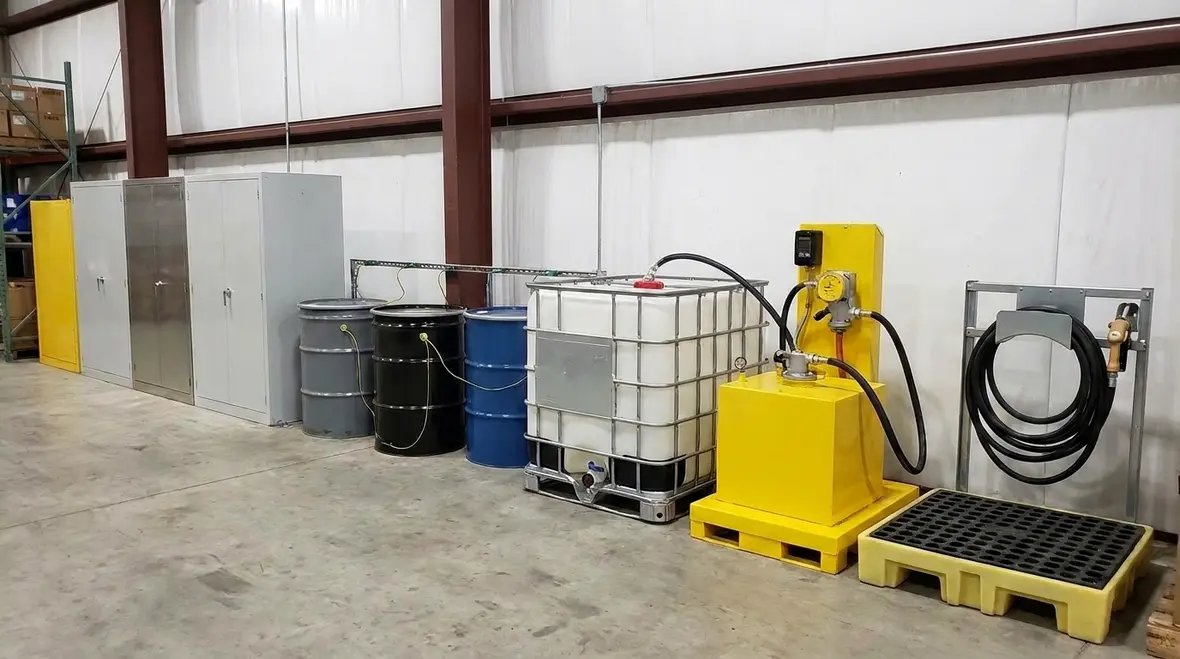
NFPA 30 Section 18.3: Definitions for Dispensing and Transfer
Quick Answer
NFPA 30 Section 18.3 definitions dispensing transfer clarify how the standard categorizes flammable and combustible liquid operations. This classification directly affects where equipment may be installed, how systems must be inspected, and which control measures apply when liquids move between containers, areas, or storage states.
Why NFPA 30 Section 18.3 definitions matter on real projects
Commercial, industrial, and retail facilities routinely encounter situations where liquids are moved for receiving, batching, refueling, cleaning, or process supply. NFPA 30 Section 18.3 definitions dispensing transfer are not academic labels. They determine the compliance pathway for approvals, safeguards, maintenance practices, and inspection frequency.
When a site misclassifies an operation, the facility often follows the wrong installation and inspection expectations. That gap can surface during internal audits, insurance reviews, or authority having jurisdiction (AHJ) inspections, particularly around piping, pumps, hose connections, nozzles, spill control, bonding and grounding, and documentation.
For a practical compliance overview of how NFPA 30 regulates flammable liquids, Kord Fire Protection recommends reviewing how NFPA 30 regulates flammable liquids.
Facilities that also need broader protection planning for flammable liquid hazards can review Kord Fire Protection’s layered fire protection system for flammable liquids for a practical look at how containment, suppression, and inspection strategies work together.
What Section 18.3 typically covers: dispensing vs. transfer
NFPA 30 Section 18.3 definitions dispensing transfer focuses on the operational terminology used throughout the flammable liquid requirements. Facilities use these definitions to differentiate between providing liquid to a point of use and moving liquid from one container or location to another as part of supply or distribution.
Dispensing (operational intent and point of use)
“Dispensing” generally refers to providing flammable or combustible liquids from a supply to an intended use location. In facilities, dispensing commonly includes activities such as filling containers, fueling equipment, or supplying liquid to a process at a point where the liquid is used immediately or for a controlled task.
From a fire safety standpoint, dispensing activities are where ignition sources, operator interface, and spill potential tend to concentrate. That is why dispensing setups often require robust equipment selection, controlled hose management, and verified grounding and bonding practices.
Transfer (movement between containers, areas, or systems)
“Transfer” generally refers to moving liquid from one location or container to another. Transfer operations often include receiving liquids into bulk storage, pumping from one tank to another, transferring from drums or totes into day tanks, or supplying bulk process vessels.
Fire safety risk in transfer operations is often tied to system integrity and containment during movement. That means the facility must emphasize valves, piping supports, pump seals, overfill protection, spill containment, and documented inspection of transfer hardware.
How these definitions affect compliance decisions
Even when a facility does everything “safely,” compliance failure often occurs when procedures and hardware are not aligned with the intended category. NFPA 30 Section 18.3 definitions dispensing transfer influence several practical compliance decisions.
Equipment selection and installation expectations
Dispensing and transfer setups typically require different hardware configurations. Dispensing configurations often emphasize nozzles, hose assemblies, breakaway protection, and safe handling controls. Transfer configurations often emphasize pump suitability, piping design, shutoff strategies, and containment systems appropriate to the transfer method.
If a site uses the same hose, nozzle, or connection method for both categories without a controlled procedure, it commonly creates uncertainty for inspectors about the applicable safeguards and maintenance standards.
Inspection, testing, and documentation scope
Many compliance activities hinge on what the system is doing. A transfer system that pumps liquid between containers may require documented checks for leaks at connections and pump seals, inspection of piping condition, and verification that spill response equipment remains readily available and serviceable.
A dispensing system typically requires verification that dispensing devices remain in safe operating condition, bonding connections are intact, and hoses and nozzles do not degrade in ways that increase release risk.
Common operational failure points
- Improper labeling and unclear procedures that cause operators to treat a transfer operation as dispensing, or vice versa.
- Connection practices that vary between shifts, such as inconsistent coupling methods or missing safety caps.
- Bonding and grounding drift due to maintenance, equipment replacement, or corrosion at contact points.
- Hose and nozzle wear that increases permeability, abrasion damage, or malfunctioning shutoffs during high use.
- Overfill and control gaps in transfer scenarios where alarms or automatic shutoffs are bypassed for productivity.
Commercial facility implementation: procedures that hold up under inspection
Facilities reduce compliance risk by converting NFPA 30 Section 18.3 definitions dispensing transfer into written operational controls, training, and maintenance routines that match the real workflow.
Operational workflow controls
A strong compliance program separates dispensing from transfer in job steps. Examples include using distinct connection points, requiring specific hose assemblies for each category, and prohibiting mixed use of fittings that blur the intended operational classification.
Kord Fire Protection commonly helps customers address practical workflow issues, such as where operators store hoses and caps, how they manage coupling during shift changes, and how site maps and placards clearly indicate authorized locations for each operation type.
Maintenance and inspection alignment
Maintenance must verify the physical components that prevent release. For dispensing, this can include ensuring hoses, nozzles, and shutoff mechanisms remain functional and compatible with the liquid. For transfer, this can include leak checks at flanges and threaded connections, verification of pump seal condition, and confirmation of overfill protection performance.
Facilities that maintain equipment correctly still sometimes fail inspections if they cannot demonstrate inspection frequency, recorded results, and corrective action completion when issues are found.
Training that reinforces correct categorization
Training should reflect the definitions operationally. Operators must understand why the facility treats transfer as transfer and dispensing as dispensing, including the safety impact on containment, release prevention, and emergency response readiness.
The most common training gaps occur when contractors or temporary staffing perform tasks without the site’s procedural boundaries, or when the facility does not update training after equipment changes.
How Kord Fire Protection supports ongoing compliance
Compliance with NFPA 30 is not a one-time documentation exercise. Dispensing and transfer operations require ongoing verification that equipment and procedures remain aligned with NFPA 30 Section 18.3 definitions dispensing transfer and related installation requirements.
Kord Fire Protection supports commercial facilities with practical, inspection-ready service approaches that emphasize field verification, clear maintenance outcomes, and corrective action discipline. This support helps reduce surprise findings during AHJ reviews and supports safer day to day operations.
If a facility needs to confirm how its current dispensing and transfer practices map to NFPA 30 expectations, Kord Fire Protection can assist with a structured compliance review and maintenance planning aligned to the site’s actual workflow.
For facilities evaluating suppression options tied to flammable liquid hazards, Kord Fire Protection’s fire suppression system services page is a useful next step for understanding inspection, maintenance, and system support options.
Frequently Asked Questions
Next step: tighten definitions, procedures, and inspection records
Facilities should confirm their current dispensing and transfer workflows align with NFPA 30 Section 18.3 definitions dispensing transfer, then verify that procedures, equipment, placards, training, and maintenance records consistently reflect those definitions. If the facility cannot clearly show how each operation is controlled and inspected, it should request a compliance-focused review. Kord Fire Protection can help map real site practices to NFPA 30 expectations and build an inspection-ready maintenance plan.

Join Our Newsletter!
Get the latest fire safety tips delivered straight to your inbox From our Newsletter.



