
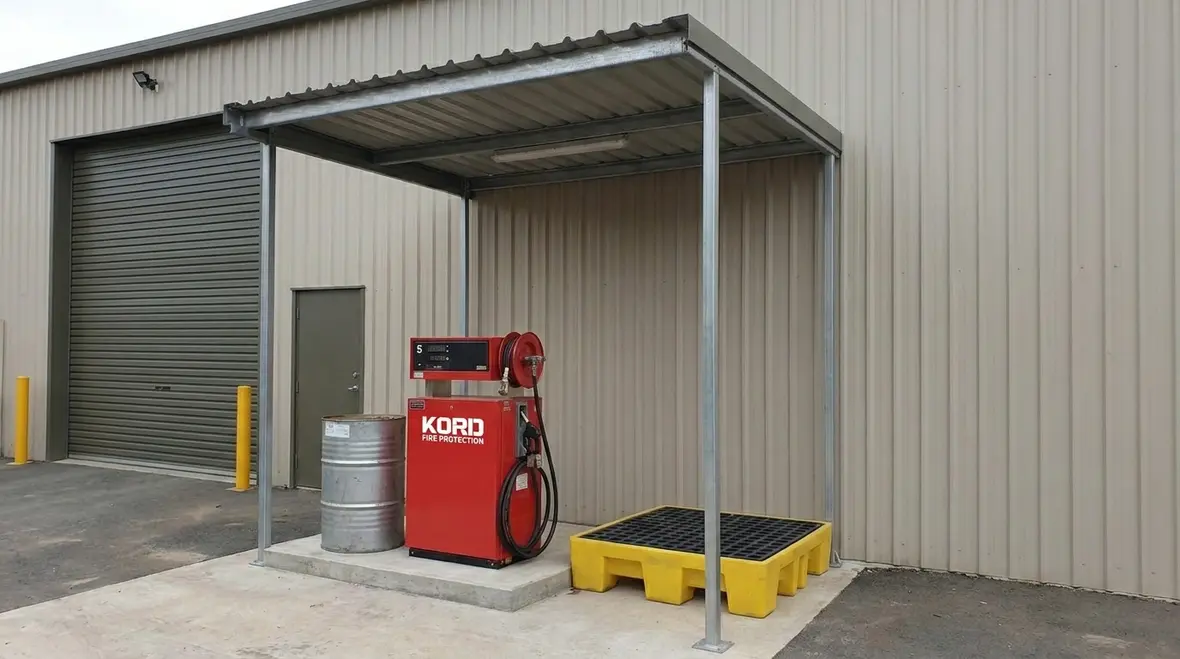
NFPA 30 Section 13.18: Dispensing Liquids in Detached Buildings
Quick Answer
NFFA 30 Section 13.18 governs how facilities dispense flammable and combustible liquids when the dispensing point is located in a detached building. Compliance focuses on containment, spill control, ventilation, equipment suitability, bonding and grounding, and inspection and maintenance controls to prevent ignition and fire spread.
Why NFPA 30 Section 13.18 matters for detached dispensing points
Detached buildings change the risk profile. Fire and smoke can still threaten the main facility, but the exposure pathway shifts to how vapors are handled, how ignition sources are controlled, and how leaks and spills are limited until responders arrive. Under NFPA 30, NFPA 30 Section 13.18 dispensing detached buildings requires facilities to treat the dispensing area as a purpose built hazard control zone, not as a general utility space.
Commercial, industrial, and retail operators often experience compliance gaps when they retrofit tanks and dispensers without aligning building systems, electrical classification, and operating procedures with the standard. Kord Fire Protection helps facilities manage these gaps through practical inspection planning, documentation control, and targeted testing and maintenance that supports ongoing compliance.
For teams building a stronger compliance program around inspections and ongoing service, inspection, testing, and maintenance support can help tie the paperwork and the field conditions together naturally. ([kordfire.com](https://kordfire.com/itm-fire-protection-inspection-testing-maintenance/?utm_source=openai))
What NFPA 30 Section 13.18 expects at the dispensing location
NFPA 30 Section 13.18 dispensing detached buildings centers on controlling ignition potential and limiting release. While specific requirements depend on the liquid class and the facility design, the core compliance themes consistently include:
- Appropriate equipment for flammable service including pumps, hoses, nozzles, and motors suited for the hazard environment.
- Vapor control supported by ventilation design and operational checks.
- Spill containment using barriers and drainage arrangements that prevent spilled liquid from migrating to drains, sumps, or surrounding areas.
- Bonding and grounding to prevent static discharge during transfer.
- Control of ignition sources by limiting hot work, managing electrical connections, and maintaining equipment in safe condition.
In practice, NFPA 30 compliance success depends on how well these elements remain aligned after installation. Changes such as dispenser upgrades, hose replacement, pump motor swaps, or new lighting plans can unintentionally break the original hazard control strategy.
Operational controls that make or break compliance during dispensing
Even when the building and equipment are installed correctly, day to day operation often introduces risk. Facility procedures must ensure that dispensing remains within the safe boundaries set by NFPA 30 Section 13.18 dispensing detached buildings.
Transfer procedures and static control
Operators must use approved bonding and grounding configurations and follow safe transfer behavior. Common failure points include worn bonding leads, missing grounding clips, damaged dispenser cords, and improper hose handling that allows separation from the bonding point. Static accumulation is a recurring ignition pathway during slow flow, high turbulence transfer, and repeated topping off.
Hose management and leak prevention
Detached dispensing buildings often use longer runs or higher access complexity than indoor systems. Hose wear and nozzle dripping become routine if inspection is not enforced. Facilities should implement pre use checks for:
- Cracks, blistering, or hardening of hose cover material
- Coupling security and seal condition at both ends
- Nozzle latch function and shutoff performance
- Visible seepage at fittings, gaskets, and pump connections
Kord Fire Protection supports facilities by strengthening inspection and maintenance workflows that catch these issues before they lead to uncontrolled releases.
Ventilation performance and operating discipline
Ventilation systems must perform as designed. Operators typically compromise ventilation by blocking louvers, disabling fans during maintenance, or storing materials that alter airflow patterns. Compliance requires verification that ventilation is active when dispensing occurs, and that fans and ducting remain unobstructed, properly maintained, and supported by a documented maintenance schedule.
Engineering and building features: containment, drainage, and exposure control
Detached buildings require reliable containment so that spills do not propagate beyond the dispensing footprint. NFPA 30 Section 13.18 dispensing detached buildings expects the facility to address how liquid is captured, how it is prevented from migrating into the broader site, and how vapors are controlled.
Containment systems and drainage strategy
Where floors drain, the drainage arrangement must protect against spreading flammable liquid to locations that can ignite. Common operational errors include:
- Blocked containment sumps or improperly maintained separators
- Drain covers left open or removed
- Accumulated debris preventing effective collection
Inspection programs should include verification of the containment integrity, condition of sealing surfaces, and housekeeping discipline that prevents minor leaks from becoming major incidents.
Electrical and ignition source management
Dispensing areas frequently require electrical systems that match the hazardous environment classification. The most frequent issues involve modifications that introduce noncompliant fittings, damaged cables, or inappropriate lighting or extension cords. A controlled process for electrical work and equipment replacement reduces rework and audit exposure.
For broader context on how NFPA 30 regulates flammable liquid hazards across facility life cycles, use this technical resource: How NFPA 30 regulates flammable liquids.
Inspection, testing, and maintenance: how compliance stays current
NFPA 30 compliance depends on demonstrable ongoing performance. For NFPA 30 Section 13.18 dispensing detached buildings, inspection and maintenance should focus on maintaining the hazard controls that limit ignition and release.
Equipment-focused inspection checklist
At minimum, a practical program should track condition and performance of dispensing components:
- Pumps, motors, and power connections for deterioration or abnormal operation
- Hoses, nozzles, breakaway devices if used, and coupling integrity
- Bonding and grounding continuity and connection condition
- Valves and shutoff mechanisms for reliable operation
- Ventilation fans, louvers, duct condition, and operational interlocks
Documentation and audit readiness
Commercial facilities frequently fail compliance not because the hardware is wrong, but because maintenance proof is incomplete. Records should include:
- Inspection frequency and responsible personnel
- Test results or condition grading criteria
- Corrective actions, dates, and parts replacement details
- Change management for upgrades or repairs
Kord Fire Protection assists organizations in building an audit ready compliance system that aligns inspection outcomes with the expectations of NFPA 30 and the realities of daily operations.
Common compliance challenges in detached buildings
Facilities commonly encounter recurring challenges when implementing NFPA 30 Section 13.18 dispensing detached buildings:
- Uncontrolled modifications: Lighting, electrical panels, and enclosure changes that affect hazardous area protection.
- Housekeeping drift: Debris accumulation around dispensers and vents that degrades ventilation and containment performance.
- Static control breakdown: Loose bonding connections, missing clips, or damaged leads after routine servicing.
- Drainage and spill management failures: Blockages or improper maintenance that allow migration beyond containment.
- Procedure gaps: Inadequate training, incomplete transfer checklists, and poor incident reporting after minor leaks.
These issues are preventable with a structured compliance program that includes equipment checks, facility inspections, and maintenance controls that remain consistent even when contractors perform repairs.
Frequently Asked Questions
Conclusion and Call to Action
NFPA 30 Section 13.18 dispensing detached buildings requires more than correct initial installation. Facilities must sustain safe transfer conditions through verified ventilation, spill containment, bonding and grounding integrity, and disciplined inspection and maintenance records. Kord Fire Protection helps commercial operators close compliance gaps with practical testing, targeted maintenance support, and documentation that stands up to audits. Contact Kord Fire Protection to review your detached dispensing setup and build a maintenance plan aligned to NFPA expectations.

Join Our Newsletter!
Get the latest fire safety tips delivered straight to your inbox From our Newsletter.



