
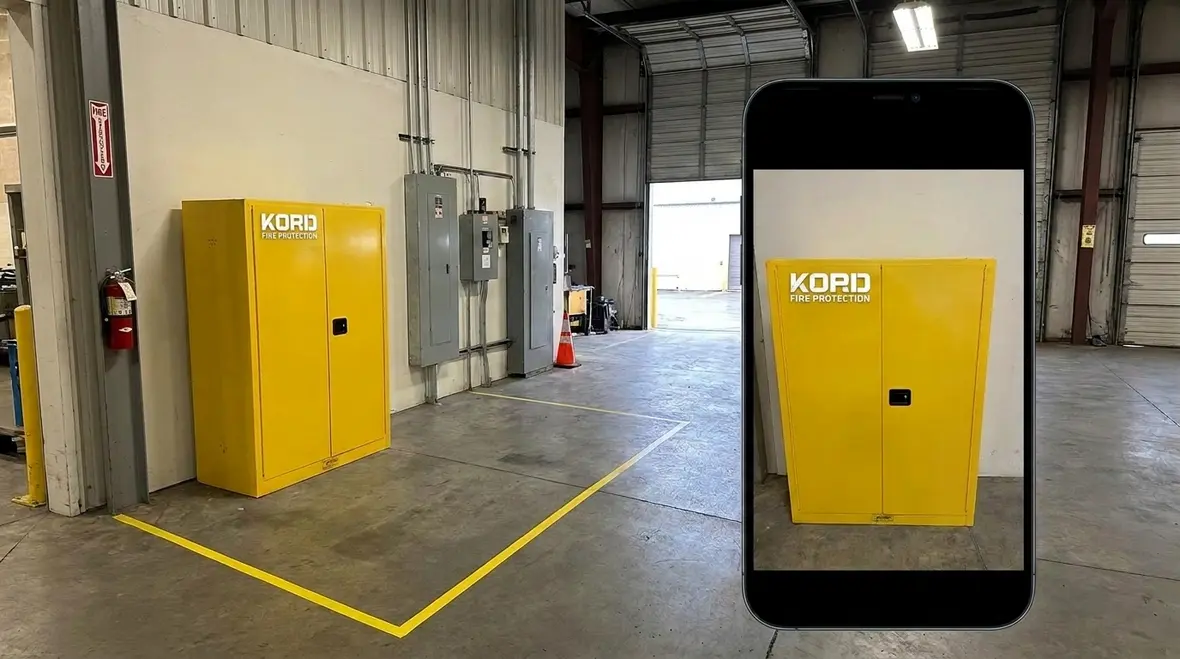
NFPA 30 Section 14.6: Designated Sites for Hazmat Lockers
Quick Answer
NFPA 30 Section 14.6 designates where hazmat lockers may be placed to control fire and vapour hazards. It focuses on site selection, separation from ignition sources, protection of the surrounding area, and ongoing readiness. Facilities must verify locker placement and maintain the system to stay compliant.
What NFPA 30 Section 14.6 requires for hazmat locker designated sites
NFPA 30 Section 14.6 designated sites hazmat lockers are not simply “wherever they fit.” The standard ties the locker location to hazard reduction principles: controlling spills, limiting exposure of the locker to ignition sources and external fire involvement, and ensuring the area around the locker supports safe storage operations. For commercial, industrial, and retail facilities, compliance is achieved through a documented location strategy, correct separation distances, and a maintenance program that keeps both the locker and the site environment functioning as intended.
Facilities often assume the locker itself provides the main protection. In practice, the “designated site” is part of the safety system. Even a compliant locker can fail to meet performance expectations if it is installed near uncontrolled ignition sources, in a poorly ventilated area, in a route where vehicles or forklifts strike equipment, or in a location that blocks access for emergency response.
Near the top of any compliance conversation, it also helps to connect locker placement with the broader maintenance picture. For facilities reviewing surrounding protection systems at the same time, commercial fire extinguisher service and certification can fit naturally into the same readiness plan.
How designated site selection impacts fire risk and operational safety
Fire safety outcomes depend on the interaction between stored flammable or combustible liquids and the surrounding environment. NFPA 30 Section 14.6 designated sites hazmat lockers places the emphasis on reducing escalation pathways. Site selection should consider the following operational hazards.
1) Control of ignition exposure
Lockers should not be located where routine activities or building systems can create ignition exposure. This includes proximity to:
- Charging stations, generators, heaters, and unsealed electrical equipment
- Vehicle routes, idling zones, and areas where exhaust can influence vapour ignition risk
- Welding, grinding, and maintenance work zones without procedural controls
Compliance should be supported by a site review that maps likely ignition sources against the locker location and documents controls such as hot work procedures and no ignition policies.
2) Spill control and surface compatibility
If a container leaks or is overfilled, the designated site must support safe outcomes. The surrounding surface should limit spread, resist degradation from the liquids, and avoid creating additional hazards (for example, materials that absorb fuel and later release vapours). The site also must support containment concepts consistent with the overall storage and hazard control plan.
3) Protection from external fire involvement
The locker location should limit the chance that nearby fires engulf the locker. Typical failure points include locker placement against combustible walls, inside areas with high transient combustibles, or along corridors where fires can propagate from stored inventory or waste accumulation.
4) Access, egress, and emergency operations
Lockers must remain reachable under emergency conditions. If access is blocked by shelving, pallets, or temporary storage, responders cannot apply the intended hazard response. This is a common audit finding in commercial facilities where short term staging becomes routine.
Where NFPA 30 compliance breaks down in real facilities
Most non compliance is not caused by misunderstanding the concept of “designated site.” It comes from site drift over time. Facilities change layouts, add equipment, expand storage, or modify electrical systems. NFPA 30 Section 14.6 designated sites hazmat lockers must be revisited whenever the hazard profile or occupancy plan changes.
Common operational and maintenance failure points
- Locker moved without a formal review: A small relocation to accommodate workflow causes separation failures and creates new ignition exposure.
- Blocked clearance: Labels are removed, doors cannot open fully, and access pathways become congested with stock.
- Mechanical damage: Forklifts strike locker bases or anchorage, creating integrity issues and alignment problems.
- Corrosion and seal degradation: Continuous exposure to vapours, cleaning chemicals, or washdown can compromise locker performance.
- Missing inspection documentation: Staff cannot demonstrate that checks and repairs occur on schedule.
Commercial environments such as warehouses, retail back rooms, and light industrial workshops often have high movement and frequent layout changes. A compliance program that treats locker sites as “set and forget” tends to fail at the operational level long before it fails on paper.
Design features and inspection focus for hazmat lockers on designated sites
Once the designated site is selected, performance depends on inspection discipline. A robust program covers both the locker and the installation environment. Kord Fire Protection supports commercial clients by aligning inspection and maintenance processes to real site conditions.
Key inspection areas that should be verified
- Locker placement and anchorage: Confirm the unit remains secured, aligned, and positioned within the approved designated site boundaries.
- Door operation and latching: Ensure closures function properly to limit vapour escape. Check that seals are intact and latch mechanisms are not binding.
- Container compatibility: Validate that the stored liquids match the locker intended use and container types, including compatibility with seals and internal surfaces.
- Spill and drainage response: Check that the designated site surface does not deteriorate and that any spill management approach remains accessible.
- Clearance and access routes: Measure clearance and verify that emergency access is maintained year round.
Inspection mechanisms and common “hidden” issues
Many failures occur without visible damage. For example, door alignment can drift slightly after impact, reducing seal effectiveness. Seals can harden due to chemical exposure even when the locker looks intact. Routine inspections should include functional tests and physical checks, not only a visual pass.
If the facility also manages flammable liquids under NFPA 30, a broader compliance review strengthens the hazmat locker program. For supporting context on how NFPA 30 regulates flammable liquids, see how NFPA 30 regulates flammable liquids. This supports consistent hazard thinking across storage, handling, and designated site controls.
Operational procedures that keep designated sites compliant
Compliance requires more than correct installation. Facilities should implement procedures that protect the designated site from day to day changes.
Facility SOPs to implement
- Locker site map and sign off: Maintain an updated site diagram showing locker location, access routes, and nearby ignition sources. Require sign off for any change in layout.
- Hot work and ignition control coordination: Ensure permits and controls cover work near designated sites, including temporary ignition risks from maintenance.
- Inventory handling discipline: Limit storage levels to approved quantities and ensure containers are capped before moving the operational area.
- Periodic walkthroughs: Assign supervisors to verify clearance, door operation, and the absence of temporary obstruction.
- Incident response triggers: Define what happens if a spill occurs, if a container is damaged, or if a locker is struck by equipment.
These procedures should tie into inspection records so that audits can confirm the facility controls hazardous storage conditions throughout the year.
Why ongoing maintenance and testing matter for audits
Designated sites hazmat lockers under NFPA 30 are performance based. Even if the original installation met requirements, deterioration or operational drift can undermine safety. Auditors and insurers typically look for evidence of ongoing control, including:
- Scheduled inspection intervals and completed records
- Corrective actions with documented closure dates
- Proof of staff awareness for clearance, access, and handling procedures
- Change management when floors, walls, electrical equipment, or storage layouts are updated
Kord Fire Protection helps commercial facilities manage the compliance lifecycle, including inspection planning, verification of locker and site conditions, and support for corrective actions. This reduces the risk of last minute audit preparation and closes the most common compliance gaps created by operational changes.
Frequently Asked Questions
Conclusion and call to action
NFPA 30 Section 14.6 designated sites hazmat lockers succeeds when facilities treat the locker location as a controlled hazard site with ongoing verification. Confirm access, separation from ignition exposure, surface compatibility, and site integrity, then maintain records that show consistent oversight. Kord Fire Protection can support commercial compliance through inspections, documentation, and corrective action planning. Book a site review to align your designated locker locations with current risk and audit expectations.

Join Our Newsletter!
Get the latest fire safety tips delivered straight to your inbox From our Newsletter.



