NFPA 30 Flammable and Combustible Liquids Overview
Every facility that stores or handles fuel, solvents, or alcohol based products eventually meets the same authority figure: the nfpa 30 flammable and combustible liquids code overview. It is not a suggestion. It is not a friendly guideline taped to a breakroom fridge. It is the roadmap for how liquids that ignite, flash, and burn should be stored, transferred, and protected. In this article, that nfpa 30 flammable and combustible liquids code overview will be unpacked in clear terms, the way Kord Fire Protection technicians explain it on job sites every day. Because while the code is written in formal language, its message is simple. Store it right. Protect it right. Or risk learning the hard way.
Understanding the Purpose Behind NFPA 30
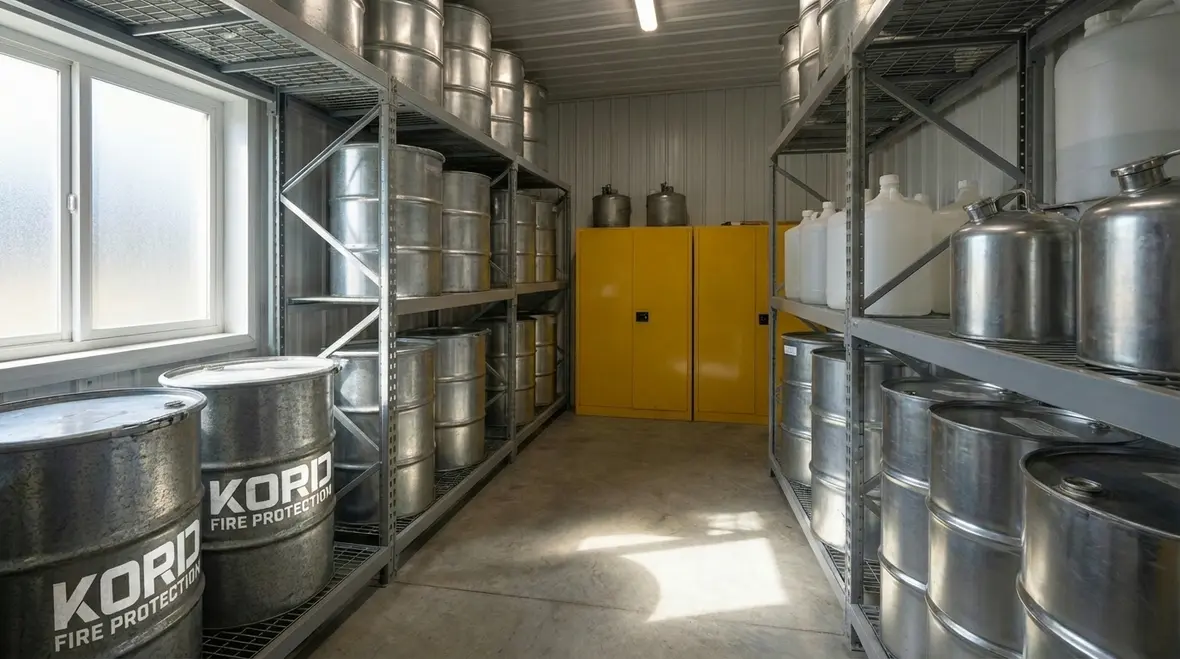
Before anyone talks about tank spacing or ventilation rates, it helps to understand the heart of the standard. NFPA 30 exists to reduce fire risk from flammable and combustible liquids. That sounds obvious. However, many facilities treat it like a checklist rather than a safety strategy.
Flammable liquids have low flash points. They ignite easily at normal temperatures. Combustible liquids require higher temperatures to ignite, yet they can still fuel serious fires. Therefore, the code separates them into classes based on flash point and boiling point. This classification drives everything else, from storage limits to fire protection design.
Kord Fire Protection technicians often explain it this way: the liquid itself is only part of the problem. The vapor is the real troublemaker. Vapors travel, collect, and wait for a spark. And unlike employees, they do not attend safety meetings.
Consequently, NFPA 30 focuses on preventing vapor release, controlling ignition sources, and limiting the spread of fire if one occurs. When facilities ignore the intent behind the rulebook, they miss critical protections. The code is not about paperwork. It is about physics, chemistry, and keeping people safe.

Common Misinterpretations Facilities Make
Many businesses believe that small quantities mean small risks. However, even limited volumes stored incorrectly can create dangerous conditions. One frequent mistake involves misclassifying liquids. A product labeled as combustible might behave like a flammable liquid under certain storage temperatures. As a result, facilities apply the wrong storage rules.
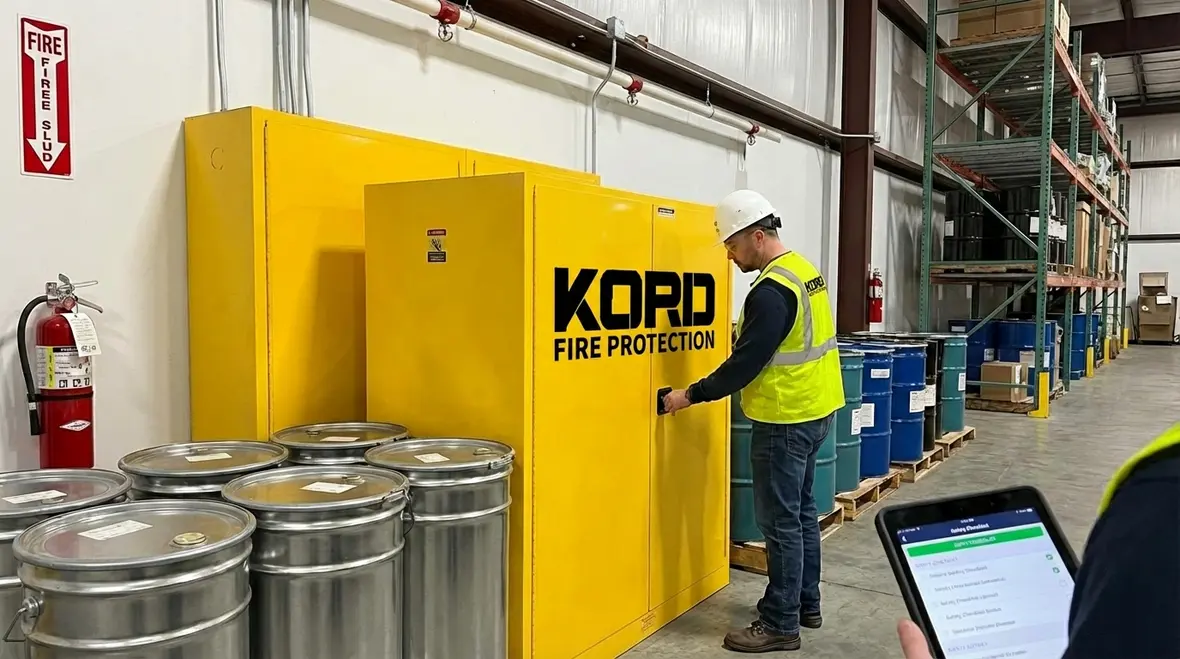
Another issue arises with storage cabinets. Some assume that placing containers inside any metal cabinet satisfies the requirement. In reality, NFPA 30 specifies construction details, fire resistance ratings, and capacity limits. A flimsy cabinet from an office supply store does not count. It might hold paperwork. It will not hold back a fire.
Improper separation distances also create problems. Facilities stack drums close together to save space. However, spacing affects heat exposure and fire spread. When drums sit too close, one failure can quickly become several.
Additionally, many sites overlook grounding and bonding during liquid transfer. Static electricity builds quickly, especially with low conductivity liquids. Without proper bonding, a single spark can ignite vapors. It is not dramatic. It is predictable.
Kord Fire Protection technicians regularly encounter these missteps during inspections. They do not scold. They educate. Because most errors come from assumptions, not bad intentions.
How Should Flammable Liquids Be Stored According to Code
When someone types into a search engine, “How should flammable liquids be stored according to code,” they want clarity, not legal language. The answer begins with classification and quantity.
First, facilities must identify the liquid class. Then, they determine the maximum allowable quantity for each control area. Control areas limit how much hazardous material can be stored within a fire rated space. If quantities exceed limits, additional protection measures apply.
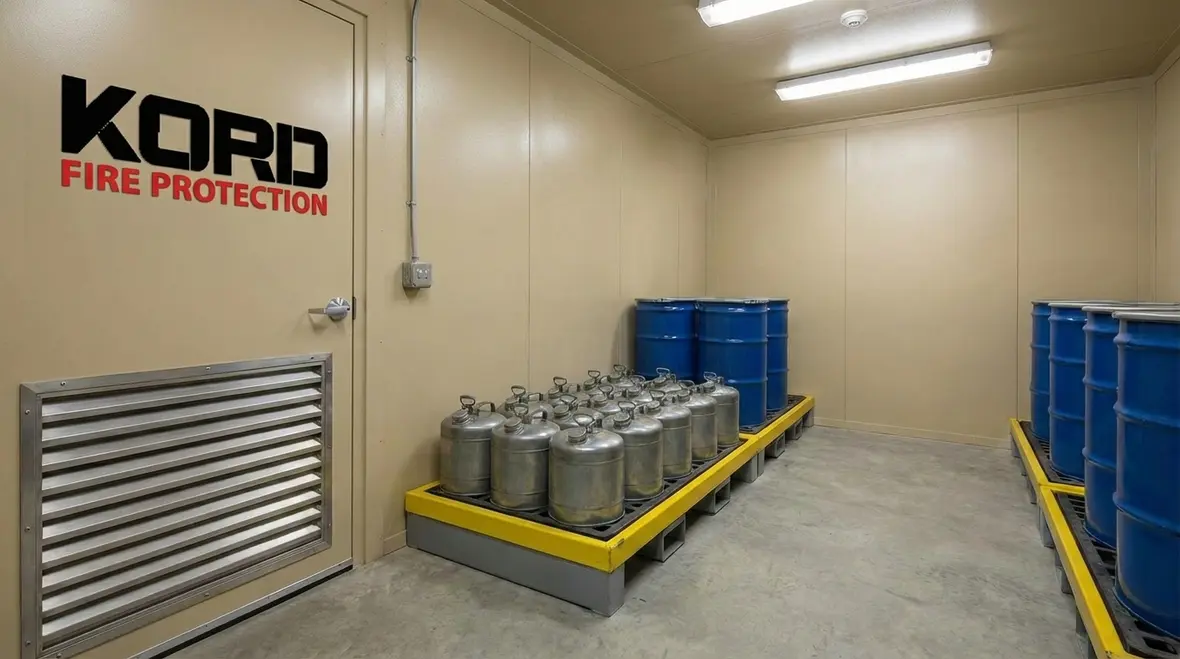
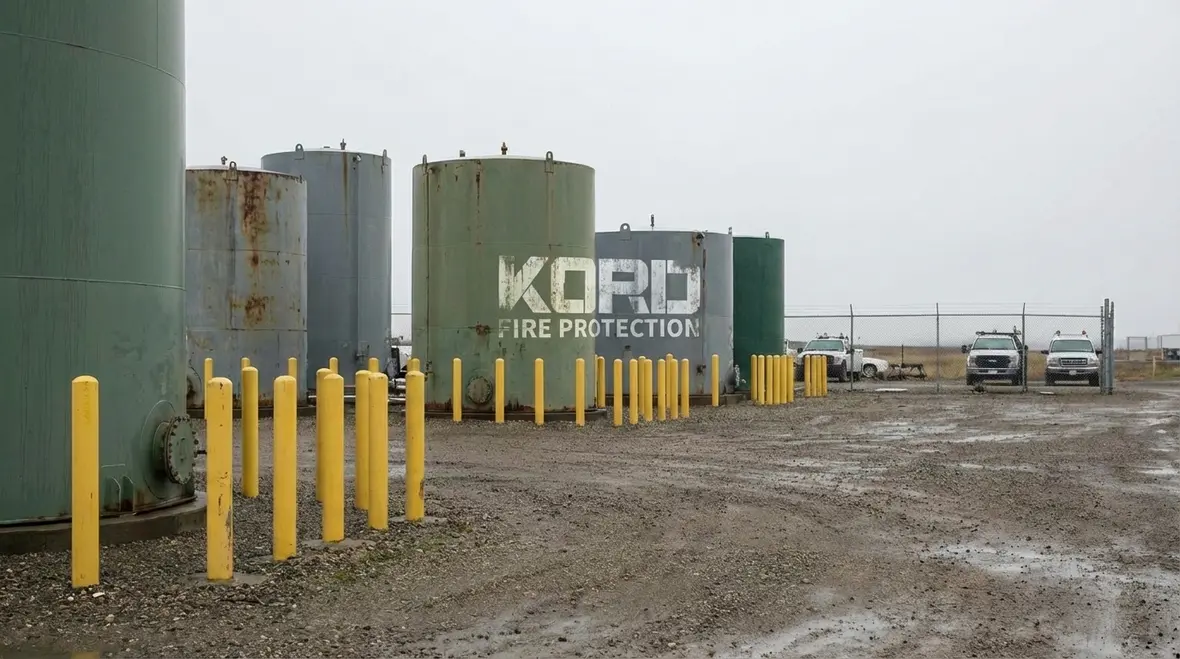
Approved containers are mandatory. These include listed safety cans, drums built to recognized standards, or tanks designed for flammable service. Furthermore, storage rooms often require fire rated construction, spill control, and mechanical ventilation.
Ventilation matters because vapors accumulate near the floor. Therefore, exhaust systems must draw air from low points. Meanwhile, makeup air must replace what is removed to prevent negative pressure issues.
Electrical equipment in storage areas may need to meet hazardous location requirements. That means explosion resistant fixtures and sealed wiring methods. It is not about looking rugged. It is about preventing ignition.
Finally, fire protection systems such as sprinklers must align with the hazard level. Standard sprinkler layouts may not suffice for high hazard liquid storage. Foam systems or increased densities may be required depending on the arrangement.
In short, storage is not just about where containers sit. It is about environment, design, and built in protection.
Connecting Storage Guidance to Deeper NFPA 30 Resources
For facilities that want to go deeper into specific storage scenarios, Kord Fire’s dedicated NFPA 30 flammable and combustible liquids guide walks through classifications, maximum allowable quantities, and system design in even more detail, using real world examples from warehouses, laboratories, and industrial plants.
Inside vs Outside Storage Requirements
Facilities often debate whether to store liquids indoors or outdoors. Each option carries its own rules and tradeoffs. The following comparison highlights key differences.
Indoor Storage
- Requires fire rated rooms in many cases
- Limited maximum allowable quantities
- Mechanical ventilation typically required
- Spill control and drainage provisions necessary
- Closer coordination with sprinkler design
Outdoor Storage
- May allow larger quantities with proper spacing
- Requires separation from buildings and lot lines
- Protection from vehicle impact often required
- Weather protection for containers needed
- Security measures to prevent tampering
Although outdoor storage can reduce building risk, it introduces exposure to weather and traffic. Conversely, indoor storage offers environmental control but demands stricter construction features. Kord Fire Protection technicians often help facilities weigh these factors based on site layout and operational flow.
What Inspectors Look for During an Evaluation
When inspectors walk into a facility, they do not start with a magnifying glass and dramatic music. Instead, they follow a logical path shaped by the code.
They check container labeling and condition. Dented or leaking drums raise immediate concern. Next, they review quantities within each control area. If volumes exceed limits, they verify that additional safeguards exist.
Inspectors also evaluate ignition sources. Are there open flames nearby? Is electrical equipment rated properly? Are forklifts protected against sparks? These details matter because ignition control forms the backbone of prevention.
Spill containment receives close attention. Floors should prevent liquid migration to other areas. Drains must not allow flammable liquids to enter public sewer systems without proper safeguards.
Documentation plays a role as well. Facilities should maintain safety data sheets, training records, and maintenance logs for fire protection systems. While paperwork alone does not stop fires, it proves that systems receive care.
As Kord Fire Protection technicians often say, inspections should not feel like surprise exams. When facilities build compliance into daily operations, evaluations become routine conversations rather than stressful events.
Integrating Fire Protection Systems with Liquid Storage
Fire protection design must match the hazard. That sounds simple. However, many facilities install standard sprinkler systems without considering liquid classification or storage arrangement.
For example, rack storage of flammable liquids can demand higher sprinkler densities. In some cases, foam water systems provide better control by suppressing vapors. Therefore, design professionals must coordinate closely with operations teams.
Alarm systems also require attention. Early detection reduces response time. Heat detectors, flame detectors, or enhanced smoke detection may be appropriate depending on the environment.
Moreover, emergency planning ties directly into system design. Facilities should train staff on spill response, fire extinguisher use, and evacuation procedures. A well designed system loses value if no one knows how to react.
Kord Fire Protection technicians emphasize integration. Tanks, cabinets, sprinklers, alarms, and training must work together. Think of it as assembling a team. If one player skips practice, the whole defense suffers.
Linking NFPA 30 Storage with Fire Pump Reliability
Because flammable and combustible liquids can drive high sprinkler demand, many facilities pair NFPA 30 compliance with a strong fire pump program. Kord Fire’s article on fire pump testing requirements explains how weekly churn tests, annual flow tests, and routine inspections keep water supplies ready when those systems are called to control a liquid fire.
Building a Culture That Respects the Code
Compliance is not a one time project. It is a culture. Facilities that succeed treat the code as part of daily operations rather than an annual scramble before inspection.
Leadership sets the tone. When managers prioritize safe storage layouts and proper maintenance, employees follow suit. Conversely, when shortcuts go unchecked, risk grows quietly.
Regular internal audits help identify drift from original design. Over time, storage areas expand, containers multiply, and processes change. Without review, facilities outgrow their initial protection plans.
Training should remain practical. Instead of reading regulations word for word, teams benefit from scenario based discussions. What happens if a drum leaks? Where does the liquid flow? Who responds first? These conversations make the rules real.
And yes, there is room for humor. Kord Fire Protection technicians sometimes joke that flammable vapors have no sense of humor at all. They will not laugh at a shortcut. They will simply ignite. The room usually goes quiet after that. Message received.
Frequently Asked Questions
Conclusion: Turning Knowledge into Protection
The rules within NFPA 30 carry weight because fire does not negotiate. Facilities that understand the intent behind the standard protect more than property. They protect people, reputations, and futures. Kord Fire Protection technicians stand ready to translate complex requirements into clear action steps. When storage, systems, and training align, risk shrinks.
If your facility handles flammable or combustible liquids and you are unsure whether your pumps, sprinklers, and storage plan are truly in sync, this is the time to ask for help. Explore Kord Fire’s guide to fire pump servicing and then contact Kord Fire Protection to schedule a consultation. Reach out today and let experienced professionals help build a safer, stronger operation from the ground up.
Know Your Weapon Before You Fight the Flame
Kord Fire Protection is your go-to when it comes to all things fire protection. For over 20 years, we’ve been serving Southern California with the quality service and equipment to keep your home or business safe at all times. Our competitive prices reflect our unwavering commitment to protecting what matters most in the event of a fire emergency. Give us a call, send an email, or use that form!

Join Our Newsletter!
Get the latest fire safety tips delivered straight to your inbox From our Newsletter.