NFPA 291 Section 4.12 Hydrant Flow Test Results Explained
Quick Answer
NFPA 291 Section 4.12 explains how to read hydrant flow test results and turn them into usable fire flow data. It helps facilities understand water supply, pressure loss, and system limits. For industrial, retail, and commercial sites across Australia, Kord Fire Protection can turn those numbers into clear action, practical risk control, and stronger fire safety planning.
If you need support beyond the spreadsheet stare-down, Kord also offers full fire protection services that help connect hydrant data to the wider fire strategy across active commercial sites.
Why Hydrant Flow Test Results Matter
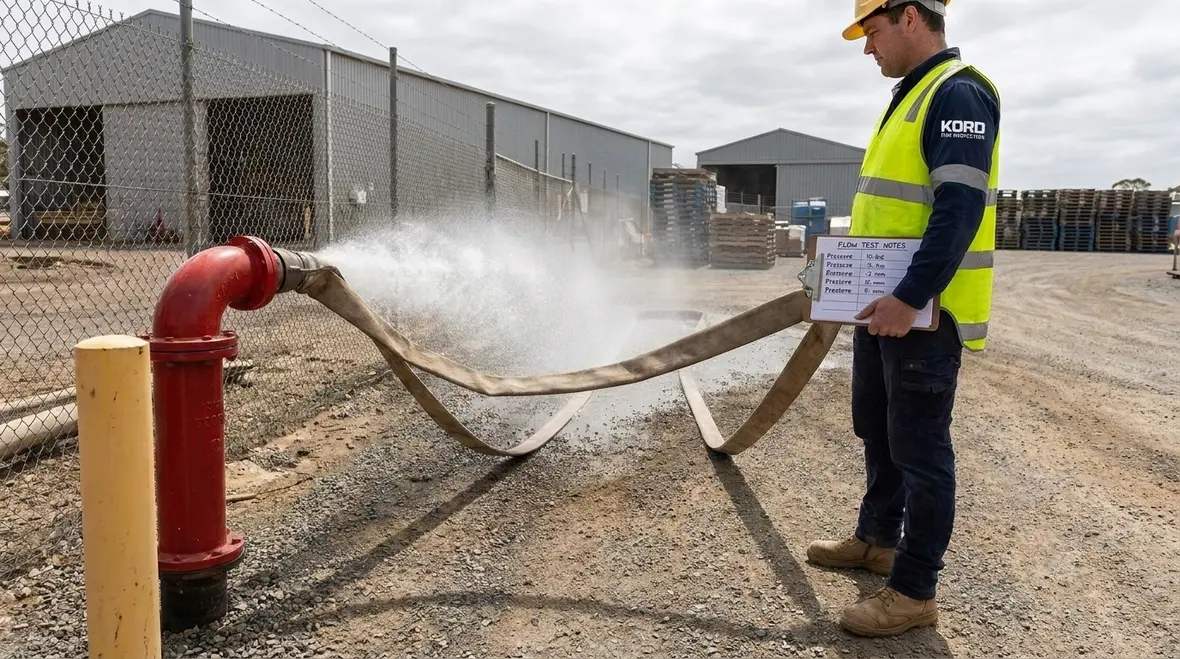
When a site gets hydrant flow test results, the numbers do more than sit on a page looking serious and important. They show how much water a supply can really deliver during a fire event. That matters because a strong building, shiny equipment, and a tidy site still need water that can keep up when the heat turns ugly.
For industrial plants, shopping centres, warehouses, and large commercial sites across Australia, these results help owners and managers judge whether the site can support fire protection needs. In the first 100 to 150 words of any proper review, those results should already guide the conversation. Otherwise, the report becomes decorative paper, and nobody needs that kind of office art.
The value is not just in proving that water exists. Of course water exists. The question is whether it shows up with enough pressure and volume when the system is under real demand. That is the part that separates a useful fire protection plan from one built on crossed fingers and hopeful nodding.
Why the report is more than a formality
A hydrant flow test report helps engineers, maintenance teams, insurers, and site managers speak the same language. It gives everyone a common reference point for supply strength, potential shortfalls, and upgrade timing. Without that, decisions can drift into guesswork, and guesswork is a terrible project manager.
How NFPA 291 Section 4.12 Works in Practice
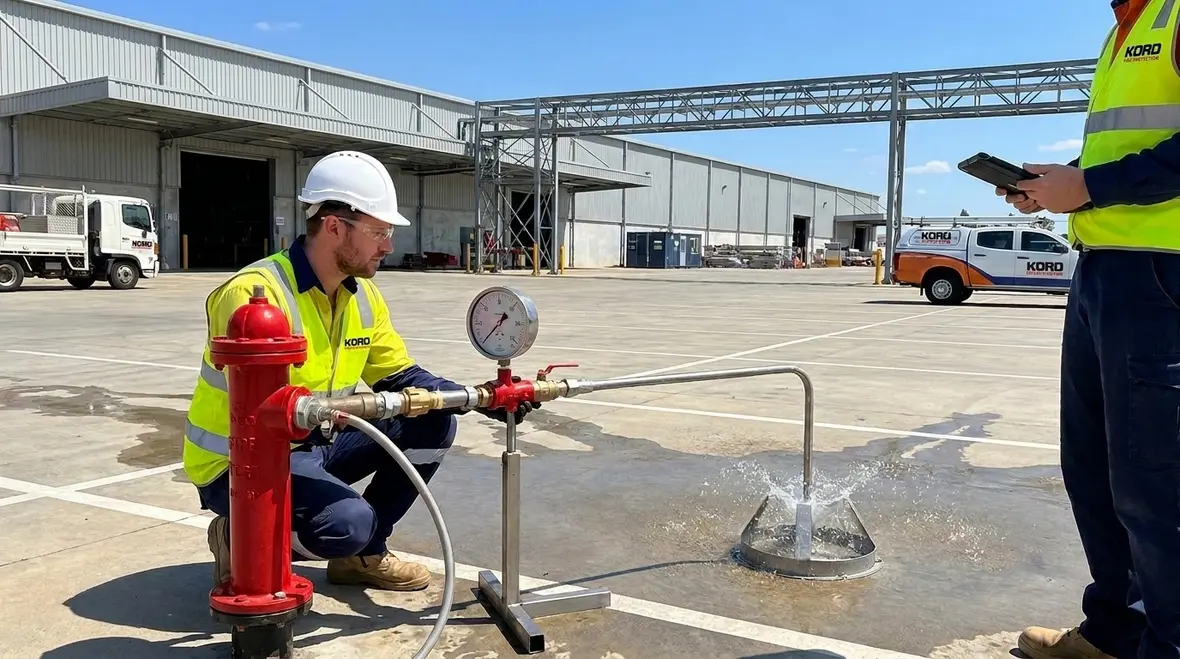
NFPA 291 Section 4.12 focuses on the calculation side of the test. In simple terms, it takes field data from the hydrant flow test and turns it into usable figures for fire flow planning. The process uses static pressure, residual pressure, and flow data to estimate the water supply available at a given location.
This matters because raw test readings can mislead people. A hydrant might show decent pressure at one moment, yet still drop too fast when demand increases. Therefore, the calculation result tells the real story. It shows how the system behaves under stress, not just how it looks on a calm day with no fire and no drama.
In practical reviews, teams look at how the measured data translates into likely fire performance, whether the available flow supports current building use, and whether the network has enough resilience for planned growth. That is where interpretation becomes essential. Numbers do not panic, improvise, or explain themselves. Humans still have to do that part.
What the calculation is trying to answer
At the heart of Section 4.12 is a simple business question dressed in technical clothing: how much dependable water can the site count on during an emergency? Once that answer is clear, everything from hydrant planning to suppression decisions becomes a lot less mysterious.

Key Numbers That Shape the Result
The calculation usually centers on a few core values. Each one plays a clear role, and together they reveal the site’s water supply strength.
- Static pressure: the pressure before water flows
- Residual pressure: the pressure left while water is flowing
- Flow rate: how much water moves during the test
- Calculated available fire flow: the estimated usable supply for fire response
These values help fire protection teams judge whether the water supply supports the risk level at the site. In many cases, the answer is not a simple yes or no. Instead, it shows limits, tradeoffs, and areas that need closer review. That is where experience matters, because numbers alone do not have a voice. They need a translator.
How each value changes the story
Static pressure offers the calm-before-the-storm baseline. Residual pressure shows what is left once demand starts pulling hard on the system. Flow rate reveals delivery capacity in motion. The calculated available fire flow then ties those pieces together into a figure that can be compared against real suppression demand. One number alone can flatter a system. Together, they are much less polite.
Interpretation Guide for Site Managers
How should a facility interpret hydrant flow test results? The answer starts with context. A result that works for a small retail site may fall short for a large warehouse or a high hazard industrial area. So, the calculation must match the building use, hazard type, and fire protection design.
Here is a simple way to read the results:
- If residual pressure stays strong, the water network likely has good capacity
- If pressure drops sharply, the supply may struggle during a fire event
- If the available fire flow is below the expected demand, the site may need added protection
- If results change over time, the system or water supply may be degrading
Because of that, the report should never be read in isolation. It should connect to sprinkler systems, hydrant spacing, pump needs, and overall site risk. That is the kind of joined up thinking that keeps people safe and keeps insurance teams from raising an eyebrow like a villain in a courtroom drama.
It also helps to compare fresh results with previous tests, planned renovations, storage changes, and operational shifts. A site that adds stock, machinery, partitions, or hazardous materials can quietly outgrow an older water supply assumption. That is usually discovered at the worst possible moment, because of course it is.

Two Column View of What the Calculation Tells the Business
Operational View
The calculation helps managers see whether the site has enough water for emergency response, planned upgrades, and compliance checks. It also supports maintenance planning before a weak supply becomes a costly problem.
From a day to day standpoint, this can influence inspection priorities, capital planning, contractor scope, and even how confidently a site proceeds with change. When the available flow is known and documented, decisions become cleaner and faster.
Risk View
The result shows where fire suppression may fail under load. It also helps identify sites that need boosters, storage tanks, or design changes to meet the actual hazard.
Risk reviews become much sharper when the business knows whether its water supply is merely acceptable on paper or genuinely dependable under stress. That difference can shape emergency response planning, insurance posture, and the urgency of upgrades.
Where Kord Fire Protection Adds Real Value
Kord Fire Protection can become a vital partner in this service because hydrant flow testing is only the first step. The real value comes from what happens after the numbers arrive. Kord Fire Protection can help interpret the result, compare it to site risk, and recommend the right next move.
For industrial, retail, and commercial clients across Australia, that support can save time and reduce confusion. In addition, Kord Fire Protection can assist with practical follow up work, including system reviews, fire protection upgrades, and guidance on how the water supply affects the wider fire strategy. That is useful, because a report without action is just a polite warning in a hard hat.
By working closely with site teams, Kord Fire Protection helps turn hydrant flow test results into decisions that support safety, compliance, and business continuity. That partnership matters most when a site has mixed uses, changing layouts, or growing fire risk.
For readers who want broader background, Kord also has a helpful fire hydrant flow test guide to water pressure and, where available, this related resource: NFPA 291 fire hydrant testing and marking guide 2026. Those internal references fit naturally here because flow test calculations make far more sense when connected to real field testing and hydrant marking practices.
From report to action plan
The best support does not end with a neatly formatted document. It continues through review, prioritisation, remediation, and retesting. That is the difference between information and improvement, and most facilities would strongly prefer the second one.
What Facilities Should Do After the Test
After the calculations are complete, the next step is to act on the findings. Site leaders should review the result with a fire protection specialist, compare it to current system demands, and document any shortfalls. Then they should plan repairs, upgrades, or monitoring as needed.
It also helps to repeat testing on a set schedule. Water networks change, demand changes, and buildings change. Therefore, a result that looked solid two years ago may no longer hold up today. In fire protection, yesterday’s answer can age faster than a streaming subscription with too many logins.
Facilities should also track any related actions that come out of the review, whether that means hydraulic analysis, hydrant maintenance, pump review, storage planning, or broader suppression upgrades. The report should feed a living plan, not disappear into a folder where only dust and forgotten PDFs ever visit.
FAQ
Conclusion
NFPA 291 Section 4.12 gives facilities a clear way to read hydrant flow test results and make smart fire safety decisions. For Australian industrial, retail, and commercial sites, Kord Fire Protection can help turn those numbers into real protection.
Contact Kord Fire Protection to review your site, assess your water supply, and plan the next step with confidence.

Join Our Newsletter!
Get the latest fire safety tips delivered straight to your inbox From our Newsletter.