NFPA 25 Annex B Inspection Testing Maintenance Reports
Quick Answer: NFPA 25 Annex B gives fire protection teams a clear way to document inspections, testing, and maintenance. It helps facilities keep accurate records, reduce risk, and stay ready for audits. For industrial, retail, and commercial sites across Australia, Kord Fire Protection can help manage this work with skill, consistency, and calm confidence.
NFPA 25 inspection testing maintenance forms reports are the paper trail that proves a fire protection system has been checked, tested, and cared for properly. In plain terms, they turn maintenance into evidence. For commercial buildings, industrial sites, and retail spaces across Australia, that evidence matters. It supports safety, compliance, and smooth operations. Annex B of NFPA 25 gives a practical structure for those records, and it helps teams avoid the classic “we meant to file it” disaster that loves to appear during audits.
When sites want a broader support model around inspections, service intervals, and compliance readiness, Kord Fire Protection’s full fire protection services fit naturally into that conversation. The practical side of documentation works much better when the service work behind it is consistent, timely, and handled by a team that understands what each report is supposed to prove.

What Annex B Does for Fire Protection Records
Annex B in NFPA 25 offers sample forms and report templates for inspection, testing, and maintenance tasks. These tools help teams record what was checked, who checked it, when it happened, and what action followed. As a result, the records become easier to read, easier to store, and easier to defend if questions come up later.
For facilities that manage sprinklers, pumps, valves, tanks, hydrants, and alarms, this structure saves time. It also reduces confusion between contractors, site staff, and compliance teams. Moreover, it creates a stronger history of system performance, which can help spot repeat faults before they turn into expensive drama.
Why the sample structure matters
A lot of recordkeeping problems do not begin with laziness. They begin with inconsistency. One technician writes a detailed note, another writes three words, and six months later everyone is trying to decode what “minor issue, monitor” was supposed to mean. Annex B helps remove that mystery by giving teams a repeatable format that keeps the important information visible from one visit to the next.
That kind of repeatability matters because fire protection systems are not maintained once and forgotten. They are checked again and again over time. If the record format shifts every quarter, trends get harder to follow. If the format stays stable, the history becomes useful instead of decorative.
Why NFPA 25 Inspection Testing Maintenance Forms Reports Matter in Australia
Australian facilities often face multiple layers of duty, from internal safety rules to insurer expectations and local compliance needs. Therefore, clear documentation is not just neat paperwork. It is part of risk control. Strong NFPA 25 inspection testing maintenance forms reports help show that critical fire systems received proper care on a regular basis.
These reports also help business leaders see trends. For example, a valve that keeps sticking or a pump that struggles under load may not look urgent at first. However, repeated notes in the record can reveal a pattern. That gives the team time to act before a small issue becomes a shut down worthy surprise. Nobody wants that kind of plot twist.
Kord Fire Protection has also covered the broader relationship between documentation, routine service, and audit readiness in its article on fire protection for compliance and readiness in Australia. That larger picture matters here because forms only help when they sit inside a disciplined service process.

Records turn service history into decision making
A good report does more than prove that someone showed up. It shows what condition the system was in, whether anything changed, and what still needs attention. That makes the report useful to operations teams, finance teams, risk managers, and future technicians who would all prefer not to solve a mystery novel before breakfast.
In other words, records help connect technical details to business choices. If a site keeps seeing the same failures, leaders can decide whether repair, replacement, or a broader upgrade makes the most sense. Without clean records, those calls are slower and less confident.
What Information a Good Report Should Capture
A useful report should do more than collect signatures. It should tell the story of the system check in a clear and simple way. That means it should record the equipment type, location, test result, defects found, repairs needed, and the date of follow up. It should also show whether the system passed, failed, or needs more work.
In practice, the best forms keep details consistent across each inspection cycle. That makes them easier to compare over time. It also helps teams work faster because they do not need to rebuild the same report from scratch every visit. A solid format supports better decision making, and it keeps everyone speaking the same language.
Asset or equipment identification
Exact system location or zone
Inspection, test, or maintenance activity completed
Observed condition and measured result
Defects, impairments, or follow up actions required
Technician name, date, and sign off trail
Clarity beats complexity
The strongest reports are not the ones with the most jargon. They are the ones that a site manager, auditor, insurer, and technician can all understand without needing a translator. If a defect exists, it should be stated plainly. If a retest is needed, that should be obvious. If the system is impaired, nobody should have to squint at line seven and guess.
How Kord Fire Protection Can Support the Job
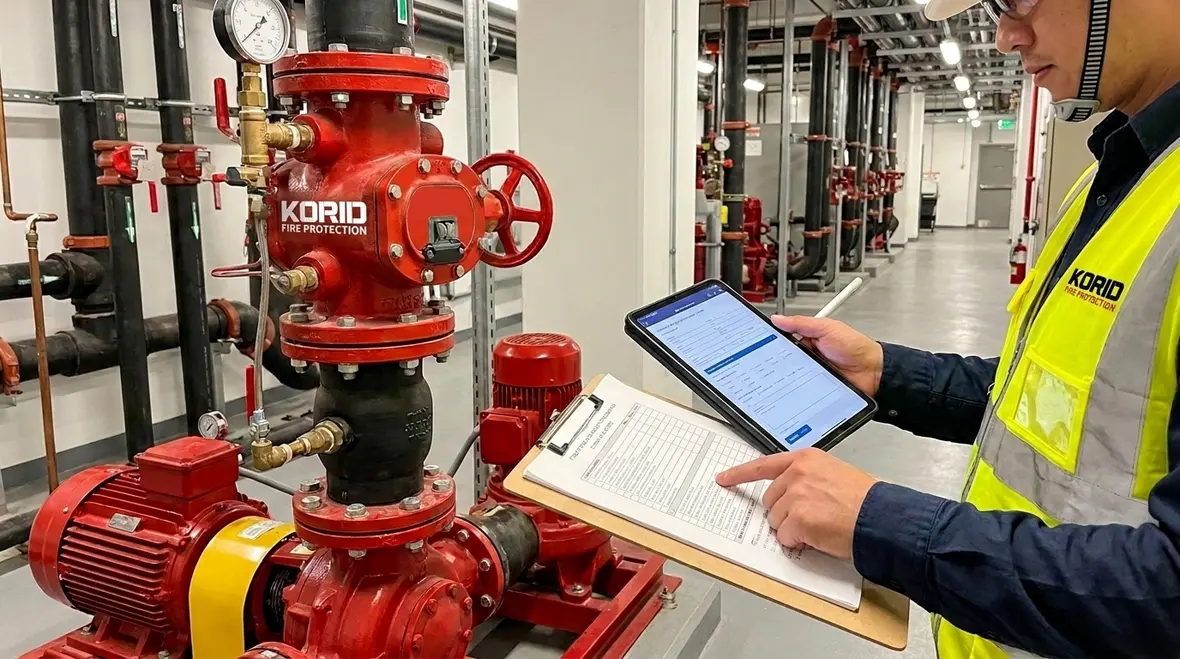
Kord Fire Protection can become a vital partner by helping facilities handle inspection, testing, maintenance, and documentation with confidence. In a busy industrial plant or a large retail site, that support can make the difference between a smooth program and a chaotic one.
Service support
Regular inspections, testing, and maintenance for fire protection systems.
Documentation support
Clear reporting that follows the structure needed for compliance and review.
In addition, Kord Fire Protection can help sites keep records organized, reduce missed tasks, and respond faster when defects appear. That matters because good fire protection is not only about equipment. It is also about the discipline behind the paperwork. The system may sit quietly in the ceiling for most of the year, but the records should never go quiet.
For readers who want more context on the wider standard, Kord Fire Protection also has a helpful breakdown here: NFPA 25 overview and water-based fire protection systems maintenance breakdown. It is a useful companion piece because Annex B makes much more sense when viewed as part of the full inspection, testing, and maintenance framework.
How to Build a Better Reporting Process
A better reporting process starts with consistency. First, the site should use the same form structure for each inspection cycle. Next, it should assign responsibility for review, sign off, and storage. Then, it should keep the reports in a place where they can be found quickly during audits, insurer checks, or internal reviews.
In addition, the process should connect the report to action. If a defect appears, someone should own the repair, track the timeline, and confirm completion. Otherwise, the report becomes a very expensive diary entry. Useful? Yes. Enough? Not even close.
A simple reporting workflow that actually works
Complete the inspection or test using a standard form.
Record results clearly while the details are fresh.
Flag any defect, impairment, or follow up item immediately.
Assign ownership for corrective action.
Store the finished report where the site can retrieve it fast.
Review trends over time instead of treating each report like a one off event.
That last step is easy to skip, but it is often where the biggest value sits. Reports are not just there to satisfy an outside reviewer. They are there to help the site get smarter about its own systems.
What Facilities Should Look for in a Service Partner
Facilities should look for a partner that understands both the technical side and the reporting side of fire protection. Experience matters, but so does communication. A strong partner will explain findings in clear terms, document results accurately, and keep the site informed when action is needed.
For industrial, retail, and commercial operations across Australia, that kind of support can reduce stress and save time. It can also help teams stay ready for audits and site reviews without scrambling at the last minute. And honestly, nobody enjoys the “where is that report from last quarter” scavenger hunt.
Qualities worth paying attention to
Consistent inspection and maintenance scheduling
Clear, readable reporting with meaningful notes
Fast communication when defects or impairments appear
A practical understanding of compliance expectations
Support that matches the pace and complexity of the facility
FAQ
Bring Order to Fire Protection Records
Strong fire protection needs strong records. Annex B gives facilities a clear way to document work, and Kord Fire Protection can help turn that structure into a reliable system. For Australian businesses that want less guesswork and more control, now is the time to tighten the process, improve the reporting, and keep safety ready for the real world.
When the paperwork is clear, the service history becomes useful, the next step becomes obvious, and the audit process becomes much less dramatic. That is the real value of good reporting. It does not just store information. It helps the whole fire protection program stay organized, accountable, and ready when it counts.

Join Our Newsletter!
Get the latest fire safety tips delivered straight to your inbox From our Newsletter.