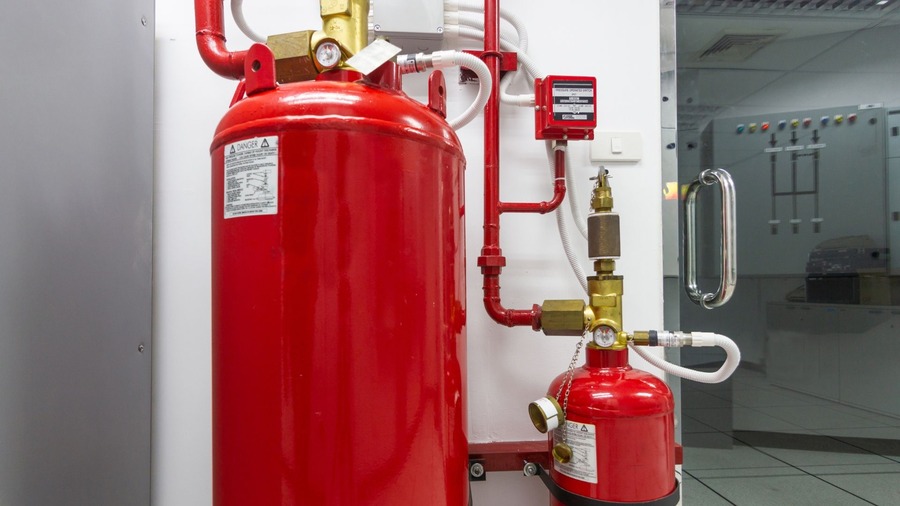
NFPA 25 § 8.2 Fire Pump Inspection Checklist Tracking
Quick Answer
A facility team that follows the NFPA 25 § 8.2 fire pump inspection items stays ready for dependable fire protection. This includes tracking inspection dates, documenting test results, and watching for pump performance drift. Kord Fire Protection can help turn the checklist into a reliable program your sites can actually keep up with.
In Australia, fires do not care how busy a facility is. They only care what works. That is why the fire pump inspection checklist NFPA 25 matters, especially under NFPA 25 § 8.2, where inspection items set the tone for ongoing readiness. Kord Fire Protection often sees facilities treat fire pumps like a “set and forget” asset, then they act surprised when performance trends shift. Instead, facility teams can track the right items, keep records clean, and reduce the chance of unpleasant surprises during audits or emergencies.
Now, let us walk through what facility teams should track, how to use the inspection items in daily operations, and where Kord Fire Protection can step in as a vital partner. Because yes, compliance is important. And no, it should not require a spreadsheet marathon at midnight.
If your team is tightening broader compliance workflows, Kord’s full fire protection services can support inspection scheduling, documentation consistency, and follow-through across the systems that share the same life safety spotlight.
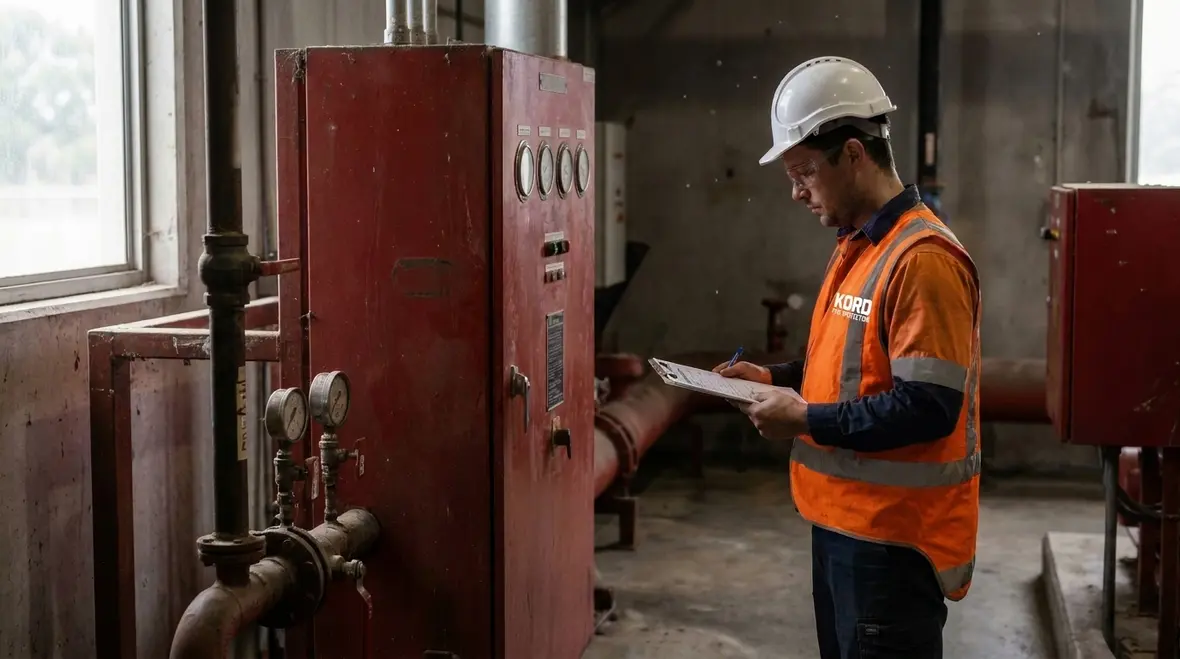
What NFPA 25 § 8.2 requires facility teams to track
Under NFPA 25 § 8.2, the goal stays consistent: confirm the fire pump system can deliver the required performance and respond as designed. Facility teams typically track items connected to control functions, operation readiness, and evidence that checks occurred at the right time. In practice, this means teams should maintain a clear view of what gets inspected, who performed it, what the results were, and what corrective actions followed.
Also, the inspection items should not live only in a technician’s head. They must live in a structured program. Therefore, the team can compare “last known good” results against today’s findings, spot drift early, and avoid waiting for a problem to announce itself loudly, like a smoke alarm with low battery.
The difference between checking and truly tracking
A checklist only adds value when it creates a repeatable trail. That means each inspection item should connect to a date, a responsible person, a result, and a next step if anything looks off. Teams that only tick boxes may satisfy a moment. Teams that track trends build a program that survives staff turnover, busy seasons, and the all-too-common “I thought someone else handled it” conversation.
This is also where owners and managers benefit from understanding the bigger maintenance picture. Kord’s NFPA 25 overview for water-based fire protection systems helps frame why inspection intervals, records, and owner responsibility all need to work together instead of wandering off in separate directions.
How to build a practical tracking system for inspection items
A tracking system should support three outcomes: scheduling, verification, and decision making. First, facility teams should schedule inspections and document the due dates so nothing slips between shifts, shutdown windows, and contractor access times. Second, teams should verify that each inspection item gets checked, not just the “main stuff.” Third, teams should link results to follow up actions with clear owners and deadlines.
In Australia’s industrial and commercial environments, the most common failure point is not the inspection itself. It is the handoff. Someone does the work, but information does not reach the right people fast enough. As a result, maintenance actions stall, repeat issues happen, and the next test looks like a deja vu episode.
To prevent that, facilities can use a simple workflow: record the result, flag deviations, assign corrective action, and then confirm closure. Kord Fire Protection helps teams standardise this approach across sites so the program stays consistent from warehouse to retail distribution.
A no-drama workflow that people will actually use
- List the inspection item and the due date.
- Record the actual inspection date and the person who completed it.
- Enter measured results and short notes that mean something six months later.
- Flag any deviation immediately instead of hiding it in paragraph nine of a report.
- Assign corrective action ownership and a target closure date.
- Require retest confirmation before the issue is considered closed.
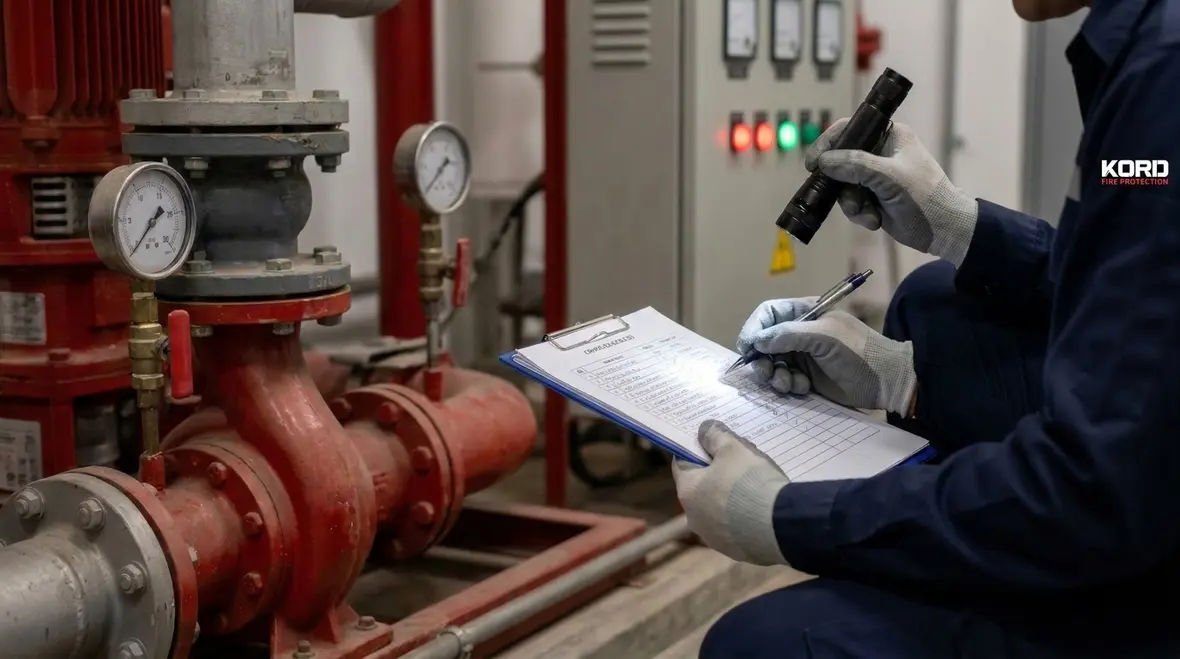
Inspection outcomes that actually affect fire pump performance
Not every note on an inspection report carries the same weight. Facility teams should pay special attention to items that influence pump start, stability, and control reliability. For example, inspection findings connected to controller function, alarm interlocks, and operational readiness can affect how quickly the pump responds when it matters most.
Additionally, teams should track signs of performance drift. Even when a pump starts, subtle changes can show up over time. Therefore, they should watch for trends such as unusual readings, repeated minor faults, or recurring alarms. These signals often precede bigger failures, and catching them early keeps downtime low and risk lower.
Kord Fire Protection often advises clients to treat the fire pump as a system, not a standalone piece of equipment. When the water supply conditions, power reliability, and control logic all receive attention, the inspection checklist NFPA 25 becomes more than a compliance document. It becomes a roadmap.
Small findings that should not be treated like background noise
This is where smart teams separate signal from clutter. A single odd reading might be nothing. A repeated odd reading is a conversation. A repeated odd reading plus a recurring fault is a flashing sign that says, politely but firmly, please stop ignoring me. Patterns tied to controller response, alarms, power transfer, or inconsistent run conditions deserve attention long before a major test or a real emergency forces the issue.
| Tracking element | Why it matters |
|---|---|
| Inspection date and due date | Prevents missed intervals and supports audit evidence |
| Measured results | Shows performance stability and trend movement |
| Pass fail and notes | Captures deviations that require action |
| Corrective action owner | Keeps fixes from stalling due to unclear responsibility |
| Retest confirmation | Verifies the fix actually restored readiness |
Document control and audit readiness for Australian sites
Audit readiness depends on how clean the records are. Facility teams should ensure inspection documentation is complete and searchable. That means it includes the date, the inspection item set, the measured results, and any corrective actions taken. It also means keeping records easy to retrieve when a regulator, insurer, or internal auditor asks one simple question: “Show me.”
In multi site organisations across Australia, document chaos can spread fast. One team uses one template, another uses a different format, and suddenly your “single standard” becomes a collection of unique snowflakes. Instead, facilities can apply one consistent format for the fire pump inspection checklist NFPA 25 items, along with a clear naming convention for reports and photos.
When Kord Fire Protection supports your program, it can align reporting practices to match how your organisation already operates, so the service paperwork does not become a second job.
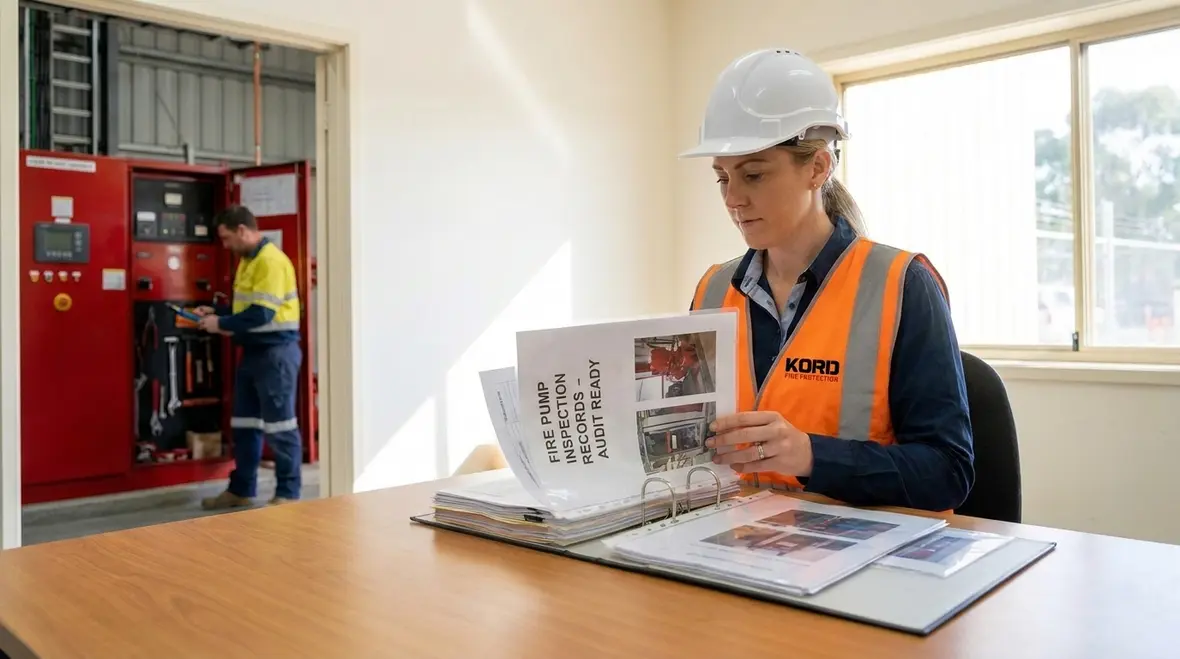
What clean records look like in real life
- One naming convention for all reports, photos, and retest documents.
- One template for all sites, even when the teams and contractors differ.
- One place to see open findings, overdue actions, and completed retests.
- One version of the truth, which sounds dramatic, but is very useful during an audit.
Using the fire pump inspection checklist NFPA 25 to manage corrective actions
When an inspection shows a deviation, the response must be more than a quick fix. Facility teams should log the issue, assess the risk, correct it, and verify the correction worked. Therefore, corrective actions should follow a methodical path: identify the root cause, repair or adjust the component, retest, and then update the system records.
Some deviations look small, but they can still matter. A repeated minor control fault, for instance, can lead to delayed pump start under real conditions. Likewise, a pattern of issues around the same inspection item can signal wear, contamination, or a maintenance gap.
To keep momentum, facilities can set time based targets for action closure. In other words, they should not let corrective work drag into the next shutdown cycle without a documented reason. And yes, humans are great at postponing tasks that do not cause immediate pain. Fire safety teams cannot afford that habit, even if it feels like procrastination with better branding.
Corrective action tracking that does not stall out
The trick is to move each finding from observation to closure with as little ambiguity as possible. Who owns it. What needs to happen. When it is due. Whether the retest passed. If any of those fields go missing, the issue tends to linger in that mysterious zone called “still being looked into,” which is not a real maintenance strategy no matter how often people say it with confidence.
Fire pump inspection checklist NFPA 25 service partnership: where Kord fits
Kord Fire Protection can become a vital partner because it brings two things facilities often struggle to balance: consistency and follow through. First, Kord helps teams apply inspection items the same way across sites, so results remain comparable. Second, Kord supports corrective action planning and retesting so issues do not reappear like that one pop culture villain who “dies” and then comes back stronger.
When facilities want a dependable program, Kord can work alongside internal maintenance and fire safety leads. As a result, the facility keeps control of priorities while receiving expert support on the technical and documentation side. This reduces confusion, shortens response time after findings, and keeps your fire pump readiness on track.
That support also pairs naturally with the practical guidance in Kord’s fire pump testing requirements guide, which helps teams connect routine inspection tracking with the broader testing habits that keep pump performance visible instead of mysterious.
FAQ
Conclusion and CTA
Facility teams that track the NFPA 25 § 8.2 fire pump inspection items with clear scheduling, clean records, and verified corrective actions stay ready for real life, not just paperwork. A practical tracking system turns routine inspections into decisions, and decisions into reliability. That is the part that matters when the pressure is on and nobody has time for missing notes, fuzzy ownership, or a report that vanished into someone’s inbox abyss.
If your sites are industrial, retail, or commercial across Australia, Kord Fire Protection can help you standardise the fire pump inspection checklist NFPA 25 process and keep it moving. Reach out to Kord today and turn inspections into a dependable safety program that people can actually maintain without needing a spreadsheet marathon at midnight.

Join Our Newsletter!
Get the latest fire safety tips delivered straight to your inbox From our Newsletter.