
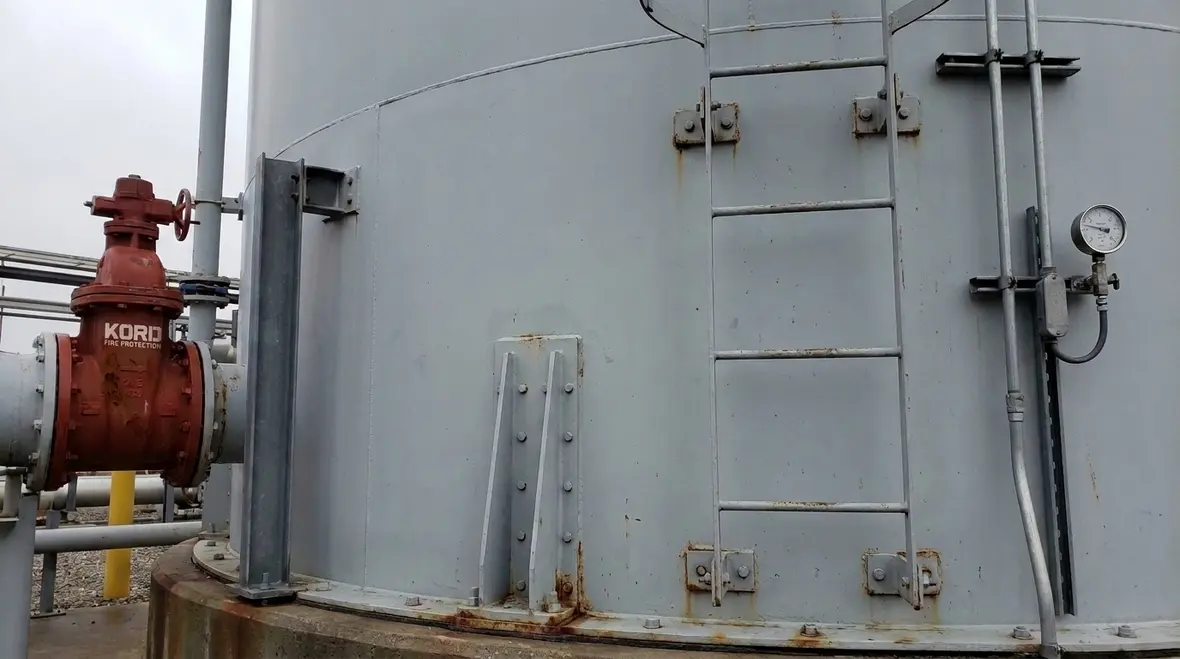
NFPA 22 Section 4.8: Attaching Equipment to Water Tank Structures
Quick Answer: NFPA 22 Section 4.8 controls how suction, discharge, valves, meters, alarms, and support assemblies are attached to water tank structures. It requires secure, code compliant connections that remain reliable under operating loads, corrosion exposure, and inspection maintenance cycles.
For facilities that want a stronger compliance and testing path around connected fire protection equipment, it helps to review the fire pump testing and certification process as part of broader system planning. ([kordfire.com](https://kordfire.com/fire-pump-testing-and-certification-process-explained/?utm_source=openai))
What NFPA 22 Section 4.8 Requires Before Any Attachment Work Starts
NFPA 22 Section 4.8 addresses a common real world problem in commercial water tank systems: equipment mounting and connection points that were installed for convenience rather than long term reliability. The regulation focuses on safety and performance, ensuring that attachments to water tank structures NFPA 22 depend on sound engineering, proper materials, and construction that holds up through service conditions and inspection expectations.
In practice, “attachments” includes more than bolting a panel to a tank. It covers how piping and devices are supported, how penetrations are sealed, and how dynamic and static forces transfer into tank structure and supports. Fire protection system performance depends on preventing looseness, misalignment, leakage, and corrosion driven failure.
Which Components Typically Trigger Section 4.8 Attachment Review?
Facilities frequently underestimate how many items qualify for Section 4.8 scrutiny. During design review, commissioning, and later inspections, the Authority Having Jurisdiction often asks for documented justification for how equipment is physically secured to the tank structure.
Common attachment categories
- Piping supports for suction and discharge lines, including brackets, hangers, and base plates.
- Valve assemblies and flow control components where the valve body or manual operating gear experiences torque, vibration, and leverage forces.
- Fire pump connections and strainers that transmit weight and thermal growth into the tank structure.
- Level measurement devices and associated mounting hardware on or at the tank exterior.
- Instrumentation such as pressure gauges, transmitters, and alarm switches where wiring and mechanical mounting add stress.
- Access ladders and platforms when they create anchorage loads that must remain stable for maintenance personnel.
- Drain, overflow, and vent assemblies that require reliable sealing and stable penetrations.
Why the attachment method matters operationally
Even if the system piping is hydraulically correct, a non compliant attachment can cause gradual performance drift. Common operational impacts include misaligned piping, excessive stress at tank penetrations, valve linkage binding, and sensor drift due to vibration or movement at the mounting points.
How Proper Attachments Are Built to Survive Real Loads, Not Just Installation Day
Section 4.8 expectations translate into field priorities: robust mechanical fastening, correct support geometry, secure penetrations, and corrosion resistant construction. Commercial facility owners typically face multiple stressors at once, including frequent maintenance traffic, water quality variations, and weather exposure in outdoor installations.
Load types that attachments must accommodate
- Static loads: equipment weight, pipe weight, and supported component dead load.
- Dynamic loads: pump starts and stops, water hammer potential, and vibration from rotating machinery.
- Thermal loads: temperature changes that create expansion and contraction forces along pipe runs.
- Environmental loads: wind, ice, and impacts on exterior mounting assemblies.
- Maintenance loads: equipment servicing actions that introduce leverage forces on valves and devices.
Material and corrosion control are not optional
Attachments fail most often where dissimilar metals meet, where coating systems break at anchor points, or where moisture traps form around penetrations and brackets. The attachment method must account for corrosion exposure and the tank environment. For long term compliance, facilities should coordinate tank coating integrity with anchor hardware, sealants, and inspection access.
In ongoing programs, Kord Fire Protection supports commercial clients by verifying that attachment hardware selections, protective coatings, and sealing practices remain consistent with the installation basis and the system maintenance plan.
Common Compliance Failures Found During Inspections and Testing
Field checks frequently reveal the same patterns. These issues may not be visible during commissioning, but they appear later after vibration cycles, weather exposure, or repeated service work.
Top attachment failure points
- Loose or undersized anchors: anchors that do not maintain required holding strength or that were not installed with the specified torque, embedment, or substrate condition.
- Improper penetration sealing: gaskets and sealants applied inconsistently, leading to slow leaks and corrosion at the interface.
- Missing restraints or poor support spacing: piping that relies on the device body for support rather than having dedicated pipe supports.
- Dissimilar metal corrosion: stainless steel hardware fastened to carbon steel without isolation where conditions promote galvanic corrosion.
- Inadequate alignment: devices mounted out of square or piping connected with stress, which later causes seal failure at valves and sensors.
- Coating damage at attachment points: unprotected anchor holes and disturbed tank coating areas that allow corrosion growth.
These failures undermine reliability and increase maintenance burden. They can also raise enforcement risk if inspection documentation does not show how the facility verifies attachment integrity, leak control, and continued functional performance.
Inspection, Maintenance, and Documentation Expectations
NFPA 22 emphasizes that fire protection systems remain operational through periodic inspection, testing, and maintenance. For attachments to water tank structures NFPA 22, the practical outcome is a maintenance routine that verifies mechanical stability and functional performance at the connection points.
What inspections should verify
- Visual condition of brackets, clamps, and bases: missing fasteners, deformation, rust staining, and coating breakdown.
- Evidence of movement: misalignment signs on piping and device interfaces after vibration exposure.
- Penetration integrity: seal condition, signs of seepage, and deterioration at gaskets and fittings.
- Valve and device stability: proper operation without binding caused by stressed mounting or bent supports.
- Clear identification and access: attachments should not block service access to valves, drains, and instrumentation where required.
Documentation that supports ongoing compliance
Commercial facilities benefit from keeping an attachment register or equivalent record for key devices and connection points. The record should include installation basis, material selections, torque or installation parameters where applicable, and inspection findings. Kord Fire Protection helps clients maintain the service history needed to demonstrate that the attachments remain in acceptable condition over time, not just at initial acceptance testing.
For broader context on how NFPA 22 regulates water tank systems, review: how NFPA 22 regulates fire protection water tanks.
How to Plan Attachment Upgrades or New Installations Without Triggering Rework
Many projects waste time because attachment planning happens late, after piping layout and device selection. A better approach coordinates mechanical attachment design, tank structure considerations, and maintenance access from day one.
Project planning checklist for facilities
- Confirm device attachment points early: identify where each valve, sensor, and piping support will connect to the tank structure.
- Define support intent: specify whether piping weight and loads transfer through dedicated pipe supports rather than device bodies.
- Select compatible materials: prevent galvanic corrosion and ensure compatibility with tank coating and the water environment.
- Specify penetration sealing method: require seal systems designed for the tank and service conditions.
- Plan inspection access: allow maintenance personnel to check fasteners, seals, and device operation safely.
- Align with testing and maintenance: ensure the attachment layout supports ongoing inspection and replacement without damaging tank coatings.
Kord Fire Protection typically supports commercial, industrial, and retail facilities by coordinating compliance oriented testing and by verifying that installation and maintenance practices align with the water tank system’s long term reliability goals.
Frequently Asked Questions
Call to action: If your facility has an existing water tank system, or you are planning an upgrade, Kord Fire Protection can help you evaluate attachment practices, support inspection readiness, and maintain ongoing compliance. Contact Kord Fire Protection to review attachment integrity, coordinate testing and maintenance, and reduce the likelihood of rework, leakage, or enforcement findings tied to water tank structure connections.

Join Our Newsletter!
Get the latest fire safety tips delivered straight to your inbox From our Newsletter.



