
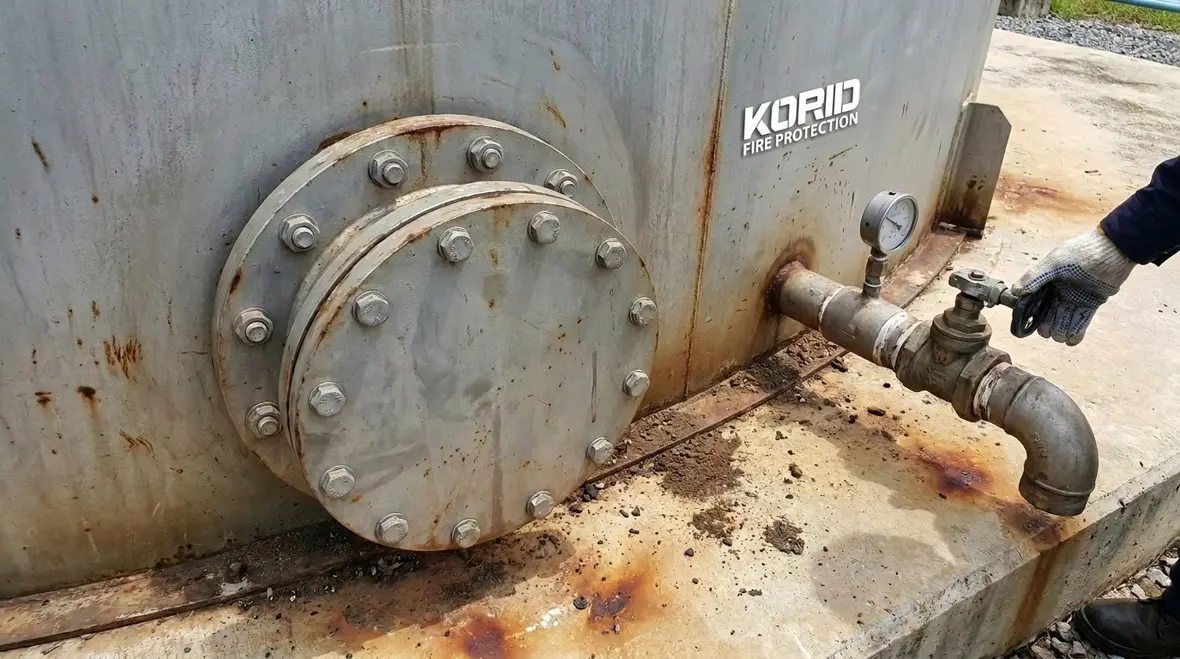
NFPA 22 Section 14.7: Clean-Out and Drain Connections for Water Tanks
Quick Answer
NFPA 22 Section 14.7 establishes when and how water tank clean-out and drain connections must be provided, located, sized, and maintained. The goal is safe inspection, removal of sediment, and reliable drainage without compromising fire protection performance.
For broader fire protection system support that naturally connects with water supply readiness, inspections, and corrective work, Kord Fire Protection also provides fire sprinkler system service for commercial properties.
Why Section 14.7 drives day to day tank compliance
For commercial, industrial, and retail facilities, water tank integrity depends on more than structural construction. Sediment, corrosion products, and incidental contamination can accumulate in wet and fire water tanks. NFPA 22 Section 14.7 addresses that reality by requiring appropriate clean-out and drain connections so staff can inspect, service, and remove debris while preserving system reliability. Facilities that treat these connections as “install once and forget” often discover the issue during testing, inspections, or emergency response readiness reviews.
In practice, water tank clean-out and drain requirements affect what maintenance contractors can do, how quickly tanks can be restored, and how reliably the fire protection system maintains usable water quality. This section also influences how facilities coordinate confined space controls, lockout tagout, and spill management during service events.
What NFPA 22 Section 14.7 requires for clean-out connections
Clean-out connections enable personnel to access the interior of a water tank for inspection and removal of accumulated solids. Section 14.7 typically drives several operational outcomes:
- Access for sediment and debris removal: Tanks collect sludge, rust, scale, and construction debris over time. Clean-outs provide a controlled path to remove these materials without destructive procedures.
- Inspection feasibility: Compliance depends on the ability to visually verify internal condition and confirm that protective coatings, liners, or internal surfaces remain in acceptable condition.
- Maintenance safety: Proper clean-out configuration supports safe work planning, reducing the need for improvised access that may violate facility safety procedures.
From a compliance perspective, the most common failure points appear after installation. Missing caps, damaged gaskets, blocked openings, nonfunctional valves, and incompatible fittings can prevent meaningful service and trigger nonconformance findings during impairment investigations or insurer plan reviews.
Drain connections: how they support safe and reliable water removal
Drain connections must support controlled tank emptying and flushing so facilities can remove accumulated solids and address water quality degradation. In fire protection operations, “drainable” does not mean “eventually drained.” It means the facility can perform drainage with functional valves, correct routing, and discharge methods that prevent hazards.
Key operational expectations behind water tank clean-out and drain requirements include:
- Drainability for maintenance cycles: Facilities need predictable draining to support scheduled internal inspection and cleaning, not only emergency remediation.
- Verification of discharge flow path: Drains must route to an appropriate discharge location or treatment method per facility policy and applicable environmental requirements.
- Prevention of recontamination: If drain lines allow backflow or connect improperly to other piping systems, maintenance can reintroduce contaminants into the tank.
Commercial facilities frequently encounter problems when drain piping is modified during renovations. A valve may be left in a failed position, a line may be capped incorrectly, or a contractor may route discharge into areas not approved for wastewater or firefighting water. Those issues often become visible only when the maintenance team attempts an actual tank service event.
Common design and installation mistakes that fail inspections
Even where connections exist, inspection findings often focus on practical operability. The following are recurring issues that compromise compliance and effective maintenance:
1) Obstructed or inaccessible clean-out openings
Clean-outs that cannot be opened safely, are blocked by structural members, or have insufficient clearance for tools and inspection tend to fail functional review even if the opening is technically present.
2) Nonfunctional valves, caps, or seals
Valves that seize, missing or mismatched caps, and degraded gaskets prevent controlled service. In operational terms, this creates delays during scheduled maintenance and can extend outages during corrective actions.
3) Incorrect routing, improper discharge location, or backflow risk
Drain connections require a safe and acceptable discharge pathway. Improper routing can violate facility environmental controls and create cross contamination risks.
4) Connections that compromise tank or system performance
Incorrect installation, poor flange alignment, or incompatible fittings can lead to leaks. Leaks can reduce usable water, interfere with level control, and trigger alarm or impairment conditions.
For context on how NFPA 22 regulates water tank fire protection components, facilities can review this resource: How NFPA 22 regulates fire protection water tanks.
Inspection and maintenance practices that keep you audit ready
Compliance with NFPA 22 Section 14.7 is not a one-time acceptance check. Commercial facilities should use a repeatable maintenance workflow that aligns tank service actions with readiness requirements.
Operational inspection checklist
- Confirm accessibility: Verify clean-out and drain access is unobstructed and safe for maintenance personnel.
- Verify valve condition: Confirm valves operate through intended positions and do not bind under expected conditions.
- Inspect seals and hardware: Check gaskets, caps, and fasteners for deterioration or missing components.
- Validate discharge readiness: Ensure the drain path directs to an approved location and does not introduce cross connections.
- Document findings: Maintain records that link inspections to corrective actions and retesting where required.
Maintenance execution: what “good” looks like
Effective cleaning and draining procedures include water management controls, verification of internal cleanliness, and controlled reinstallation of hardware. Facilities that perform draining without verifying solids removal often discover recurring sludge buildup, which can affect water clarity, pump performance, and system reliability.
Kord Fire Protection supports commercial owners and maintenance teams by coordinating NFPA 22 compliant inspections, testing support, and corrective maintenance workflows. This approach helps facilities reduce uncertainty during insurer reviews, AHJ interactions, and annual or periodic service events.
Who should own this work in commercial facilities?
While facilities vary, responsibility usually requires coordination between property operations, fire protection system maintenance, and engineering. A clear ownership model prevents gaps when a tank is serviced for reasons unrelated to fire protection.
In many commercial settings, the most effective approach assigns:
- Facility operations: Access control, safety coordination, confined space readiness where applicable, and discharge routing coordination.
- Fire protection maintenance: Verification of valves and connections tied to the fire system water supply and ongoing impairment prevention.
- Qualified fire protection provider: Oversight of compliance alignment, documentation, and corrective actions related to NFPA 22 requirements.
Kord Fire Protection helps commercial facilities keep water tank clean-out and drain provisions functional over the life of the asset, not just at commissioning.
Frequently Asked Questions
Conclusion and call to action
NFPA 22 Section 14.7 water tank clean-out and drain requirements protect fire protection performance by ensuring tanks remain inspectable, serviceable, and drainable when conditions demand it. Facilities should verify accessibility, valve function, sealing integrity, and discharge routing before problems occur. Kord Fire Protection can support your compliance program with inspection readiness, maintenance coordination, and corrective actions so your documentation and hardware remain aligned with NFPA 22 throughout the year. Contact Kord Fire Protection to schedule an assessment.

Join Our Newsletter!
Get the latest fire safety tips delivered straight to your inbox From our Newsletter.



