
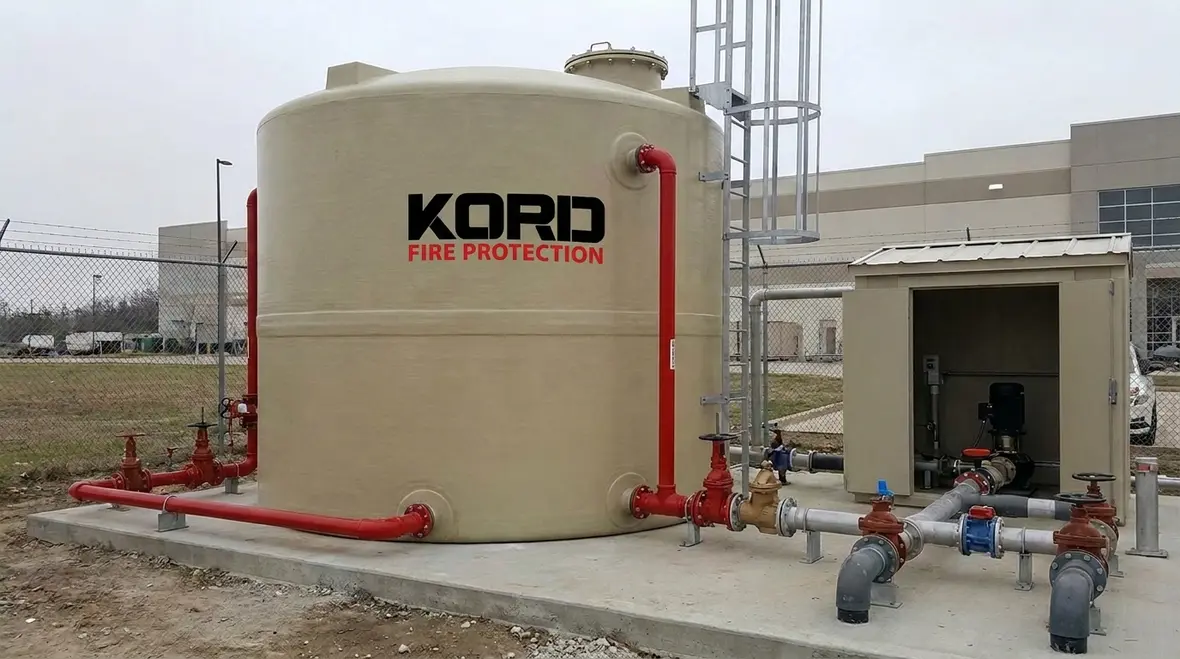
NFPA 22 Section 11.1: General Rules for Fiberglass-Reinforced Plastic Tanks
Quick Answer
NFPA 22 Section 11.1 sets general compliance expectations for fiberglass reinforced plastic (FRP) water tanks used in fire protection systems. It focuses on safe installation, durable construction, correct connection to fire service piping, and ongoing inspection readiness to maintain reliable water supply performance.
What does NFPA 22 Section 11.1 require for FRP tanks?
For facilities that rely on fire protection water tanks, NFPA 22 governs design, installation, inspection, testing, and maintenance practices. In particular, fiberglass reinforced plastic water tank requirements NFPA 22 in Section 11.1 establish broad general rules that must be satisfied before a facility can treat an FRP tank as an approved and dependable water source for fire protection service.
Section 11.1 does not operate in isolation. It acts as the baseline framework that supports the more detailed requirements found in later FRP related sections and the broader NFPA 22 system rules. In day to day compliance work, this means inspectors and AHJs expect a complete tank, connection, and water supply configuration that can demonstrate water availability under the real operating and maintenance conditions of the building.
Where FRP water tanks fit in fire protection system operations
Commercial and industrial facilities commonly use FRP tanks for fire protection water supply when site constraints, cost, or installation timelines influence tank selection. Retail occupancies may also require FRP tank solutions when underground excavation is impractical or when the facility needs a stable, above grade water reserve.
In practice, FRP tanks support system performance through several functional elements:
- Reliable stored water volume for sprinkler, standpipe, or other water based systems.
- Stable tank pressure and flow conditions through correct pump suction and discharge piping arrangements.
- Water quality control to minimize corrosion, scaling, and biological growth that can impair valves, strainers, and sprinklers.
- Operational readiness so automatic pumps and controllers can draw water during a fire event.
Section 11.1 general rules help ensure that the FRP tank does not become the system’s weakest link. The most common compliance failures are not glamorous. They typically involve installation deviations, inadequate access for inspection, weak connection detailing, or maintenance gaps that allow debris, contamination, or mechanical impairment.
If your team is also evaluating how tank performance connects to pump readiness in the field, fire pump inspection and testing services can help tie water supply planning to real world system performance.
Installation and siting expectations under the general rules
Even when an FRP tank matches its design drawings, field conditions can introduce risk. NFPA 22 Section 11.1 supports the principle that FRP tanks must be installed in a manner that preserves their structural and functional integrity for fire protection use.
1) Structural support and stability
General compliance depends on the tank’s ability to remain stable during normal operation and foreseeable events. Installers must ensure correct foundations, proper leveling, and support that matches the manufacturer’s requirements. If settlement occurs, suction conditions can change, and valves or piping may experience stress that leads to leaks or misalignment.
2) Environmental exposure and damage resistance
FRP tanks may be used indoors or outdoors depending on the project. The general rules require attention to protection from impacts, weathering, and physical hazards. Commercial facilities often place tanks near loading areas, service corridors, or vehicle routes, which increases the likelihood of impact damage. A compliant plan addresses protective barriers and visual inspections as part of an ongoing maintenance routine.
3) Access for inspection and maintenance
Inspectors must be able to verify tank condition and related components. Facilities frequently fail compliance during routine reviews because access covers, ladders, and safe work clearances were not designed for maintenance activities. Under Section 11.1 general expectations, providing practical access becomes an operational requirement, not a convenience.
Connections, controls, and how failures show up during testing
Section 11.1 focuses on general rules, but most observed issues occur at the interfaces where the FRP tank meets pumps, piping, and control devices. These are the points that translate “tank installed” into “tank functions reliably.”
Piping interface quality and leak prevention
Common failure points include improper fittings, incorrect sealing methods, and piping that places mechanical stress on tank nozzles. Even minor seepage can create a maintenance cycle that is hard to detect early. When leaks go unnoticed, they can reduce available water volume and undermine confidence in the system.
Check valves, strainers, and suction conditions
Fire protection systems often rely on check valves and strainers to protect pumps and maintain proper flow direction. If suction screens clog from debris or sediment, pump priming and flow rates can degrade during a test or real demand. Under the general rules, the configuration must support effective inspection and cleaning.
Overflows, drains, and functional water management
Tank overflows and drains must be arranged to avoid contamination and to maintain clear pathways for safe water management. Facilities sometimes add improvised piping extensions that create unintended backpressure or obstruct drainage. During inspection, this can manifest as unexpected water level behavior, inadequate venting, or failure to meet operational expectations.
Controls and operational sequencing
Fire pump controllers and automatic controls depend on correct tank water level conditions and stable system logic. If level sensors, alarms, and setpoints are not maintained, the system can either fail to start when needed or cycle unnecessarily. The general rules support reliable performance by requiring that installed configurations remain fit for purpose throughout the tank’s service life.
Inspection, testing, and maintenance: making compliance durable
NFPA 22 compliance does not end at installation. For FRP tanks, the operational challenge is sustaining water supply performance through time. Commercial facilities should treat tank upkeep as a scheduled program that aligns with NFPA 25 style maintenance thinking and the inspection expectations reflected across NFPA 22.
What maintenance programs must cover
- Tank interior condition checks for sediment, bio growth, contamination, and physical deterioration.
- Component inspection of nozzles, fittings, access openings, and attached valves.
- Strainer and suction inspection to prevent pump starved conditions.
- Vent, overflow, and drain verification to confirm the tank water management system functions as intended.
- Documentation and recordkeeping so the facility can demonstrate consistent compliance readiness.
Commercial facility compliance challenges you should plan for
In the field, compliance often breaks due to non technical constraints: limited access, under scoped maintenance, and delayed corrective actions. Retail and industrial operators frequently face high equipment uptime requirements, and that can lead to postponed inspection activities. A robust compliance plan builds inspection access into operating schedules and supports prompt repairs before issues progress.
For related guidance on how NFPA 22 regulates fire protection water tanks, review: How NFPA 22 regulates fire protection water tanks.
For a deeper look at recurring pump-side issues that can affect dependable water delivery, see advanced commercial fire pump diagnostics for power issues.
Why ongoing service matters
Kord Fire Protection supports commercial and industrial facilities with inspection, testing, and maintenance services that help keep fire protection water supplies dependable. This includes practical verification of tank related equipment, documentation that aligns with enforcement expectations, and corrective action workflows that reduce the chance of repeat deficiencies. When facilities treat compliance as an ongoing program rather than a one time project, they reduce operational surprises during annual testing and plan renewals.
Common “gotchas” during plan review and AHJ inspections
Even experienced teams run into predictable friction points when FRP tanks are involved. These issues often appear during plan review, pre inspection, or first round field inspections.
- Unclear tank access details that prevent effective inspection and maintenance activities.
- Connection details not aligned with manufacturer guidance or with the intended fire system configuration.
- Incomplete documentation including installation records, component identification, and maintenance logs.
- Water management inconsistencies such as ineffective drains or overflow arrangements that create maintenance and contamination risks.
- Maintenance deferral leading to accumulation of sediment or debris that can impair suction performance.
Kord Fire Protection commonly helps teams reduce these risk points by performing compliance focused field evaluations, confirming readiness for inspection, and setting maintenance priorities that directly influence system performance. This approach protects both life safety and operational continuity.
Frequently Asked Questions
Call to Action
Ensure your FRP tank supports reliable fire protection performance by treating NFPA 22 compliance as an ongoing program. Kord Fire Protection can help you validate installation readiness, plan maintenance priorities, and support inspection and testing workflows. Request a compliance focused assessment today so you can address access, connection, and maintenance risks early and protect system readiness year round.

Join Our Newsletter!
Get the latest fire safety tips delivered straight to your inbox From our Newsletter.



