NFPA 2001 Section 8.5 Shielding for Clean Agent Systems
Quick Answer
NFPA 2001 Section 8.5 sets clear shielding rules for local application clean agent systems so the agent reaches the fire area without being blocked by equipment, walls, or airflow. Done right, this helps protect high value industrial, retail, and commercial sites. Kord Fire Protection can help design, install, and maintain these systems with confidence.
If you are planning upgrades or a fresh installation, Kord Fire Protection’s clean agent fire suppression services fit naturally into this conversation because shielding only works when the whole system is designed around real site conditions. A beautiful drawing is nice. A discharge pattern that actually reaches the hazard is nicer.
NFPA 2001 Section 8.5 and why shielding matters
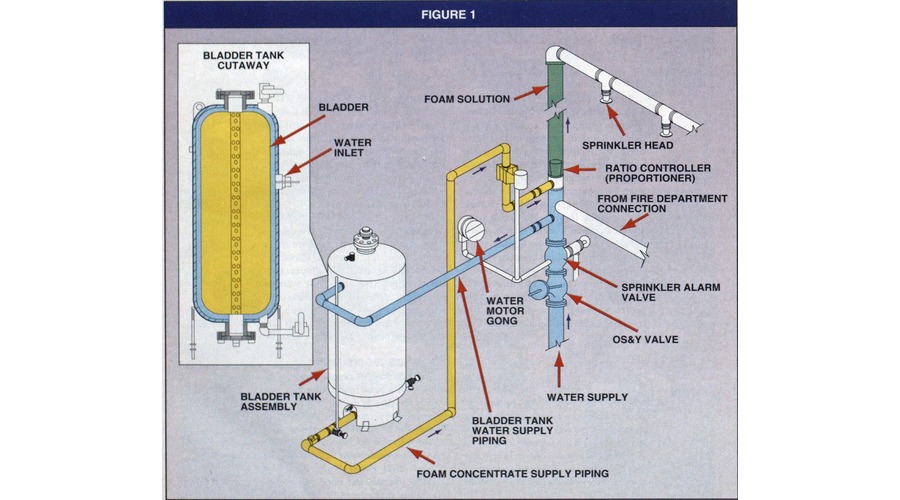
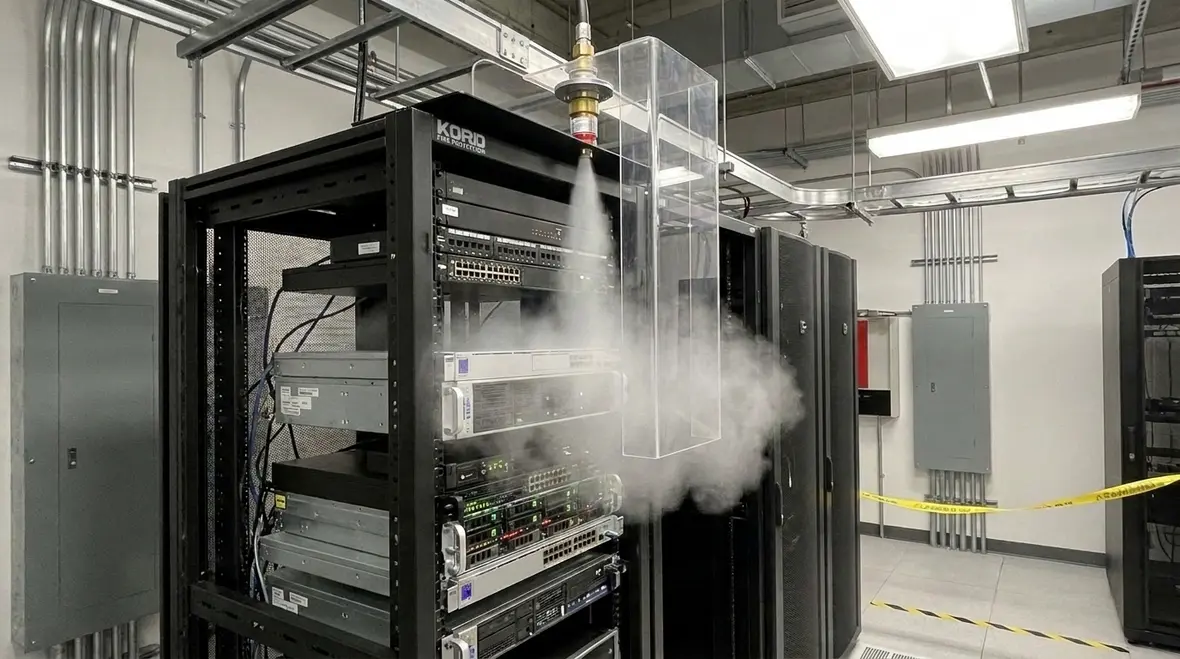
NFPA 2001 shielding local application clean agent fire suppression is built around one simple goal: get the agent where the fire is, fast and in the right amount. Section 8.5 deals with shielding requirements, which means the system must account for anything that could block, divert, or dilute the clean agent. That includes machinery, frames, panels, ducting, storage racks, and even strong air movement.
This matters because a local application system does not flood an entire room. Instead, it protects a specific hazard area. So, if the agent misses the target, the fire may still grow while everyone stands around looking serious and hopeful. Fire safety, sadly, is not impressed by wishful thinking.
What shielding means in a local application system
In simple terms, shielding means removing or managing anything that can prevent the agent from reaching the fire surface. NFPA 2001 expects the design team to look closely at the hazard layout and make sure the discharge pattern stays effective. As a result, the system must cover the protected area with the right flow, density, and exposure time.
For industrial and commercial sites, this can be a challenge. Equipment changes, storage layouts shift, and production lines rarely sit still for long. Therefore, shielding cannot be treated as a one time guess. It needs proper planning, site checks, and smart design updates when the hazard changes.
What the design team has to think through
The practical side of shielding starts with visibility and reach. Can the nozzle discharge actually strike the surfaces that matter? Is there a corner, frame, support leg, cabinet edge, or belt assembly turning part of the hazard into a hidden pocket? If the answer is yes, the design has more work to do. Shielding is really a test of whether the system protects the hazard you have, not the hazard you wish you had back when the drawings were cleaner and everyone had better handwriting.
How NFPA 2001 Section 8.5 guides system design
Section 8.5 pushes designers to think like the fire will think. It asks one key question: what might stop the agent from doing its job? Because of that, the design process must review the shape of the hazard, the height of protected surfaces, and the placement of nozzles and discharge lines.
It also means the system should not rely on luck. The agent must reach all needed surfaces, even when equipment creates shadows or dead zones. In practice, this often leads to nozzle placement changes, added nozzles, airflow control, or shielding panels. In other words, the system has to act like a good stage crew and get the spotlight exactly where it belongs.
That same broader design mindset is reflected in Kord Fire Protection’s resource on NFPA 2001 guidelines for clean agent fire suppression systems, which fits well here because shielding rules do not exist in isolation. They work best when paired with sound detection, discharge planning, installation quality, and maintenance discipline.
Common shielding problems in industrial and commercial sites
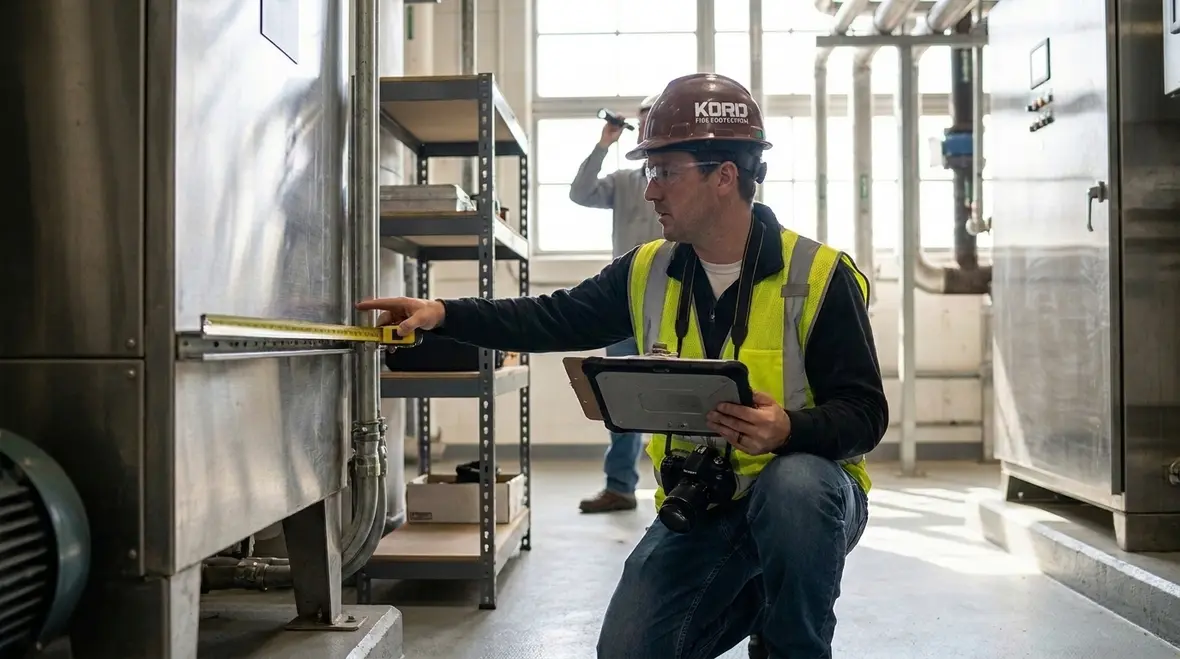
Many sites across manufacturing, warehousing, data rooms, plant rooms, retail back of house areas, and process zones face similar issues. Tall machinery may block the spray path. Open frames may break up the discharge pattern. Fans or extraction systems can move the agent away from the hazard before it settles.
Other common problems include:
- Equipment added after the original design
- Storage placed too close to protected zones
- Changes in airflow from HVAC or process vents
- Misplaced nozzles that leave blind spots
- Physical barriers that were never part of the initial hazard plan
Because of these risks, a clean agent system must be reviewed with the actual site layout in mind, not just the drawings. Paper plans are useful, but they do not stop a rack from appearing overnight like a plot twist in a streaming series.
Why real world changes create real world gaps
This is where facilities get tripped up. The original install may have been excellent. Then operations expand, a new machine arrives, a duct gets rerouted, stock starts living where it should not, and suddenly the protection pattern has new blind spots. Nobody planned for the problem on purpose. It just happened the way site changes usually happen: gradually, busily, and with everyone assuming someone else checked it.
How a proper site survey supports compliance
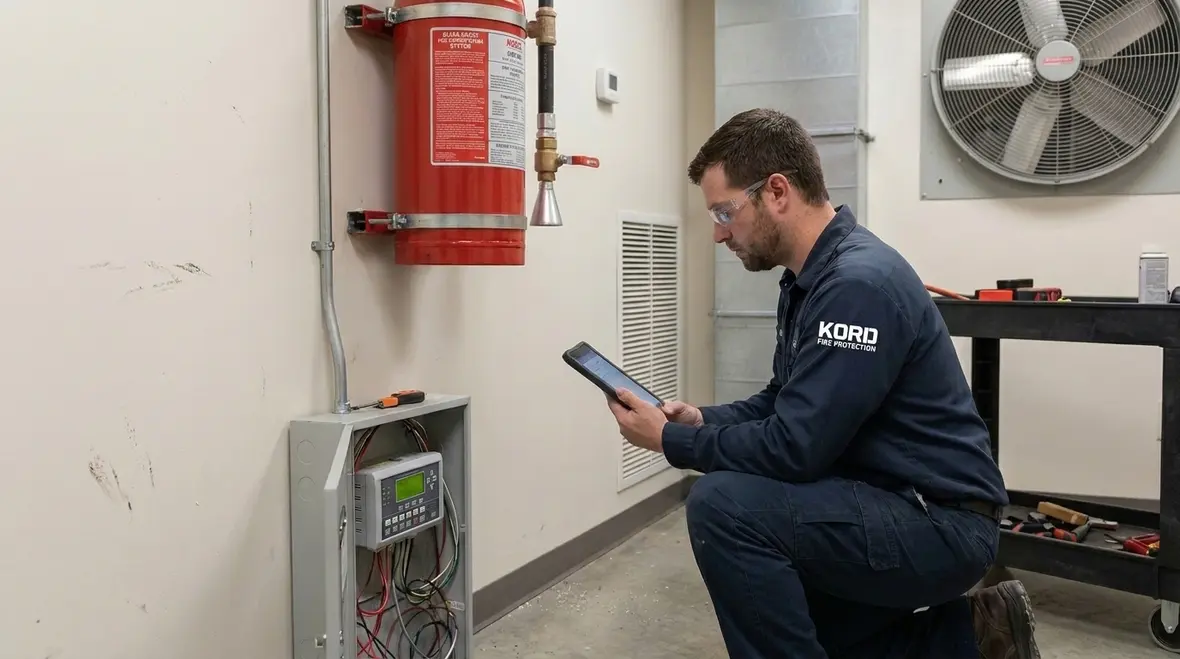
A strong site survey turns theory into working protection. During the survey, the design team checks the hazard area, measures clearances, notes obstructions, and studies the way the agent will move through the space. This step helps confirm whether the system meets the shielding rules in NFPA 2001 Section 8.5.
It also supports safer operation over time. If the survey finds a blockage risk, the team can adjust the design before installation begins. That saves time, lowers rework, and helps avoid system failures later. For busy facilities, that kind of planning is worth its weight in gold, or at least in very expensive equipment that should not catch fire.
What a useful survey usually includes
A useful survey is not just someone glancing around with a clipboard and nodding like they solved everything. It should document obstructions, nozzle paths, hazard dimensions, nearby storage, ventilation effects, and likely change points in the area. If the site is active and evolving, the survey should also think ahead. Where might equipment move next quarter? Which aisle tends to collect overflow storage? Which fan settings change during production? Those details can decide whether the system performs as intended or merely looks impressive on paper.
Why Kord Fire Protection can be a vital partner
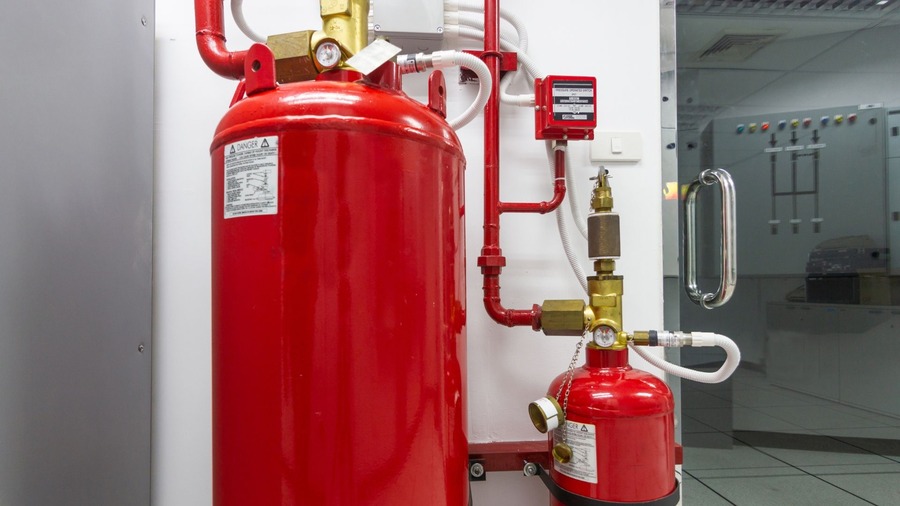
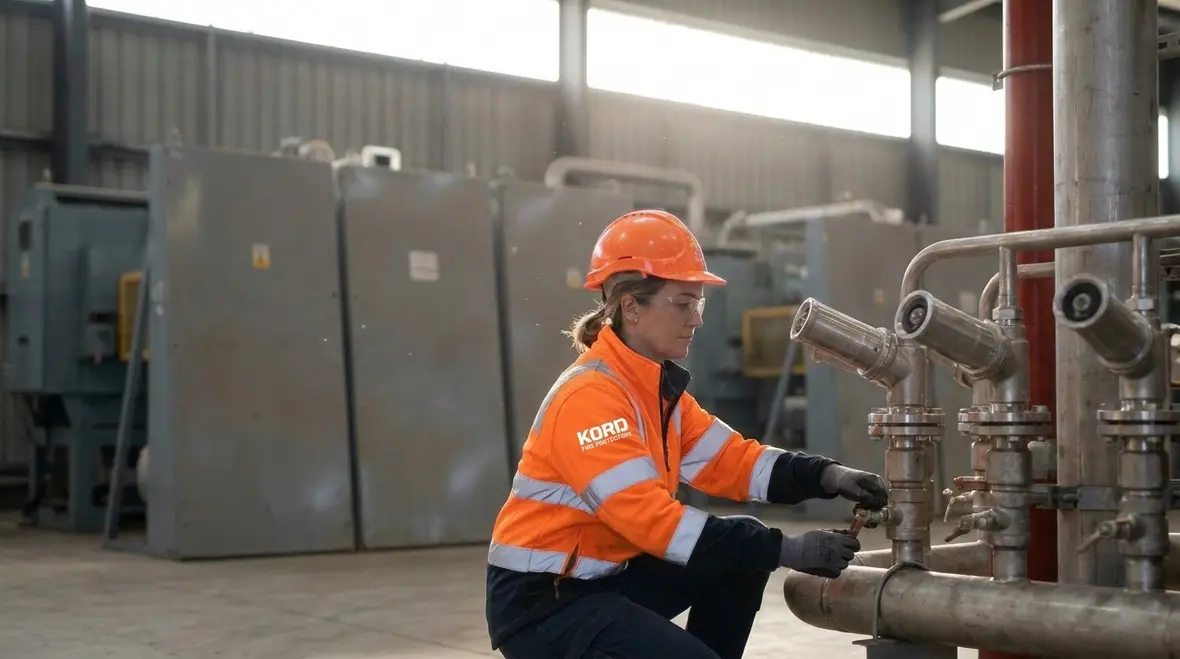
Kord Fire Protection can play a vital role in this service by helping clients design, install, test, and maintain NFPA 2001 shielding local application clean agent fire suppression systems that suit real site conditions. For industrial, retail, and commercial clients, that support matters because every site has its own hazards, airflow patterns, and equipment layout.
Kord Fire Protection can assist with:
- Hazard reviews and site inspections
- System design that matches shielding needs
- Installation that supports proper nozzle placement
- Commissioning and testing for performance confidence
- Ongoing maintenance and system checks
As a result, clients get more than a product. They get a partner who helps keep the system effective when the site changes, which, as every facilities manager knows, happens about five minutes after the last meeting ends.
Why compliance and maintenance go together
Shielding is not only a design issue. It is also a maintenance issue. Over time, a system can lose effectiveness if storage shifts, new plant is installed, or barriers appear near the hazard. Therefore, regular inspections help confirm that the original shielding strategy still works.
In addition, maintenance checks can reveal nozzle damage, blocked discharge paths, or airflow changes that affect performance. This is especially important in fast moving environments such as warehouses, production floors, and retail support areas. NFPA 2001 shielding local application clean agent fire suppression works best when the site treats it as a live safety system, not a set and forget install.
A standard is only useful if the site still matches it
That is the quiet truth behind compliance. A standard may have guided the original design perfectly, but if the environment changes and nobody checks the effect on shielding, the site can drift away from the conditions that made the system reliable in the first place. Regular inspections bring the standard back into the real world. They answer the unglamorous but important questions: Is anything in the way now? Did airflow change? Are nozzles still aimed and clear? Has somebody parked a “temporary” obstacle in exactly the worst possible place? Temporary has a funny way of becoming permanent when everyone is busy.
FAQ
Conclusion
NFPA 2001 Section 8.5 gives local application clean agent systems the structure they need to work under real site conditions. For industrial, retail, and commercial facilities, the right shielding plan can make the difference between control and chaos.
Kord Fire Protection can help turn that standard into a reliable, site ready solution. For expert support, a proper site review is the smart next step.

Join Our Newsletter!
Get the latest fire safety tips delivered straight to your inbox From our Newsletter.