NFPA 20 Chapter 5 High Rise Building Fire Pump Requirements
Quick Answer: NFPA 20 Chapter 5 sets clear rules for fire pumps serving high rise buildings, including design approach, acceptance testing, and system reliability. Meeting the high rise building fire pump requirements NFPA 20 keeps occupants safer and helps teams avoid costly rework. Kord Fire Protection can support the job with planning, documentation, and commissioning support.
High rise buildings in Australia run on one promise: when something goes wrong, the fire protection system must respond, fast and without drama. That is exactly why high rise building fire pump requirements NFPA 20 matter. NFPA 20 Chapter 5 focuses on fire pumps for these taller, more complex occupancies, where pressure, flow, and reliability cannot be guesses. Instead, they must be calculated, built, tested, and proven.
Now, pumps do not care about your project timeline. They only care about correct design and proper acceptance. And if someone says otherwise, they are probably the same person who thinks a smoke detector is decorative. In a professional setup, though, teams can get ahead of issues early. That is where Kord Fire Protection becomes a vital partner.
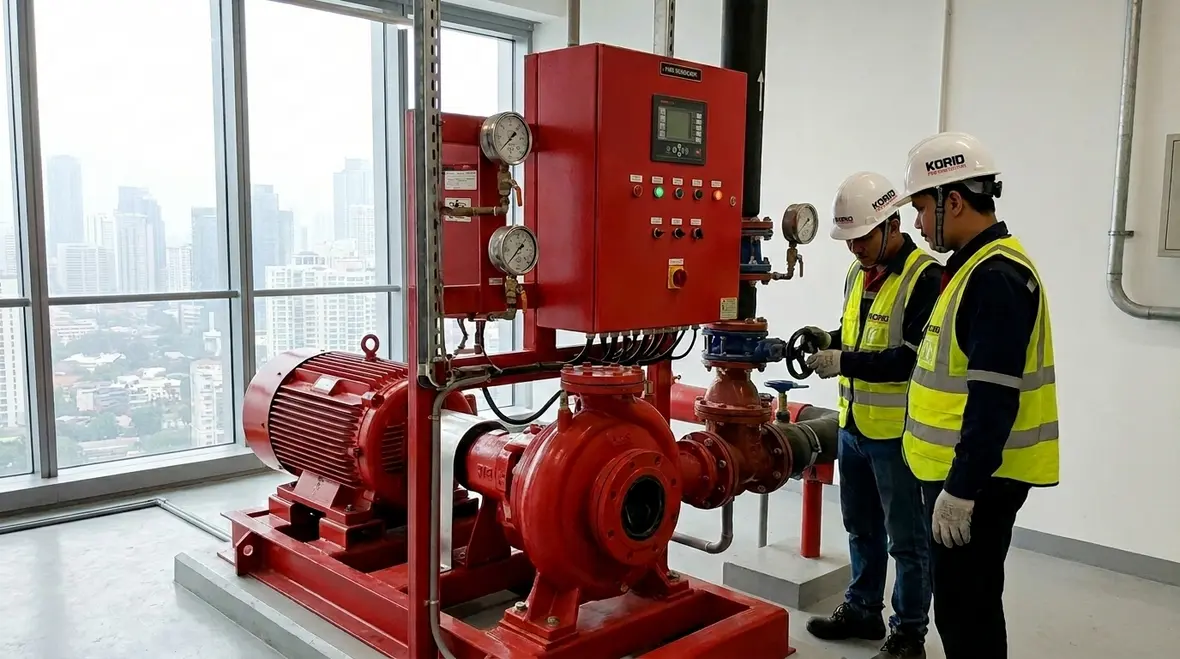
For teams that need support near the top of the process, Kord Fire Protection’s fire pump service offering fits naturally into planning, testing, repair, and maintenance workflows. It gives project teams and facilities managers a practical path to keep the pump system aligned from early review through ongoing service, instead of trying to patch gaps later when the building is already expecting everything to work.
What NFPA 20 Chapter 5 Requires for High Rise Pump Systems
NFPA 20 Chapter 5 lays out how fire pumps should support high rise building fire protection systems. At a high level, it connects the pump’s performance to the design water supply and the demands of the fire protection arrangement. Therefore, the pump must deliver the required flow and pressure for the most demanding condition.
In practice, this means teams avoid vague assumptions. They confirm the system demand and match the pump curves to the hydraulic calculations. Then they build in reliability through appropriate configuration and control logic. For example, high rise conditions often involve higher static pressures, longer hose or standpipe runs, and more critical elevation effects. As a result, the fire pump system must stay within its designed operating range while still maintaining required discharge pressure.
And because the building is vertical, even small design mistakes can amplify at height. So, the job must treat the pump like the heart of the system, not like an afterthought that gets swapped in last minute. For broader code context, Kord’s guide on how NFPA 20 regulates fire pump systems pairs well with this chapter-specific discussion.
Why Chapter 5 Matters More in Tall Buildings
A shorter building may tolerate less complexity in pressure management, but a high rise usually does not forgive sloppy assumptions. Elevation changes, friction losses, and real world operating conditions combine fast. That is why Chapter 5 becomes less about paperwork and more about making sure the wet system behaves properly when people need it most.
How Designers Match Pump Performance to System Demand
NFPA 20 Chapter 5 pushes teams to prove that the pump system can meet the demand. So designers begin with the hydraulic calculation and identify the required flow and pressure at the system’s operating point. After that, they select pump sizes and arrangements that align with the demand curve.
Then the work moves from paper to real equipment. Fire pumps must operate safely within their performance characteristics. If the system requires pressure at multiple elevations, the pump must maintain stability while the system draws water. In addition, designers consider friction loss, changes in piping diameter, and the way valves and fittings affect flow.
Finally, designers confirm that the control strategy supports correct pump start and stop behavior. This step helps ensure pumps respond when demand occurs, not when someone presses a button like it is a movie remote.
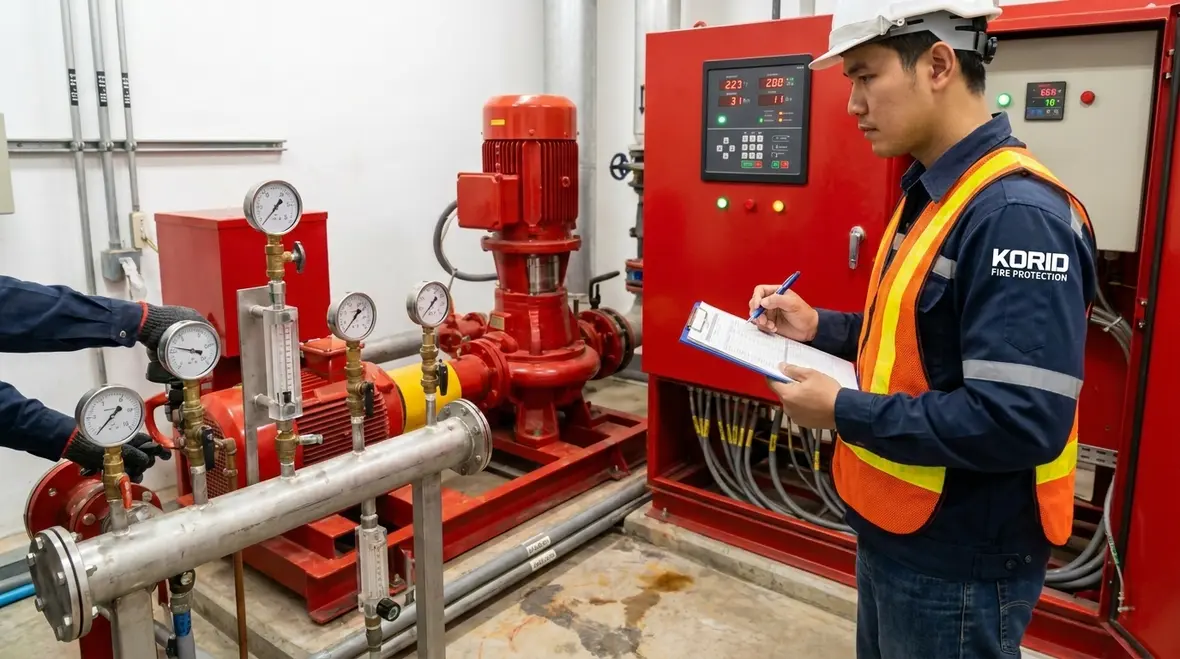
Pressure, Flow, and Real Equipment Behavior
This is where theory has to survive contact with motors, controllers, valves, and site conditions. A clean design set is useful, but it still has to become a pump arrangement that actually starts, stabilizes, and delivers what the building asks for. If not, the nicest drawing set in the world is just decorative paper with ambition.
Pump Arrangements, Reliability, and Why Redundancy Matters
High rise buildings force fire pump systems to work harder. Therefore, reliability becomes a top requirement rather than a “nice to have.” Teams often use arrangements that provide dependable operation, even when one component is not available.
NFPA 20 Chapter 5 supports the idea that the fire pump system must be able to perform its duty without unacceptable degradation. That means the arrangement and controls should reduce the chance of single point failure. It also means the system should support rapid response to demand.
In real projects across Australia, a common challenge is not just whether the pump can run. It is whether it can run correctly in the conditions that show up during commissioning and acceptance. For example, electrical supply quality, sensor calibration, and control settings can quietly create failures that only appear under test flow.
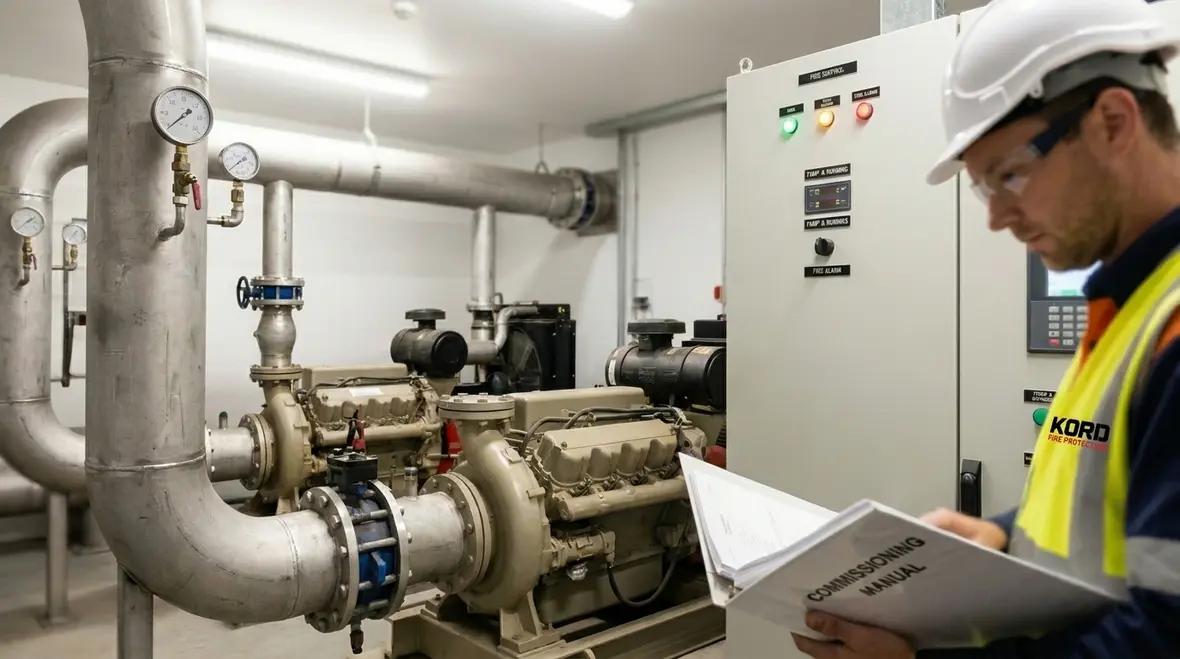
So, reliability starts at selection and continues through installation quality checks and acceptance planning. This is exactly where a partner like Kord Fire Protection can help prevent rework. They support job teams with process discipline, commissioning coordination, and documentation that holds up under scrutiny.
Reliability Is Built, Not Assumed
A dependable high rise pump system usually reflects dozens of correct decisions in a row. Layout, power path, controls, pipework, verification steps, and handover discipline all pile up into either confidence or chaos. It is much better when the chaos stays hypothetical.
Acceptance Testing and Operating Proof, Not Hope
NFPA 20 Chapter 5 emphasizes that the pump must be tested to verify performance. That shifts the focus from “installed” to “proven.” In addition, acceptance testing helps confirm the pump’s ability to deliver the required performance across the expected operating conditions.
Typically, teams verify key parameters such as flow, discharge pressure, pump run status, and control responses. They also check that alarms and status signals communicate properly to the control panel. Because high rise systems often connect into wider building fire detection and suppression strategy, test results must match what the whole system expects.
However, tests can become messy if the job team waits until the end. For instance, if piping offsets, suction conditions, or control wiring verification gets rushed, acceptance can turn into a series of delays. And no one wants that, especially when the building team is already coordinating trades like a circus with spreadsheets.
By planning for acceptance during installation, teams can reduce surprises. Kord Fire Protection can serve as a steady partner across the service/job lifecycle, helping align commissioning steps, review checklists, and keep records tidy for future inspections.
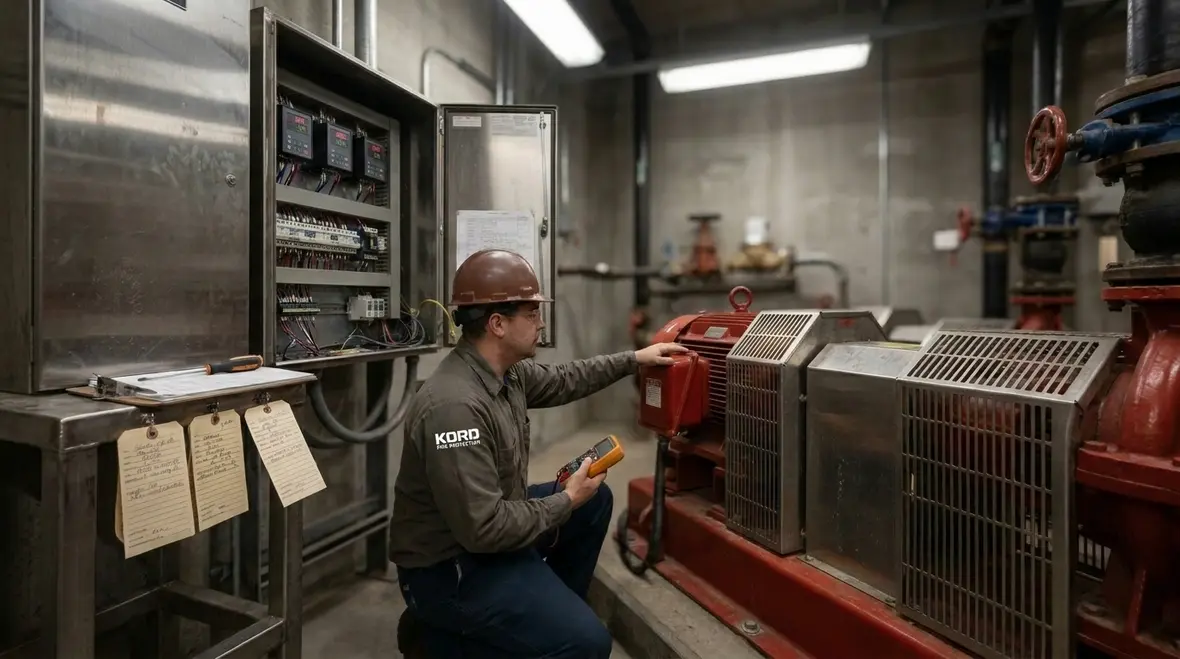
Common Installation Pitfalls in High Rise Fire Pump Projects
Even strong designs can fail in the field if installation details slip. High rise construction adds complexity because it involves more vertical runs, more interfaces, and more opportunities for misalignment. Therefore, teams should watch for predictable problem areas.
- Suction and piping conditions: Poor alignment, incorrect fittings, or air entrapment can affect pump suction performance.
- Electrical and control wiring: Incorrect settings or loose connections can disrupt start sequence and monitoring.
- Valve configuration: Incorrect valve positions or inconsistent operating procedures can break system behavior.
- Instrumentation calibration: Sensors and gauges must match test expectations, or readings become unreliable.
- Document gaps: Missing commissioning records can slow down handover and complicate future service work.
When these issues show up late, the fix can cost time and money. Yet early verification reduces both. Kord Fire Protection can support the team by strengthening the handover package, aligning testing steps, and providing a clear path to service readiness. They do not just show up at the end like an “on call” magician. They help make sure the performance you plan is the performance you get.
What Usually Goes Wrong First
Most ugly commissioning surprises are not mysterious. They are usually traceable to coordination misses, rushed checks, or details that looked small in the schedule and turned out to be enormous when the system had to perform.
Service and Maintenance That Keeps the System Dependable
After installation, a fire pump is not a set and forget asset. It needs maintenance, testing, and control checks to stay reliable. In high rise facilities, the consequences of degraded performance are greater because the system must meet demand under tough conditions.
So, facilities teams should build maintenance routines that check pump health, verify control logic, and confirm that operating conditions remain within expected ranges. They should also track changes in building use that might affect system demand assumptions.
Moreover, service documentation matters. When a future inspection arrives, a complete record reduces friction and supports compliance decisions. This is where Kord Fire Protection can become a vital partner beyond the initial job. They help align service planning with the original acceptance intent so the pump stays “proven,” not merely “present.”
Working With Kord Fire Protection as Your Vital Partner
Fire pump work moves through multiple stages, and each stage affects the final outcome. Kord Fire Protection can support the service/job with practical coordination across design understanding, installation verification, commissioning support, and maintenance planning. As a result, the facility team gains smoother handovers and fewer last minute surprises.
In addition, Kord helps teams maintain the thread of compliance from acceptance testing into service. That means the high rise building fire pump requirements NFPA 20 do not become a one time checklist. They become a living standard for ongoing performance.
Here is how the partnership typically helps across the project lifecycle.
| Project Stage | How Kord Supports |
|---|---|
| Commissioning planning | Helps align testing steps, documentation, and responsibility handover so acceptance stays on track. |
| Acceptance readiness | Supports checklist discipline and helps teams verify performance expectations before final signoff. |
| Maintenance and service | Builds dependable maintenance practices so the system remains proven over time. |
Conclusion
High rise fire pump work demands discipline, proof, and follow through. NFPA 20 Chapter 5 sets the standard, and the field must deliver. When the design, installation, acceptance, and maintenance chain stays connected, the result is a system that performs with a lot less drama and a lot more confidence.
If your team needs stronger commissioning planning, better acceptance readiness, or dependable service support, Kord Fire Protection can become the partner that keeps the system performing when it matters. Reach out to Kord today and protect your next high rise project with confidence.
Frequently Asked Questions

Join Our Newsletter!
Get the latest fire safety tips delivered straight to your inbox From our Newsletter.