NFPA 2 HPIT Safety Requirements and Fueling Guide
Quick Answer
NFPA 2 guides the safety of hydrogen powered industrial trucks by covering design, ventilation, fueling and operator training to lower fire and explosion risk. Compliance with HPIT safety requirements protects workers and property in warehouses and plants. Kord Fire Protection can be a vital partner offering audits, training and on site emergency planning to support HPIT fleets across Australia.
Facilities that want a stronger compliance process can also benefit from a fire protection compliance auditing guide that helps connect documentation, inspections, and practical corrective actions before little issues decide to become large and expensive personalities.
NFPA 2 overview and HPIT safety requirements
Hydrogen powered industrial trucks HPITs are becoming common in modern facilities. NFPA 2 explains how to design and operate these trucks with safety at the forefront. Key HPIT safety requirements include proper equipment certification and installation, robust ventilation in areas where hydrogen is stored or dispensed, reliable leak detection with alarms, and equipment grounding to prevent static discharge. It also calls for formal fueling procedures, rigorous operator training and an ongoing maintenance program. The aim is to protect workers and assets while keeping operations efficient.
For sites reviewing commissioning and integrated system readiness, Kord’s NFPA 3 overview for fire protection systems fits naturally into the conversation because safe operations are not just about equipment existing. They are about equipment actually working when the day gets weird.
Core safety elements that matter most
- Certified equipment and proper installation
- Ventilation in storage and dispensing areas
- Leak detection with alarms and clear response actions
- Grounding to reduce static discharge risk
- Documented fueling procedures and operator training
- Routine maintenance and inspection programs
Hydrogen handling and fueling safety in practice
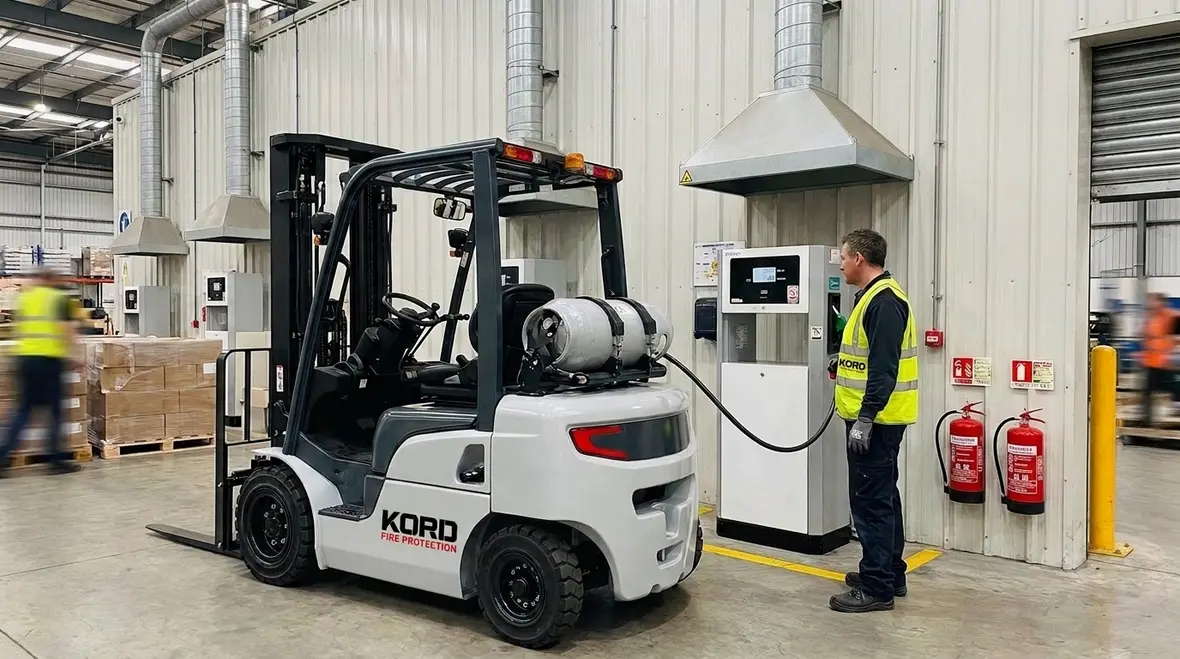
Fueling a hydrogen forklift should follow clear steps. Before fueling, technicians perform checks for leaks, ensure the fueling area has active ventilation and remove sources of ignition. During fueling, hoses and connections must be intact and equipment properly grounded. After fueling, system pressure is verified and there is a post fueling check for any signs of hydrogen release. Fire protection measures including detectors, extinguishers and audible alarms stay ready. Regular maintenance and leak tests keep the system trustworthy and ready.
A practical fueling sequence
- Check the area for leaks and confirm ventilation is operating
- Remove ignition sources and verify safe access around the station
- Inspect hoses, fittings and connection points before fueling
- Ground equipment correctly where required
- Verify system pressure after fueling
- Carry out a post fueling inspection for any release indicators
Operational risk management and emergency response
Work sites must have a documented emergency response plan for HPIT operations. This includes roles for staff, defined evacuation routes and coordination with local emergency services. Training covers not only normal operation but also spill response and fire drills. Daily supervision and routine inspections help catch issues early. A calm, practiced team reduces the chance of panic when an incident occurs. A good plan is a peace of mind plan, even in a noisy warehouse environment.
This becomes even more useful when paired with warehouse focused planning, and Kord’s warehouse fire protection strategy adds context for drills, access, evacuation readiness and the kind of organized response that beats dramatic confusion every single time.
Emergency planning essentials
- Defined staff roles and communication steps
- Marked evacuation routes and assembly areas
- Coordination with local emergency services
- Routine drills and refresher training
- Daily supervision and regular inspections
The partnership with Kord Fire Protection
Kord Fire Protection acts as a vital partner for HPIT safety. They bring deep expertise in fire protection design and compliance with NFPA 2 related requirements. Their team analyzes the safety gaps in fueling stations, storage rooms and vehicle bays and helps implement robust fire protection systems. They offer staff training, fire watch services and assistance with emergency response planning so facilities can maintain steady operations while staying compliant. For companies that want practical safety upgrades with minimal disruption, Kord is a trusted ally.
Why Kord is a trusted partner
- Experience aligning with NFPA 2 for HPIT fleets
- Fire protection system design tailored to hydrogen areas
- Staff training on fueling safety and emergency response
- On site risk assessments and compliance checks
What Kord provides on site
- Engineered fire protection and detection for HPIT zones
- Fueling station safety reviews and SOP development
- Emergency response planning and drills
- Documentation, audits and ongoing safety coaching
Australia wide adoption and regional considerations
Australian facilities across industrial, retail, commercial and facilities sectors can adopt HPIT safety requirements with practical steps. Local sites benefit from adapting NFPA 2 guidelines to their climate, building codes and electrical standards. Kord Fire Protection supports Australian operations by translating these international safety concepts into site specific actions. They help ensure that fueling stations and storage rooms meet both national and local safety expectations while keeping downtime low and safety high.
How hydrogen forklift fueling fits into HPIT safety requirements in Australian facilities?
Hydrogen forklift fueling must be treated as a critical safety activity under HPIT safety requirements. Approved fueling stations, rigorous pre and post fueling checks and continuous ventilation reduce risk. Training ensures operators know how to handle hydrogen, recognize leaks and respond quickly. Australian sites benefit from clear SOPs, regular inspections and a partner like Kord Fire Protection to oversee compliance, perform drills and keep records up to date. The result is safer every day operations with fewer interruptions.
FAQ
Conclusion and call to action
For industrial facilities across Australia embracing HPITs the path to safety is clear. NFPA 2 delivers the framework for safe hydrogen powered trucks while hydrogen fueling procedures and strong fire protection practices protect lives and assets. Kord Fire Protection stands ready to partner with you offering audits training and practical solutions that keep operations smooth and compliant. Contact Kord today to discuss your HPIT safety needs and set a robust plan in motion.

Join Our Newsletter!
Get the latest fire safety tips delivered straight to your inbox From our Newsletter.