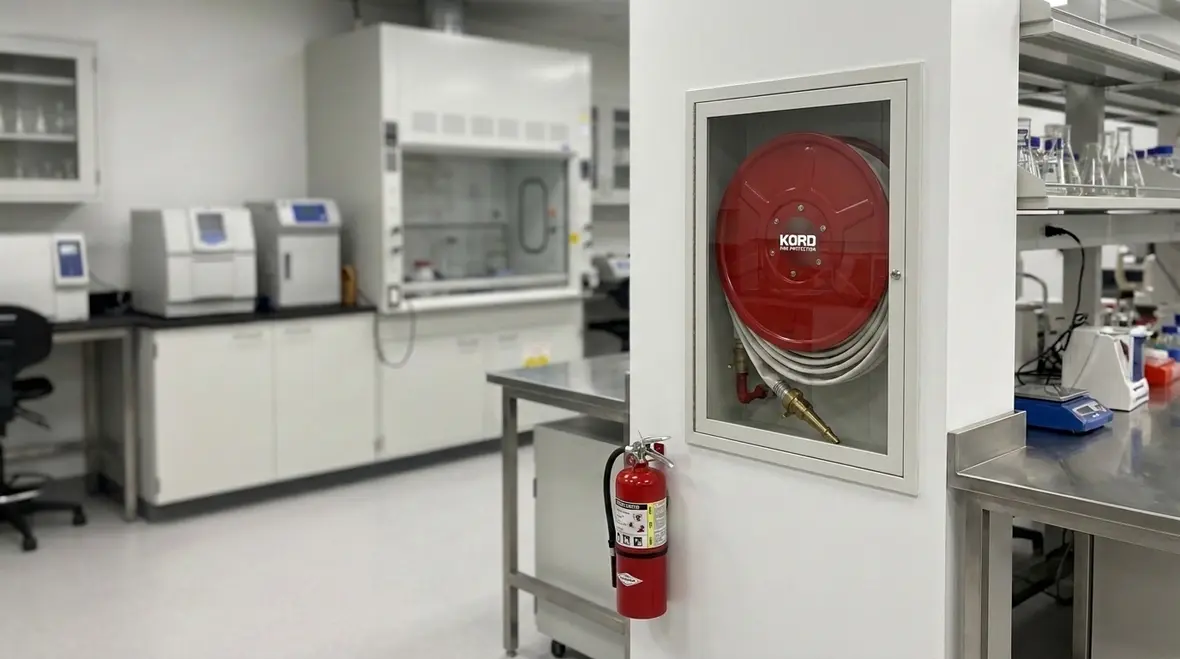
NFPA 45 Section 6.2: Standpipe and Hose Systems in Lab Facilities
Quick Answer
NFPA 45 Section 6.2 sets performance and maintenance expectations for standpipe and hose systems used in laboratory occupancies. It focuses on readiness, correct equipment configuration, and inspection practices so systems deliver water effectively when building staff need an immediate response.
For a broader maintenance view that pairs naturally with this topic, see NFPA 25 standpipe inspection, testing, and maintenance. It fits well here because laboratory readiness often depends on the same discipline: accessible equipment, documented inspections, and corrective action that actually gets completed.
What NFPA 45 Section 6.2 requires for laboratory standpipe and hose readiness
NFPA 45 laboratory standpipe hose systems are designed to provide quick access to water supplies for early fire control in environments where hazards can be laboratory scale, high value, and time sensitive. Section 6.2 establishes that standpipes and hose assemblies must be installed and maintained so they remain functional, accessible, and capable of delivering water when needed.
In practice, compliance depends less on one time commissioning and more on repeatable operational readiness. Commercial facility owners, industrial campuses, and retail science annexes typically struggle with the same gaps: missing caps and nozzles, hoses removed for “temporary” use, blocked hose cabinets, and inconsistent inspection records across shifts and contractors.
System components: what inspectors look for in standpipe and hose setups
NFPA 45 Section 6.2 ties performance to the complete system, not individual parts. For laboratory applications, teams should expect scrutiny of both plumbing and operational interfaces.
Standpipe configuration and connection points
Inspectors typically verify that standpipes provide appropriate outlets for hose connections throughout the protected area. Common failure points include misrouted hose connections, improper adapters, shutoff valves left in the wrong position, or outlets that become obstructed during renovation or equipment placement.
Hoses, couplings, and nozzles
Standpipe hose systems often fail during real use because assemblies degrade or become mismatched. Typical issues include:
- Hoses stored with kinks, cuts, or abrasion damage from cabinets, racking, or forklifts.
- Incorrect nozzle types or missing nozzles leading to poor spray patterns and ineffective water delivery.
- Couplings that do not seat properly due to corrosion, debris, or non compliant replacement parts.
- Hose lengths that do not match the intended coverage and response plan for the lab floor layout.
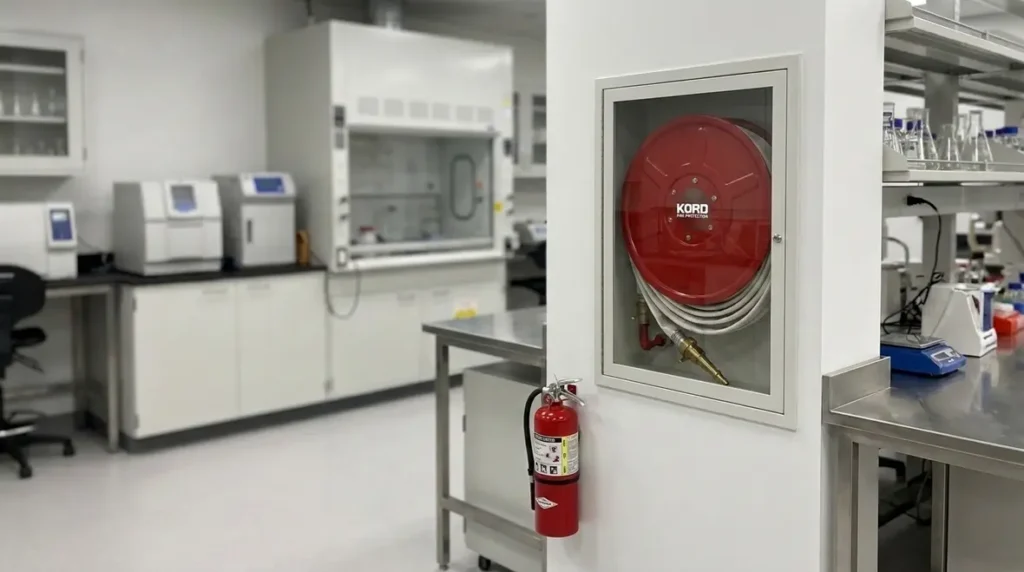
Cabinet location, labeling, and access
Laboratories frequently include tall benches, chemical storage, and temporary work zones. The system must remain immediately accessible. Plants and universities commonly reconfigure spaces, and hose locations get inadvertently blocked by carts, storage racks, or lab operations. Section 6.2 compliance requires ongoing attention to access pathways and cabinet visibility.
Inspection and maintenance: how to keep NFPA 45 laboratory standpipe hose systems operational
Standpipe and hose systems demand maintenance procedures that align with how labs operate day to day. The compliance value comes from documented inspections, standardized replacement triggers, and controlled access to maintenance tasks.
Documented readiness checks
Facilities typically adopt a routine that confirms:
- Hoses remain installed, rolled properly, and secured for quick deployment.
- Couplings and nozzles are present, clean, and correctly assembled.
- Cabinet doors close and latches work without jamming.
- Outlets and valves are unobstructed and operable.
These checks should be tied to shift handoffs or monthly field verification to reduce drift after renovations and contractor work.
Water flow performance and system impairment controls
Even when hoses look serviceable, hidden impairment can exist. Valve position changes, minor leaks behind walls, underground feed issues, or pressure variations can reduce system effectiveness. A mature compliance program evaluates performance impacts after any of the following:
- Piping modifications, valve replacements, or routing changes.
- Fire pump or supply system maintenance.
- Lab fit outs that alter cabinet placement or obstruct hose pathways.
- Long periods of vacancy followed by reoccupation.
Testing coordination for commercial and industrial environments
In multi tenant or campus settings, standpipe and hose testing should be coordinated to avoid interference with lab operations. Effective programs include pre test notification, isolation planning when needed, and controlled staging of test hoses to prevent damage to completed lab finishes and chemical storage areas.
For facilities that also need to coordinate water supply verification, fire pump testing requirements provide useful context for how pump performance, flow planning, and inspection routines support dependable standpipe response.
Operational procedures that prevent common real world failures
Section 6.2 compliance becomes fragile when operational readiness does not match equipment readiness. Labs often require rapid action by trained staff, not only by fire departments.
Training for deployment and water application
Facilities should train staff to deploy the hose without creating additional hazards in chemical or electrical areas. Training should cover safe approach routes, how to avoid contact with stored materials, and how to manage hose kinks while moving to an outlet position. A best practice is to align training with lab specific layouts and typical travel paths.
Labeling and response integration
Hose cabinets and outlets should be clearly labeled to match emergency response plans. When labeling lags behind construction changes, teams waste critical time searching for the correct connection point.
Impairment management
Commercial facilities frequently take systems out of service for repairs or contractor work. A strong impairment management process prevents periods where hoses exist but cannot deliver water. It also ensures that systems return to service with verification steps completed and documented.
Compliance documentation: what auditors and insurers expect
Strong documentation helps facilities demonstrate that NFPA 45 laboratory standpipe hose systems remain reliable throughout their lifecycle. Auditors typically look for consistency, traceability, and evidence of corrective actions.
Inspection records and corrective action trails
Records should include dates, locations, identified conditions, and the resolution actions taken. High quality documentation also records part replacement details, such as hose assemblies or nozzles, including what was replaced and why.
Consistency across contractors and facility staff
In lab environments, multiple contractors work in parallel. Documentation should standardize how each group reports issues, how parts are ordered, and how repairs are verified. This reduces the risk of unauthorized substitutions that look correct but do not perform correctly under flow conditions.
Gap analysis after renovations
Any lab fit out that changes cabinet locations, wall penetrations, or equipment placement can create non obvious access problems. Facilities should treat renovations as triggers for a full readiness recheck, not only a visual walkthrough.
How to plan a maintenance program for lab changes and seasonal risk
Laboratory facilities experience recurring disruptions: annual shutdowns, seasonal staffing shifts, and frequent equipment moves. Maintenance planning should anticipate these cycles so standpipe and hose systems do not degrade unnoticed.
Before reoccupation or major operational changes
- Reverify hose placement, cabinet access, and outlet visibility.
- Check for damage caused during storage moves or construction staging.
- Confirm valve status and water supply interfaces after mechanical work.
Seasonal staffing and training refresh
Staff turnover and contractor rotation are predictable. A short, recurring training refresh and quick familiarization walkthrough improves first response outcomes and reduces deployment errors.
For teams that want a direct service path, the fire pump service page outlines inspection, maintenance, testing, and support options that often sit upstream of reliable standpipe and hose performance.
Frequently Asked Questions
Next step: confirm your lab’s standpipe hose readiness
NFPA 45 laboratory standpipe hose systems work only when the equipment stays assembled, accessible, and operational. Conduct a targeted readiness review of cabinet access, hose condition, and valve interfaces, then schedule inspection and testing aligned with your lab change schedule. For commercial compliance support, partner with Kord Fire Protection to maintain accurate documentation, address recurring failure points, and reduce inspection risk.

Join Our Newsletter!
Get the latest fire safety tips delivered straight to your inbox From our Newsletter.