NFPA 1900 Section 23.3 Breathing Air Compressor Systems
Quick Answer
NFPA 1900 Section 23.3 sets clear expectations for breathing air compressor systems on fire apparatus. In simple terms, these systems must deliver safe, clean air for fire crews, support fast refill needs, and work reliably in tough field conditions. For industrial, commercial, and facility teams, that means safer operations, better uptime, and less drama when the pressure is on.
If your broader fire protection program also needs coordinated inspection and maintenance support, Kord Fire’s full fire protection services show how one partner can help keep multiple life safety systems inspection-ready without turning your calendar into a hostage situation.
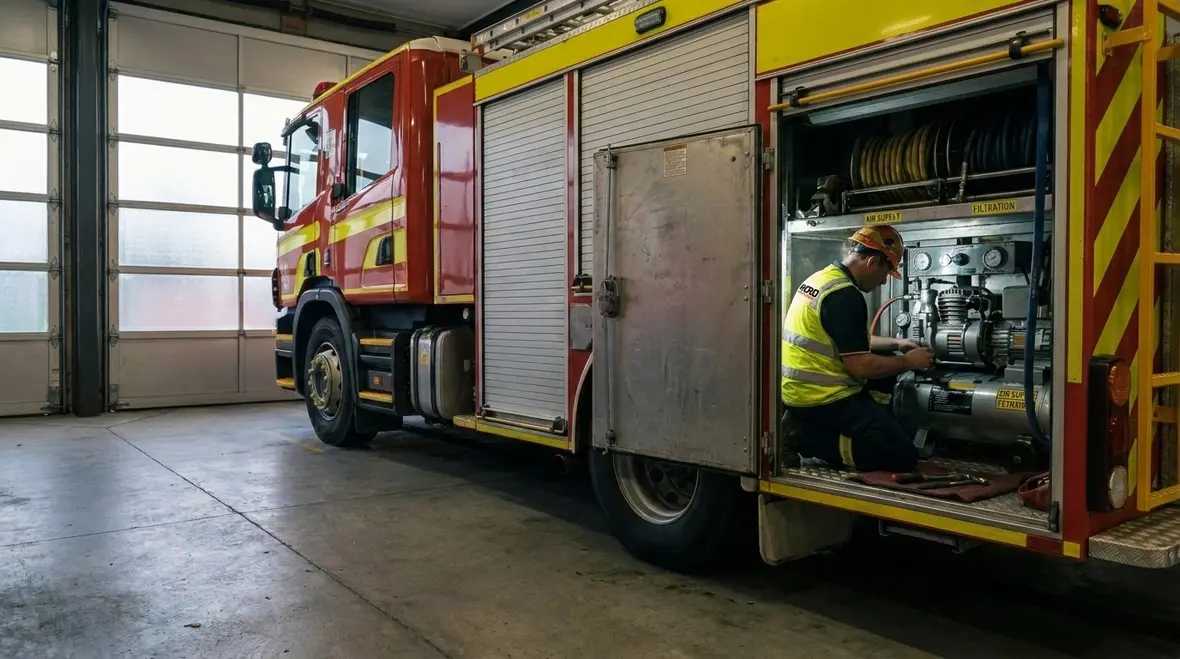
Fire trucks do not get to have off days. When crews depend on a fire truck breathing air compressor NFPA setup, the system must do one job very well: supply clean breathing air when it matters most. NFPA 1900 Section 23.3 focuses on compressor performance, air quality, controls, and safe operation on apparatus. For industrial sites, retail hubs, commercial buildings, and large facilities, this is more than a standards issue. It is a safety and readiness issue. And yes, the air must be cleaner than the excuses after a bad shift.
That is where careful design, testing, and service matter. Kord Fire Protection can become a vital partner in this work by helping organizations keep fire apparatus breathing air systems ready, compliant, and dependable. In a setting where delays cost time and risk rises fast, that support has real value.
What NFPA 1900 Section 23.3 means for breathing air systems
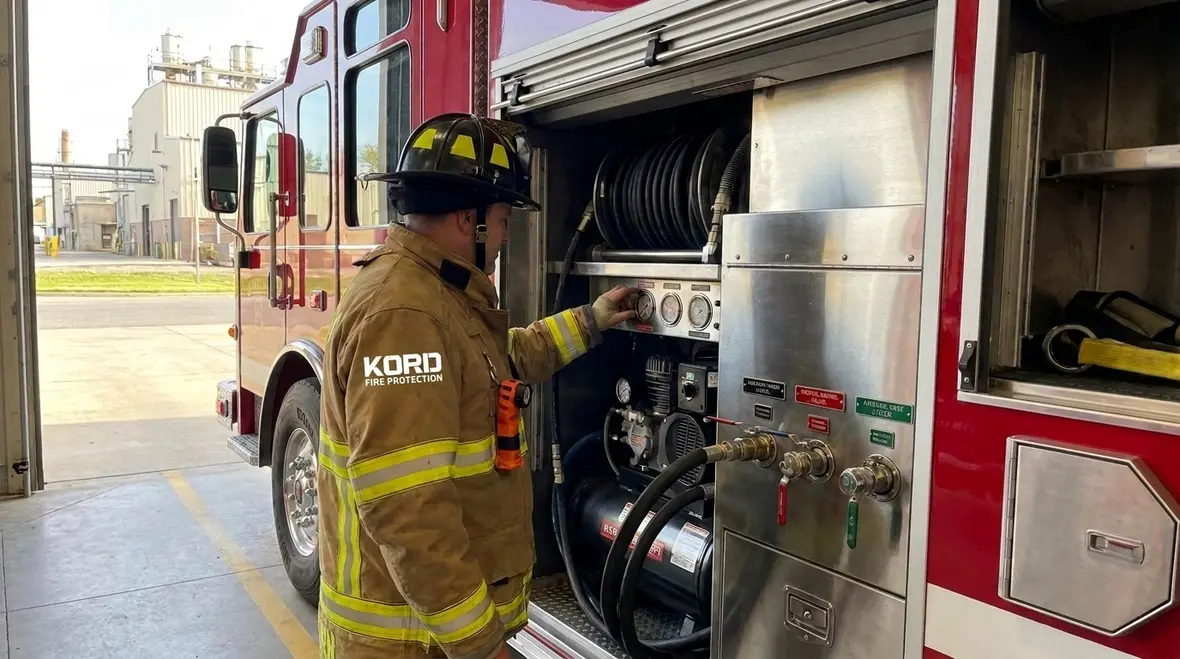
Section 23.3 covers the breathing air compressor requirements for fire apparatus. It sets the baseline for how these systems should work on the vehicle and how they should protect the crew. The goal is simple: deliver breathing air that supports safe firefighting and rescue work. The standard helps ensure the compressor, filtration, storage, and controls all work as one system, not as four parts pretending to be friends.
For facility and industrial teams, this matters because many fire apparatus serve complex sites where response speed can shape outcomes. Therefore, the apparatus must arrive ready to support firefighters immediately. A weak compressor system can slow refill operations, create maintenance gaps, and raise risk. NFPA 1900 helps reduce that risk by demanding a higher level of equipment discipline.
Why this section matters beyond the apparatus bay
A breathing air compressor system is easy to ignore when it sits quietly in the background and does not ask for attention. That is exactly why smart teams stay on it. The moment an emergency hits, nobody wants to discover that a filter was overdue, a pressure issue went unnoticed, or a control alarm had been doing interpretive dance instead of providing useful information. Section 23.3 reinforces the idea that breathing air support is operational equipment, not decorative hardware.
Why air quality and system control matter on the truck
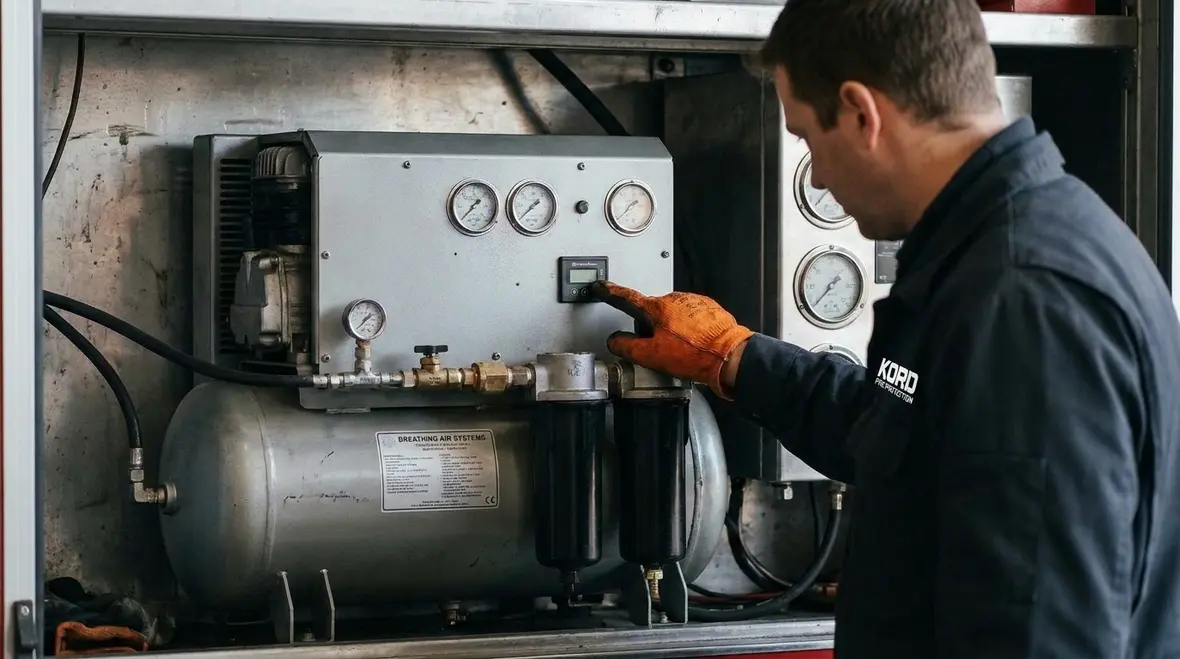
Clean breathing air is not optional. It must stay within strict limits for moisture, oil, carbon monoxide, and other harmful contaminants. Because firefighters use this air in high heat and under stress, the compressor system must protect the air supply from start to finish. The standard also expects controls that help operators monitor performance and spot problems before they become headaches with sirens.
In practice, this means proper intake placement, strong filtration, safe compressor design, and clear indicators. As a result, crews gain more confidence in the system. At the same time, the apparatus team gains better control over inspections and upkeep. That balance is what keeps a fleet useful, not just shiny.
The real-world value of dependable controls
A breathing air system with weak controls is like a crew member who only says “probably fine” to every question. Operators need readable indicators, predictable responses, and shutdown protections that make sense under pressure. Clear controls support faster troubleshooting, better maintenance decisions, and fewer moments where someone is left staring at a panel and hoping confidence alone will fix the problem.
How apparatus teams should think about compliance
Compliance is not just a box to tick. It is a working process. Teams should treat the fire apparatus breathing air system as critical equipment that needs regular checks, documented service, and trained operators. Moreover, they should verify that the compressor setup matches the vehicle’s actual duty cycle and site needs. A system that looks fine on paper may still struggle in real world service, much like a superhero who only works in daylight.
Here are the main areas that usually need attention:
- Air quality testing and filtration checks
- Compressor output and pressure performance
- Inspection of hoses, valves, and fittings
- Controls, alarms, and safety shutoffs
- Preventive maintenance records and service logs
With this approach, teams can reduce downtime and keep the apparatus mission ready. In addition, they can support long term asset life, which matters when equipment sits at the center of an emergency response plan.
Documentation is part of readiness
Good records do more than satisfy auditors and file cabinets. They help teams spot recurring faults, confirm service intervals, and make replacement decisions before a minor issue turns into expensive downtime. When the maintenance history is clear, the system stops being mysterious and starts being manageable. That is a much nicer relationship for everyone involved.
Where Kord Fire Protection adds real value
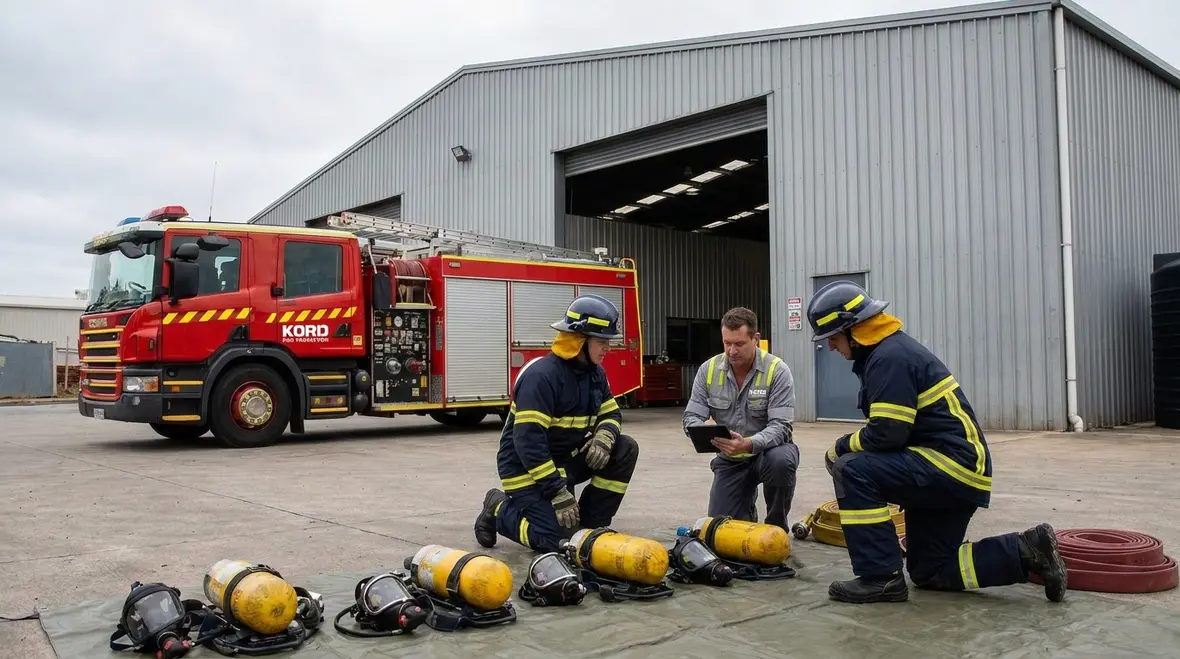
Kord Fire Protection can become a vital partner by helping clients manage the full life of a breathing air compressor system. That includes service, inspection support, compliance guidance, and practical advice that fits real site conditions. For industrial and commercial operations, that kind of help saves time and reduces guesswork.
Just as important, Kord can support teams that need a trusted specialist rather than a general fix it and hope approach. Fire apparatus systems should not be left to chance. Instead, they should be handled by people who understand the standard, the equipment, and the demands of emergency response. In short, Kord helps turn a technical requirement into a dependable operating advantage.
For teams comparing broader code guidance across vehicle and equipment design, Kord also covers the NFPA 1900 standard in a way that helps connect individual requirements back to the bigger operational picture.
How to choose the right support partner
Choosing a service partner should not feel like a blind date. The right provider should understand fire apparatus, breathing air systems, and the compliance expectations tied to NFPA 1900. They should also communicate clearly, respond quickly, and know how to work within industrial and commercial environments.
That usually means looking for a partner who can support multiple properties, coordinate service windows, and help reduce disruption. Furthermore, the best partner will focus on reliability, not just repairs. They will help keep equipment ready before a problem shows up in the field, which is always cheaper than fixing a surprise at 3 a.m.
| Facility priority | What the partner should deliver |
| Compliance support | Clear guidance tied to NFPA 1900 Section 23.3 |
| System care | Inspection, testing, and preventive maintenance |
| Response readiness | Fast service that limits downtime |
| Site fit | Support for industrial, retail, and commercial settings |
What separates decent support from useful support
A decent provider can show up and perform a task. A useful provider helps you avoid repeat problems, plan around operations, and understand where your real risks live. With technical systems like breathing air compressors on fire apparatus, that difference matters. The right partner does not just solve today’s issue. They help prevent next month’s headache from arriving early and bringing friends.
Conclusion
NFPA 1900 Section 23.3 gives fire apparatus breathing air systems the discipline they deserve. For industrial and commercial sites, that means safer operations, stronger readiness, and fewer ugly surprises when crews need reliable air support fast. A compressor system that is properly designed, monitored, and maintained becomes a real operational asset instead of a nervous little question mark.
Kord Fire Protection can help keep those systems compliant, reliable, and ready for action through practical service support and a broader understanding of connected fire protection needs. If breathing air support matters to the fleet, it is time to bring in a partner built for the job and not just someone with a wrench and suspicious optimism.
FAQ

Join Our Newsletter!
Get the latest fire safety tips delivered straight to your inbox From our Newsletter.