
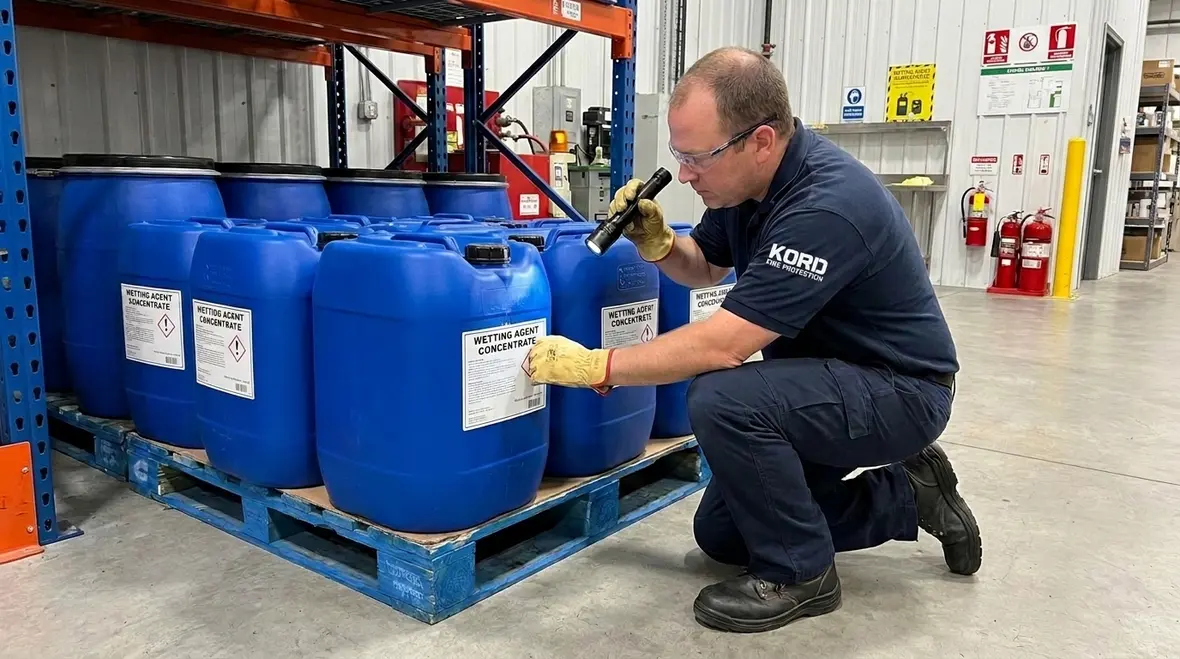
NFPA 18 Section 9.1: Packaging Requirements for Wetting Agent Concentrates
Quick Answer
NFPA 18 section 9.1 packaging requirements wetting agent concentrate focuses on keeping concentrates identifiable, compatible with intended use, and protected from contamination or deterioration. Proper labeling, container integrity, and handling controls help prevent concentration drift, corrosion, and nozzle or system performance failures.
What does NFPA 18 section 9.1 require for wetting agent concentrates?
NFPA 18 treats wetting agents as a critical component in foam and water based fire protection strategies where performance depends on correct formulation, water quality interaction, and consistent concentration at discharge. Section 9.1 concentrates on packaging requirements, which in practice determine whether the product arrives on site in a usable condition and remains usable through receipt, storage, transfer, and proportioning.
Facilities that manage these agents often discover that non compliance does not fail during inspections as a dramatic event. Instead, it shows up as “gradual performance loss” due to packaging defects, label mismatch, contamination, or uncontrolled mixing practices. That is why the section emphasizes packaging controls that support traceability, chemical stability, and safe handling across commercial and industrial environments.
For a broader foundation before diving deeper, see Kord Fire Protection’s NFPA 18 overview of wetting agents.
Why packaging integrity drives real-world system performance
Even when a wetting agent meets specification at the time of manufacture, field outcomes can change when packaging and handling break fundamental assumptions. For example, compromised containers can introduce contamination, wrong dilution outcomes, or chemical breakdown that affects surface tension reduction and wetting behavior.
Common failure points tied to packaging
- Container damage: Cracks, dents, degraded closures, or gasket failure can permit air ingress or slow leaks, creating concentration drift and slip hazards.
- Improper storage conditions: Heat, sunlight, and freeze thaw cycles accelerate deterioration for many surfactant chemistries and can destabilize performance over time.
- Mixing and transfer errors: Using unapproved transfer equipment, unlabeled jugs, or improvised funnels increases cross contamination risk between concentrates or between different product lines.
- Traceability loss: Missing labels or unreadable batch numbers makes it difficult to verify compatibility, shelf life, and concentration verification procedures.
These risks matter in commercial, industrial, and retail facilities where wetting agent products may be stored in service rooms, near pump houses, or in maintenance areas that are accessed by multiple trades. Packaging controls reduce ambiguity and help maintain predictable fire pump, proportioner, and discharge performance.
Packaging requirements you should operationalize on site
NFPA 18 section 9.1 packaging requirements wetting agent concentrate are typically implemented through a combination of manufacturer compliant containers and facility controlled receipt, storage, and issue practices. The best approach is to treat packaging as part of your fire protection system, not as general inventory.
1) Receive concentrates with verified identity and integrity
At delivery, facilities should verify that containers match the product spec, remain sealed, and show no signs of leakage or physical degradation. Batch and manufacture information should be retained to support later traceability if performance questions arise during maintenance or testing.
Recommended records include delivery date, batch number, container count, container condition, storage location, and the responsible technician. When labels are present but unreadable, agencies and insurance stakeholders often expect evidence of corrective action, not just that “the product is correct.”
2) Maintain compatible storage and prevent contamination
Packaging compatibility extends beyond “will it fit in a cabinet.” It includes chemical compatibility with the container material, exposure to incompatible cleaning agents in shared areas, and prevention of water intrusion during storage. Facilities should separate wetting agent concentrates from general chemicals and housekeeping products.
Where temperature swings occur, container insulation or climate controlled storage may become necessary to maintain stability. Packaging requirements are ineffective if the storage environment undermines concentration performance and container material durability.
3) Preserve labels, batch data, and hazard communication
Labels must remain intact and legible so technicians can confirm correct product selection during replenishment. If a label is damaged, the facility should replace it using the original product labeling information, not an estimate. Out of date or partially removed labels increase the likelihood of mixing the wrong concentrate into a system.
For compliance, the facility should align storage labeling practices with internal chemical inventory policies and local safety requirements. This creates consistency between fire protection documentation and workplace safety expectations.
4) Control dispensing, transfer, and concentration verification
Packaging requirements connect directly to how concentrates transition from storage to the fire protection system. Facilities should use approved closed containers, calibrated transfer tools, and documented transfer procedures. Improvised transfer methods introduce contamination and inaccurate dosing, undermining the intent of NFPA 18 section 9.1 packaging requirements wetting agent concentrate.
Because proportioners and eductors depend on correct concentration and stable chemistry, service personnel should also follow concentration verification practices and verify that replenishment uses packaging quantities that match recorded batch information.
How commercial facilities implement NFPA 18 wetting agent packaging controls
Compliance is rarely achieved by a single policy document. It requires consistency across facilities, shifts, contractors, and maintenance cycles. Many commercial operators standardize their approach around three program pillars: training, inspection routines, and documented corrective actions.
Training focus for technicians and facility teams
- How to identify the correct concentrate by label and batch information.
- How to safely inspect container condition, seals, and closures.
- How to prevent cross contamination during transfer and replenishment.
- How to report packaging defects and quarantine product pending evaluation.
Inspection routines that catch packaging issues early
Packaging defects are often visible before performance problems appear. A practical inspection routine should include container integrity checks, seal condition review, label legibility verification, and environmental condition checks in the storage area. Any container showing leaks, bulging, degraded closures, or label damage should be quarantined and handled according to the facility’s chemical management procedure.
Integration with broader wetting agent and system requirements
Facilities that want to align packaging with the rest of their wetting agent program typically start with a system overview and then map how concentrates integrate into proportioning and discharge. For additional context on wetting agents, see Kord Fire Protection’s NFPA 18 overview of wetting agents.
What to watch for during maintenance and compliance visits
During scheduled maintenance, inspectors and internal compliance teams often look for evidence that packaging controls translate into operational discipline. The goal is to reduce “paper compliance” and confirm that concentrates remain traceable and fit for service.
Documentation that typically matters
- Replenishment records that tie the product issued to container batch and receipt dates.
- Storage inspection logs including container condition and label status.
- Quarantine and corrective action records for damaged or questionable containers.
- Service documentation for proportioning or eductor systems that confirms correct concentration practices.
Equipment and setup details that can invalidate packaging compliance
Even with compliant containers, issues arise when transfer and proportioning equipment do not support the intended packaging safeguards. Examples include contaminated suction lines, uncleaned eductor bodies, incorrect calibration settings, or failure to maintain proportioner control components. These failures can mimic the symptoms of degraded concentrate even when packaging arrives in good condition.
Operators can also reduce the risk of coordination failures by pairing fire protection service schedules with broader pump and sprinkler area maintenance planning. For related sprinkler and system service capability, refer to Kord Fire Protection’s Australian fire sprinkler services.
For added background on pump testing, acceptance checks, and the maintenance rhythm that supports reliable water delivery, visit this fire pump acceptance testing guide. Sometimes the quiet hero in the pump room deserves a little more attention before it turns into expensive drama.
Frequently Asked Questions
Conclusion and call to action
NFPA 18 section 9.1 packaging requirements wetting agent concentrate are only effective when facilities operationalize them through container integrity, traceable labeling, controlled storage, and disciplined transfer practices. Kord Fire Protection helps commercial sites keep wetting agents fit for service through inspection routines, documentation, and ongoing maintenance support. Contact Kord Fire Protection to align your packaging procedures with NFPA 18 expectations and reduce concentration drift, contamination risk, and audit findings before they become operational problems.
Additional reference: For background on fire pump and system maintenance considerations that often intersect with proportioning and reliable water delivery, visit firepumps.org.

Join Our Newsletter!
Get the latest fire safety tips delivered straight to your inbox From our Newsletter.



