
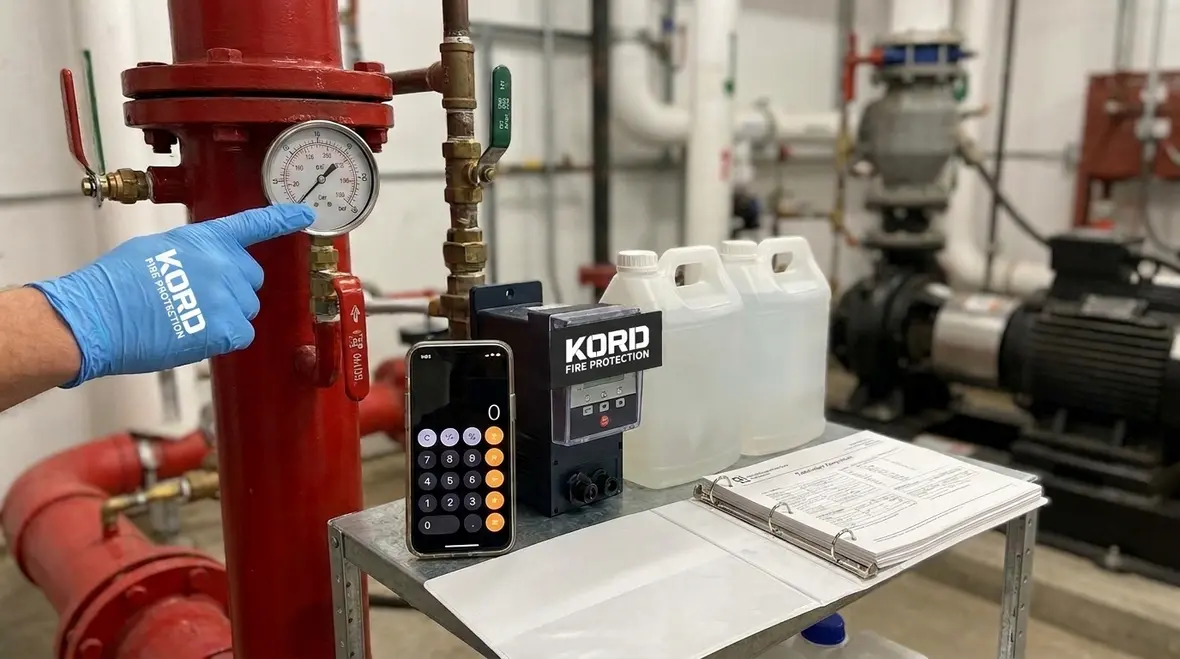
NFPA 18 Section 1.6: Units and Formulas in the Wetting Agents Standard
Quick Answer
NFPA 18 section 1.6 defines the unit system and the formulas used to quantify wetting agent performance, delivery, and calculations. This matters because incorrect SI conversions can create compliance gaps, wrong discharge rates, and ineffective fire control. Accurate unit handling supports inspection, testing, and commissioning.
Why NFPA 18 section 1.6 units and formulas SI conversions matter on real sites
In commercial and industrial fire protection programs, wetting agents must be measured, calculated, and verified with the same rigor expected of sprinklers, pumps, and water supplies. The practical risk is not theory. It is field execution: a calculation that uses mismatched units or an incorrect conversion factor can lead to undersized application, improper foam water solutions, or inaccurate flow verification during commissioning and annual testing.
Fire protection teams often assume unit conversion is a minor administrative task. In practice, NFPA 18 section 1.6 units and formulas SI conversions drive how the wetting agent system is designed, documented, inspected, and maintained. Facilities that run mixed documentation sets, retrofit legacy systems, or rely on vendor spreadsheets commonly encounter nonconformances during audits.
For teams also reviewing broader system readiness and long term maintenance planning, fire sprinkler maintenance for commercial safety in Australia offers useful context on keeping inspection, testing, and documentation working together instead of drifting into separate silos. For broader context on how wetting agents are treated within the standard, reference Kord Fire Protection’s NFPA 18 overview of wetting agents.
What section 1.6 covers in wetting agent calculations
NFPA 18 section 1.6 establishes the framework for the numeric work required throughout the wetting agents standard. The goal is repeatable calculations that produce consistent outcomes regardless of who performs the math. That includes:
Defining the unit system used for quantities tied to wetting agent application and performance.
Specifying how formulas relate key variables such as concentration, solution preparation, discharge or delivery measures, and performance-related inputs.
Clarifying how to apply the formulas in documentation, so commissioning results match field verification.
Operationally, this affects more than design calculations. It influences how test instructions are written, how inspectors verify setup, and how maintenance teams reproduce the same results after service events, pump overhauls, container changes, or procedural updates.
SI conversions: where compliance failures usually start
SI conversions often become the weak link when organizations combine older project documents with current engineering standards, or when contractors complete calculations in one unit system and field technicians execute in another. Common failure points include:
Concentration drift from incorrect conversion. A small error in converting between volume based measures can alter the effective wetting agent fraction delivered to the hazard.
Flow rate mismatches during verification. Pump or discharge rates measured during functional testing may be recorded in one unit system while formulas expect another, creating incorrect pass fail conclusions.
Documentation inconsistency. Design reports, as built drawings, and operating procedures can disagree on the units used for key parameters. Auditors then flag the mismatch even if the physical system operates adequately.
Container and dosing device calibration confusion. Dosing setups or dilution kits may be labeled in one system. If the conversion is wrong, dilution or topping procedures produce the wrong solution strength.
To reduce these risks, commercial facilities need a controlled calculation workflow. The workflow should include unit checks, conversion verification, and version control for spreadsheets or worksheets used during annual service.
How teams apply section 1.6 formulas during commissioning and maintenance
1) Commissioning and acceptance testing
When a wetting agent system is commissioned, teams should treat section 1.6 calculations as part of the verification chain, not as reference material. A practical approach includes:
Confirm the unit basis used in the calculation package before any field setup.
Validate conversion factors used in spreadsheets against a controlled engineering standard.
Use field measured values in the same unit system required by the NFPA 18 section 1.6 formulas.
2) Inspection and functional testing
During scheduled inspection and functional testing, maintenance teams must ensure that the test procedure reproduces the same conditions assumed by the formulas. This includes verifying:
Wetting agent supply status, including solution condition and storage suitability.
Dosing equipment operation, including controller settings and dilution steps aligned with the calculation basis.
Delivery measures and measurement instruments used for performance checks, with consistent units in test logs.
3) Service events and change management
After repairs, pump work, valve maintenance, controller replacement, or wetting agent replenishment, crews often rerun dilution procedures and update logs. This is where section 1.6 units and formulas SI conversions must remain stable. Facilities should require:
Documented revalidation of the dilution math tied to the current system configuration.
Updated operating procedures and calibration records that reflect the units used in the calculation package.
Consistent training for field staff who perform solution preparation or dosing operations.
Where pump systems are involved, align wetting agent delivery expectations with pump performance documentation. For practical pump related context, see this NFPA 25 fire pump testing requirements guide.
Commercial compliance support: reducing risk with ongoing service
Facilities that rely on annual maintenance cycles typically see a pattern: nonconformances rise when spreadsheets, internal checklists, and vendor documentation drift apart. A dependable compliance program keeps wetting agent calculations tied to the installation, the instruments used, and the operational procedures followed on site.
Kord Fire Protection supports commercial, industrial, and retail facilities with ongoing testing, maintenance planning, and documentation discipline. For teams working in Australia or coordinating with local service requirements, Kord Fire Protection’s Australian fire sprinkler services provides an example of structured service delivery aligned to real facility needs.
In practice, strong support helps ensure that SI conversions and section 1.6 units and formulas SI conversions are consistently applied across design records, test plans, maintenance checklists, and audit evidence.
Frequently Asked Questions
Get your unit conversions and test documentation aligned
Ensure NFPA 18 section 1.6 units and formulas SI conversions are applied consistently across design, commissioning, testing, and maintenance. Kord Fire Protection can help you standardize procedures, validate calculation workflows, and keep compliance evidence audit ready. Contact Kord today to review your current documentation set and establish a repeatable verification process for wetting agent systems.

Join Our Newsletter!
Get the latest fire safety tips delivered straight to your inbox From our Newsletter.



