
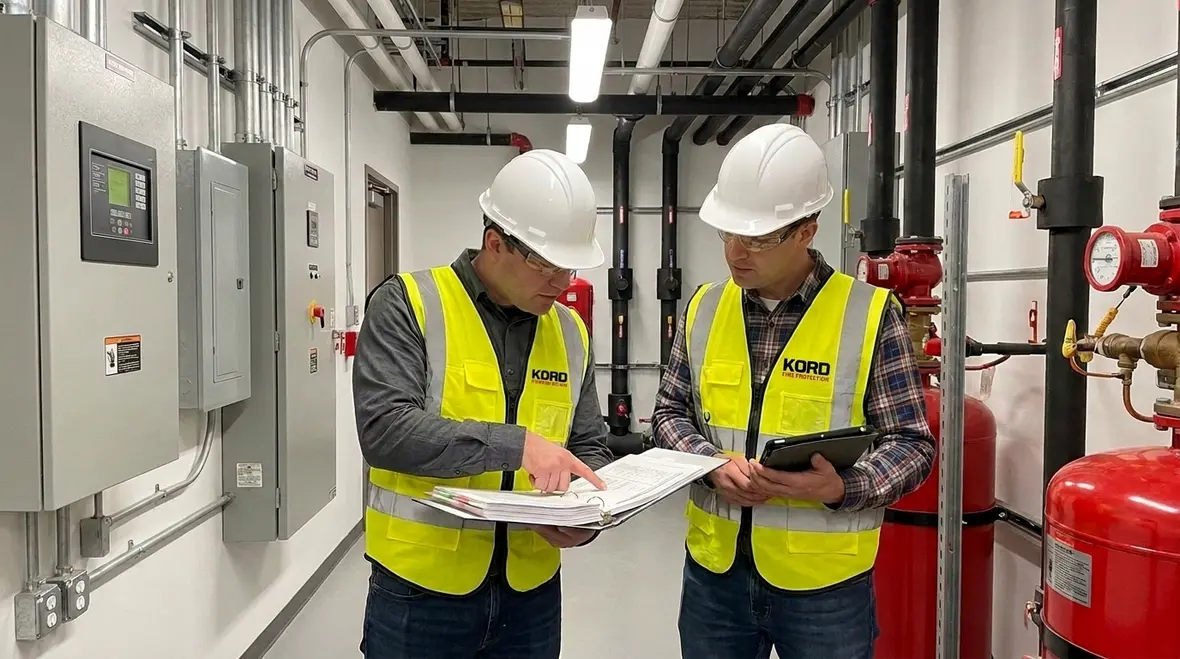
NFPA 18 Section 2.4: References for Extracts in Mandatory Sections Decoded
Quick Answer
NFPA 18 section 2.4 extracts in mandatory sections reference list identifies where mandatory requirements draw their source text. This reference structure clarifies applicability, reduces misinterpretation during plan review, and supports defensible inspections and documentation for commercial wetting agent protection systems.
If you are reviewing broader system reliability near the start of that process, it also helps to understand NFPA 25 fire pump testing requirements alongside the clause-traceability discipline discussed here.
Why NFPA 18 section 2.4 matters for compliance documentation
Commercial facilities often treat standards like “checklists,” but mandatory wording requires stricter control. NFPA 18 section 2.4 extracts in mandatory sections reference list is the backbone that connects shorter mandatory excerpts to their full authoritative locations within NFPA 18. That linkage matters when a facility needs to demonstrate that:
- Design decisions match the intent of the mandatory requirements, not just a partial quote.
- Inspection and maintenance findings are evaluated against the correct clause source.
- Alterations, pump upgrades, sprinkler head changes, or operational procedure updates do not drift out of compliance.
- Documentation stands up during AHJ reviews, insurance underwriting, incident investigations, and internal audits.
For operations that rely on wetting agents and water delivery performance, ambiguous interpretation creates real risk: incorrect discharge behavior can reduce effectiveness even when the system appears “installed and maintained.”
What section 2.4 is actually doing behind the scenes
NFPA 18 section 2.4 functions as a reference map. In practice, mandatory sections often include extracts, meaning the standard quotes or summarizes portions of requirements to keep the document readable. Section 2.4 then provides the extracted reference list so users can trace each mandatory excerpt back to its originating text location.
This structure supports three operational realities:
- Traceability: When a requirement drives testing parameters or acceptance criteria, the facility can trace the exact basis. That traceability is critical when equipment changes occur over the life of the asset.
- Consistency in inspection: Inspectors and engineers must score the same requirement against the same clause intent. The reference list supports consistent interpretation across teams and service contractors.
- Quality control during maintenance: When a system uses specialized components such as wetting agents, pumps, and delivery hardware, maintenance procedures must align with the requirement that governs performance and continuity.
When facilities skip this step, they commonly end up with “compliance drift,” where maintenance records cite an excerpt but the underlying mandatory clause changes its interpretation when traced to the full text.
How the reference list impacts wetting agent systems in commercial buildings
In wetting agent and water delivery applications, the operational challenge is not only whether the equipment is present. The challenge is whether it performs as intended during heat exposure and during system actuation. That is where NFPA 18 section 2.4 extracts in mandatory sections reference list becomes a practical tool for engineering and maintenance teams.
Common compliance pain points tied to clause interpretation
- Wetting agent selection and verification: Facilities often rely on vendor documentation only. A proper compliance workflow confirms that the system’s wetting agent type and handling requirements are evaluated against the correct mandatory clause source from the extract reference list.
- Discharge concentration and dilution practices: If the system uses injection, proportioning, or mixing approaches, small deviations can reduce effectiveness. Correct evaluation depends on tracing mandatory excerpt language to the underlying requirement location.
- Pump performance acceptance and maintenance: Pump control settings, seal condition, suction conditions, and start cycle behavior can impact flow delivery. The reference list helps ensure that testing checks the mandatory intent, not a generic standard interpretation.
- Inspection frequency and documented results: Many facilities maintain logs, but logs become unreliable when they do not map findings to the correct mandatory requirement source.
For technical background on wetting agents and how commercial teams manage them, refer to Kord Fire Protection’s overview: NFPA 18 overview wetting agents. For broader service capability in commercial environments, Kord Fire Protection also supports Australian sprinkler and related systems: Australian fire sprinkler services.
Operational procedures: turning the reference list into a working maintenance standard
A compliant facility does not just “own” the standard. It builds procedures that align with the standard’s mandatory extracts and the source clauses identified in section 2.4.
Recommended compliance workflow for facility teams
- Clause mapping at commissioning and after any change
When engineers update equipment or procedures, the team maps each affected mandatory extract to the reference list item. That ensures maintenance activities connect directly to the mandatory intent. - Inspection checklists that cite source intent
Service checklists should include both the excerpt and its traced source reference. This reduces ambiguity for technicians and strengthens audit defensibility. - Test results tied to performance objectives
For pump driven delivery systems, teams should validate flow behavior, control response, and mechanical health. Practical pump expertise is also relevant to system reliability and maintenance planning, including resources such as fire pumps. - Wetting agent handling and storage controls
Commercial and retail facilities often have constrained storage, staffing, and supplier turnover. Procedures should address batch handling, labeling, and verification steps that align with the mandatory requirement source traced via section 2.4. - Corrective action thresholds and documented closure
When measurements fall outside acceptable ranges, the corrective action plan should reference the mandatory extract and its source clause to confirm that the fix addresses the correct requirement basis.
For facilities that need ongoing support, Kord Fire Protection can help operationalize this approach through structured service planning, inspection readiness support, and maintenance execution that respects the standard’s mandatory framework.
Where teams typically get it wrong during plan review and AHJ engagement
Missteps usually show up at the intersection of design intent, installation documentation, and recurring maintenance. The reference mechanism in NFPA 18 section 2.4 extracts in mandatory sections reference list helps reduce these errors, but teams must apply it.
High risk scenarios
- Using quoted extracts without tracing the source: A review may accept an excerpt during concept discussions but reject the interpretation later when tested against the full clause intent.
- Assuming vendor specs automatically satisfy mandatory requirements: Vendor data describes a product. Mandatory requirements describe how the system must be configured, maintained, verified, and documented.
- Incorrect assumptions after retrofit: Replacing components such as injection hardware, control valves, or pump assemblies changes system behavior. Each change should trigger a re-check of which mandatory excerpts apply and what their reference sources require.
- Maintenance records that cannot be defended: If a facility cannot link inspection findings to the correct mandatory clause, it weakens escalation decisions and complicates insurer or AHJ follow up.
In commercial settings, these errors often lead to delayed corrections, rework costs, and operational downtime. Structured traceability using section 2.4 prevents that cycle.
Frequently Asked Questions
Call to action
If your facility relies on wetting agent protection or pump driven delivery systems, align your inspection and maintenance procedures with the mandatory intent behind NFPA 18 extracts. Kord Fire Protection can help you operationalize NFPA 18 section 2.4 extracts in mandatory sections reference list traceability so records stay defensible, performance stays reliable, and AHJ engagement becomes smoother. Request a compliance review and maintenance planning session today.

Join Our Newsletter!
Get the latest fire safety tips delivered straight to your inbox From our Newsletter.



