
NFPA 17A Annex C Common Deficiencies and Impairments: What to Fix Before Compliance Fails
Quick Answer
NFPA 17A Annex C lists common deficiencies and impairments found during inspection, testing, and maintenance of wet chemical extinguishing systems. The most frequent failures involve incorrect system conditions, poor maintenance records, obstructed nozzles, degraded valves, and improperly performing pumps or controls.
Facilities reviewing wet chemical system risks can also explore wet chemical fire suppression systems and Range Guard for related application context, design considerations, and service insight.
Why Annex C Matters in Real-World Inspections
Annex C of NFPA 17A supports the main requirements by highlighting deficiencies and impairments that show up in field evaluations. For commercial kitchens, fast service restaurants, retail display hazard areas, and industrial processes, these issues often stem from predictable maintenance gaps: incomplete periodic checks, incorrect storage and handling of agent tanks, poor access for inspection, and equipment aging without documented correction.
When auditors or AHJs reference NFPA 17A annex C common deficiencies impairments, they typically look for patterns that signal the system will not perform as intended in an actual fire. That means the conversation quickly moves beyond “it looks installed” to whether the wet chemical system can discharge the right agent, at the right pressure, into the right protected hazard, with the correct sequence and timing.
What Counts as a Deficiency Versus an Impairment?
A “deficiency” generally indicates a failure to comply with required inspection, testing, maintenance, or installation conditions. An “impairment” signals that the system performance is compromised or could be compromised during an emergency.
In practice, many items start as minor deficiencies but become impairments as they accumulate. For example, a partially blocked nozzle or an obstructed discharge path may be tolerable temporarily for inspection purposes, yet still prevent proper agent distribution. Annex C common deficiencies impairments guidance helps facilities and service providers focus on the higher risk items that most often lead to discharge failure, delayed operation, or incomplete coverage.
Common Deficiencies and Impairments That Trigger Noncompliance
The following categories reflect the operational themes Annex C commonly addresses. Facility teams usually find these issues during annual service, semiannual inspections, or discharge tests, often triggered by maintenance turnover, tenant changes, or renovation activities.
1) Improper System Condition and Lack of Readiness
Valves not in the required position for automatic or manual operation.
Agent tanks not properly prepared, sealed, or maintained according to the manufacturer’s requirements.
Unverified supervisory signals, incorrect device status, or control panel indications not matched to actual system hardware.
For commercial facilities, readiness is not just a visual check. Control and detection components must reflect the true installed configuration, wiring integrity, and intended sequencing. Systems that are taken out of service for upgrades without a documented return to service frequently show up as “configuration mismatch” deficiencies.
2) Blocked, Damaged, or Mispositioned Discharge Nozzles
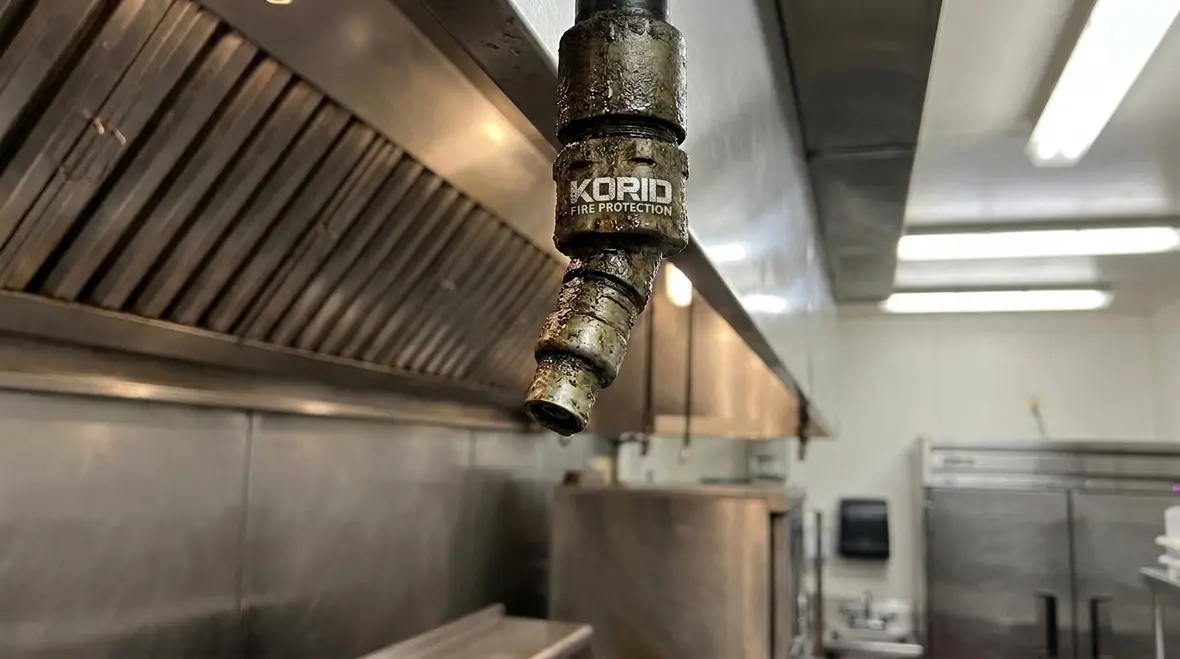
Accumulation of grease, paint overspray, dust, or construction debris on discharge openings.
Nozzles obstructed by ductwork, hoods, suspended equipment, or recently added fixtures.
Physical damage from impacts, cleaning tools, or maintenance access.
Wet chemical systems protect by discharging agent into a defined coverage pattern. Even small obstructions can reduce coverage and undermine suppression performance. In food service and industrial lubrication areas, ongoing cleaning activities can accidentally reposition discharge components if mounting points loosen over time.
3) Impairments in Detection and Actuation Equipment
Detection devices out of calibration or installed incorrectly for the hazard geometry.
Actuation delays caused by wiring faults, poor connections, or intermittent control signals.
Incorrect reset procedures after drills or alarms leading to system not returning to the correct standby state.
Annex C common deficiencies impairments frequently tie to “it alarmed but did not discharge.” That outcome usually comes from an actuation path failure, incorrect device placement, or improper reset and verification after maintenance. Service teams must treat post activity verification as a core requirement, not an optional step.
4) Pumping, Pressure, and Flow Performance Problems
Water or fluid supply not meeting design requirements.
Pressure losses due to partially closed valves, clogged strainers, or deteriorated piping.
Condition problems in pumps, including reduced performance from wear, corrosion, or incorrect priming.
Where pumps are part of the wet chemical system design, performance depends on system hydraulics. This is a common commercial service challenge because facility staff may change plumbing routes or add valves during renovations without coordinating with suppression system requirements. For pump-related insights and industry context, facilities can also review resources on fire pumps at firepumps.org.
5) Improper Maintenance Practices and Documentation Gaps
Missing inspection records, incomplete test forms, or unclear “as found” versus “as left” results.
Service completed without verifying critical settings, torque values, or component conditions.
Expired inspection intervals or delayed corrective actions after minor defects were observed.
Documentation matters because it demonstrates system readiness. AHJs and insurers typically expect traceability for what was tested, what was found, and what was corrected. In commercial kitchens and retail environments, rapid turnover and subcontracting increase the risk of missed steps and inconsistent documentation.
How to Build a Practical Inspection and Maintenance Plan
Facilities can reduce NFPA 17A annex C common deficiencies impairments exposure by moving from reactive fixes to process-based maintenance. A strong plan focuses on access, verification, and hazard change control.
Use Hazard Change Control as a Trigger
Any renovation, duct modification, hood change, shelving addition, or electrical work near detection and discharge components should trigger a suppression system review. Annex C concerns often surface after construction because discharge paths are easiest to disturb during installation and finishing work.
Implement a Two-Level Verification Approach
Pre-service readiness check: confirm valves positions, supervision status, and equipment accessibility.
Post-service return to service verification: confirm reset state, device status indications, and discharge path condition.
This approach catches “worked on the panel, forgot the system state” failures, which often become impairments later when the system is needed.
Prioritize Discharge Path Cleanliness and Integrity
Grease-laden environments require disciplined cleaning methods. Service providers should verify nozzle cleanliness and check for damage from cleaning tools, particularly around the hood area and near ceiling-mounted components.
For additional context on wet chemical system considerations and performance expectations, review enhancing fire safety with NFPA 17A wet chemical extinguishing systems.
Commercial Compliance Challenges and How to Reduce Risk
Commercial facilities operate with frequent tenant turnover, shift-based maintenance, and short repair windows. These operational realities create a compliance gap between “system installed” and “system reliably maintained.”
Tenant Turnover and Configuration Drift
New equipment layouts, added cooking lines, and relocated ducting alter the hazard coverage assumptions. A suppression system design can become mismatched to the actual hazard without an engineered recheck. The result is a deficiency that looks minor on paperwork but behaves as an impairment during discharge.
Access and Clearance Problems
If discharge components are not accessible for inspection, service technicians cannot verify cleanliness, alignment, or mechanical condition. Over time, these access barriers become permanent obstructions.
Integrating Maintenance With Broader Fire Protection Programs
Wet chemical suppression systems sit alongside alarms, extinguishers, and other suppression hazards. Integrated fire protection programs improve accountability and prevent scheduling conflicts that leave systems in a disabled state.
For a service partner perspective on system design and ongoing support, facilities can explore fire suppression systems from Kord Fire Protection.
What a High-Quality Corrective Action Looks Like
When Annex C common deficiencies impairments are identified, the corrective action must do more than “repair the item.” It must restore the system to the intended condition, verify performance-critical functions, and prevent recurrence.
Corrective Action Must Include Verification
Replace or repair damaged components and confirm installation against the current design.
Clean discharge paths and confirm unobstructed coverage.
Verify detection and actuation wiring integrity and correct state after reset.
Where pumps and pressure components exist, verify supply and performance conditions.
Prevent Recurrence With Maintenance Discipline
Turn findings into repeatable controls. For example, document which areas collect grease and schedule cleaning verification before the next inspection interval. Where renovations are common, establish a formal coordination step between construction management and fire protection service scheduling.
Frequently Asked Questions
Conclusion and Call to Action
NFPA 17A annex C common deficiencies impairments issues rarely appear out of nowhere. They typically follow predictable patterns tied to access, cleanliness, component condition, and verification discipline. Kord Fire Protection can support commercial facilities with inspection planning, corrective actions, post service return to service checks, and ongoing maintenance that aligns with wet chemical system expectations. Contact Kord Fire Protection today to schedule a compliance focused review and close the highest risk gaps before your next inspection cycle.

Join Our Newsletter!
Get the latest fire safety tips delivered straight to your inbox From our Newsletter.



