
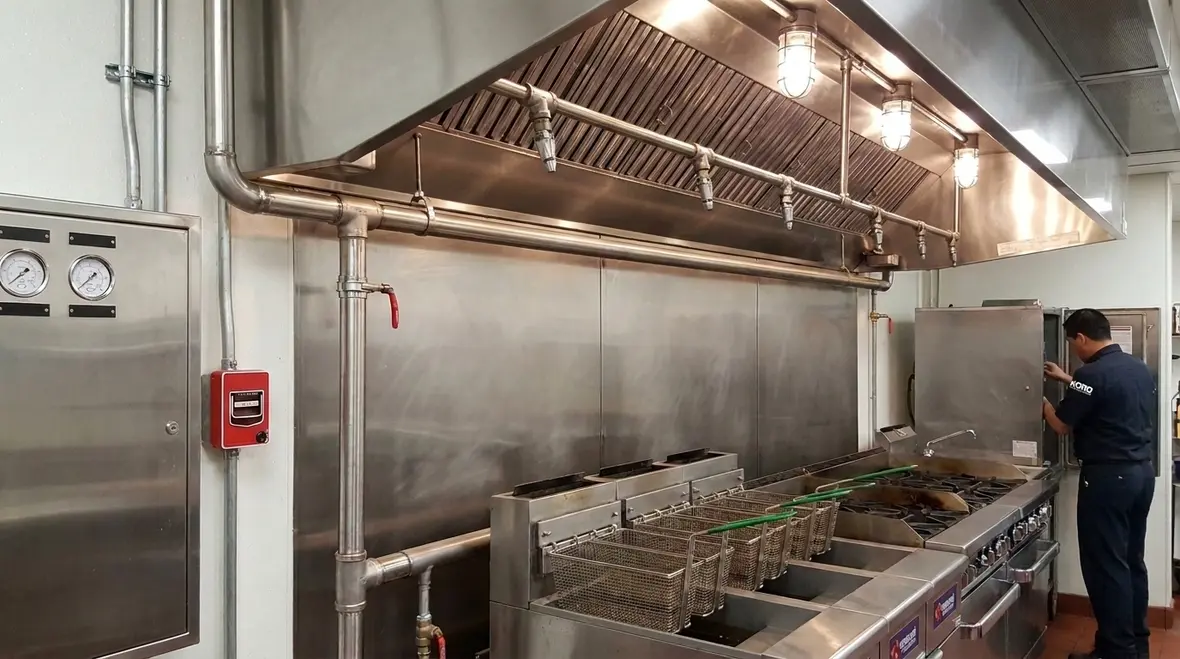
NFPA 17A Annex A Explanatory Material: Chapter Commentary for Wet Chemical Systems
Quick Answer: NFPA 17A Annex A provides explanatory material that clarifies intent, assumptions, and practical application of the standard’s requirements for wet chemical fire extinguishing systems. The chapter commentary helps facilities interpret design, installation, inspection, testing, and maintenance expectations.
For a practical system overview near the start, see wet chemical fire suppression systems and Range Guard. It fits naturally here because Annex A commentary makes a lot more sense once you connect the standard’s language to how the actual suppression hardware, nozzles, agent discharge, and cooking hazard coverage work in the field.
What is NFPA 17A Annex A, and why does the chapter commentary matter?
NFPA 17A annex A explanatory material commentary is not enforceable code text, but it is widely used by engineers, inspectors, contractors, and facility teams to understand the “why” behind specific requirements. For commercial kitchens, quick-service restaurants, laundries, and other light hazard cooking and process areas, the explanatory material helps translate standards into reliable operational outcomes.
In day to day compliance, the commentary often determines how contractors interpret system purpose, how designers select compatible components, and how maintenance teams verify readiness. This reduces the risk of partial compliance, ineffective discharge performance, and inspection failures driven by misunderstood documentation, installation details, or inadequate servicing intervals.
How Annex A chapter commentary supports practical compliance decisions
1) Interpreting intent for design and installation
The Annex A chapter commentary typically elaborates on key assumptions embedded in NFPA 17A. Facilities benefit when design teams and installers treat the commentary as a risk map: what conditions the standard expects the system to handle, what mechanisms enable reliable discharge, and what installation details influence agent delivery.
Common commercial facility questions include:
- How the piping layout affects nozzle coverage, discharge distribution, and uniformity across the protected hazard.
- How to prevent obstructions, improper routing, and incompatible materials that can affect flow.
- How the system components should be arranged so the hazard receives effective wet chemical application.
For service teams, the design intent described in Annex A directly impacts what they verify during inspections and functional testing. If installers omitted documentation or deviated from the assumed configuration, the system may pass a basic visual check but fail performance expectations.
2) Connecting inspection and testing to real system mechanisms
Wet chemical systems depend on proper agent condition, unobstructed flow paths, and correctly functioning detection and actuation devices. Annex A commentary often expands on why specific inspection and testing tasks exist, rather than treating them as routine paperwork requirements.
In commercial environments where cooking equipment is modified, moved, or upgraded, the commentary supports a disciplined approach to maintaining system effectiveness. When a tenant remodel changes ducting, hood design, or cooking appliances, it can alter protected areas and coverage assumptions that the system was originally designed around.
3) Documenting readiness for inspection, audits, and insurance reviews
Many enforcement and audit outcomes come down to whether the facility can demonstrate that the system is maintained to the standard’s intent. Annex A explanatory material commentary helps commercial teams organize evidence that supports compliance, such as:
- Inspection records that reference required checks and observed conditions.
- Maintenance documentation for agent integrity and component serviceability.
- Test results that confirm actuation sequence and mechanical readiness.
This is where an established service provider plays a major role. For example, Kord Fire Protection supports ongoing compliance by aligning service actions with the operational intent behind wet chemical performance requirements, including maintenance workflows that address common field failure points.
What facilities frequently get wrong when applying Annex A guidance
Chapter commentary is designed to clarify, not complicate. Yet commercial, industrial, and retail facilities still encounter predictable gaps during installation and maintenance.
Coverage assumptions do not match the hazard as built
A system can be installed correctly yet still underperform if the protected hazard does not match the design assumptions. Typical drivers include unauthorized hood changes, appliance swaps, blocked discharge paths, or changes to mounting height and geometry.
Operational implication: the system may discharge but fail to wet the intended surfaces effectively. This can lead to incomplete control of grease and cooking fires.
Maintenance skips risk based verification
Annex A commentary helps explain which checks prevent functional failures. Common maintenance shortfalls in the field include:
- Neglecting condition verification of components that degrade due to corrosion, vibration, or contamination.
- Allowing minor obstructions in tubing runs, fittings, or discharge interfaces to remain unaddressed.
- Delaying servicing actions that keep agent and mechanical components within expected performance parameters.
Operational implication: a system that “looks fine” may not deliver required flow or may fail to actuate reliably when demanded.
Incomplete documentation and unclear service history
When an inspector or insurer requests proof of maintenance, the facility must provide records that clearly show what was checked, what was found, and what corrective actions occurred. Annex A chapter commentary supports the intent that maintenance is evidence driven, not guesswork.
How to use Annex A commentary to improve ongoing service and QA
The most effective compliance programs treat Annex A explanatory material commentary as a continuous improvement tool. The approach below aligns service actions with operational outcomes.
1) Build an inspection crosswalk from design intent to field verification
Facilities should maintain a simple crosswalk that maps:
- Design assumptions for protected coverage and agent delivery.
- Inspection checks that verify those assumptions remain valid.
- Maintenance tasks that prevent known degradation or operational impairment.
This method reduces repeated failure patterns after tenant improvements or equipment replacements.
2) Establish a change management trigger for remodels and cooking line updates
Whenever a commercial kitchen updates hoods, appliances, or ventilation layout, the facility should treat it as a system impact event. Wet chemical systems rely on hazard geometry and distribution pathways. Kord Fire Protection supports this process by coordinating evaluations during change planning and ensuring the system continues to meet the intended protection concept.
3) Ensure technicians verify not only components, but interfaces and flow paths
Field reality confirms that failure often occurs at interfaces: fittings, discharge nozzles, actuation components, and routing pathways. Service teams should verify that connections remain correct, that discharge paths remain clear, and that actuation sequences operate as required.
For a deeper understanding of commercial wet chemical system considerations and service value, Kord Fire Protection provides resources here: enhancing fire safety with NFPA 17A wet chemical extinguishing systems.
For broader perspectives on fire suppression system implementation, commissioning, and upkeep, review: fire suppression systems.
Inspection and maintenance readiness: aligning people, processes, and equipment
Wet chemical systems for commercial hazards often sit behind complex operational schedules. A realistic readiness program accounts for technician access, documentation control, and equipment condition verification.
Commercial scheduling constraints that cause compliance drift
- Service windows occur during off hours, increasing the risk of incomplete checklists.
- Multiple tenants or changing cooking lines create confusion about which hood sections are protected.
- Staff turnover reduces institutional knowledge about system operation, reset, and response.
Practical QA steps during service visits
To maintain a reliable performance state, service teams should implement a visit structure that includes:
- Pre visit review of the system configuration and last service findings.
- Verification of component condition and any visible changes since the prior service cycle.
- Confirmation that the system interfaces align with the intended discharge concept described in the standard’s explanatory material.
- Record completion that supports inspection requests and internal audits.
For those coordinating broader fire protection systems, pump and water supply interactions can also influence overall system reliability. For additional context on fire pump systems and readiness practices, see: firepumps.org.
Frequently Asked Questions
Get compliance-ready service for your wet chemical systems
Kord Fire Protection helps commercial facilities keep wet chemical systems aligned with NFPA 17A intent through structured inspections, maintenance, and documentation that supports audits and insurer reviews. If your kitchen, hood layout, or cooking equipment changes, schedule a service assessment before operations resume. Request a compliance review today and confirm your system stays performance ready, not just visually present.

Join Our Newsletter!
Get the latest fire safety tips delivered straight to your inbox From our Newsletter.



