
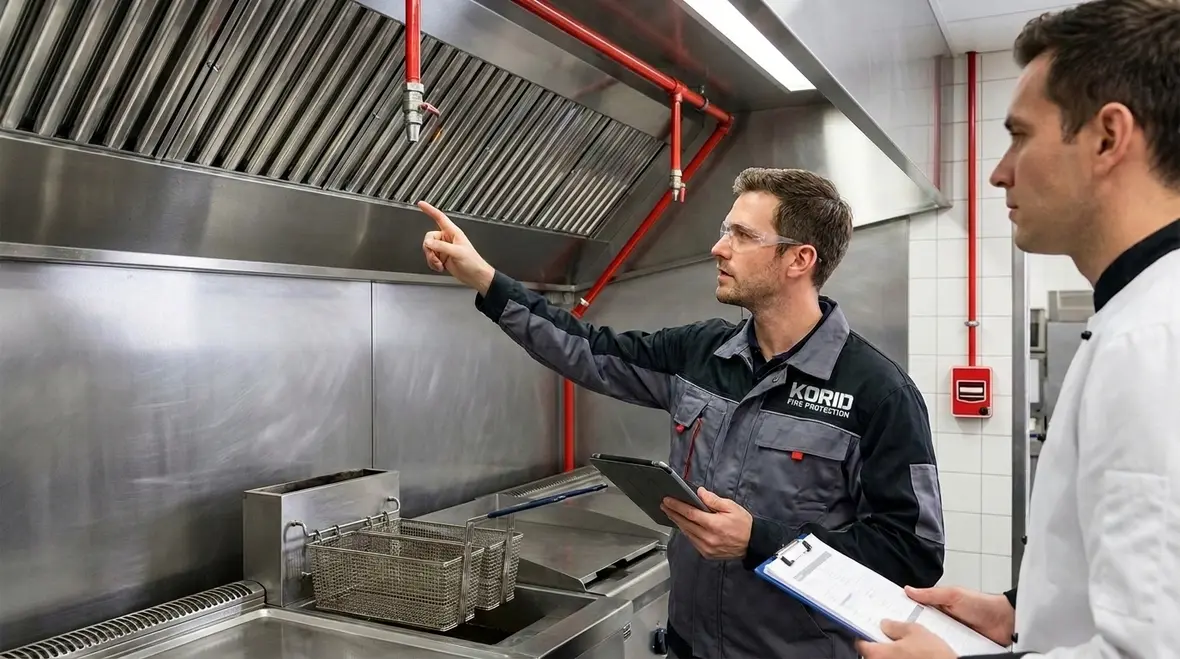
NFPA 17A 7.4 Approval and Acceptance Testing: What Commercial Facilities Must Verify
Quick Answer: NFPA 17A 7.4 governs how owners, installers, and authorities having jurisdiction confirm that wet chemical fire extinguishing systems are correctly designed, installed, and ready for service. The NFPA 17A approval installations acceptance test focuses on workmanship, system performance, correct installation details, and documented results.
Facilities planning this phase should also understand how these systems fit into the bigger protection picture. For a practical overview, see NFPA 17A kitchen suppression guide. ([kordfire.com](https://kordfire.com/nfpa-17a-kitchen-suppression-guide-with-kord-fire-protection/?utm_source=openai))
What NFPA 17A 7.4 Really Requires Before the System Is “Accepted”
NFPA 17A approval installations acceptance test activities are not a box check. They are the final verification step that a wet chemical extinguishing system will operate as intended when a protected hazard is exposed to a grease or cooking fire. Section 7.4 concentrates on acceptance criteria that authorities and facilities use to confirm system readiness after installation and prior to routine occupancy.
In commercial kitchens, industrial process areas, and retail food service operations, the acceptance process must also account for practical realities: line routing, ceiling obstructions, concealed discharge locations, panel labeling, access and service clearances, and the condition of cylinders and actuation components. A successful acceptance effort depends on disciplined commissioning, accurate documentation, and confirmation that no “as-built” differences were left unresolved.
How to Prepare for the NFPA 17A Approval Installations Acceptance Test
Facilities that treat acceptance as an afterthought often discover late-stage issues. Common problems include incorrect nozzle selection, piping that does not match the design intent, wrong discharge orientation, incomplete labeling, and actuator configuration that does not match the system listing requirements. To avoid delays, ownership teams and contractors should establish readiness criteria before testing begins.
1) Confirm design intent and listing compatibility
Before any functional testing, the installer should verify the system configuration matches the approved submittals. That includes nozzle type and coverage assumptions, tank or cylinder configuration, remote manual pull station placement, and any special provisions for hazards. When the installation differs, the facility must correct it or obtain the appropriate approvals before acceptance testing proceeds.
2) Verify installation workmanship and readiness
During pre inspection, crews should check that:
- Piping is supported correctly and follows the routed plan without excessive strain at fittings.
- Connections meet the manufacturer and listing requirements and show no evidence of damage or improper sealing.
- Discharge nozzles are installed at the correct location and facing the correct hazard area.
- Electrical devices used for detection and actuation comply with required wiring practices and terminal integrity.
- System components are accessible for future maintenance and inspection.
3) Assemble acceptance documentation early
Acceptance typically relies on traceable records. Facilities should compile the installation record set, including hydraulic or flow basis records where applicable, cylinder and agent documentation, valve and actuator information, as well as contractor certifications. This documentation reduces rework during the witnessing process and supports future service scheduling.
For additional system selection context and how wet chemical protection integrates with facility safety programs, see Enhancing Fire Safety With NFPA 17A Wet Chemical Extinguishing Systems. ([kordfire.com](https://kordfire.com/enhancing-fire-safety-with-nfpa-17a-wet-chemical-extinguishing-systems/?utm_source=openai))
Step by Step: Acceptance Testing Activities Focused on System Performance
In the acceptance phase, the main objective is to confirm the system operates correctly as a complete package: actuation triggers, release sequence, correct agent discharge, and proper status indications. A credible commissioning approach divides tasks into mechanical readiness checks and functional verification.
Actuation and release verification
Acceptance testing should confirm that the system actuation and release devices perform within required timing and sequencing expectations. For systems with detection and control interfaces, this often includes verifying that initiating devices cause the correct downstream actions without premature release or incorrect interlocks. For systems with manual or remote actuation pathways, technicians confirm that signals produce the expected control response and that the release sequence is consistent.
Common failure points at this stage include miswired input circuits, improper reset behavior, incorrect device addressing or panel configuration, and loose terminal connections that create intermittent signaling under normal operating conditions.
Agent discharge path and integrity checks
Wet chemical systems depend on an uninterrupted discharge path from the extinguishing agent container to the nozzles serving the protected hazard. Acceptance testing should therefore verify that agent distribution occurs to the intended discharge outlets. Technicians confirm that:
- Discharge outlets match the design locations and orientations.
- Obstructions do not block the discharge or alter the spray pattern.
- Pipe runs are properly assembled and do not create trapped or dead sections that interfere with discharge performance.
- Valves and check devices are correctly installed and oriented.
Visual confirmation of correct discharge behavior
Even when a system is engineered and installed correctly, acceptance can fail due to on site configuration errors. During witnessing, the acceptance team confirms the system reaches a functional discharge condition at the connected hazard outlets. In commercial and industrial environments, visual checks also help confirm nozzle cleanliness, absence of physical damage, and proper alignment after final finishes are completed.
Where pumps or auxiliary components are part of the overall fire suppression solution, technicians should coordinate acceptance evidence with associated fire water delivery equipment. For broader pump and fire system context, refer to Fire Pump Water Mist System Requirements Guide. ([firepumps.org](https://firepumps.org/blog/fire-pump-water-mist-system-requirements-guide/?utm_source=openai))
Common Compliance Challenges During Acceptance in Commercial Facilities
Facilities frequently face acceptance testing friction because wet chemical systems are sensitive to real world installation details. Commercial, industrial, and retail sites also have operating constraints such as limited access to ceilings, frequent remodel cycles, and ongoing tenant work that affects system integrity.
1) As built changes that are not closed out
It is common to encounter “small” modifications during construction, such as routing changes around ductwork or revised nozzle placements after ceiling grid redesign. If these changes are not reconciled to the design basis, acceptance testing becomes a rework event. A strong commissioning workflow prevents acceptance delays by tracking deviations in real time.
2) Concealed hazards and discharge clearance conflicts
Wet chemical discharge depends on unobstructed paths and correctly oriented outlets. In finished kitchens and food service areas, post installation shelving, signage mounts, and duct additions can reduce discharge effectiveness. Acceptance teams should confirm field conditions match what the design assumed.
3) Labels, instructions, and inspection readiness
Authorities often expect clear labeling and accessible instructions that support maintenance operations. If labeling is incomplete or placement prevents safe access, acceptance can be deferred. For ongoing compliance, facilities should ensure that service access routes remain clear and that end users understand basic system status indicators.
For a broader view of integrated fire suppression service and facility program support, see Fire Suppression Systems. ([kordfire.com](https://kordfire.com/nfpa-17a-4-6-wet-chemical-agent-composition-and-listing/?utm_source=openai))
What “Passing” Looks Like: Evidence and Acceptance Outcomes
A properly executed NFPA 17A approval installations acceptance test produces defensible evidence that the system is installed and functions as required. While the specific documentation expectations can vary by jurisdiction, accepted outcomes generally include:
- Verified correct installation per the approved configuration and applicable listings.
- Functional verification of actuation and release sequence that matches design intent.
- Confirmed discharge performance at the protected locations without indication of misrouting or component mismatch.
- Completed acceptance records signed by the installer and witnessed where required.
- Established readiness for ongoing inspection, maintenance, and re service needs.
Facilities should also treat acceptance as the starting point for their service lifecycle. An accepted installation can still fail later if maintenance is delayed or if components are exposed to contamination, corrosion, or physical damage during routine operations.
How Kord Fire Protection Supports NFPA 17A Acceptance and Ongoing Compliance
Kord Fire Protection helps commercial facilities avoid acceptance setbacks by aligning commissioning practices with real operational needs. The service approach emphasizes installation review support, coordinated witnessing readiness, and acceptance documentation that stands up to authority scrutiny.
After acceptance, Kord Fire Protection supports the next steps: planned inspections, maintenance scheduling, agent and component status monitoring, and rapid response when operational changes affect risk. This reduces downtime, prevents compliance drift, and keeps kitchens and hazard areas protected throughout occupancy.
Frequently Asked Questions
Call to action: For a smooth NFPA 17A approval installations acceptance test, schedule an acceptance readiness review before functional testing. Kord Fire Protection can help validate configuration, commissioning readiness, and documentation so your team avoids repeat work and delays. Contact Kord Fire Protection today to align your installation details with authority expectations and establish a maintenance plan that protects compliance beyond acceptance.

Join Our Newsletter!
Get the latest fire safety tips delivered straight to your inbox From our Newsletter.



