
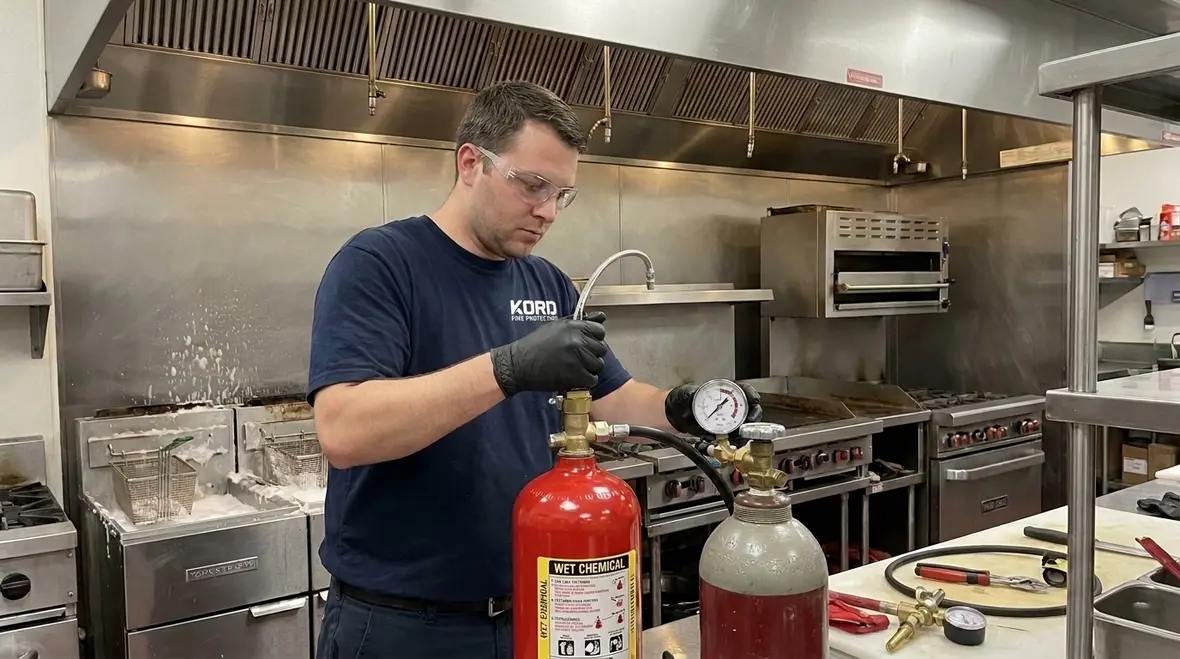
NFPA 17A 8.4 Recharging After Discharge
Quick Answer: NFPA 17A 8.4 addresses the recharging requirements for wet chemical systems after discharge. Commercial operators must restore the system to listed operating conditions, verify correct agent quantity and pressure, and complete required inspections and documentation before returning the equipment to service.
For broader suppression planning in commercial facilities, see fire suppression system solutions. For related technical context on wet chemical compliance, see enhancing fire safety with NFPA 17A wet chemical extinguishing systems.
Why NFPA 17A recharging wet chemical after actuation is a non negotiable compliance step
After a wet chemical system discharges, NFPA 17A 8.4 requires recharging to ensure the system can perform its intended fire suppression function. For teams managing commercial, industrial, and retail facilities, the practical risk is not only mechanical. It includes documentation gaps, incorrect recharge agent, improper pressure restoration, and incomplete acceptance testing. These issues can delay reopening, trigger insurance disputes, or expose the facility to enforcement action.
In real operations, staff often focus on cleanup and assume the system is “mostly fine.” NFPA 17A recharging wet chemical after actuation demands a structured return to service process rather than a partial refill.
What NFPA 17A 8.4 expects after the system discharges
NFPA 17A 8.4 centers on bringing the extinguisher and associated components back to the condition that existed prior to discharge, consistent with the system listing and manufacturer instructions. For wet chemical systems, that typically means: replenishing the wet chemical agent, restoring the gas or pressure supply used for actuation, and verifying that no system component has been compromised by the discharge event or environmental exposure during downtime.
Key compliance outcomes to verify during recharging
Correct agent volume and concentration. The wet chemical must match the listed formulation and quantity for the hazard. Improper concentration can alter discharge characteristics and extinguishing performance.
Proper pressure and operational readiness. Wet chemical systems rely on pressure to deliver agent through distribution piping and discharge nozzles. If pressure is not correctly restored, distribution performance may fail.
Component integrity after discharge. Discharge can deposit residue in piping, strainers, valves, and fittings. Damaged, stuck, or corroded components must be replaced or restored per listing and manufacturer guidance.
Return to service verification. The system must pass required inspection and functional checks before it is placed back online.
Step by step recharging workflow a commercial team should follow
Facilities that want predictable outcomes treat recharging as a project, not a quick service call. The following workflow aligns with how compliant restoration is typically executed for commercial wet chemical systems after discharge.
1) Secure the site and document the actuation
Record the event details. Date, time, location, apparent cause, and whether the fire was controlled.
Confirm system type and configuration. Identify the agent tank, selector or actuation method, and distribution layout for the premises.
Preserve the evidence. Capture photos of nozzle discharge locations and any residue patterns. This supports root cause analysis and avoids repeating the same issue.
2) Perform post discharge inspections before recharge
Before introducing new agent or pressure, technicians assess where the discharge traveled and whether flow path components were affected. Common problem points include valves with residue buildup, check valves that do not reseat properly, clogged strainers, and any corrosion or mechanical damage caused by heat or debris.
3) Recharge the system to listed operating conditions
Recharging wet chemical after actuation generally includes replenishing the agent to the correct charge weight or volume, then restoring the actuation pressure supply as specified for the listed system. Technicians also verify that any associated components designed for replacement upon discharge, such as certain seals or pressure components, are handled correctly.
4) Verification and functional confirmation
After recharging, the service team performs required checks to confirm the system is ready. This commonly includes confirming correct system identification, verifying component positions, checking for leaks, and completing any acceptance style confirmation steps required for returning the system to service based on the system listing and local authority expectations.
5) Update records and label the system status
Commercial maintenance records should clearly show that the system was recharged after discharge, identify the service provider, and document the restored condition. Many compliance failures occur because records exist but do not demonstrate that NFPA 17A 8.4 recharging and return to service requirements were fully completed.
Common operational failure points during recharging wet chemical systems
Knowing where teams typically get tripped up helps facilities avoid downtime and rework. The following issues frequently appear after actual discharge events.
1) Partial refill instead of full listed restoration
Some facilities attempt a quick refill of obvious agent loss. Wet chemical systems often require the full restoration of agent quantity and correct pressure parameters, not a “top off.” If the wrong quantity is restored, the system may under deliver during a future event.
2) Agent mismatch or incorrect concentration
Using an agent that does not match the listed wet chemical formulation can change discharge spray characteristics and extinguishment behavior. This becomes an enforcement and liability issue because the system can no longer be proven to match the listing.
3) Residue induced valve or nozzle issues
Discharge residue can affect moving parts such as valves and can leave deposits that reduce flow. If technicians recharge without inspecting and correcting restricted components, the next activation may fail or may not perform as expected.
4) Pressure restoration errors
Wet chemical delivery depends on correct pressure. If pressure is not restored properly, distribution to the nozzles or piping runs may be inadequate, especially in longer or more complex commercial layouts.
5) Missed recordkeeping and label updates
Even when the physical recharge is done, some facilities fail during audits due to incomplete documentation. A compliant return to service package must align with NFPA 17A expectations and local inspection practices.
Who should perform NFPA 17A recharging and how to select a compliant service partner
Because discharge events change the condition of the system, competent restoration matters. Facilities should use a qualified commercial fire protection service provider that can perform recharging, post discharge inspection, and documented return to service. Kord Fire Protection supports commercial compliance through structured maintenance and testing practices, including wet chemical system service planning.
For broader commercial system support and service approach, facilities can review fire suppression systems and align maintenance plans with operational schedules. For pump and water supply considerations that can affect system readiness in many wet chemical installations, teams can also reference fire sprinkler pumps and water pressure in buildings for general technical education and best practice context.
Selection checklist for facilities
Documented recharging procedure. The provider should describe how it restores agent charge and pressure to listed conditions.
Post discharge inspection capabilities. The provider should confirm inspection of valves, fittings, and distribution components affected by discharge residue.
Clear return to service documentation. Reports should support compliance, inspections, and audit readiness.
Operational coordination. The provider should plan downtime and restore the system quickly without bypassing required steps.
How to plan for minimal downtime after actuation
Commercial operators usually face a business constraint: reopen timelines and staff safety. NFPA 17A 8.4 recharging after discharge works best when the facility plans ahead for the operational realities of restoration.
Practical measures that reduce schedule risk
Maintain spare parts strategy. Identify components likely to be replaced after discharge and confirm availability before the event occurs.
Keep maintenance records current. Current service history accelerates system identification and helps technicians restore the correct configuration.
Assign an internal incident owner. One person should coordinate access, escort requirements, and building operational decisions during restoration.
Pre define “return to service” approval steps. Align internal sign off with what the service provider will deliver as documentation and confirmation.
These measures support compliance, reduce rework, and help ensure the system returns to a verified state rather than an assumed one.
Frequently Asked Questions
Conclusion and call to action
NFPA 17A 8.4 recharging after discharge requires more than cleanup and refilling. Commercial operators must restore the wet chemical system to listed operating conditions, inspect components impacted by residue and discharge, and complete documented return to service verification before occupancy resumes. Kord Fire Protection can support compliant restoration planning, recharging execution, and maintenance documentation so your facility can reopen with confidence. Contact Kord Fire Protection today to schedule post discharge service and ensure audit ready readiness.

Join Our Newsletter!
Get the latest fire safety tips delivered straight to your inbox From our Newsletter.



