
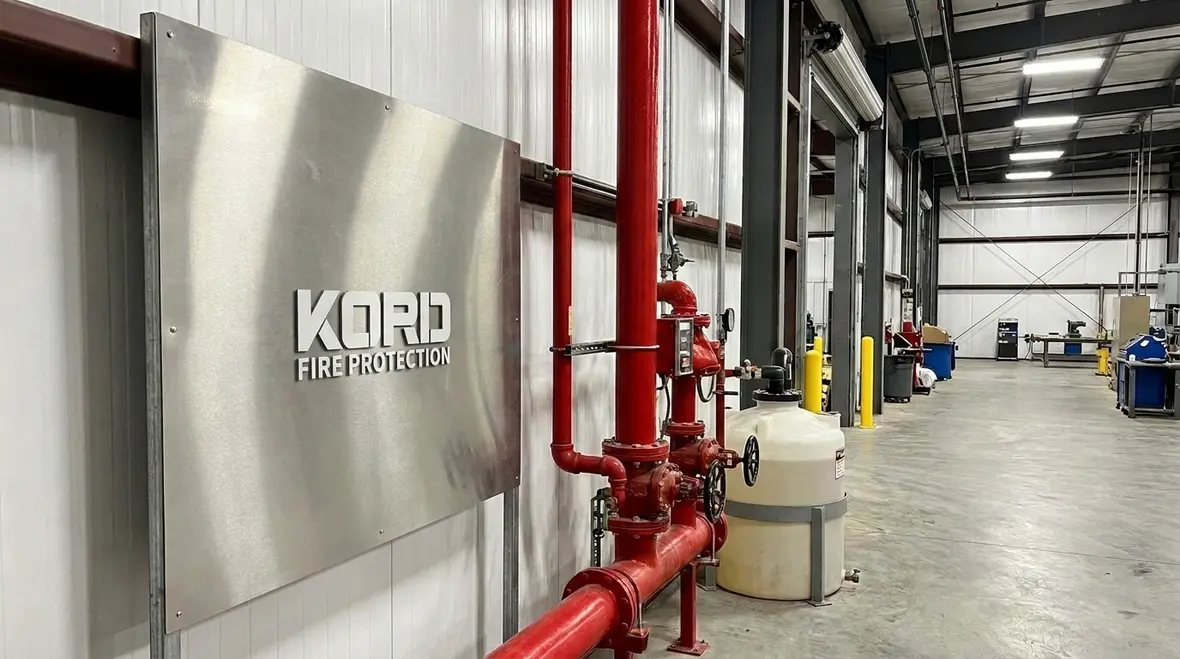
NFPA 16 Section 8.7: The General Information Sign for Foam-Water Systems
Quick Answer
NFPA 16 Section 8.7 requires a clearly legible general information sign for foam water systems. The sign helps responders and facility staff identify the system, key operating actions, and essential hazards. Correct placement and maintenance reduce response delays and support compliant inspections.
If your team is already reviewing foam fire suppression inspection requirements and service, this signage requirement fits naturally into the same inspection-readiness conversation.
What NFPA 16 Section 8.7 is trying to solve
NFPA 16 aims to standardize the practical details that people need in the first minutes of a foam water system incident. Section 8.7 focuses on the general information sign because facility occupants, local response teams, and inspection personnel often do not interact with foam proportioning equipment during normal operations. When a fire occurs, the sign becomes a fast, consistent reference that supports safer manual actions and more efficient system operation.
In practice, general information sign foam water systems reduce ambiguity around system activation, key components, and hazards associated with foam use. For commercial and industrial sites, this also aligns with site-specific emergency planning and training.
Where the general information sign belongs and why placement matters
NFPA 16 Section 8.7 requires the general information sign to be installed where it can be seen immediately by responders and personnel approaching the system. The sign should be positioned so it remains visible under normal ambient lighting and remains legible at the typical approach angle to the foam water system connection points and control areas.
Common placement mistakes that trigger nonconformance
- Blocked visibility: Signs placed behind doors, stored materials, or cable trays reduce the ability to quickly locate information.
- Wrong mounting height: If the sign is too high or too low, it becomes difficult to read when personnel are operating handheld flashlights or moving quickly.
- Damaged or faded text: Sun exposure, overspray, chemical fumes, and cleaning procedures can degrade labels and printed sign faces.
- Inconsistent location: If signs are moved during renovations and not updated in the inspection record, staff may reference the wrong system.
Facilities servicing multiple foam systems should ensure each system sign correlates to the correct foam area and control scheme. This is a typical compliance challenge in large retail distribution centers, industrial warehouses, and multi-tenant commercial buildings where work orders and contractors can unintentionally mix locations.
What the sign should communicate during foam system operations
The general information sign supports quick orientation. While exact sign language and formatting requirements are determined by the NFPA 16 framework for foam water systems, the core objective remains consistent: provide the essential guidance that helps people understand what the system is, how it is arranged, and what to do next.
Operational information that responders need most
- System identification: The sign should clearly identify that the area is protected by a foam water system and provide the correct system reference for that location.
- Key hazards awareness: Foam use can introduce slip hazards and confusion around foam generation, drainage, and visibility changes. The sign should support awareness and safe handling expectations.
- Action guidance: The sign should support immediate next steps so personnel do not improvise when system components are present but not yet operating.
- Coordination with emergency plans: The sign information should align with internal procedures and pre-incident planning documents, so training and drills match field reality.
For many facilities, the compliance risk emerges when the sign content falls out of date after changes to foam concentrate type, proportioning equipment, nozzle arrangements, or control interfaces. Kord Fire Protection commonly addresses this gap by reviewing installed equipment configuration against the documented intent and then verifying signage matches the actual system build.
How inspectors verify compliance and what typically fails in the field
Inspection teams evaluate the sign as part of the overall foam water system inspection process. The sign is not a decorative item. It functions as an operational control document at the point of use.
Inspection checks that drive pass and fail outcomes
- Legibility: Text must be readable without unusual effort. Inspectors typically reject signs with faded print, damaged covers, or unreadable contrast.
- Correct association: The sign must correspond to the correct foam water system location and control arrangement.
- Physical condition: Tears, corrosion, loose fasteners, or missing components reduce reliability during emergencies.
- Consistency with installed hardware: If equipment was replaced or modified, the sign must reflect the current system state.
Typical failure points seen during annual and periodic maintenance
- Label drift after upgrades: New pump modules, proportioners, or control interfaces may be installed, while signage remains unchanged.
- Contractor confusion during tenant changeouts: Retail and light industrial spaces often experience frequent turnover. Foam water system signs can be overlooked in handover documentation.
- Improper cleaning practices: Aggressive solvents used on signage surfaces can blur printed content.
For additional NFPA 16 context and system-level requirements, facility teams can review the full standard overview here: NFPA 16 standard guidance and system considerations. This helps align signage compliance with the broader foam water inspection and maintenance lifecycle.
Maintenance procedures that keep the sign compliant year after year
NFPA 16 signage compliance depends on more than initial installation. Facilities should treat the general information sign as a living compliance asset that must be verified during scheduled inspections and after any modification that impacts the foam water system.
Recommended maintenance discipline
- Schedule a signage audit: Include the sign condition and content check in recurring rounds, not just during periodic NFPA 16 inspections.
- Verify after any system change: Any replacement of foam concentrate type, proportioning components, control interfaces, or system routing should trigger a signage content verification.
- Use durable materials: Industrial environments may require moisture resistant, chemical resistant, and corrosion resistant sign faces and mounting hardware.
- Document sign updates: Maintain a revision trail in maintenance records so compliance history remains defensible during inspections and insurance reviews.
Kord Fire Protection supports commercial, industrial, and retail facilities with documentation review, verification of installed configuration, and practical correction steps to keep foam water system signage aligned with actual equipment. This reduces recurring inspection issues and shortens the time to close corrective actions.
Frequently Asked Questions
Next step: keep your foam water system signage inspection-ready
Don’t treat NFPA 16 Section 8.7 as a one time installation task. Kord Fire Protection can help you verify sign placement, legibility, and content alignment with your installed foam water system, then document compliance for routine inspections. Contact Kord Fire Protection to schedule a signage and foam system readiness review and reduce the risk of repeat corrective actions.

Join Our Newsletter!
Get the latest fire safety tips delivered straight to your inbox From our Newsletter.



