
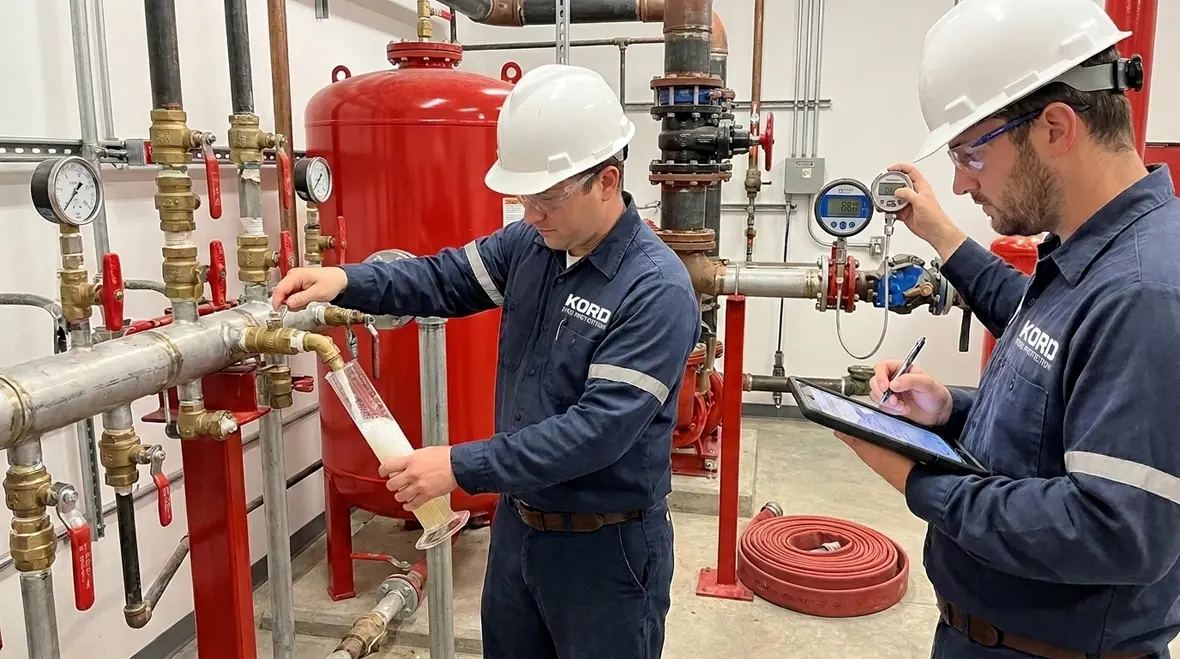
NFPA 16 Section 8.4: Testing the Proportioning System to Verify the Ratio
Quick Answer
NFPA 16 Section 8.4 requires testing the proportioning system to confirm the foam concentrate to water ratio under operating conditions. This process validates calibration, flow stability, and correct control responses. Proper proportioning system testing NFPA 16 helps prevent ineffective foam and noncompliant delivery during real fires.
If your facility is coordinating this work alongside broader fire protection services in Southern California, it helps to align foam system ratio verification with pump, suppression, and documentation planning from the start.
Why Section 8.4 matters in commercial foam systems
In commercial and industrial facilities, foam systems often protect high value hazards such as flammable liquid storage, spill risk zones, and process areas. Section 8.4 focuses on one critical outcome: the foam concentrate proportioning must produce the design ratio when the system is actually flowing. Even minor drift in settings, worn metering components, or incorrect control logic can reduce foam quality and firefighting performance.
For facility teams, the compliance challenge is not only passing inspection. The challenge is proving that the installed system will deliver the required ratio consistently across realistic flow and pressure conditions, while meeting maintenance schedules and documentation expectations. A repeatable testing method, performed by qualified technicians, supports safer operations and smoother audits.
What NFPA 16 Section 8.4 expects during ratio verification
NFPA 16 Section 8.4 centers on testing the proportioning system to verify the concentrate to water ratio. The intent is to confirm that the metering and control components produce the specified mixture when the system operates. Testing typically addresses both mechanical and control driven proportioning strategies, including:
- Metering accuracy of the concentrate feed mechanism.
- Correct ratio control driven by system flow and pressure inputs.
- Stability during flow, not just a single reading.
- Repeatability across test conditions consistent with the installation design.
Because foam concentrate performance depends heavily on the ratio, this verification protects the facility from performance shortfalls that may not be obvious during non flowing inspections or visual checks. Section 8.4 places emphasis on measurable results tied to the system’s hydraulic reality.
How the proportioning system works (and where ratio errors happen)
Proportioning systems translate water flow into concentrate injection. Typical configurations include hydraulically driven proportioning devices, positive displacement or variable metering components, and control valve based systems that respond to system demand. Regardless of type, the same failure modes frequently affect ratio accuracy:
1) Calibration drift and incorrect setup
Over time, settings can drift due to maintenance activity, component replacement, vibration, or changes in piping routing and pressure losses. If the proportioning control is not set to the design ratio, the system can underfeed or overfeed concentrate.
2) Flow and pressure mismatch
Many proportioning components rely on inlet pressure and flow to maintain proper injection. If the fire pump curve, pressure regulating devices, strainers, check valves, or piping modifications change operating conditions, the actual concentrate delivery may deviate from the target ratio.
3) Worn metering components or contamination
Sluggish injection, inconsistent dosing, or filter loading can skew ratio results. Common culprits include partially blocked strainers, fouled check valves, damaged seals, and concentrate viscosity changes due to temperature.
4) Air entrainment and incorrect suction conditions
Air in concentrate lines or unstable suction conditions can cause erratic injection behavior. This can create readings that fluctuate during the test rather than holding steady at the target ratio.
5) Control logic or sensor issues
For electronically controlled proportioning, sensor accuracy and wiring integrity matter. A failed flow sensor, drifted transducer, or calibration mismatch can lead to a ratio that appears to be controlled but remains outside allowable tolerances.
Step by step: Practical proportioning system testing NFPA 16 for ratio verification
Commercial facilities need a testing approach that is technically defensible and operationally safe. A solid method aligns with NFPA 16 intent, manufacturer requirements, and the site’s fire test constraints. Kord Fire Protection typically coordinates the test plan to address shutdown impacts, safety procedures, and system readiness.
Plan the test conditions and documentation
- Confirm the system design ratio and the tested operating point(s) required by the installation and applicable acceptance criteria.
- Verify test equipment calibration records.
- Ensure concentrate supply, valves, and isolation devices are positioned correctly for the test.
- Confirm foam concentrate temperature and line conditions, since viscosity impacts metering performance.
Run the system and measure concentrate delivery
Ratio verification depends on measuring how much concentrate is actually introduced relative to the water flow. Depending on the proportioning type, technicians use approved measurement techniques that produce a repeatable ratio result. The goal is to capture performance under flowing conditions, not a static configuration.
During the test, technicians commonly track key variables such as:
- Water flow rate or operating flow condition
- Inlet pressure and stable system pressure
- Concentrate metering response and injection stability
- Time based sampling consistency when measurement requires timed collection
Verify ratio accuracy and stability
The system passes when the measured concentrate to water ratio meets the specified design intent and allowable deviation criteria defined for the installation and referenced standard requirements. Technicians also evaluate how quickly the system stabilizes and whether ratio drift occurs during the test window. A system that briefly meets ratio but then drifts indicates a control or mechanical stability issue that must be corrected.
Correct deficiencies and document outcomes
If the ratio does not verify, the testing process continues as part of a corrective cycle. Kord Fire Protection supports facilities by:
- Identifying whether the root cause is calibration, pressure regulation, contamination, component wear, sensor issues, or piping changes.
- Performing the necessary adjustments or repairs.
- Re testing to verify the corrected performance.
- Providing compliance ready documentation that auditors expect.
For a broader compliance overview of the standard requirements, facility teams often reference: NFPA 16 standard guidance from Kord Fire Protection.
Common commercial failure points uncovered by Section 8.4 testing
Ratio verification testing frequently reveals issues that routine visual checks miss. In retail, industrial, and multi tenant commercial environments, the most common failure points include:
- Unnoticed strainer loading that changes flow resistance and affects proportioning performance.
- Incorrect valve lineup after maintenance, especially where isolation valves are frequently cycled.
- Temperature effects that shift concentrate viscosity and metering behavior.
- Concentrate line routing changes after construction or equipment relocation that alters hydraulic losses.
- Control calibration gaps in electronically controlled systems after sensor replacement.
These issues matter because proportioning system testing NFPA 16 focuses on performance under flow. If the ratio cannot be verified at the required operating condition, the system may not deliver effective foam expansion, blanket formation, and cooling during an actual incident.
Maintenance and verification frequency: keeping ratio stable over time
NFPA 16 compliance is not a one time event. Proportioning accuracy can degrade due to component wear, contamination, and changes to site hydraulics. Facility managers typically benefit from a maintenance strategy that links:
- Preventive maintenance intervals for proportioning components and strainers
- Inspection and functional checks tied to system performance
- Re calibration or component replacement based on test results
- Concentrate management practices, including supply verification and storage condition controls
For many commercial facilities, the biggest obstacle is scheduling. Water flow testing can intersect with operational constraints and production windows. Kord Fire Protection helps commercial stakeholders plan tests to minimize downtime while still producing results that hold up to compliance scrutiny.
Frequently Asked Questions
Conclusion and call to action
Effective foam protection depends on accurate concentrate proportioning. NFPA 16 Section 8.4 testing verifies that the system achieves the required ratio under operating conditions and flags performance risks caused by drift, contamination, or hydraulic changes. To protect staff, equipment, and compliance status, schedule proportioning system testing NFPA 16 with qualified technicians. Kord Fire Protection can plan, execute, document, and correct ratio verification work to keep commercial foam systems reliable when it matters most.

Join Our Newsletter!
Get the latest fire safety tips delivered straight to your inbox From our Newsletter.



