
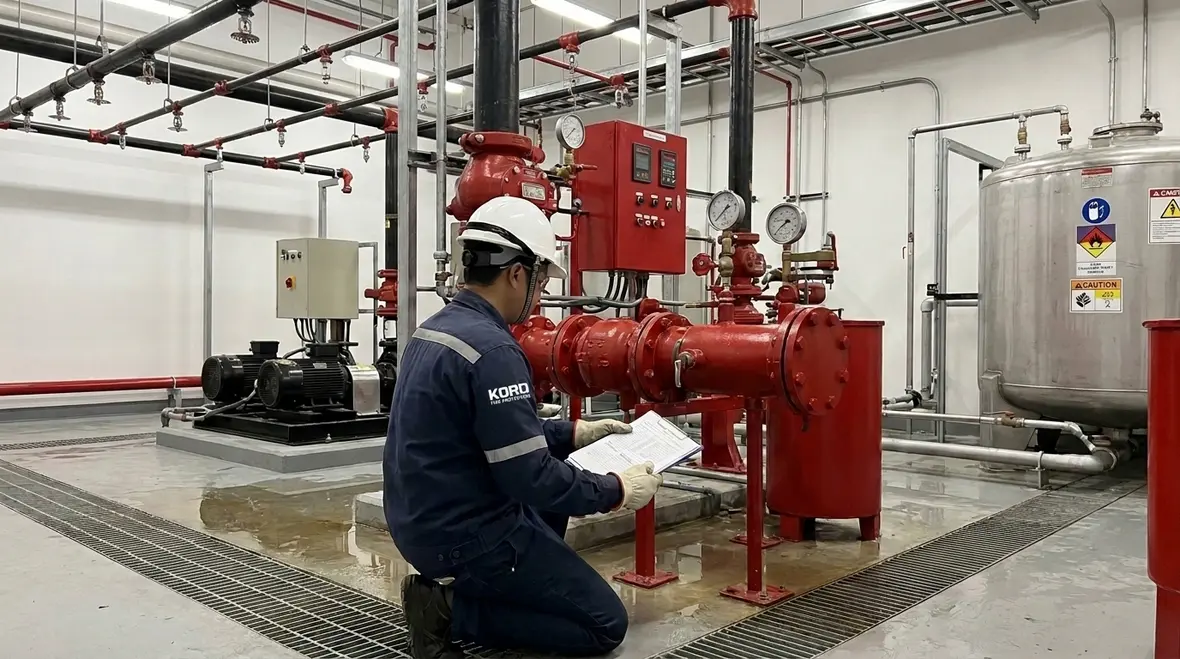
NFPA 16 Section 7.8: Designing Foam-Water Deluge Systems
Quick Answer
NFPA 16 Section 7.8 sets design expectations for foam-water deluge systems, including hydraulic layout, foam concentrate proportioning, water supply performance, and component compatibility. Successful design also anticipates inspection, testing, and operational reliability requirements for commercial and industrial facilities.
If your facility is also planning long-term upkeep, foam fire suppression system maintenance and testing should be part of the conversation early, not after the drawings are done and everyone suddenly discovers the valves are located in a place only a contortionist could love.
What NFPA 16 expects in Section 7.8
NFPA 16 provides the performance and design framework for foam-water fire protection systems. In Section 7.8, the standard focuses on how system designers should configure foam-water deluge arrangements so they deliver the intended foam solution concentration, flow rate, and discharge performance under real operating conditions. For facilities evaluating a foam-water deluge system design NFPA 16, the key is not only meeting calculations on paper, but also ensuring the installed system can be maintained, tested, and relied on with minimal service disruption.
For a full compliance baseline, facility teams often start by reviewing the requirements and scope overview at NFPA 16 standard guidance from Kord Fire Protection.
Design objectives that drive the entire layout
A compliant foam-water deluge system must achieve functional performance across three linked areas: (1) the water supply can sustain required pressures and flows, (2) the foam proportioning method produces the specified foam solution concentration, and (3) the discharge design distributes that solution to the protected hazard with consistent coverage and wetting.
Section 7.8 design choices generally translate into practical site requirements such as pump set capacity, supply pressure stability, control valve selection, and the integration of foam concentrate equipment in a way that supports routine inspection and periodic operational testing.
Define the hazard envelope before sizing hardware
Design decisions become more predictable when the hazard classification, exposure configuration, and discharge assumptions are documented early. Facility engineers should confirm discharge boundaries, obstructions, and where full deluge coverage is required versus localized wetting. This step affects nozzle spacing, pipe routing, and actuator logic for rapid system operation.
Plan for “system behavior” during flow, not just static calculations
Deluge systems operate under high flow and rapid demand. Designs must account for pressure losses during flowing conditions and the dynamic response of water delivery components. Many compliance failures trace back to pressure stability assumptions that fail when pumps start, when valves open, or when multiple outlets discharge simultaneously.
Hydraulics and proportioning: the compliance pair
In foam-water deluge arrangements, the hydraulic system and foam proportioning system act like a single integrated network. Even small mismatches can lead to inadequate foam concentration at the hazard or improper flow distribution across the manifold.
Water supply performance and pump stability
Section 7.8 expectations require that the water supply supports sustained operation. Designers must verify available pressure at the proportioning and control equipment during discharge. For commercial and industrial facilities, the most common real-world risks include:
- Pressure dips caused by pump start sequencing or loss of prime on concentrate-related equipment
- Inadequate reserve capacity during concurrent water demand scenarios
- Hidden friction losses from later modifications such as re-routed piping, added valves, or revised ceiling configurations
Foam concentrate selection and compatibility
Foam concentrates must be compatible with the system materials and proportioning method. If concentrate chemistry does not match the design intent, the foam quality can degrade, which may affect drainage, expansion characteristics, and drainage behavior on burning fuels or hot surfaces. Designers should document concentrate type, intended application, and manufacturer directed proportioning ranges so the field technician can verify correct operation during testing.
Proportioning method: control points and measurement
Whether the system uses a dedicated foam proportioner or another approved approach, Section 7.8 design intent centers on controlling and verifying that the foam solution concentration remains within specification at the required flow conditions. The system must provide measurable control points so service personnel can confirm setpoints and perform functional testing without guessing.
During inspections, operators typically need access to proportioning equipment, strainer conditions, concentrate supply levels, and indicators that demonstrate the system can transition from standby to foam-water discharge reliably.
Valves, controls, and sequencing: where systems fail most often
Foam-water deluge reliability depends on valve actuation, control system integration, and stable transitioning into discharge mode. Section 7.8 design considerations help ensure that the foam generation path is not delayed or interrupted once the deluge command occurs.
Actuation and deluge initiation timing
Designers must ensure the deluge valves, control valves, and any foam concentrate injection mechanisms respond quickly and predictably upon actuation signals. In practice, delayed injection can reduce early fire attack effectiveness, and inconsistent timing can complicate post-test evaluations.
Backflow prevention and system protection
Foam concentrate injection and circulation components must remain protected from backflow and contamination. Improper selection or poor maintenance of check valves, vacuum breakers, and strainers can result in concentrate loss, inaccurate concentration delivery, or system downtime.
Common failure points tied to maintenance realities
Commercial facilities often schedule preventive maintenance around tenant operations. That means design choices must support practical access and safe isolation. Common failure points include:
- Clogged strainers at the proportioning interface, causing reduced concentrate flow and low foam concentration
- Air entrainment in the concentrate feed line, leading to unstable injection performance
- Incorrect valve positions or failed supervisory signals after maintenance events
- Discharge pattern disruption from damaged nozzles, misaligned branches, or accumulated debris
Discharge distribution: making the foam-water solution do the job
Even when hydraulics and proportioning are correct, discharge design determines whether the foam-water solution reaches the hazard in a usable pattern. Section 7.8 design intent supports proper spacing, nozzle selection, and piping arrangements that limit excessive drift or uneven wetting.
Nozzles and manifolds: distribution consistency
Engineers should select nozzles that match the required flow per outlet and maintain expected throw characteristics under design pressure. If the site includes obstructions or uneven elevations, designers must anticipate how those factors affect coverage, and ensure the piping supports consistent discharge across the manifold network.
Freeze protection and environmental constraints
Many retail and industrial sites face freeze risk or extreme temperature swings. The design must account for how the foam-water deluge system stays operational or is appropriately protected when environmental conditions demand it. This affects valve selection, pipe insulation strategies, and whether certain sections require controlled drainage or auxiliary protection.
Inspection and maintenance: compliance is operational, not theoretical
Design under NFPA 16 becomes verifiable only through documented inspection and testing practices. For many facility managers, compliance difficulty arises when equipment access is poor, test procedures are not clearly planned, or proportioning verification does not align with the design’s measurement points.
What to verify during routine maintenance
- Concentrate type, age, and fill levels against the documented system intent
- Strainer condition and clean flow path from supply through proportioning
- Valve supervisory status, check valve function, and correct actuator operation
- Nozzle condition, alignment, and discharge outlet integrity
- Pressure stability at the designed control points during discharge operation
Testing approach that reduces downtime and preserves system readiness
Effective foam-water deluge system testing typically requires coordination, because discharge events can affect occupants, operations, and post-test cleanup. A well designed maintenance program creates repeatable procedures for flowing test water, verifying concentrate injection, and documenting results in a format that supports audit readiness.
Kord Fire Protection supports commercial facility teams with compliance driven inspection, testing, and maintenance that aligns field results to the original design intent. This reduces the risk of discovering concentration or discharge issues late in a compliance cycle.
Frequently Asked Questions
Get your foam-water deluge design ready for real-world compliance
NFPA 16 Section 7.8 requirements demand more than sizing and diagrams. To protect your facility, confirm that your foam-water deluge system design NFPA 16 calculations match installed hydraulic performance, proportioning delivery, valve sequencing, and discharge distribution. Kord Fire Protection helps commercial operators maintain compliance with inspection, testing, and practical maintenance planning. Contact Kord Fire Protection to review your design basis, develop a service and test plan, and close the gaps that typically cause field failures.
If you want additional context on how deluge, sprinkler, and spray arrangements compare before locking in design assumptions, see NFPA 16 Section 4.2: Types of Foam-Water Systems – Sprinkler, Deluge, and Spray.

Join Our Newsletter!
Get the latest fire safety tips delivered straight to your inbox From our Newsletter.



