
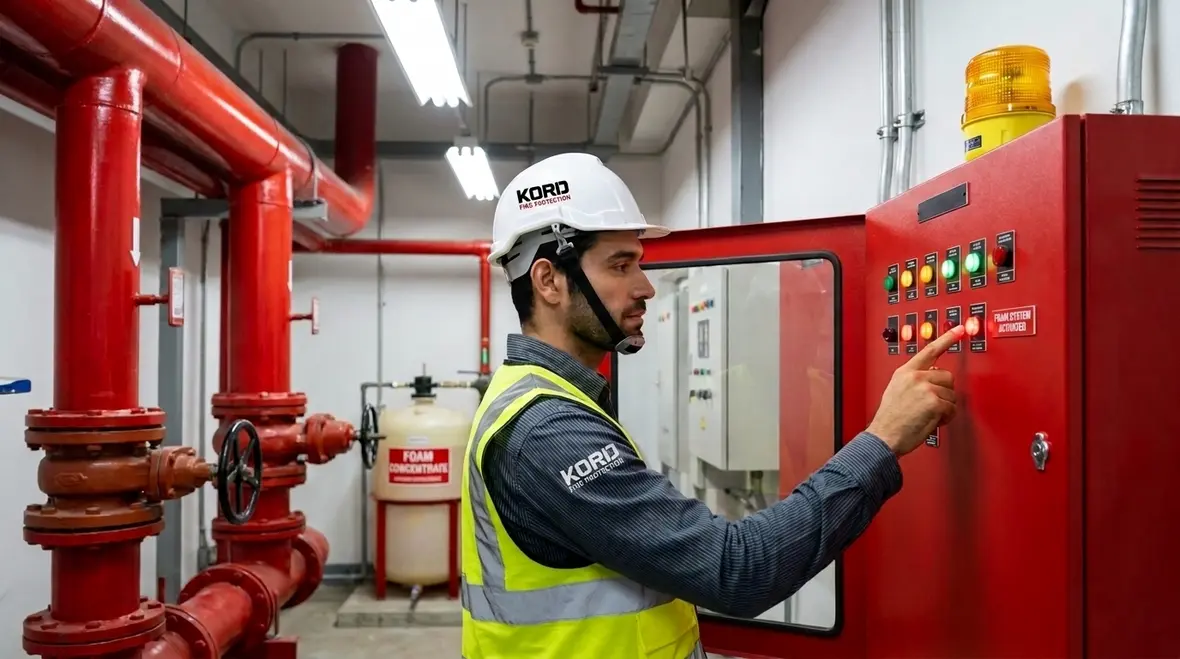
NFPA 16 Section 7.4: Alarm Requirements for Foam-Water Systems
Quick Answer
NFPA 16 Section 7.4 sets alarm expectations so crews receive immediate, dependable notification when a foam-water system initiates or changes operating conditions. The requirements typically address alarm transmission, where alarms must be seen and heard, and how system control components report status.
What NFPA 16 Section 7.4 expects from foam-water system alarm requirements
Foam-water system alarm requirements under NFPA 16 focus on one practical outcome: reliable communication of system operation to occupants, responding personnel, and monitoring where required. In commercial, industrial, and retail facilities, the biggest compliance risk is not the alarm hardware itself, but poor coordination among detection, control, actuation, annunciation, and inspection practices. The result is alarms that do not sound when needed, sound the wrong type, or cannot be verified during routine testing.
For facilities reviewing alarm integration near the start of planning, commercial fire alarm services in Southern California can help connect foam-water signaling requirements to real building notification workflows. For a broader compliance roadmap, facility teams should review the full NFPA 16 program requirements and how the foam-water system interfaces with site life safety systems: NFPA 16 standard overview and application guidance.
Where the alarms must occur and what they must communicate
NFPA 16 Section 7.4 drives alarms to be both timely and actionable. That means the alarm strategy must align with the system’s operating sequence and the facility’s emergency response expectations. In practice, alarms should be configured so they report meaningful states such as:
- System start or actuation when the foam-water system moves from standby to operating.
- Condition changes that indicate the system has reached a required operating mode.
- Supervisory or fault states where the standard requires notification based on loss of readiness, abnormal conditions, or control system status.
For commercial occupancies, the most common failure point involves “alarm heard only” assumptions. Many sites rely on a local audible device without ensuring the correct control signal reaches the right location, such as a fire alarm control unit, monitoring service interface, or designated fire command station. Section 7.4 requirements support a communication layer that matches the system’s hazards and response workflow.
How foam-water systems trigger alarms: control logic and signaling paths
Alarm performance depends on the control and detection chain. A typical foam-water system control arrangement may include actuation devices, pressure or flow verification, valve position status, and foam proportioning system monitoring. The alarm signaling path usually includes at least two layers: the immediate system control response and the outward notification to alarm devices or supervising equipment.
Common control components that must function as designed
- Release or actuation circuitry that initiates system operation.
- Valve position indication for confirmatory status of critical valves.
- Flow and pressure monitoring to validate that system operation is actually occurring, not only commanded.
- Proportioner and foam concentrate monitoring when the system is engineered to maintain correct foam solution delivery.
- Control panel outputs and mapping to ensure the correct alarm type and location behavior.
Operational procedure that prevents “silent failures”
During maintenance, teams should confirm that each alarm point is tied to the correct event in the system logic. That means verifying that:
- The intended alarm contacts close or signal on a confirmed system operating event.
- Any supervisory function triggers on the specific abnormal state the system design supports.
- Manual and automatic initiation pathways generate consistent alarm behavior.
- Any interlocks prevent alarm activation from being suppressed by unrelated fault conditions.
Commercial facilities often discover that alarm outputs change behavior after panel firmware updates, rewiring during renovations, or changes in device addressing. Because foam-water system alarm requirements depend on correct signaling mapping, Kord Fire Protection typically validates alarm cross points and control panel configuration during periodic inspections and service visits.
Inspection and testing: proving the alarms do what they should
Compliance fails when alarms look correct during installation but do not perform during testing. Section 7.4 expectations work only if the site can demonstrate that alarms activate under controlled conditions and can be verified without guesswork.
What inspectors and technicians should verify
- Audibility and intelligibility of local notification devices where applicable, including coverage at typical response and occupant locations.
- Correct alarm routing to any remote annunciation, control room display, fire command center, or monitoring interface.
- Alarm timing relative to system actuation, ensuring notification occurs promptly when the system transitions into the operating state.
- Supervisory alarm behavior under non-emergency conditions, such as loss of readiness signals, if required by the system design and NFPA 16 provisions.
- Device condition such as stuck contacts, corroded terminals, water ingress into field wiring enclosures, or damaged siren outputs.
Maintenance realities that create noncompliance
In retail, industrial, and commercial mixed-use facilities, the most frequent alarm-related issues include moisture damage to field wiring, aging annunciators, inadequate labeling, and panel-to-device point mismatch after tenant improvements. Foam-water systems also introduce additional variables, such as proportioner faults, changes to foam concentrate storage handling, and valve supervisory circuits that do not update when valves are serviced.
Kord Fire Protection supports ongoing compliance by performing documented testing, point-by-point verification, and practical corrective action so facilities can pass inspections with confidence and reduce the risk of alarms that fail under real fire conditions.
Common alarm failure points and how to prevent them
Even well engineered foam-water systems can produce unreliable alarm performance. The following failure points show up repeatedly during service calls and compliance follow ups.
- Miswired or misidentified alarm points. Labels may not match circuit function after electrical work, producing the right physical device but the wrong operating signal.
- Incorrect alarm mapping in the control panel. The system may actuate correctly, but the panel may report the wrong alarm type, location, or priority.
- Valve supervisory circuit instability. Critical valves may show intermittent status because of worn limit switches or poor electrical terminations.
- Loss of notification device readiness. Audible devices, power supplies, or output modules may fail silently until a test forces activation.
- Water exposure to field devices. Foam-water systems can be unforgiving to junction boxes, conduit seals, and terminal blocks if ingress control is not maintained.
- No end to end verification. Facilities test alarms only at a local level, missing remote reporting requirements and monitoring pathway failures.
Prevention requires repeatable testing procedures and clear responsibility. Kord Fire Protection helps facilities standardize inspection documentation so alarm performance can be tracked over time, not just checked at install and then forgotten.
Integrating foam-water system alarms with building life safety operations
Commercial facilities operate as systems. Foam-water alarms should not behave like isolated equipment signals. Instead, alarm signaling should align with how the building’s emergency response is managed, including:
- Monitoring and notification workflow so alarms reach the correct responders quickly.
- Fire command and evacuation coordination with clear, consistent indications of system operation.
- Operational discipline during drills and inspections so staff know what alarm sounds mean and what actions they must take.
When facilities coordinate foam-water system alarm requirements with fire alarm system interfaces, supervision layers, and panel annunciation strategy, they reduce confusion during actual events and improve operational readiness. That coordination is a frequent focus of Kord Fire Protection service planning, especially where multiple tenants, renovations, or phased expansions have changed the building’s electrical topology.
Frequently Asked Questions
Next step: schedule a compliance-focused alarm verification
NFPA 16 foam-water system alarm requirements demand more than functional checks. Kord Fire Protection can review your alarm signaling design, verify end-to-end operation, and document testing results in a format that supports inspections and reduces operational risk. Request a service visit to assess annunciation routing, control mapping, and alarm device readiness, then implement corrective action before the next compliance window.
If your facility also needs broader foam system support, foam fire suppression system services can help align alarm verification with inspection, maintenance, and system readiness planning.

Join Our Newsletter!
Get the latest fire safety tips delivered straight to your inbox From our Newsletter.



