
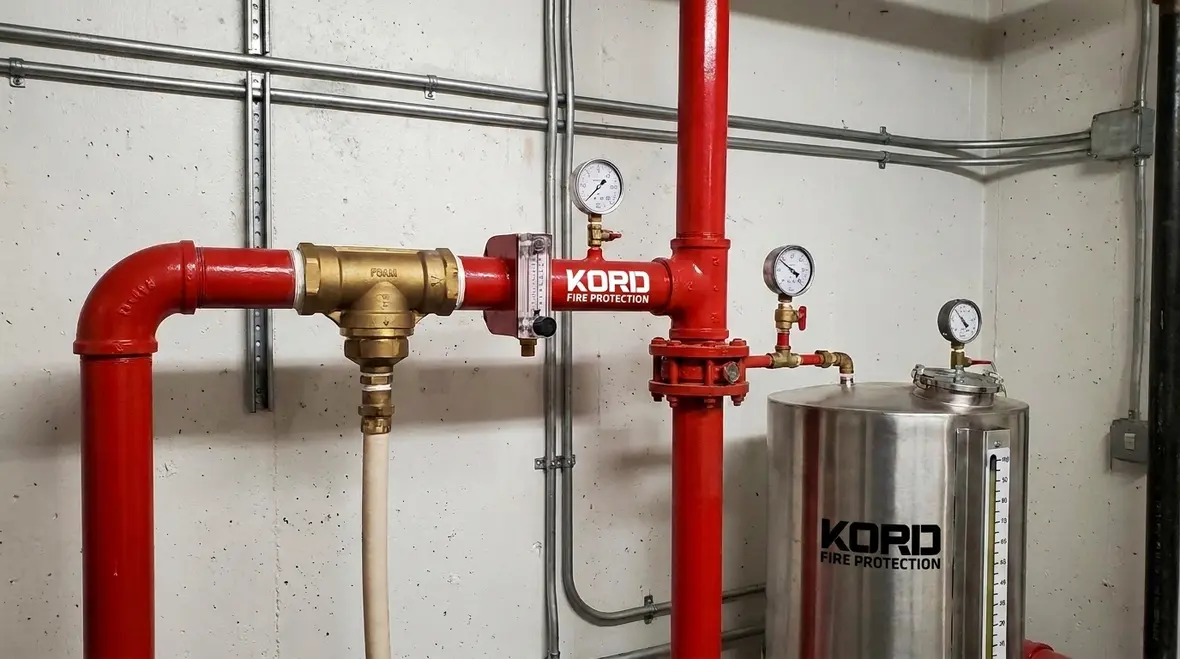
NFPA 16 Section 6.4: Foam Concentrate Proportioning Means Explained
Quick Answer: NFPA 16 Section 6.4 governs how foam concentrate gets measured and mixed with water to maintain the designed foam solution. Foam proportioning means requirements NFPA 16 focus on approved devices, correct concentration delivery, and reliable performance through installation, inspection, and maintenance.
Facilities that want a practical service path for keeping foam systems ready can also review foam fire suppression inspection requirements and service from Kord Fire Protection before diving into the code details.
Why Section 6.4 matters in real fire suppression systems
Foam systems fail most often at the interface between water flow and concentrate delivery. NFPA 16 Section 6.4 addresses that risk by defining what “foam concentrate proportioning means” must do: accurately combine concentrate with water at the required ratio, under expected operating conditions. For commercial facilities such as warehouses, aircraft hangars, marine or industrial occupancies, and retail sites with specialized hazards, this section helps ensure foam solution strength stays within design limits during an actual incident, not during ideal conditions in a test bay.
Many owners understand the tank and concentrate storage pieces, but operators and facilities teams frequently underestimate the engineering and service requirements for proportioning equipment. Correct concentration delivery depends on correct selection, correct piping and strainer condition, stable water pressure, and ongoing testing. This is where proactive commercial service makes a measurable difference.
What “foam concentrate proportioning means” includes
Under NFPA 16 Section 6.4, proportioning means refer to the components and methods that create the foam solution by mixing foam concentrate with water at the required percentage. In practice, this typically includes devices such as:
- Balanced or unbalanced pressure proportioning systems
- Eductor or injector proportioning devices
- Metering systems and dilution controls used with foam concentrate
- Related control and sensing components that ensure the device operates in the specified concentration range
The key compliance concept is performance assurance. The proportioning means must maintain the target foam solution proportion during system operation and must do so in a way that can be verified through inspection and testing procedures aligned to the standard.
Foam proportioning means requirements NFPA 16: concentration control and stability
Foam proportioning means requirements NFPA 16 center on delivering the designed foam concentrate to water ratio. While designs differ by occupancy hazard and foam type, common operational targets are typically in the range of 0.5 percent to 1.0 percent foam concentrate solution, depending on the foam system design basis and listing. The proportioning device must respond predictably to flow and pressure conditions and must not drift outside the acceptable concentration range over the service life.
Facilities often encounter real-world variables that affect concentration delivery:
- Water pressure variation: changes in supply pressure or friction losses can alter mixing behavior for eductor or pressure operated systems.
- Strainer fouling: blocked strainers reduce available flow and can shift concentrate feed rates.
- Worn seals and internal wear: deterioration of internal components can change metering accuracy.
- Incorrect valve positions or bypassing: maintenance shortcuts can unintentionally bypass controls.
- Incorrect concentrate type: mixing the wrong concentrate or using incompatible concentrate can change viscosity and proportioning behavior.
Because of these factors, NFPA 16 requires systems to be kept in a condition where concentration can be verified and maintained. The proportioning device becomes a regulated performance component, not a passive accessory.
How proportioning devices work: operational mechanisms and failure points
Balanced pressure proportioning systems
Balanced pressure devices typically use differential pressure to maintain consistent concentrate feed across a range of operating conditions. Internally, they route concentrate and water so the system counteracts pressure changes. When balanced pressure proportioning systems operate as designed, they provide better stability under varying flows.
Common failure points include internal leaks, blockage, and wear that disrupt the pressure differential. Even minor shifts can cause under or over concentration, and both outcomes can reduce foam performance in critical times.
Eductor and injector systems
Eductors use water flow and venturi effects to draw concentrate into the stream. This method depends heavily on flow rate, friction losses, and the condition of nozzles, orifices, and strainers. If flow decreases or if piping geometry changes, concentrate draw can change and the foam solution proportion can drift.
Common issues include partially blocked eductor passages, misaligned installation, or debris in the strainer upstream. Facilities often discover these conditions during flow testing after a component has been neglected for a period of time.
Metered proportioning systems
Metering approaches use controls and measurement to regulate concentrate injection. These systems can provide strong accuracy when installed correctly and maintained consistently. However, measurement components must remain clean and functional, and the control logic must match the system design.
Typical failure points include clogged meters, sensor drift, improper calibration, and software or control configuration errors after repairs.
Inspection, testing, and maintenance expectations
Compliance is not a one time event. For foam proportioning systems governed by NFPA 16 Section 6.4, owners should plan for routine inspection and periodic testing to confirm the delivered foam solution ratio matches the design intent. In commercial facilities, the most practical approach includes:
- Visual inspection: confirm correct labeling, concentrate tank level, piping integrity, valve position, and absence of leaks.
- Cleanliness checks: verify strainers and suction lines remain free of debris.
- Operational verification: perform proportioning performance tests under controlled flow conditions.
- Component service: replace worn seals, internal parts, and check valves according to service history and manufacturer requirements.
- Documentation: record test parameters and outcomes for audit readiness.
A frequent compliance challenge involves the gap between scheduled maintenance and real operating conditions. Commercial sites change faster than system design assumptions, such as added loading bays, altered hydrant arrangements, revised pump curves, or temporary maintenance configurations. Kord Fire Protection supports ongoing compliance by integrating NFPA 16 oriented service with practical facility workflows, helping ensure foam concentration delivery stays within the intended range.
For a broader system overview and how NFPA 16 fits into foam system design and inspection, see NFPA 16 Standard guidance from Kord Fire Protection.
Common compliance and operational mistakes to avoid
Many foam proportioning issues originate from avoidable setup errors or deferred maintenance. The most common mistakes include:
- Using incorrect concentrate or mixing concentrates: concentrates have distinct formulation and viscosity characteristics.
- Neglecting upstream strainers: debris and corrosion can shift concentrate feed immediately.
- Failing to verify concentration after component replacement: calibration and verification do not always follow repair if procedures are incomplete.
- Allowing pressure conditions to drift: pump changes, supply changes, or valve modifications can affect proportioning performance.
- Ignoring suction line condition: air entrainment, loose fittings, or clogged suction lines can reduce or stop concentrate draw.
These errors often remain unnoticed until a functional test or an actual demand event. A disciplined inspection and testing plan reduces the probability of concentration drift and helps demonstrate ongoing compliance readiness.
Frequently Asked Questions
Next step: keep your foam proportioning compliant
NFPA 16 foam systems depend on reliable foam concentration delivery, and Section 6.4 proportioning performance should not be treated as “set and forget.” Schedule an inspection and proportioning performance verification with Kord Fire Protection to confirm concentration stability, eliminate common failure points, and maintain audit ready documentation for your commercial facility.

Join Our Newsletter!
Get the latest fire safety tips delivered straight to your inbox From our Newsletter.



