
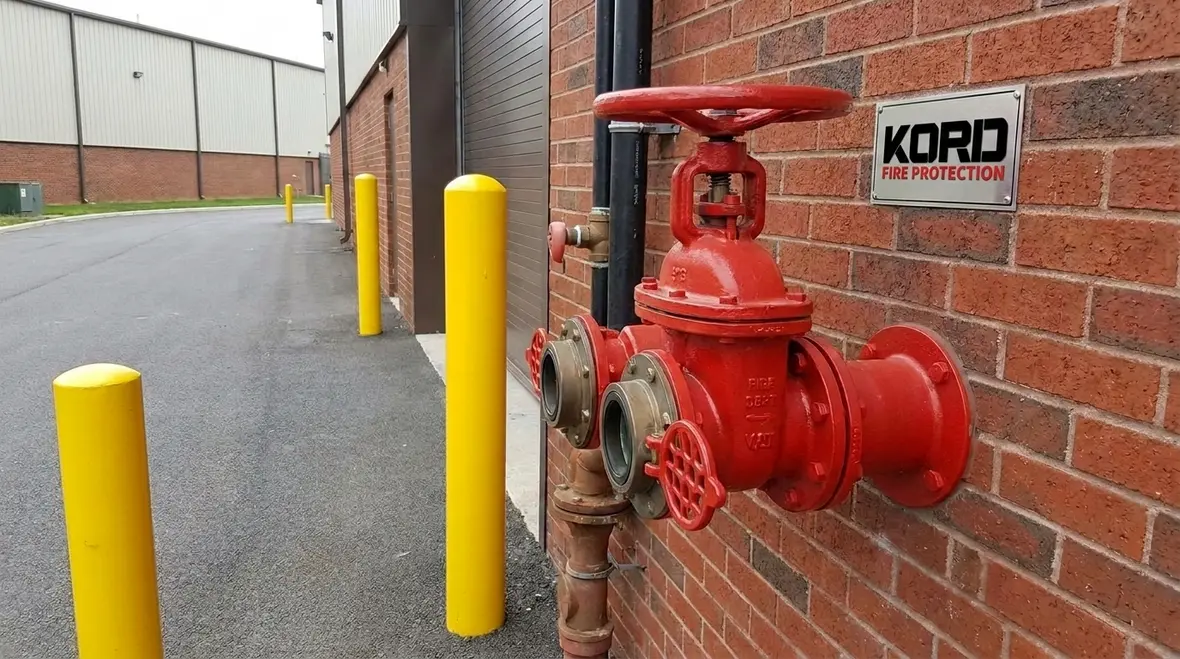
NFPA 16 Section 6.9: Fire Department Connections for Foam-Water Systems
Quick Answer: NFPA 16 Section 6.9 sets requirements for fire department connections (FDCs) used to supply foam-water systems. It covers design, labeling, locations, and readiness for emergency firefighter connection, with inspection and maintenance expectations that protect system reliability.
Why Section 6.9 Matters for Foam-Water Readiness
For commercial, industrial, and retail occupancies, fire department connection foam-water systems often function as the quickest supplemental water and foam supply pathway when an internal pump or water supply cannot meet demand. NFPA 16 Section 6.9 focuses on the practical details that affect real-world operations: where the connection sits, how firefighters identify it, and how the foam-water system responds when the fire department delivers water through the FDC.
In practice, facilities frequently treat foam system connections as “set and forget” equipment. Section 6.9 challenges that assumption by tying performance to usability, configuration, and ongoing verification. Reliable operation depends on correct hardware orientation, unobstructed access, correct fittings, and proof that the foam proportioning and waterflow pathways perform as intended.
For an overview of the standard and how it fits into system design and compliance, see NFPA 16 Standard guidance from Kord Fire Protection.
If your facility is reviewing readiness beyond the connection itself, foam fire suppression system maintenance and testing is a natural next step for keeping the full system inspection-ready.
What NFPA 16 Section 6.9 Requires for Fire Department Connections
NFPA 16 Section 6.9 establishes the “firefighter interface” between the fire department and the building’s foam-water system. While exact implementation details vary based on the foam-water arrangement and local authority requirements, compliance typically centers on the following operational requirements.
1) Connection design that supports immediate firefighter hookup
Fire department connection foam-water systems must provide a connection point that firefighters can access and attach to quickly, using standard fire service practices. Common failure points include missing adapters, inaccessible mounting, mismatched outlets, obstructed clearance, and signage that does not match the actual connection configuration.
2) Identification, markings, and visibility
Section 6.9 expectations are driven by one outcome: correct identification under stress. Facilities should ensure the FDC is identifiable from likely approaches and that markings reflect the system type and operating method for that connection. Incorrect signage can cause wasted time, wrong supply decisions, or delayed foam delivery.
3) Proper arrangement of check valves, nozzles, and system interface
Foam-water systems include components that manage pressure, prevent backflow, and route water through the foam proportioning equipment. When the fire department supplies water through the FDC, the system must avoid trapped air, incorrect flow paths, and unintended bypassing. A poorly designed interface can create conditions where water enters the system but foam does not proportion correctly, or where flow does not reach the intended distribution components.
4) Location and access considerations for commercial sites
Section 6.9 implicitly requires that the FDC supports timely use. Commercial sites often have site furniture, bollards, fences, landscaping, loading dock traffic patterns, and seasonal obstructions. Facilities should verify that fire department access routes remain open and that the FDC location supports approach and hose management without crowding hazards.
Operational Mechanics: How the Foam-Water System Responds When the Fire Department Connects
Compliance is more than hardware placement. Fire department connection foam-water systems must deliver the right flow and pressure conditions to the foam proportioning and injection components to ensure foam concentrate application at the designed rate.
Flow routing and proportioning integrity
When water is supplied through the FDC, it must travel through the system interface without defeating intended control logic. Typical system behaviors that must be verified include:
- Water flow reaches the proportioning device without being diverted by incorrect valve positions or configuration.
- Check valves prevent unwanted backflow while still allowing fire department supplied flow to enter smoothly.
- Auxiliary components do not stall under the flow regime delivered by fire service operations.
- Foam concentrate is inducted and delivered to downstream distribution points at the target concentration.
Common failure points that lead to nonperforming foam delivery
Field issues frequently include:
- Valve mispositioning after service work, tenant changes, or seasonal adjustments.
- Misaligned couplings or missing connection hardware that forces “workarounds” during emergencies.
- Corrosion, debris, or seal degradation that impacts check valve behavior and results in flow loss or pressure irregularities.
- Improper signage that directs firefighters to the wrong interface when multiple connections exist.
- Inadequate maintenance of strainers, proportioning components, and foam concentrate integrity that prevents stable dosing.
Inspection, Testing, and Maintenance: Staying Compliant Beyond Installation
NFPA 16 Section 6.9 is only effective when the foam-water interface stays ready. Commercial facilities typically face schedule pressure that causes deferred verification. A compliance program should treat FDC readiness as a recurring operational task, not a one-time acceptance activity.
What inspections should verify during routine facility rounds
- Physical accessibility: unobstructed approach, correct clearance, and no seasonal blockages.
- Condition of connection hardware: intact couplings, no missing parts, and secure mounting.
- Identification: correct placards, system labeling, and visibility from the expected approach path.
- Valve position confirmation: correct normal position and evidence of tamper or unauthorized adjustments.
Testing that supports performance assurance
Beyond visual inspection, systems require periodic functional verification to confirm the interface works with the waterflow conditions expected from fire department operations. Testing typically involves confirming stable flow through the interface, verifying that proportioning components respond, and ensuring there is no abnormal restriction or leakage that would compromise foam delivery.
Kord Fire Protection supports commercial customers with compliance-oriented testing, maintenance, and documentation workflows designed to reduce operational risk and help satisfy AHJ expectations. That includes readiness checks that align with how crews actually connect and how foam-water systems actually perform.
Commercial Facility Compliance Challenges and How to Address Them
Facilities that operate year-round often experience changes that quietly erode readiness for fire department connection foam-water systems. The most common operational challenges include the following.
Tenant turnover, contractors, and valve disturbance
Renovations and tenant buildouts can require valve access, piping modifications, signage updates, or equipment relocation. Without a structured closeout process, the FDC interface can end up mismatched to the installed system configuration. A change management checklist tied to fire protection documentation helps prevent this drift.
Site access changes and obstruction risk
Construction staging, landscaping upgrades, snow removal practices, and new site barriers can block the FDC approach route. Preventive risk controls should include defined “no obstruction” rules and an internal audit of the expected firefighter approach path.
Multiple hazard zones and confusion during emergencies
When properties include more than one foam-water system or multiple connection points, wrong selection during an incident can delay foam delivery. Address this risk through clear labeling, coordination with local fire departments when appropriate, and consistent maintenance of the markings that crews rely on.
Frequently Asked Questions
Conclusion and Call to Action
Fire department connection foam-water systems must remain ready, identifiable, and performance capable after installation. Facilities should schedule recurring FDC readiness inspections, maintain correct valve and component condition, and perform functional verification that confirms foam proportioning and flow integrity. Kord Fire Protection helps commercial owners and managers sustain NFPA 16 compliance through practical maintenance, testing, and documentation support. Contact Kord Fire Protection to align your FDC program with Section 6.9 expectations and reduce operational risk.

Join Our Newsletter!
Get the latest fire safety tips delivered straight to your inbox From our Newsletter.



