
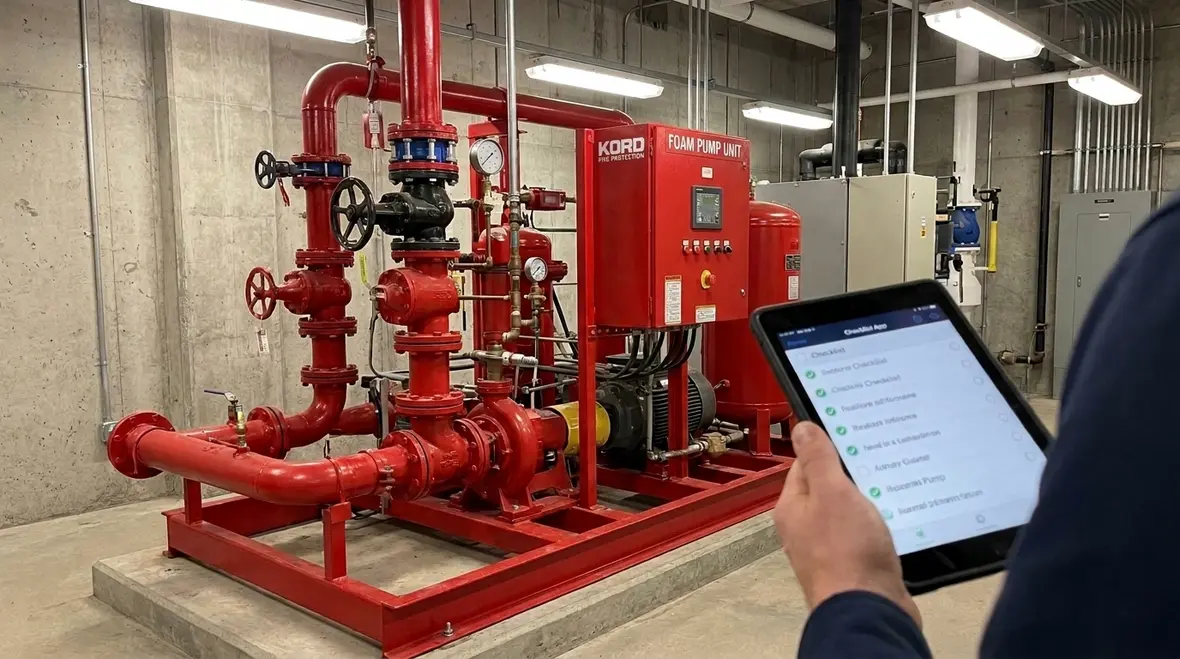
NFPA 16 Section 6.5: Foam Concentrate Pump Requirements
Quick Answer: NFPA 16 Section 6.5 establishes performance and reliability expectations for foam concentrate pumps, including compatibility, pressure and flow control, interlocks, and inspection readiness. Facilities must verify that pump systems deliver correct foam concentrate proportions and remain dependable under test and fire conditions.
Facilities that need broader foam fire suppression system maintenance and testing support usually get better results when pump checks, proportioning verification, and documentation are planned together instead of treated like unrelated chores.
Why NFPA 16 foam concentrate pump requirements matter in real facilities
Foam concentrate pump systems sit at the center of a dependable foam proportioning process. When systems fail to deliver the correct concentrate rate, foam quality, expansion, and application performance suffer. That is why the foam concentrate pump requirements NFPA 16 set explicit expectations for pump capability, control, and maintainability. Commercial, industrial, and retail occupancies often face additional constraints, including limited testing windows, building downtime impacts, and heavy corrosion or contamination exposure. These factors make compliance and ongoing maintenance just as important as initial installation.
For additional context on the overall standard, see: NFPA 16 Standard overview.
What Section 6.5 covers and how foam pumps fit into the proportioning system
NFPA 16 foam systems rely on a coordinated chain: concentrate is stored, proportioned at the correct rate, mixed with water, and delivered to the discharge devices. Section 6.5 focuses on the concentrate pumping method, including how the pump system produces and maintains the required concentrate flow across operating conditions.
In practice, foam concentrate pumps must interface with other system components, such as:
- Proportioning or injection hardware where applicable to the system design
- Water supply pressure and flow variations
- Control panels, alarm and supervisory features, and starting logic
- Strainers, check valves, pressure gauges, and check means to prevent backflow
- Operational testing provisions and access for inspection
Compliance problems often occur at the boundaries between subsystems, such as incorrect piping configuration that alters pump suction conditions, missing isolation valves that prevent safe testing, or controls that do not transition correctly during flow changes.
Key foam concentrate pump requirements NFPA 16 operationally expect
Section 6.5 requirements translate into practical inspection checkpoints. Even when designs differ by hazard classification and foam type, the underlying compliance intent stays consistent: the pump must deliver concentrate reliably at the designed rate, maintain that performance during system operation, and remain accessible and serviceable.
1) Pump capability, control stability, and proportional delivery
Foam concentrate pumps must be sized and controlled to meet the system’s required proportioning rate under the expected operating range. Facilities should treat pump performance as a tested characteristic rather than an assumed attribute. Common risk points include pump wear, changes in motor performance, partially clogged strainers, and concentrate viscosity variation due to temperature swings.
2) Suction conditions and protection of the pump from contamination
Many concentrate pump issues originate upstream. Suction side problems such as debris, degraded suction piping, trapped air, or improper strainer maintenance can lead to cavitation, surging, or reduced delivery rate. NFPA 16 related inspection and testing expectations generally require systems to be maintained so they perform as designed when actuated.
3) Interlocks, starting reliability, and failure mode awareness
Operationally, the concentrate pump system must start and run when the foam system actuates, and it must coordinate with water flow conditions as required by the design. Compliance failures can appear as delayed start, incorrect sequencing, or supervisory conditions that do not reflect real system state. For commercial facilities, these problems can remain hidden until the next test, when foam concentrate is expensive, downtime is disruptive, and access is limited.
4) Backflow prevention and valve train integrity
Backflow control protects the concentrate system from contamination and prevents unintended mixing or loss of system readiness. Valve train issues include worn check valves, leaking isolation valves, incorrect orientations, and improper bypass configurations. These failures often present as slow concentrate loss, unexpected pump load changes, or inconsistent concentrate injection during test.
5) Compatibility and corrosion management
Concentrates, water supplies, and environmental conditions interact with pump materials. Corrosion can change internal clearances, accelerate seal deterioration, and increase friction losses that reduce pump delivery. In industrial and outdoor retail loading areas, moisture intrusion and chemical exposure further increase maintenance sensitivity.
How facilities should inspect, test, and maintain concentrate pumps to stay audit ready
NFPA 16 compliance in the real world depends on repeatable maintenance practices and test documentation that supports the system’s functional capability. The following practices commonly align with audit expectations for foam systems.
Routine inspection priorities
- Verify pump and motor condition, secure mounting, and vibration control.
- Confirm suction strainer cleanliness and correct installation.
- Inspect valve positions, labeling, and actuator integrity.
- Check gauges, switches, and wiring condition, including proper supervisory indications.
- Confirm electrical protection devices and motor overload settings match the equipment listing.
Operational testing expectations
When systems undergo inspection or functional tests, the goal is to confirm the foam proportioning process delivers concentrate at the intended rate. Practical testing often includes observing concentrate delivery behavior during system actuation, checking for abnormal surging or pressure instability, and confirming control logic transitions properly.
Many facilities underestimate the value of trend data. Tracking pump run characteristics, pressure readings, and concentrate injection stability across maintenance cycles helps identify developing failures before they appear during a live flow event.
Maintenance actions that prevent recurring failures
- Seal and gasket inspections based on run hours and contamination exposure
- Pump impeller and internal wear checks during service cycles
- Concentrate quality checks, including ensuring correct product identity and storage conditions
- Testing of strainers, check valves, and fittings for leakage and flow restriction
- Verification that calibration or adjustment actions after service restore intended performance
Kord Fire Protection supports commercial facilities with compliance-focused testing and maintenance planning that reduces downtime surprises. The service approach emphasizes repeatable documentation, defect tracking, and corrective actions that restore functional performance, not just mechanical condition.
Common failure points that show up during foam concentrate pump requirements NFPA 16 audits
Auditors and inspectors typically look for evidence that the pump system can deliver the required concentrate reliably. The most frequent operational failures include:
1) Concentrate delivery rate drift
Pump wear, clogged strainers, or viscosity changes can shift the actual concentrate flow below design intent. Even small reductions can affect foam quality, and the problem can remain unnoticed until test day.
2) Control sequencing errors
Faulty timers, incorrect pressure switch settings, and wiring changes after contractors perform maintenance are common contributors. These issues often surface as late pump start, incorrect supervisory alarm status, or unstable concentrate injection.
3) Suction air ingestion and cavitation
Air can enter through suction leaks, improper priming, or degraded fittings. Cavitation reduces delivery rate and can rapidly damage pump components.
4) Valve leakage and check valve degradation
Leaking valves create unintended mixing, pressure loss, and loss of system readiness. Degraded check valves can allow backflow that contaminates the concentrate pathway or disrupts pump performance during actuation.
5) Poor access for inspection and servicing
If pumps, valves, and strainers cannot be accessed safely and promptly, the system fails the practical maintenance intent behind compliance. For commercial and retail spaces, this can be addressed through planning, safe access improvements, and maintenance scheduling aligned with the site’s operational needs.
What to document for compliance confidence
Strong documentation helps facilities prove readiness and reduces the time spent responding to questions during inspection. For concentrate pump related compliance, maintain records that show:
- Equipment identification, configuration, and listing information
- Test dates, test method, and observed outcomes related to concentrate delivery behavior
- Corrective actions, parts replaced, and calibration adjustments performed
- Valve condition checks, strainer cleaning events, and checks for leaks or restriction
- Seasonal considerations for temperature affecting concentrate viscosity and pump performance
Kord Fire Protection can help organize and standardize maintenance evidence so commercial teams can demonstrate that the system remains functionally capable between inspection cycles.
Frequently Asked Questions
Get your foam system ready for inspection with Kord Fire Protection
NFPA 16 foam concentrate pump requirements NFPA 16 do not stay “set it and forget it.” Commercial sites need test readiness, documented maintenance, and corrective actions that restore real concentrate delivery performance. Kord Fire Protection can develop a practical compliance plan for inspection, functional testing, and maintenance so your foam system remains dependable year-round. Contact Kord Fire Protection today to schedule a compliance review and maintenance alignment for your foam concentrate pump system.

Join Our Newsletter!
Get the latest fire safety tips delivered straight to your inbox From our Newsletter.



