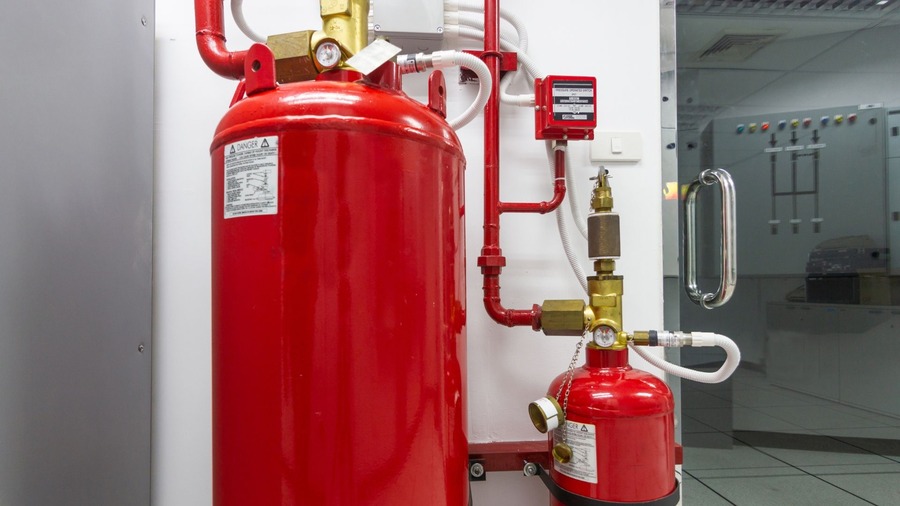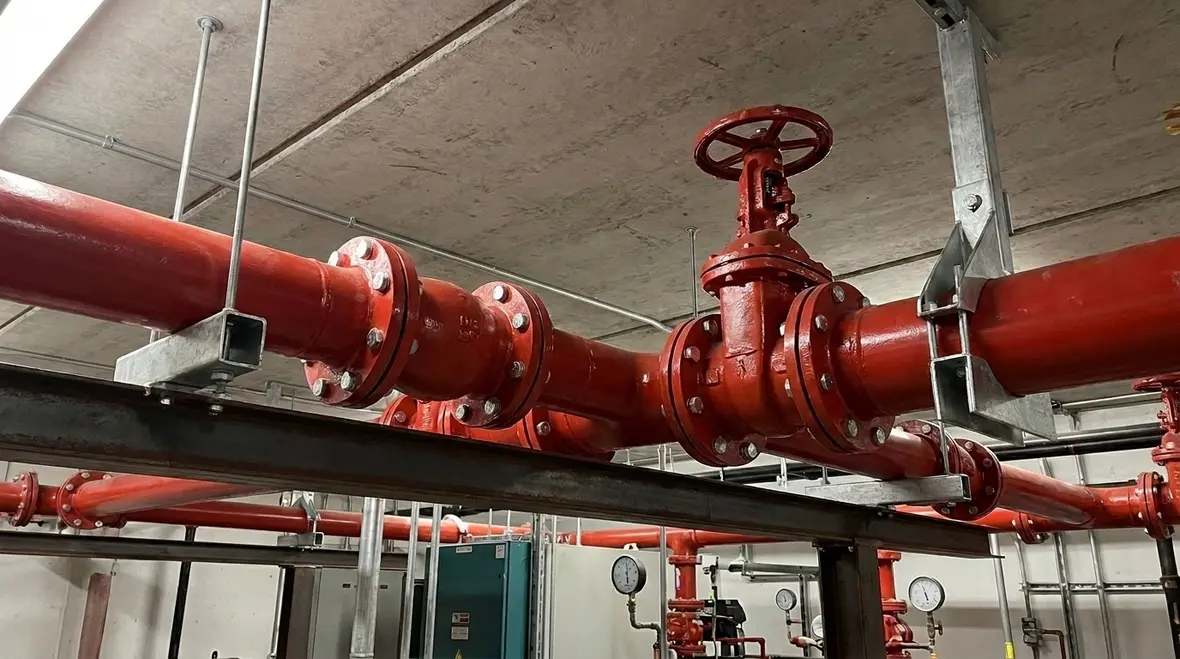
NFPA 16 Section 6.7 Foam Water Piping, Valves, Hangers
Quick Answer
NFPA 16 Section 6.7 sets the rules for piping, valves, pipe fittings, and hangers in foam water systems. In plain terms, it helps these systems stay strong, reliable, and ready when fire shows up uninvited. For sites that need practical support with foam fire suppression systems, Kord Fire Protection can help make sure the work is done right.
NFPA 16 Section 6.7 and Why It Matters
NFPA 16 piping requirements matter because foam water systems depend on clean flow, correct support, and proper parts. Section 6.7 focuses on the piping side of the job, including valves, pipe fittings, and hangers that keep the system stable during service and discharge. In foam water system piping, even a small weak point can cause trouble fast. That is not the kind of surprise any site manager wants on a busy Monday.
For industrial plants, warehouses, fuel areas, processing sites, and commercial buildings, fire suppression pipe fittings must do more than connect sections of pipe. They must hold pressure, resist damage, and support fast response when the system activates. Because of that, this section of NFPA 16 plays a major role in safety and system life.
What Section 6.7 Covers in Simple Terms
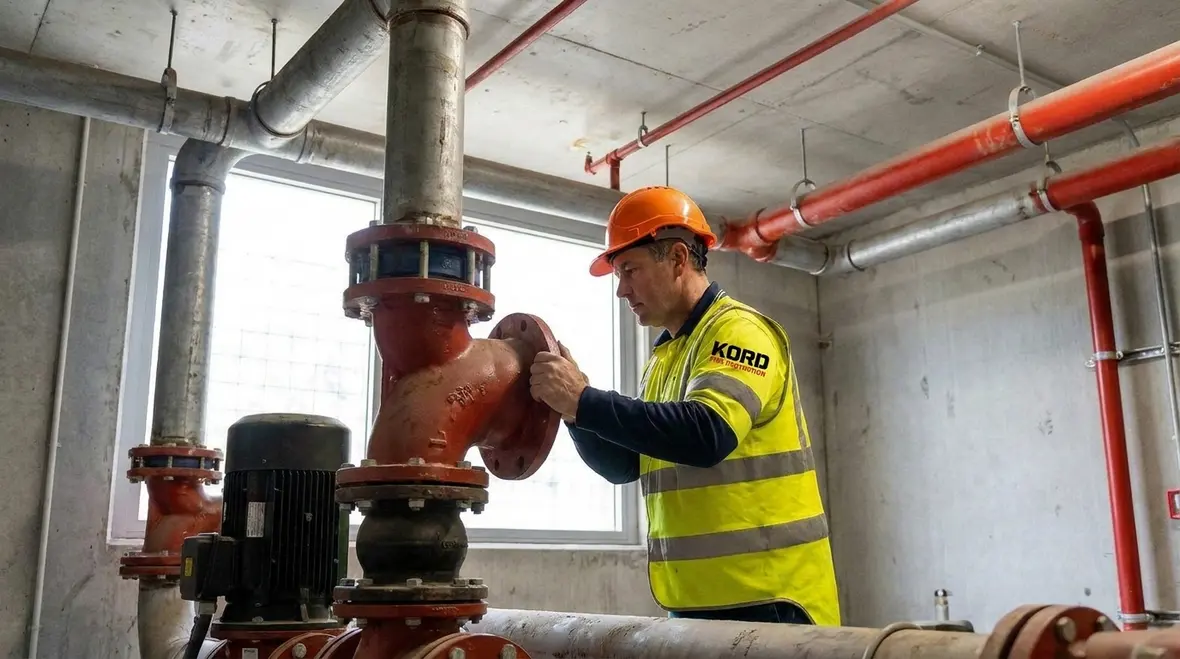
Section 6.7 deals with the parts that carry the foam solution where it needs to go. First, it covers piping layout and installation. Then, it addresses valves that control flow and let workers isolate parts of the system for service. It also covers pipe fittings, which must suit the system design and operating needs. Finally, it covers hangers and supports, which stop the pipe from sagging, shifting, or failing under load.
This part of the standard exists for a good reason. Foam systems often protect high risk areas where water alone may not control a fire well enough. Therefore, every joint, valve, and support must work together. A system may look fine on the outside, yet one weak hanger or poor fitting can turn into a costly failure later. That is the kind of quiet problem that loves to hide until inspection day.
The Core Parts Behind the Pipe Network
- Piping layout: Routes foam solution to the protected hazard area.
- Valves: Control flow and allow sections to be isolated for service.
- Pipe fittings: Create changes in direction, branches, and secure connections.
- Hangers and supports: Keep the network stable so it does not sag, twist, or shift under pressure.
How NFPA 16 Piping Requirements Support System Reliability
NFPA 16 piping requirements focus on more than just putting pipe in place. They help ensure the system can handle pressure, chemical exposure, and regular use. In foam water system piping, the design must match the hazard, the discharge method, and the site layout. As a result, the piping must remain secure and free from stress that can damage the system over time.
Proper valve placement also matters. It allows maintenance teams to work on one section without shutting down the whole network. That saves time and keeps operations moving. In a busy facility, downtime can feel like a bad sequel nobody asked for. Good design avoids that mess.
Fire suppression pipe fittings must also match the system materials and service conditions. If the wrong parts get used, leaks and corrosion can follow. So, the standard helps guide choices that support long term performance. That lines up neatly with the way Kord Fire Protection discusses foam fire suppression system maintenance and testing, where valves, piping, and related hardware need routine attention to stay dependable.
Foam Water System Piping in Real Facilities
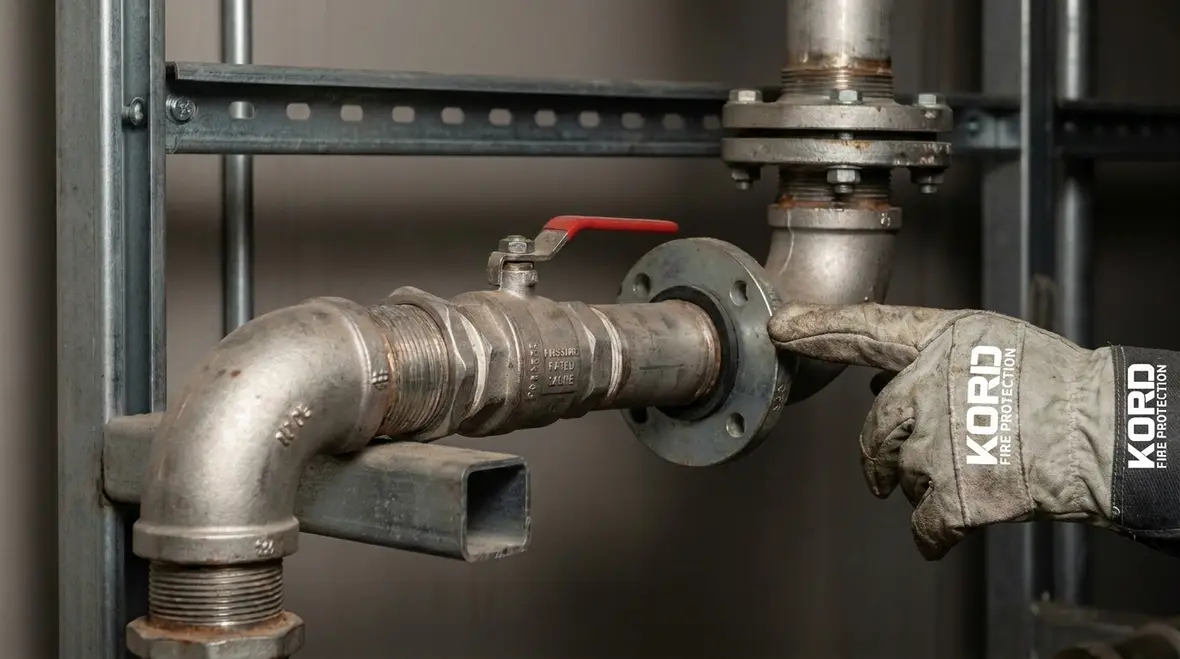
Foam water system piping often serves places where fire risk is high and response time matters. This includes fuel storage areas, loading zones, manufacturing spaces, and commercial sites with special hazard rooms. In these spaces, piping must stay in good shape even when the environment is harsh.
Heat, vibration, moisture, and accidental impact can all affect the system. Therefore, the pipe network needs careful planning and proper support. Hangers must hold the weight of the pipe and any fluid inside it. Valves must remain accessible. Fittings must create tight, lasting joints. When these pieces work together, the system stands ready with less chance of failure.
Design focus
Match pipe size, layout, and fittings to the hazard and the foam system type. A proper design considers pressure demand, discharge points, route efficiency, and the conditions the piping will face once the building gets busy and starts acting like buildings do.
Support focus
Use proper hangers and secure mounting so the pipe stays stable during daily use and discharge. Good support helps reduce movement, protects joints, and keeps the network aligned instead of slowly drifting into a future headache.
Why Real Facilities Need Extra Attention
In real facilities, the piping network does not live in a quiet textbook. It shares space with equipment, traffic, stock movement, structural changes, and the occasional bright idea that rearranges half the floor. That means support points, clearances, and valve access need to stay practical long after the installation crew has gone home. A system that looked perfect on day one still needs to make sense on day seven hundred.
Fire Suppression Pipe Fittings, Valves, and Hangers: The Small Parts That Carry Big Pressure
Many people notice the big tanks and control panels first. However, the smaller parts do a lot of heavy lifting. Fire suppression pipe fittings connect branches and turns. Valves control flow and help isolate sections. Hangers keep the network in line. Together, they form the body of the system.
If one part fails, the whole system may suffer. A loose support can cause stress at a joint. A poor fitting can lead to leaks. A valve in the wrong place can slow service work or block effective testing. For that reason, NFPA 16 Section 6.7 demands care at every step, not just the shiny headline parts.
This is also why facilities often benefit from reading broader guidance like Kord Fire Protection’s foam fire suppression system guide. The same theme keeps popping up for a reason: if the delivery path is weak, the fancy suppression concept does not get far. Fire protection has no patience for shortcuts dressed up as savings.
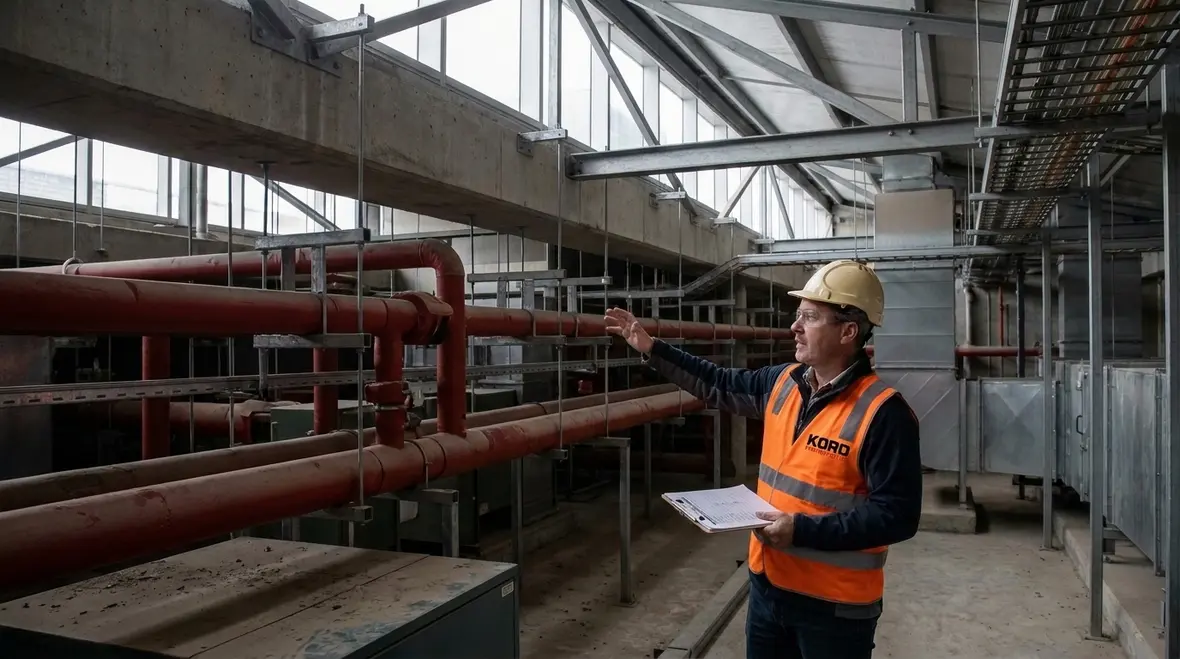
Where Kord Fire Protection Fits In
Kord Fire Protection can become a vital partner because this work needs more than parts and labor. It needs know how, planning, and a sharp eye for detail. Kord Fire Protection describes its support for foam systems through installation, maintenance, testing, and inspection services, with a practical focus on keeping protection aligned with real site conditions.
Also, a strong partner helps facilities avoid poor fit, weak support, and missed compliance issues. Kord Fire Protection can bring practical guidance on foam water system piping, fire suppression pipe fittings, and hanger placement, so the system works as intended when it matters most. That kind of support does not just protect assets. It protects operations, people, and peace of mind.
If a facility is reviewing larger suppression needs beyond just one piping section, Kord Fire Protection also offers broader fire suppression system services. That can be useful when a site wants one team looking at design fit, inspections, maintenance planning, and system readiness without splitting the job into a dozen tiny pieces and hoping they all stay friends.

How to Keep the System Ready for Action
Regular checks should look at corrosion, support condition, valve access, and fitting integrity. In addition, crews should confirm that hangers still hold the pipe correctly and that no changes to the building have stressed the network. Over time, small shifts can create bigger problems, so routine inspection pays off.
Testing and maintenance also help confirm that the system still matches the original design intent. If the site has changed, the piping may need review. A new rack, wall, or machine can create a new risk path. Therefore, the system should not be treated like a set and forget item. Fire protection rarely enjoys being ignored.
A Practical Inspection Mindset
A practical inspection mindset looks beyond obvious leaks. Teams should check whether valves are clearly identified, whether access has been blocked by storage or equipment, and whether supports still match the actual load on the pipe. Even small building changes can create strain, collision risk, or awkward access that slowly chips away at reliability. Catching those issues early is usually much cheaper than meeting them during an emergency.
FAQ
Conclusion
NFPA 16 Section 6.7 gives foam water systems the structure they need to perform under pressure. For facilities that cannot afford failure, the right piping, fittings, valves, and supports matter a great deal. This section may focus on hardware, but the real goal is reliability when conditions stop being polite and start getting flammable.
Kord Fire Protection can help keep that system strong, compliant, and ready through foam system support, maintenance insight, and broader suppression services. For facilities that want fewer weak links and more confidence, that is a partnership worth having.

Join Our Newsletter!
Get the latest fire safety tips delivered straight to your inbox From our Newsletter.