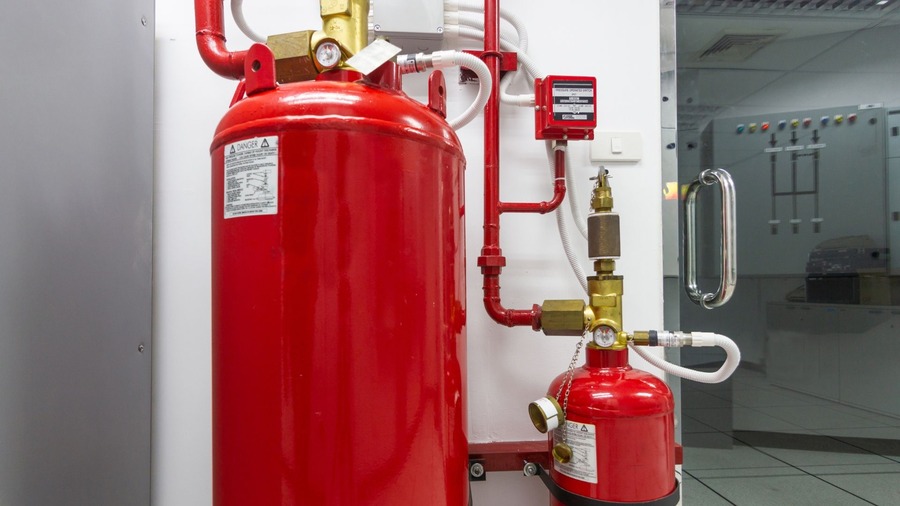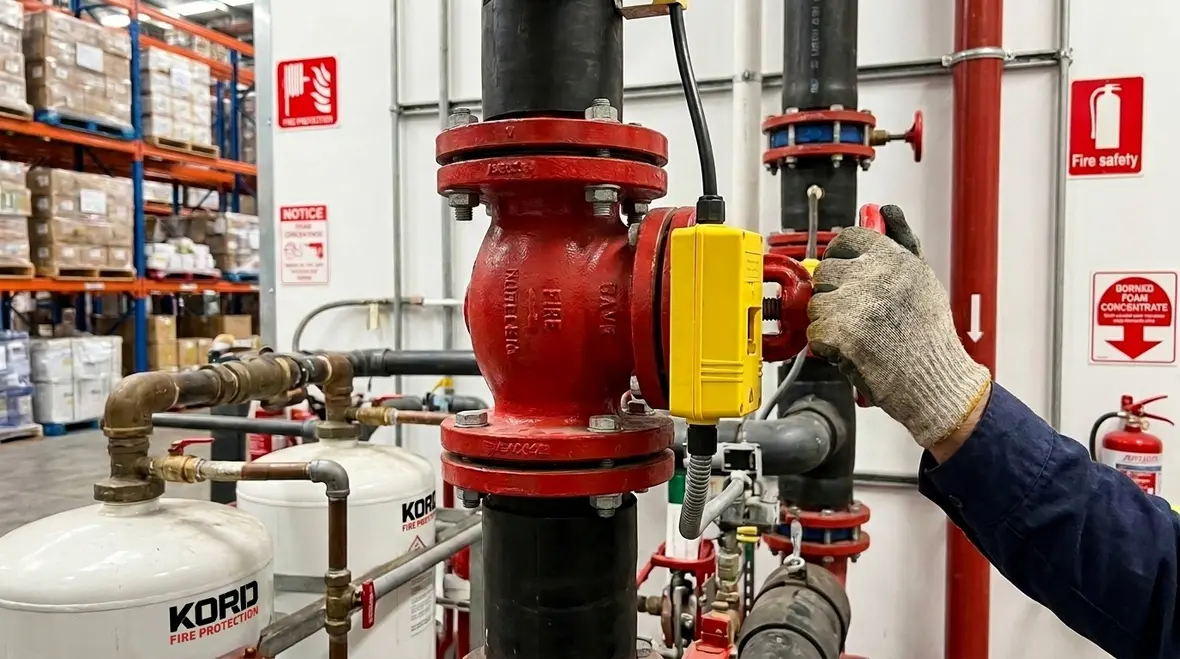
NFPA 16 Section 6.11 Valve Supervision for Foam Water
Quick Answer
NFPA 16 Section 6.11 requires clear valve supervision so foam-water sprinkler systems stay ready when needed. In practice, that means fast detection of valve changes, strong monitoring, and proper control of tampering risks. For industrial, retail, and commercial sites, Kord Fire Protection can help keep fire suppression valve monitoring reliable, compliant, and simple to manage.
If your property already depends on broader full fire protection services, valve supervision fits naturally into that bigger readiness picture. It should not live in a lonely little corner of the maintenance plan where everyone hopes it is fine because nobody has heard bad news lately. Hope is not a fire strategy, and valves do not stay compliant on positive vibes alone.
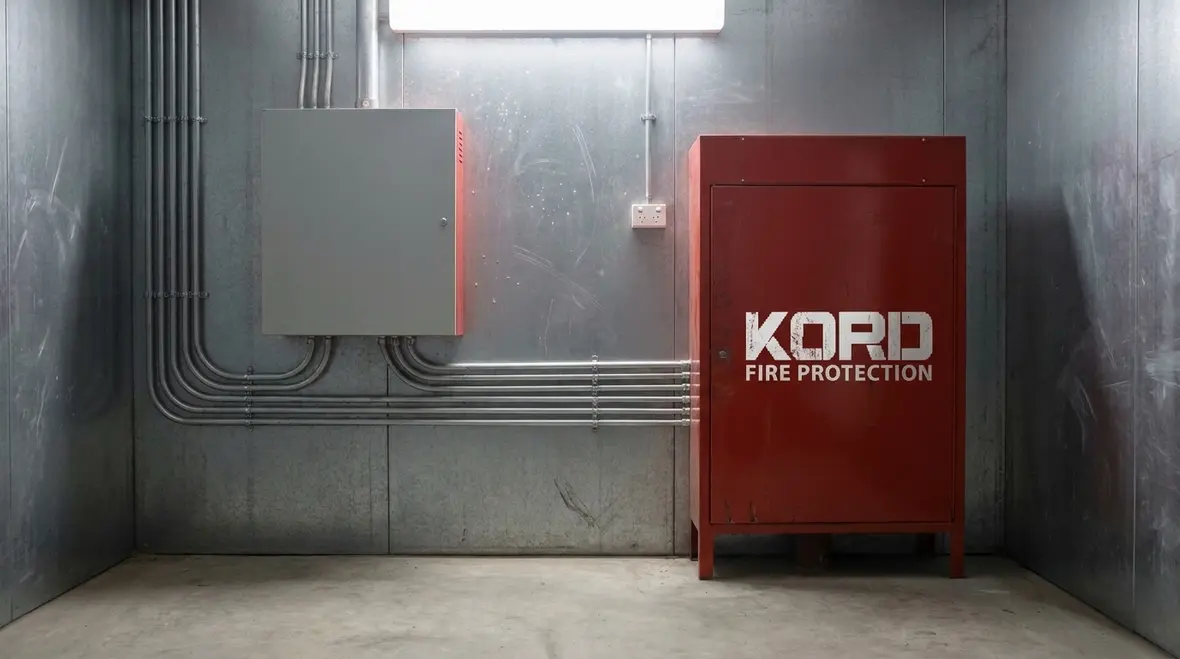
Foam-water systems do not get much applause until a real fire shows up. Then everyone suddenly cares about NFPA 16 valve supervision, foam-water system valve tamper, and fire suppression valve monitoring like they are front row tickets to a very expensive show. NFPA 16 Section 6.11 sets the rules for how valves on foam water sprinkler systems must be supervised, and that supervision matters because a closed, moved, or tampered valve can turn a protection system into expensive wall decor. For industrial, retail, and commercial sites, this topic is not just technical. It is operational, legal, and deeply tied to safety.
When a facility handles fuel, chemicals, storage, or high value assets, even a small valve issue can create a large risk. That is why many owners and managers treat supervision as part of daily protection, not as a side task. Kord Fire Protection can become a vital partner here by helping sites maintain dependable oversight, practical compliance, and a system that works when the heat rises.
What NFPA 16 Section 6.11 requires
NFPA 16 Section 6.11 focuses on valve supervision for foam water sprinkler systems. In simple terms, the standard expects critical valves to stay in the correct position and to be monitored so any change can be detected quickly. This helps reduce the chance of someone shutting a valve, leaving one unlocked, or altering the system without authorisation.
The idea is plain enough. A foam-water system only helps if it is ready. Therefore, valve supervision must support the system at all times, not just during inspections. If a valve moves, someone should know. If a control point fails, someone should know. And if a system relies on human memory alone, well, that is a plan with the life expectancy of a sandwich in summer.
For readers who want the broader code context, Kord Fire Protection also has a dedicated resource on the NFPA 16 standard. That makes it easier to place valve supervision inside the larger framework of foam-water system design, inspection, and readiness instead of treating Section 6.11 like a random isolated rule that wandered in from nowhere.
Why the supervision requirement is more than a checkbox
A supervised valve is not just a technical preference. It is a control that protects system availability. In real facilities, systems are touched by maintenance teams, contractors, tenant changes, shutdown work, retrofits, and occasional moments of pure human creativity. Sometimes that creativity is useful. Sometimes it results in a valve being left in the wrong position and everyone acting surprised later. Section 6.11 exists to cut that risk down before the fire does the auditing for you.
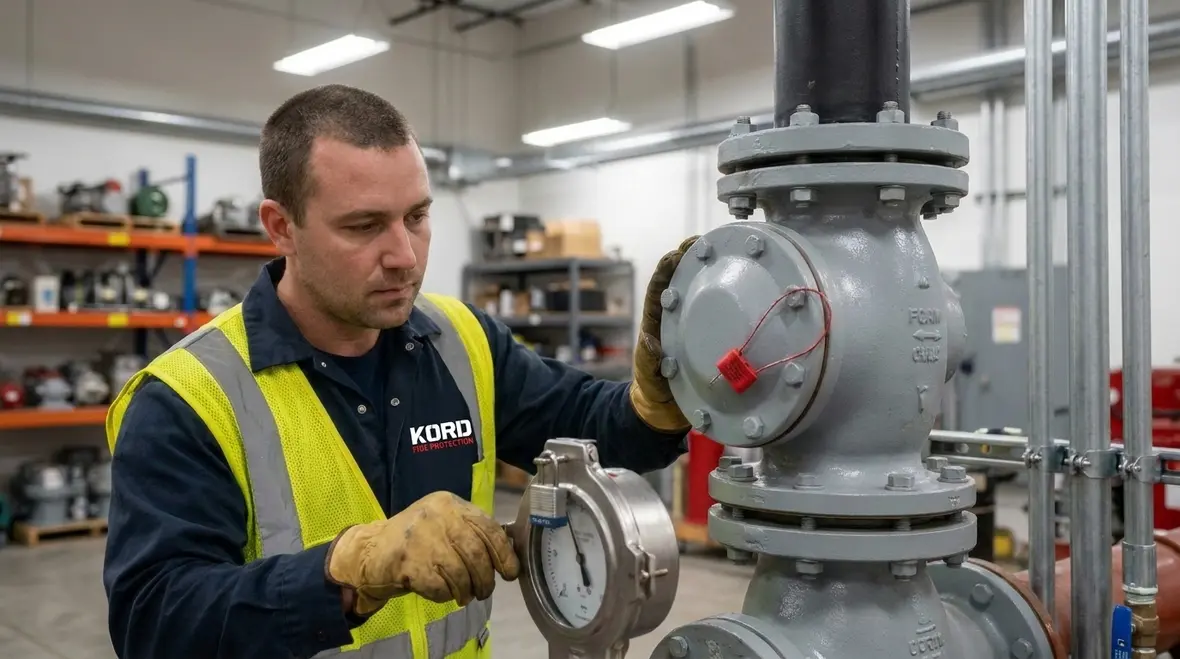
Why valve supervision matters in real facilities
Across industrial plants, retail centres, warehouses, and commercial sites, fire risk changes every day. Staff come and go. Contractors work on equipment. Maintenance teams isolate areas. Because of that, a valve can be changed by mistake or left in the wrong position after service.
Good fire suppression valve monitoring helps prevent three common problems. First, it reduces the chance of accidental shutdown. Second, it helps identify tampering before an emergency happens. Third, it supports compliance records that show the system stayed under control.
For sites with foam-water protection, this matters even more because these systems often protect high hazard areas where response time is critical. If the valve is not supervised, the whole protection chain can weaken fast. That is why strong foam-water system valve tamper controls matter just as much as alarms, pumps, and nozzles.
Where things usually go wrong
- Valves are isolated for service and not fully restored.
- Supervisory devices are present but not tested properly.
- Locks, seals, or access controls are missing or ignored.
- Alarm links exist on paper but fail in the field.
- Documentation lags behind site changes, which is a polite way of saying nobody is quite sure what happened.
These are not dramatic movie-villain failures. They are ordinary operational slips, which is exactly why they are dangerous. The boring problems are the sneaky ones. A glamorous fire hazard at least has the decency to look suspicious.
How valve tamper protection works
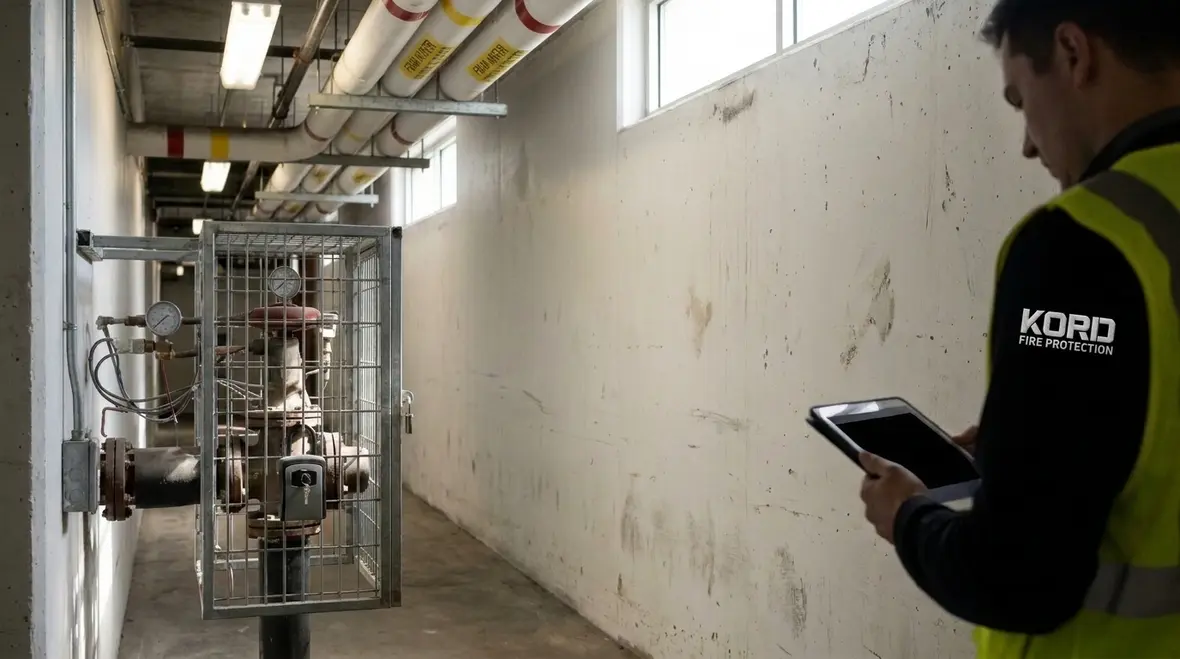
Valve supervision usually depends on devices or methods that detect movement, position changes, or unauthorized access. These may link to alarm systems, monitoring panels, or facility management systems. As a result, staff can receive an alert when a valve changes position or if a protective device is removed.
Supervised valve condition
- Valve remains in correct open or closed state
- Alarm triggers if valve is moved
- Maintenance can be tracked and logged
- Risk of hidden shutdown stays low
Unsupervised valve condition
- Valve may change without notice
- No early warning during tampering
- Inspection gaps can grow larger
- System readiness becomes uncertain
This is where a clear process helps. Good supervision does not only catch tampering. It also builds confidence that the system will respond as intended. That confidence is worth far more than a last minute scramble and a very awkward conversation.
Kord Fire Protection covers similar readiness themes in its article on fire suppression impairment prevention, which is a useful companion read if you are trying to connect valve supervision with the bigger issue of keeping a suppression system available between inspections.
What compliance looks like for facility managers
Facility managers do not need more paperwork for the sake of paperwork. They need a practical system that supports safety and makes audits smoother. Under NFPA 16 guidance, supervision should be consistent, documented, and tied to real site conditions.
That means managers should know which valves need supervision, how each one is monitored, who checks them, and how faults are recorded and cleared. It also means keeping a clear path for maintenance teams so they can work without leaving the system exposed. As a result, compliance becomes part of normal operations instead of a once a year panic session with clipboards and coffee.
A practical compliance mindset
The most reliable facilities usually treat valve supervision as a living control, not a static installation detail. They review alarm history, confirm supervisory signals still reach the right people, document isolation events, and make sure post-maintenance restoration is verified by someone who understands the system. In other words, they do not just install supervision and then wander off into the sunset.
How Kord Fire Protection supports foam water systems
Kord Fire Protection can play a key role in keeping foam water systems dependable. The team can help with assessment, valve supervision setup, monitoring support, and maintenance planning. In addition, Kord Fire Protection can help facilities identify weak points before they become costly problems.
For industrial, retail, and commercial environments, that support matters because every site has its own layout, risk level, and operating rhythm. A warehouse, a retail complex, or a processing site will not need the exact same approach. Therefore, a tailored service makes more sense than a one size fits all fix that looks nice in a brochure and fails in the real world.
Kord Fire Protection can also support routine testing and inspections, helping managers keep fire suppression valve monitoring accurate and reliable. That kind of partnership can reduce downtime, improve readiness, and support better compliance outcomes. For facilities that want a valve-focused reference point, Kord Fire Protection also covers related issues in automatic sprinkler control valves maintenance, including the everyday reality that valves rarely fail at a convenient time.
What should be checked during inspections
Regular inspections should confirm that valves remain in their correct position and that tamper signals, alarms, and monitoring links work as intended. In addition, teams should confirm that signs, locks, covers, and access controls remain intact. Any fault should be logged and fixed quickly.
- Valve position verification
- Alarm response testing
- Physical condition of supervision devices
- Access control and lock integrity
- Maintenance records and fault follow up
Because foam water systems protect critical assets, even small gaps deserve fast attention. A loose cover today can become a missing safeguard tomorrow, and nobody wants that kind of surprise on a Monday morning.
Inspection records that actually help
A good inspection record should make it easy to answer basic but important questions. Which valve was checked? What was its condition? Did the supervisory signal report correctly? Was a fault found, and if so, who closed it out? If your records cannot answer those questions without a scavenger hunt, the process probably needs tightening.
FAQ
Conclusion
NFPA 16 Section 6.11 makes one thing clear. Foam water systems must stay supervised, monitored, and ready for action. For sites that depend on these systems, that means stronger control, fewer surprises, and better protection of people and assets. Valve supervision is not glamorous, but neither is explaining after an incident why a critical valve changed position and nobody noticed.
Kord Fire Protection can help facilities put the right supervision in place and keep it working through practical support, monitoring insight, and maintenance coordination. For a practical review of valve monitoring and compliance support, Kord Fire Protection is ready to assist. That is a much better plan than trusting luck, crossed fingers, and a maintenance note that says someone definitely meant to come back later.

Join Our Newsletter!
Get the latest fire safety tips delivered straight to your inbox From our Newsletter.