
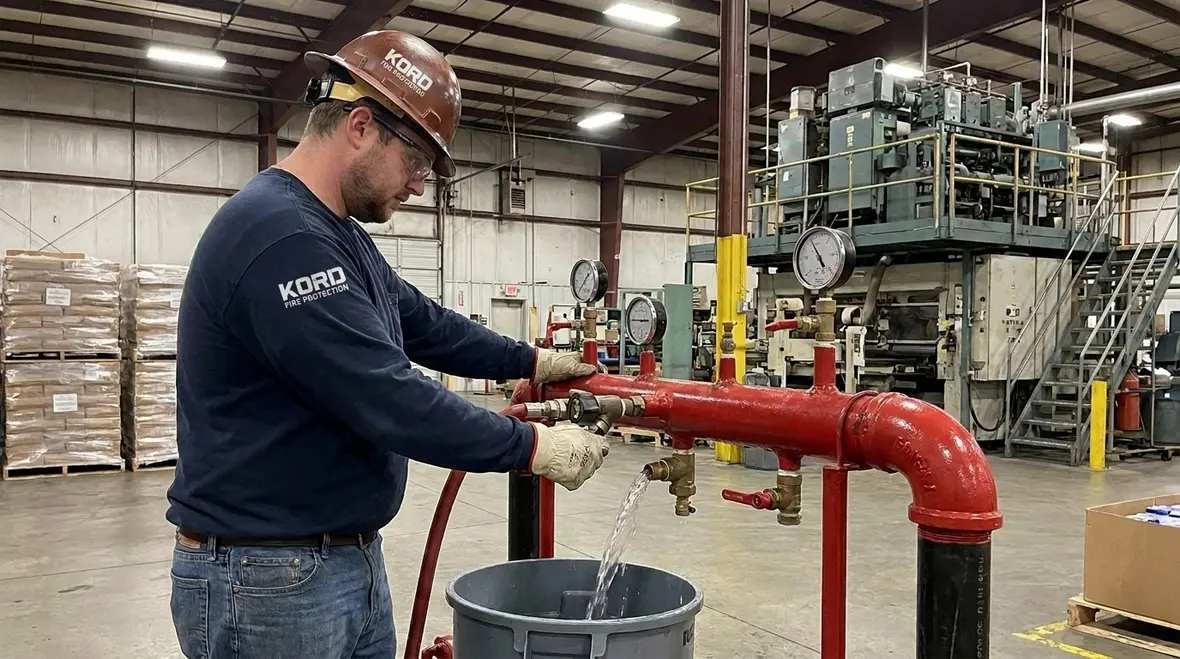
NFPA 16 Section 6.12 Test Connections for Foam Water Systems
Quick Answer
NFPA 16 Section 6.12 requires proper test connections for foam water sprinkler and spray systems so crews can verify flow, discharge, and system health without guesswork. In practice, this supports safer fire suppression system testing, better use of NFPA 16 test connections, and reliable foam water system test drains. Kord Fire Protection can help facilities keep these checks clean, compliant, and far less dramatic than a weekend alarm call.
For facilities that need hands-on support beyond theory, Kord Fire Protection’s foam fire suppression systems service fits naturally into the conversation because testing, maintenance, and readiness all live in the same real-world universe. And if you want a broader standards reference, Kord also has a related resource on NFPA 16 that helps connect the code language to actual site conditions.
NFPA 16 Section 6.12 in Plain Terms
NFPA 16 Section 6.12 focuses on the test connections used for foam water sprinkler and spray systems. These points let technicians verify that water and foam solution move through the system the way they should. In simple terms, the code wants proof that the system can do its job before anyone has to trust it in an emergency.
That sounds almost offensively reasonable, but it matters more than people think. A foam water system may sit quietly for months looking perfectly respectable while hiding a blocked line, sticky valve, poor drain arrangement, or weak discharge path. Test connections are the reality check. They give technicians a controlled way to see whether the system performs like a protection system or just poses like one.
For industrial and commercial properties, this matters because foam systems often protect higher hazard spaces such as fuel storage areas, loading zones, plant rooms, processing areas, or other locations where plain water alone may not be enough. If the test point is blocked, hidden, or poorly maintained, the entire inspection can become a guessing game. And guessing is not a strategy, unless the goal is to annoy the fire inspector and everyone else in the room.
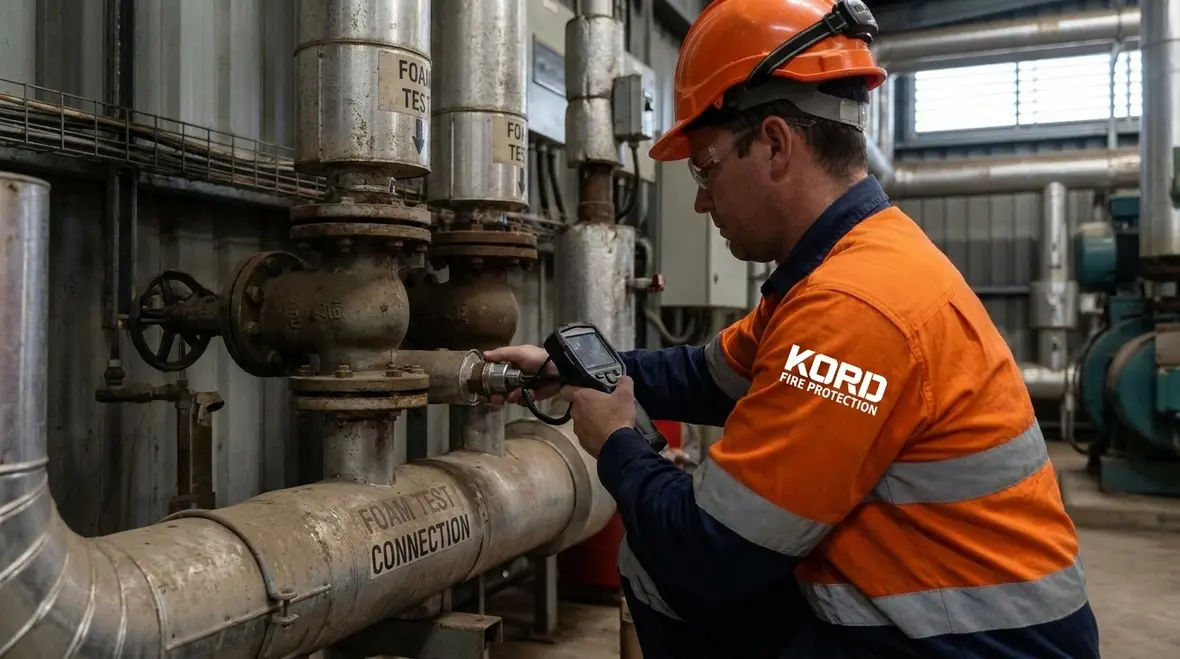
Why Test Connections Matter for Real Sites
Test connections are not there to decorate pipework like some sort of metal art exhibit. They exist so technicians can confirm pressure, flow, and discharge performance under controlled conditions. When a foam water system is tested properly, the site gains evidence that the system will activate as designed and that the discharge path behaves the way the design intends.
This is especially important in busy facilities where downtime costs money and interruptions tend to multiply the second someone touches a critical system. A missed fault in a foam system can delay response, damage stock, disrupt operations, and create serious risk for staff. Therefore, regular testing helps catch blocked lines, weak valves, poor drainage, and failed components before they turn into a very expensive headline or a very uncomfortable meeting.
There is also a practical operations benefit. A system that is easy to test is usually easier to maintain, easier to document, and easier to trust. Facilities teams do not want annual testing to feel like a scavenger hunt combined with a plumbing surprise. Clear test connections reduce wasted time, support cleaner procedures, and help each future inspection go more smoothly than the last.
Where testing value shows up fastest
- Confirming the system can move water and foam solution through the intended path
- Identifying valves that do not fully open or close
- Spotting restrictions before they affect emergency performance
- Reducing rework during inspections and follow-up visits
- Giving managers better records for service planning and compliance reviews
How Foam Water System Test Drains Support Compliance
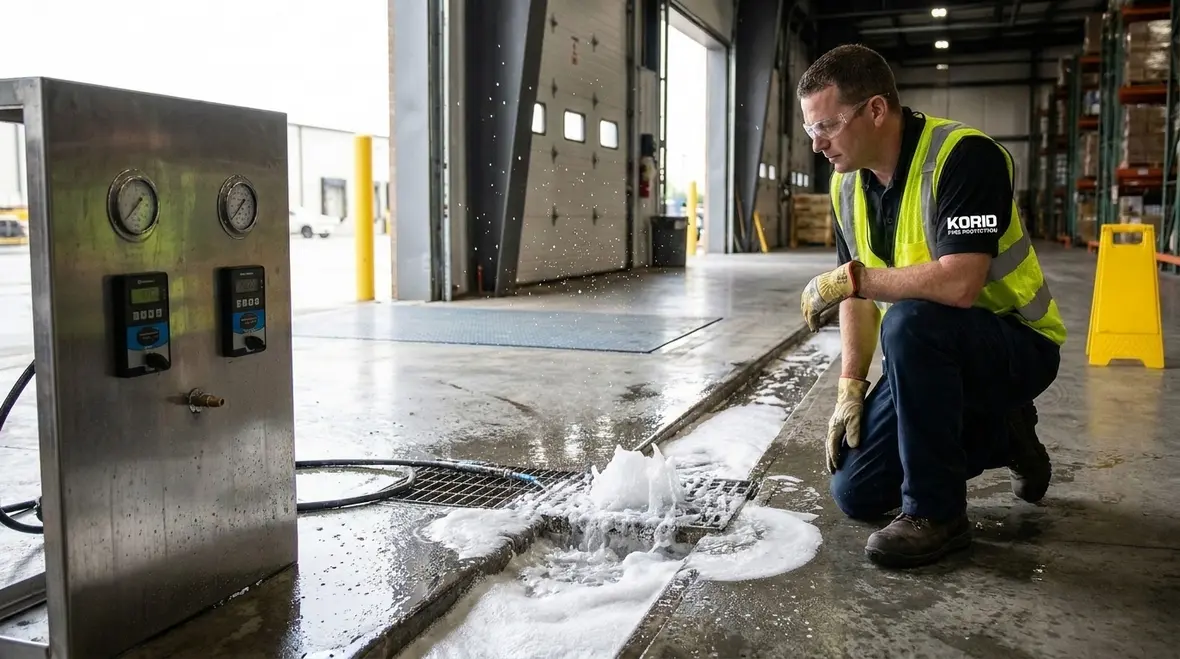
Foam water system test drains allow technicians to move water and foam solution safely out of the system during testing. They help prove that the system can discharge at the right rate while keeping the site controlled and clean. In turn, this supports accurate fire suppression system testing without flooding a floor, creating slip hazards, or sending everyone into a panicked search for mops.
Proper drain design also helps prevent trapped residue, corrosion, and false readings during later inspections. As a result, maintenance teams get a clearer picture of how the system performs under real conditions. That makes the test drain more than a pipe with a purpose. It becomes part of the system’s honesty policy, which is exactly what you want from life safety equipment.
If drainage is poorly arranged, even a technically correct test can create chaos around the discharge area. Water or foam runoff can pool, spread into work zones, or complicate cleanup enough that people start resisting proper testing altogether. Once that mindset creeps in, compliance gets weaker because the site begins treating testing like a nuisance rather than proof of readiness.
What Inspectors and Technicians Look For
During testing, inspectors and technicians usually check several practical points. They are not just looking for whether water comes out somewhere in the general vicinity. They want signs that the test connection is accessible, secure, readable, and functionally useful for repeatable testing over time.
- Accessible and clearly identified test connections
- Correct valve operation and secure fittings
- Proper flow path through the system
- Evidence that foam solution discharges as expected
- Safe drainage with no pooling or uncontrolled release
- Signs of corrosion, damage, or obstruction
- Documentation that supports repeat testing and follow-up action
They also want the site setup to support repeat testing. If a connection is hidden behind stored materials, buried above equipment, or awkward to reach, the next inspection becomes a hassle. Therefore, good access planning helps save time and improves safety for everyone involved. It also removes the classic excuse of “we meant to clear that area” which somehow appears in facilities everywhere.
Repeatability matters more than a one-time pass
A clean test result today is useful. A clean test result that can be reproduced next month, next year, and after building changes is much more valuable. That is why identification, layout, valve condition, and drainage control matter so much. Reliable systems do not depend on one technician’s memory or a heroic amount of improvisation.
Dual Column View: Site Risk and Testing Focus
| Common Site Risk | Testing Focus |
| Blocked access to test points | Clear reach and safe operation |
| Poor drainage around the test area | Controlled release through foam water system test drains |
| Old or damaged valves | Confirm full opening and closing |
| Unknown system condition | Regular fire suppression system testing and documented results |
| Hidden corrosion or residue buildup | Visual review plus functional discharge checks |
This kind of practical review helps facility managers see where risk hides. Moreover, it keeps maintenance decisions grounded in facts instead of assumptions. When teams can map site risks directly to testing focus, budget discussions become easier and corrective work becomes more targeted.
How Kord Fire Protection Helps
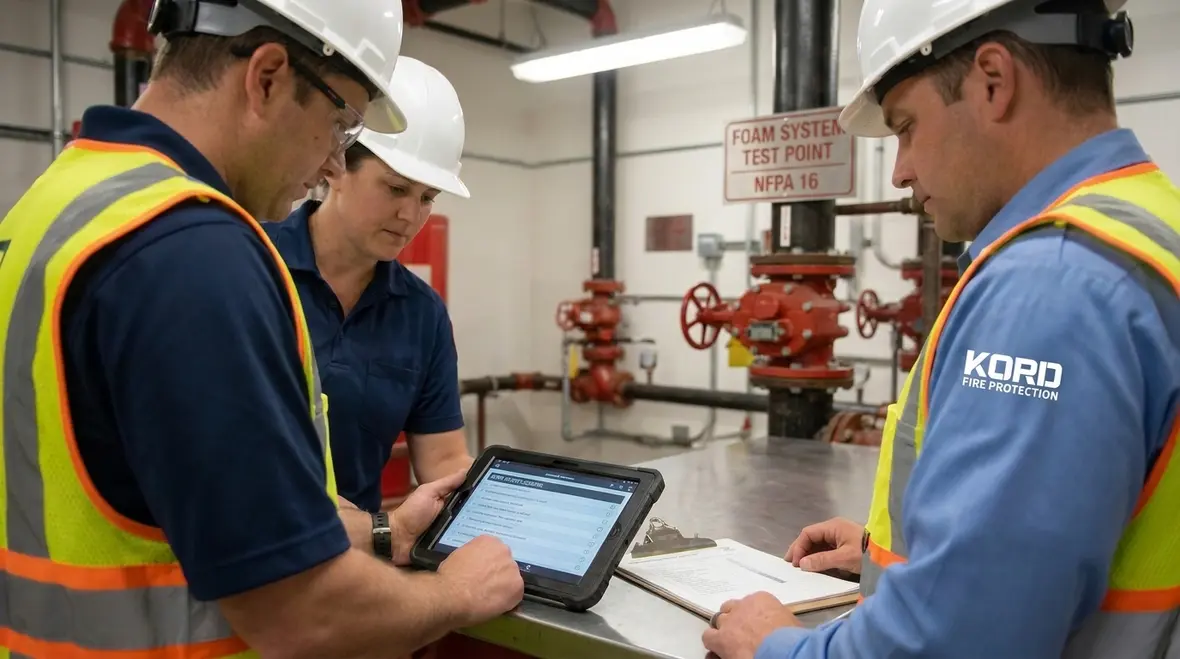
Kord Fire Protection can become a vital partner for facilities that need reliable testing, clear reporting, and practical support. Their foam fire suppression service highlights inspection, testing, maintenance, repairs, detailed documentation, and emergency support, which fits exactly with the needs of sites relying on specialized suppression equipment. The broader Kord service approach also emphasizes scheduled inspections, routine testing, and preventive maintenance across fire protection systems, which supports a more coordinated maintenance strategy instead of a patchwork one.
That matters because foam systems demand more than a quick visual check. They need careful handling, proper testing methods, and a team that understands both compliance and site pressure. Kord’s related resources on foam maintenance, foam inspection requirements, and fire suppression pressure testing all point in the same direction: good testing is measurable, documented, repeatable, and tied to real system performance rather than vibes.
For facility managers, that kind of support helps reduce disruption by organizing work around operations, identifying issues before they escalate, and keeping records usable for future service. In other words, fewer surprises, better compliance, and less drama for the facilities team, which is always a win.
What a Good Testing Program Looks Like
A strong program does more than tick a box. It builds a routine that checks the system before failure has a chance to show up uninvited. Good programs include access checks, functional testing, drainage checks, documentation, and follow-up repairs where needed. They also create consistency so each inspection adds to the site’s knowledge instead of starting from scratch every time.
Furthermore, records should show what was tested, when it was tested, what passed, and what needs attention. That paper trail matters for audits, internal safety reviews, contractor coordination, and future servicing. In other words, good documentation turns fire protection from a mystery into a managed asset.
Core parts of a solid testing routine
- Scheduled reviews of all NFPA 16 test connections
- Drainage checks for safe and controlled discharge
- Valve operation verification and component condition checks
- Clear labeling and maintained access to test points
- Documented results with corrective actions assigned
- Follow-up service to close out deficiencies instead of admiring them in a report
FAQ
Keep the System Ready Before the Alarm Does the Talking
NFPA 16 test connections and foam water system test drains are only useful when they work as intended. Therefore, facilities should treat testing as a vital part of risk control, not a chore to delay until next quarter. A system that can be tested cleanly, safely, and consistently is a system that inspires a lot more confidence when conditions go sideways.
Kord Fire Protection can help sites stay ready with dependable service, practical testing support, and documentation that turns system condition into something visible instead of mysterious. The goal is simple: fewer surprises, better readiness, and a next test day that feels smooth instead of theatrical.

Join Our Newsletter!
Get the latest fire safety tips delivered straight to your inbox From our Newsletter.



