
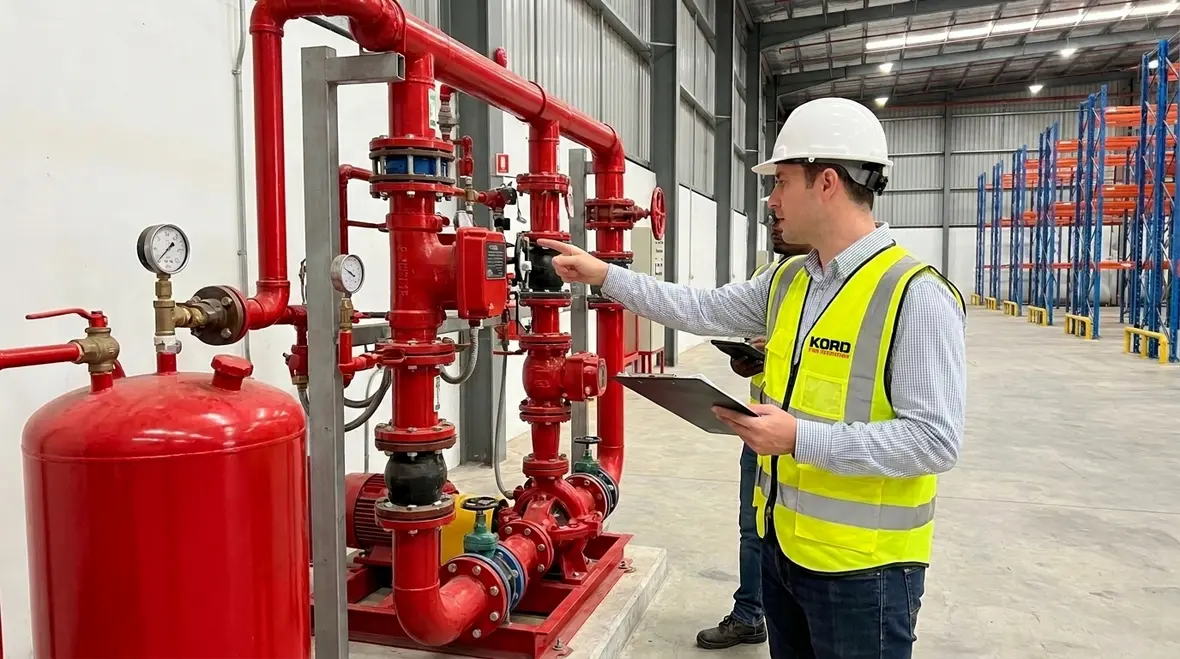
NFPA 16 Section 4.6: Getting a Foam-Water System Approved
Quick Answer: NFPA 16 Section 4.6 requires documented compliance, correct foam concentrate and proportioning setup, validated hardware performance, and ongoing readiness. Approval depends on proper design criteria, installation quality, testing results, and inspection and maintenance procedures that keep performance within listed limits.
If you’re lining up the broader service side of this work, fire suppression system services can help connect design, installation, testing, and maintenance before the AHJ review turns into a very expensive game of “why is this different from the submittal?”
What “approval” means under NFPA 16 Section 4.6
In NFPA 16, approval is not treated as a paperwork exercise. Foam-water system approval requirements NFPA 16 focus on confirming that the foam-water system will deliver the intended water and foam solution characteristics under the real conditions it will face during emergency operation. That includes the correct foam type, proportioning method, water supply parameters, hardware configuration, and test and maintenance routines that preserve performance over time.
Commercial facilities often struggle here because systems get “installed to spec” but are not validated against the full set of operational assumptions. NFPA 16 Section 4.6 expects the authority having jurisdiction (AHJ) and the design process to reconcile the system’s design intent with physical installation details, fuel or hazard characteristics, and documented acceptance outcomes.
Start with the approval package: documentation the AHJ expects
To support foam-water system approval requirements NFPA 16, prepare a complete submission package early. Most delays occur when documentation arrives late, is incomplete, or does not match what is actually installed. At minimum, the package should align with the system’s hazard basis and include clear evidence of listing, design basis, and performance testing expectations.
Core documents to include
System design basis: hazard classification, design assumptions, operating sequence, and interfaces with detection, controls, and water supply.
Equipment listing and compatibility: foam concentrate listing information, proportioning device listing, piping material compatibility, valves, and strainers.
Hydraulic calculations and water supply information: available flow and pressure, remote equipment losses, nozzle or application device constraints, and suction or pump conditions.
Proportioning method details: type of proportioner, calibration method, expected foam concentrate ratio range, and the accuracy targets used for acceptance.
Installation inspection results: closeout checklist items that confirm the system is built to design and to manufacturer instructions.
Commissioning and test reports: acceptance testing outputs that demonstrate delivery conditions meet the design intent.
Operation, inspection, and maintenance plan: schedules, responsibilities, and evidence that performance will be maintained.
For a practical compliance edge, coordinate with the AHJ on interpretation of required acceptance outcomes before installation completes. A well prepared record also shortens future renewals and reduces “reinspection” costs after changes to piping, pumps, or proportioners.
How the foam-water system must be configured to pass review
Section 4.6 approval is heavily tied to system configuration. Foam performance depends on correct solution generation and stable delivery to the hazard. If the design or installation deviates, the foam can collapse prematurely, not blanket properly, or deliver an incorrect expansion ratio.
Key configuration factors that commonly derail approval
Incorrect foam concentrate selection: the concentrate must match the hazard and the system’s listed application approach.
Proportioner mismatch or incorrect tuning: proportioners that are not calibrated for the actual pressure and water conditions will generate the wrong foam solution concentration.
Strainer and piping constraints: debris handling components and flow restrictions can change concentration stability and reduce expected foam delivery.
Valve arrangements and timing issues: delayed actuation or incorrect valve sequencing can prevent full system discharge when detection triggers.
Pump performance variability: foam systems often rely on stable pressure at the proportioner, and pumps must deliver within expected ranges.
Inconsistent nozzle or application device installation: missing devices, incorrect orientations, or partial blockage can prevent correct coverage and drainage behavior.
Commercial facilities in retail, industrial, and multi use buildings often experience approval problems when foam-water is treated like a generic sprinkler or standpipe extension. In reality, foam systems require tight concentration control, stable hydraulics, and documented operating readiness.
For an overview of NFPA 16 context and how foam water systems are structured, review: NFPA 16 Standard requirements.
Testing and commissioning: proving the system works, not just that it is installed
Approval under NFPA 16 Section 4.6 typically depends on evidence that the system delivers foam solution and foam performance within acceptable parameters. This is where many projects fail because testing focuses on “water flow” and neglects concentrate handling, proportioning accuracy, and discharge conditions.
What acceptance testing should demonstrate
Correct foam solution concentration: verification using appropriate sampling and concentration measurement methods aligned with manufacturer and AHJ expectations.
Delivery performance under design flow: testing should reflect operating conditions, including pump characteristics, line losses, and any remote discharge implications.
Proportioner stability: confirm that concentration does not drift beyond allowable tolerances during sustained discharge.
Functional operation of controls: confirm detection interface logic, valve actuation, and fail safe or supervisory behavior.
Acceptable system response time: verify that the discharge starts and proceeds as designed without interruptions caused by water supply or control sequencing.
Commissioning should also capture operational realities, such as typical facility water quality, system standby conditions, and environmental exposure that can affect foam concentrate storage and hardware calibration.
Maintenance and readiness: how approval stays valid after turnover
Even when a foam-water system receives initial approval, the system can drift out of compliance if maintenance practices do not protect concentration accuracy and hardware performance. NFPA 16 approval expectations extend into the operational life cycle because foam effectiveness is sensitive to concentrate age, proportioner calibration, and contamination.
Common performance degradation mechanisms
Concentrate aging and contamination: concentrate can change properties over time, and environmental contamination can affect solution formation.
Calibration drift in proportioners: repeated temperature and pressure changes can shift calibration if not verified.
Strainer blockage: clogged strainers reduce flow and can create concentration and discharge variability.
Valve leakage or sticking: minor leakage can lower solution availability and delay discharge.
Hardware corrosion or degradation: corrosion alters flow characteristics and can affect tight tolerance components.
To protect ongoing compliance, facilities need inspection routines that include concentrate verification readiness, proportioner checks, and evidence of corrective actions when tolerances are not met. Kord Fire Protection supports commercial clients with service planning that aligns testing practices with listed equipment behavior and the operational risk profile of each building.
For deeper maintenance context, see foam fire suppression system maintenance and testing and NFPA 25 foam system inspection, testing, and maintenance planning.
Practical compliance checklist before you request approval
Use this practical list to reduce rework and avoid the most common delays tied to foam-water system approval requirements NFPA 16.
| Checklist Item | Why it matters for approval | Documentation to keep |
|---|---|---|
| Correct foam concentrate and compatibility confirmed | Prevents foam failure and mismatch with hazard basis | Listing data, product compatibility matrix |
| Proportioner type and calibration method verified | Ensures correct foam solution concentration | Calibration records, acceptance concentration results |
| Hydraulics and water supply data match installed conditions | Confirms discharge meets design flow and pressure assumptions | Hydraulic calc summary, water supply measurements |
| Valve arrangement, actuation, and sequence tested | Prevents partial discharge or delayed response | Functional test reports and as built valve list |
| Strainers and flow paths confirmed clear and installed correctly | Protects stable foam solution formation and delivery | Installation checklist, strainers inspection results |
| Inspection and maintenance plan established and assigned | Keeps performance within tolerance after acceptance | Service schedule, responsibilities, corrective action procedure |
When documentation aligns with actual hardware and test outcomes, the approval conversation shifts from interpretation to verification, which typically shortens AHJ review cycles.
Frequently Asked Questions
Conclusion and next step
NFPA 16 Section 4.6 approval depends on more than installation quality. It requires a verified design basis, correct proportioning configuration, acceptance testing that demonstrates concentration and delivery conditions, and a maintenance plan that preserves performance. Kord Fire Protection helps commercial facilities prepare approval packages, coordinate commissioning, and maintain systems to protect readiness year after year. Contact Kord Fire Protection to review your system documentation, identify approval risk points, and build a testing and maintenance plan aligned with NFPA 16 expectations.

Join Our Newsletter!
Get the latest fire safety tips delivered straight to your inbox From our Newsletter.



